Haitian Akra is the undisputed king of Caribbean street food, offering a sensory experience that defies the standard definition of a fritter. If you have ever walked through a bustling market in Port-au-Prince, the scent of sizzling oil and spicy scotch bonnet peppers is unmistakable. It is a dish defined by its architecture—a glass-shattering, craggy exterior that gives way to a cloud-like savory center.
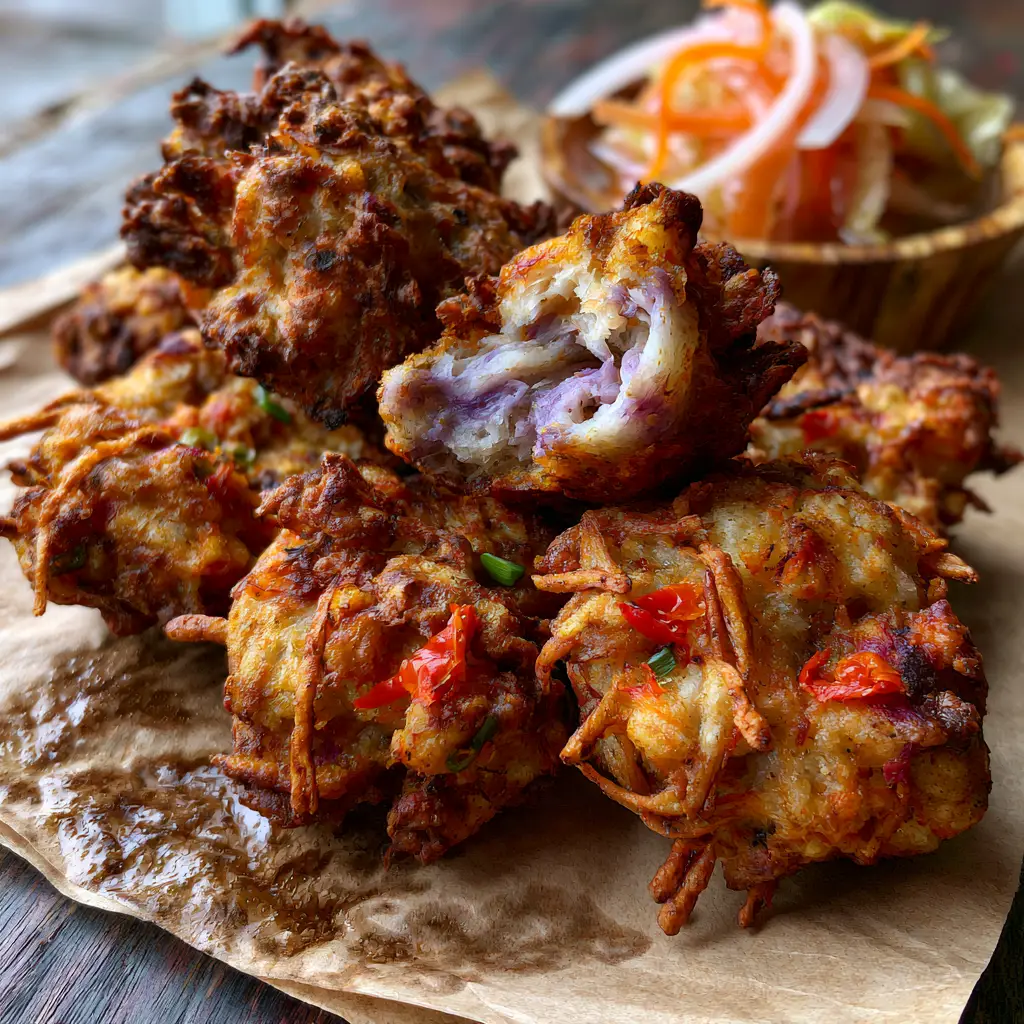
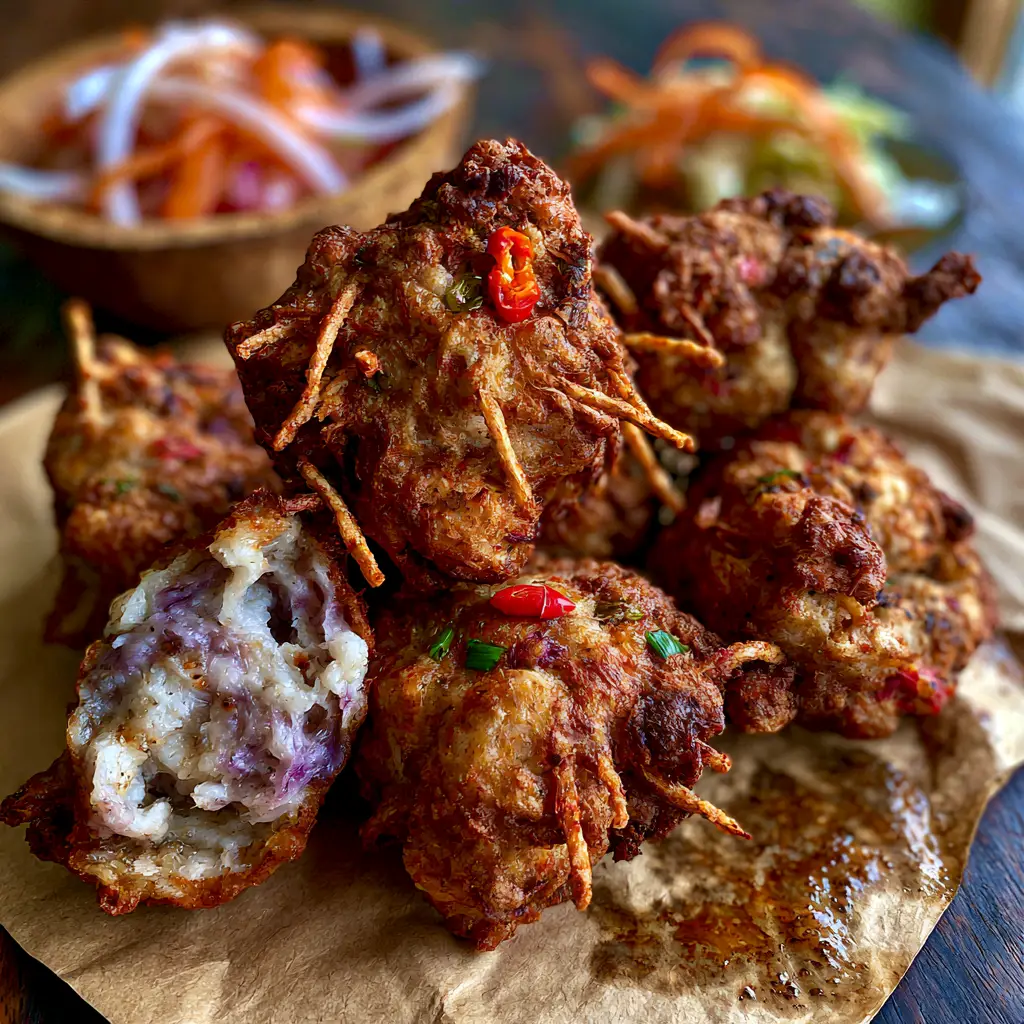
When you look at a perfectly executed Haitian Akra, you should see jagged, golden-brown threads of malanga protruding from the crust. These are not smooth nuggets; they are textural masterpieces designed to catch every drop of vinegar-heavy pikliz. One bite reveals the steaming, pale-purple and white interior that feels remarkably light despite being deep-fried to a rich mahogany hue.
In this guide, we are going to master the forensic details required to replicate the authentic “handheld smartphone photo” look. From the exact grating technique that creates those iconic jagged edges to the science of maintaining a soft interior, we are diving deep into the soul of Haitian cuisine. Grab your parchment paper and a wooden bowl for the pikliz, because we are about to create something truly spectacular.
The Anatomy of a Perfect Malanga Fritter
- Unmatched Texture: The exterior boasts an incredibly craggy, glass-shattering crispness that stays crunchy even after cooling.
- Savory Interior: Unlike flour-based fritters, the center is made of pureed and grated malanga, resulting in a steaming, soft, pale-purple and white crumb.
- Visual Heat: Tiny flecks of bright red scotch bonnet pepper and minced green scallions are embedded directly into the crust for a vibrant, professional finish.
- The Pikliz Contrast: Served alongside translucent white onion slivers and orange carrot ribbons, the acidity of the pickled cabbage cuts through the rich, fried goodness.
The Essential Components for Authentic Haitian Akra
Malanga Root (Xanthosoma sagittifolium): This is the non-negotiable heart of the recipe. Unlike potatoes, malanga has a high starch content and a unique mucilaginous quality that allows the fritters to bind without eggs or flour, resulting in that signature steaming interior.
Scotch Bonnet Pepper: These peppers provide more than just heat; they offer a fruity, floral aroma that defines Haitian cooking. The bright red flecks against the golden crust are a visual hallmark of a well-seasoned batter.
Green Scallions: We use both the white and green parts to ensure a sharp, oniony bite and beautiful green inclusions. These add a fresh contrast to the deep, earthy flavor of the fried root vegetable.
Neutral Frying Oil: To achieve that deep golden-brown crust without a burnt aftertaste, you need an oil with a high smoke point. Canola or vegetable oil works best to allow the natural flavor of the Haitian Akra to shine through.
Haitian Epis (Seasoning Base): While we include the dry aromatics, a touch of traditional epis (garlic, bell peppers, and thyme) adds the “Experience” factor. It provides the foundational savory notes that make the fritter taste as good as it looks.
The Pikliz Trio: Green cabbage, carrots, and onions are thinly sliced and submerged in white vinegar. This acidic side dish is the mandatory cooling agent for the spicy, crispy fritters.
Professional Culinary Tools for Textural Success
To achieve the “protruding threads” described in the visual blueprint, you cannot use a food processor for the entire batch. You will need a traditional box grater, specifically the side with the smallest holes, to create the paste and the medium holes for the textural threads. A heavy-bottomed Dutch oven or a deep cast-iron skillet is essential for maintaining a steady oil temperature.
You should also have a digital kitchen scale for precision, a spider strainer for safe retrieval, and brown parchment paper to drain the excess oil. The parchment isn’t just for aesthetics; it prevents the fritters from steaming against a flat plate, which would ruin that “glass-shattering” crust.
Step 1: Preparing the Malanga for Maximum Jaggedness
Start by peeling 2 lbs (907g) of malanga root. You will notice the flesh is a pale white with subtle purple speckles. This color transition is vital for the visual appeal of the broken-open fritter.
Using your box grater, grate two-thirds of the malanga using the finest holes until it forms a thick, slightly sticky paste. Grate the remaining one-third using the medium holes. This dual-texture approach is the secret to the “protruding threads of grated malanga” mentioned in our visual guide.
Place the grated malanga in a large mixing bowl. If you find the malanga is excessively watery, you can pat it gently with a paper towel, but do not squeeze out all the moisture. The natural starches are what create the soft, steaming interior once the heat hits the batter.
Step 2: Building the Aromatic Flavor Profile
Finely mince 4 large scallions (approx. 50g) and 1 whole scotch bonnet pepper. Be careful to remove the seeds if you want a milder heat, but keep the red skin for those beautiful visual flecks. Stir these into the malanga paste along with 3 cloves of crushed garlic, 1 tsp (6g) of sea salt, and a pinch of black pepper.
For an even deeper flavor profile, similar to what you might find in a Caribbean feast, you can add a teaspoon of dried thyme. Mix the batter vigorously with a wooden spoon. As you stir, the malanga will become slightly aerated, which contributes to the lightness of the final product.
Let the mixture rest for at least 20 minutes at room temperature. This allows the salt to draw out just enough moisture to create a cohesive batter that won’t fall apart in the oil. While the batter rests, you can prepare a side of refreshing slaw or, more traditionally, your spicy pikliz.
Step 3: The Science of the Deep Fry
Fill your heavy-bottomed pot with 3 cups (720ml) of neutral oil. Heat the oil to 365°F (185°C). Use a kitchen thermometer; if the oil is too cold, the fritters will be greasy. If it is too hot, the jagged exterior will burn before the pale-purple interior is cooked through.
Carefully drop heaping tablespoons of the batter into the hot oil. Do not overcrowd the pot. As the batter hits the oil, you will see the “threads” of malanga expand and crisp up. Fry for 3-4 minutes per side until they reach an ultra-crispy golden-brown crust.
Listen for the sound: the vigorous bubbling will slow down as the moisture evaporates and the crust hardens. Use your spider strainer to lift a fritter; it should feel light for its size and sound hollow when tapped with a spoon. If you enjoy this crispy texture, you’ll love the crunch of our crispy coconut shrimp.
Step 4: Draining and Serving the Masterpiece
Transfer the hot Haitian Akra to a wire rack set over grease-stained brown parchment paper. The paper absorbs the immediate surface oil while the rack allows air to circulate, preserving the craggy ridges. Immediately sprinkle with a tiny pinch of flaky sea salt while the oil is still active on the surface.
Serve the pile of fritters while they are still steaming. Arrange a small wooden bowl of vibrant pikliz nearby. The pikliz should feature translucent white onion slivers, orange carrot ribbons, and green cabbage in a clear vinegar brine. The contrast between the hot, savory fritter and the cold, acidic vegetables is the hallmark of professional Haitian catering.
For a full Caribbean-themed spread, these fritters pair beautifully with a light pasta salad or even as a crunchy side to gourmet burgers. The versatility of the malanga root makes it a star in any fusion menu.
Expert Tips for Success
- Oil Temperature Management: Always allow the oil to return to 365°F (185°C) between batches. Dropping batter into “tired” oil leads to soggy, leaden fritters.
- The Grating Secret: If your Akra looks too smooth, you’ve over-processed the malanga. Ensure those medium-grated “threads” are present to achieve the jagged visual blueprint.
- Pepper Safety: When handling scotch bonnets, wear gloves. The oils are incredibly persistent and can cause burns if you touch your face or eyes.
- Don’t Over-mix: Once you add the aromatics, stir until just combined. Over-working the batter can make the interior gummy rather than soft and steaming.
Storage, Reheating & Freezing
Haitian Akra is best enjoyed immediately, but if you have leftovers, they can be stored in an airtight container in the refrigerator for up to 3 days. To restore the glass-shattering crunch, avoid the microwave. Instead, reheat them in a 375°F (190°C) oven or an air fryer for 5-7 minutes.
You can also freeze the raw batter for up to a month. Thaw it completely in the fridge and give it a quick stir before frying. If you are freezing cooked fritters, reheat them directly from frozen in a hot oven until the interior reaches 165°F (74°C).
What to Serve With Haitian Akra
Traditionally, Akra is served as an appetizer (entrée) or part of a larger “Fritay” platter. It pairs excellently with other bold, savory dishes. If you’re looking for a balanced meal, try serving these alongside creamy chicken salad sandwiches for a picnic-style lunch.
For a more unconventional pairing that works surprisingly well, the crunch of the malanga complements the textures found in modern smash tacos. Regardless of the pairing, the star of the show remains the spicy, vinegar-based pikliz that must accompany every serving.
Frequently Asked Questions
While related, Malanga and Taro have different moisture contents. Malanga is preferred for Akra because its starch profile creates the signature jagged ‘threads’ and soft interior that Taro often lacks.
The secret is using a box grater rather than a food processor. By using a mix of fine and medium grating holes, you create the ‘threads’ that fry into those iconic crispy ridges.
Yes! Authentic Akra uses the natural mucilaginous properties of the grated malanga as a binder, meaning no eggs or dairy are required to achieve that perfect texture.
This usually happens if the oil isn’t hot enough or if the batter has too much moisture. Ensure your oil is at 365°F and let the batter rest for 20 minutes to allow the natural starches to bind.
The Authentic Haitian Akra Recipe
Haitian Akra: The Ultimate Crispy Malanga Fritter Recipe
Ingredients
Equipment
Method
- Grate 2/3 of the peeled malanga using the finest grater holes into a paste. Grate the remaining 1/3 using medium holes to create 'threads'.
- Fold in the minced scallions, scotch bonnet, garlic, and salt. Stir until the mixture is aerated and sticky. Let rest for 20 minutes.
- Heat oil in a Dutch oven to 365°F (185°C). Drop tablespoons of batter carefully into the oil.
- Fry for 3-4 minutes per side. Look for an incredibly craggy, jagged, deep golden-brown crust. Drain on brown parchment paper.
Notes
Do not substitute malanga with regular potatoes; the texture will not be the same.
Share Your Crispy Creations!
Mastering the Haitian Akra is a rite of passage for any home cook looking to explore the depth of Caribbean textures. The contrast between the jagged, golden crust and the steaming, soft interior is something you have to experience to believe. We hope this guide helps you achieve that perfect, high-resolution food photography look in your own kitchen.
If you loved this recipe, please leave a comment below and let us know how your malanga threads turned out! Don’t forget to follow us on Pinterest and share your photos of your grease-stained parchment paper spread. Happy frying!