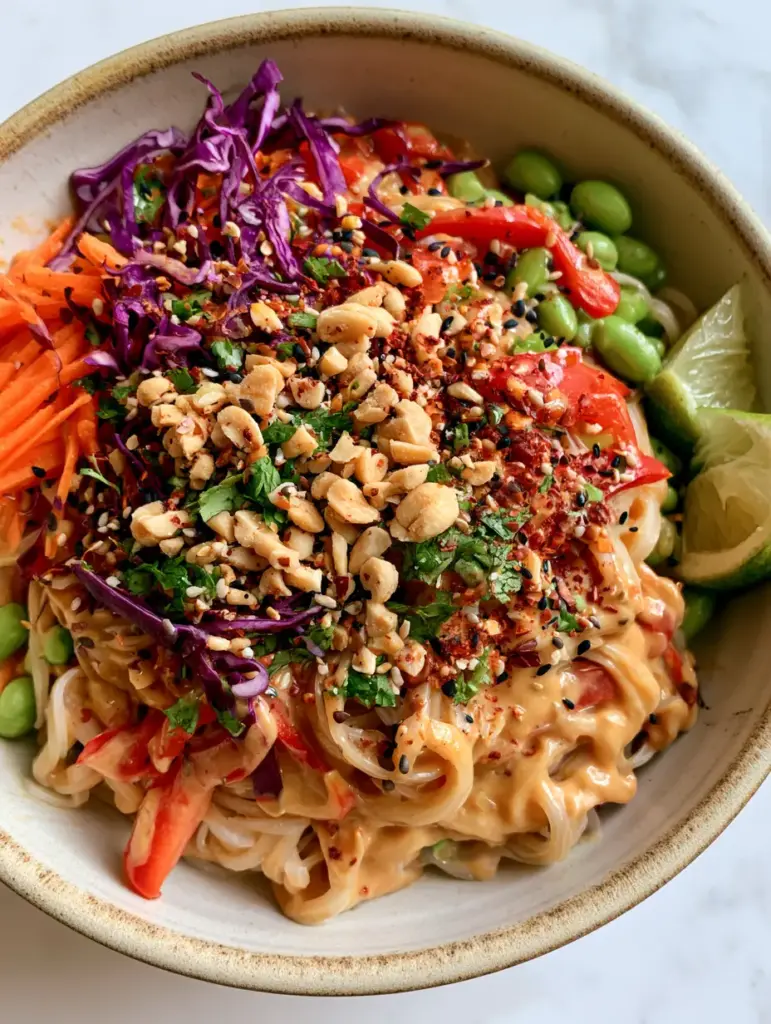
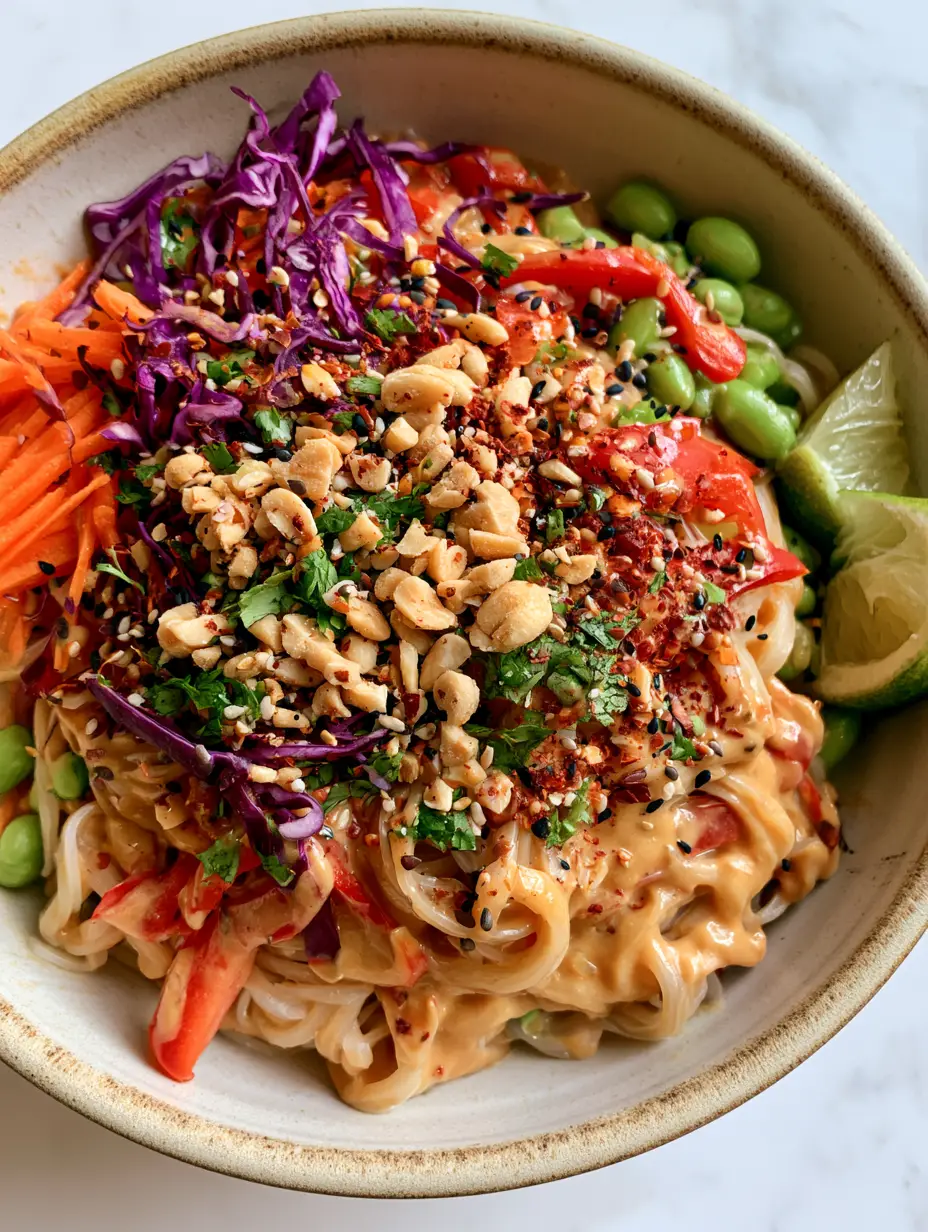
This Thai Peanut Noodle Salad is the ultimate celebration of vibrant textures, featuring a mound of silky rice noodles drenched in a thick, glossy, and impossibly creamy tan peanut sauce. If you have been searching for a dish that balances the savory depth of roasted peanuts with the crisp snap of raw garden vegetables, this rainbow-hued bowl is your new culinary obsession.
Inspired by the street food flavors of Southeast Asia, this recipe bridges the gap between a refreshing slaw and a hearty pasta dish. Every bite offers a contrast between the tender, slippery noodles and the crunch of julienned carrots, purple cabbage, and red bell peppers, all punctuated by the nutty pop of toasted sesame seeds.
Whether you are looking for a meal-prep powerhouse or a stunning centerpiece for your next gathering, this Thai Peanut Noodle Salad delivers professional-grade results with everyday ingredients. The bright, soft natural light reflecting off the glossy sauce in your bowl will make you feel like a food stylist in your own kitchen.
Why You Will Crave This Rainbow Noodle Bowl
- Silky Texture Mastery: We use specific soaking techniques to ensure your rice noodles stay slippery and “silky” rather than gummy or clumping together.
- The Ultimate Umami Sauce: A thick, creamy peanut dressing that clings to every strand, providing a luxurious mouthfeel that rivals your favorite Thai restaurant.
- Vibrant Nutrient Density: Featuring a rainbow of raw purple cabbage, bright orange carrots, and slivers of red bell pepper for a high-volume, low-fat crunch.
- Protein-Packed Crunch: The addition of plump steamed green edamame and crushed roasted peanuts provides satisfying plant-based protein and varied textures.
- Sensory Balance: Fresh lime wedges and dried red chili flakes allow you to customize the acidity and heat to your exact preference.
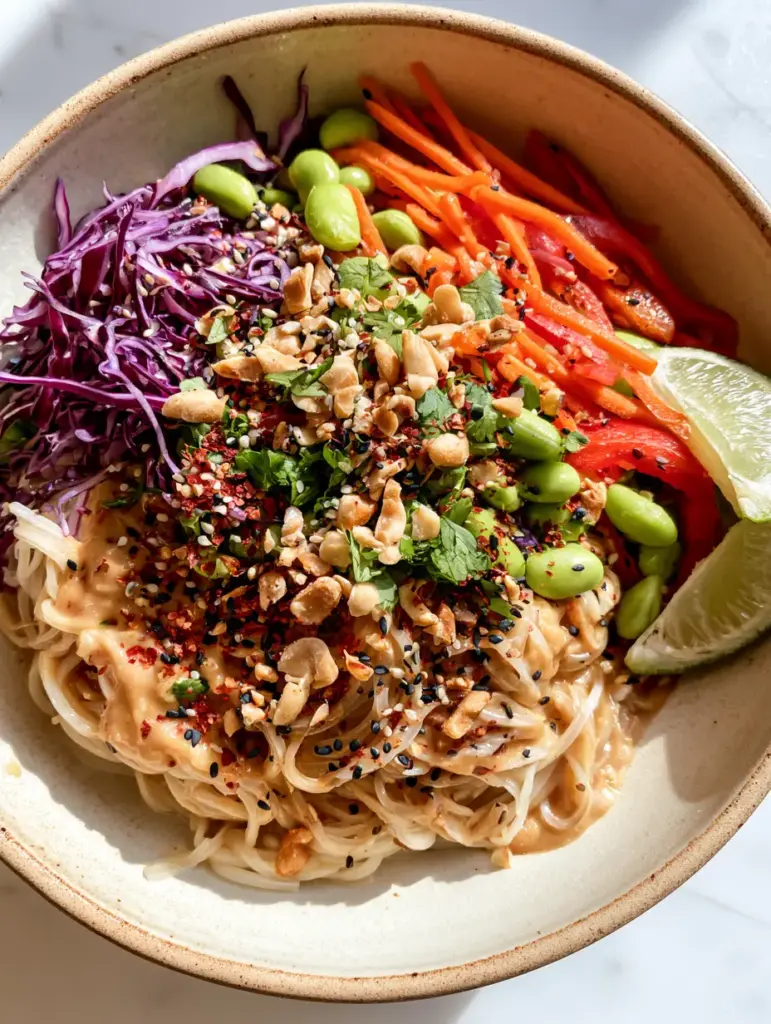
The Vibrant Components of This Rainbow Bowl
To achieve the specific visual and flavor profile of a world-class Thai Peanut Noodle Salad, you need a combination of fresh aromatics and pantry staples. Each ingredient serves a structural and sensory purpose in the final dish.
Silky Rice Noodles: We recommend medium-width dried rice sticks (14 oz / 400g). These provide the perfect surface area for the thick peanut sauce to adhere to while maintaining a delicate, slippery bite.
Thick Creamy Peanut Sauce: This is the heart of the dish, made from 1/2 cup (125g) of creamy natural peanut butter blended with soy sauce, lime juice, and toasted sesame oil. The result is a tan, glossy emulsion that looks as good as it tastes.
Raw Shredded Purple Cabbage: Use 2 cups (150g) of finely shredded cabbage to provide a deep violet hue and a robust, earthy crunch that doesn’t wilt under the sauce.
Julienned Raw Carrots: 1 cup (120g) of bright orange carrots, cut into matchsticks, adds a natural sweetness and a firm, snappy texture to the mix.
Sliced Raw Red Bell Peppers: These slivers (1 large pepper) provide a pop of juicy sweetness and a bright red visual contrast against the tan sauce.
Steamed Green Edamame: 1 cup (155g) of shelled edamame adds a buttery, soft texture and a vibrant green color that completes the “rainbow” aesthetic. If you enjoy this texture, you might also love our chickpea feta avocado salad.
The Finishing Garnishes: A heavy dusting of 1/4 cup (35g) crushed roasted peanuts, 1 tbsp (9g) each of toasted black and white sesame seeds, and a handful of finely chopped fresh cilantro. These provide the high-detail macro textures seen in professional food photography.
Flavor Spikes: Dried red chili flakes for a lingering heat and fresh lime wedges to cut through the richness of the peanut fats.
Foundational “Invisible” Ingredients for Success
While the blueprint lists the visible stars, professional culinary logic requires a few hidden supporters. You will need 2 tablespoons (30ml) of warm water to thin the sauce to a “glossy” consistency, and 1 tablespoon (15ml) of rice vinegar to brighten the earthy notes of the peanuts.
A pinch of fine sea salt is essential for the noodle boiling water to season the rice sticks from the inside out. For those who prefer a bit more complexity in their Asian-inspired dishes, you might consider pairing this with a Asian sesame noodle salad for a double-tasting menu.
Essential Tools for Precision Prep
To get those restaurant-quality julienned vegetables, a sharp Chef’s knife or a mandoline slicer is highly recommended. You will also need a large mixing bowl to toss the noodles without breaking them, and a whisk to emulsify the peanut sauce into a smooth, glossy tan liquid.
A small steamer basket is ideal for the edamame to ensure they stay “plump” and bright green rather than turning olive and mushy. Finally, a citrus juicer will help you extract every drop of bright acid from your lime wedges.
Mastering the Art of the Silky Peanut Noodle
Hydrating the Rice Noodles
Bring a large pot of salted water to a boil. Remove from heat and submerge the 14 oz (400g) rice noodles. Let them sit for 6-8 minutes, testing frequently. You are looking for a “silky” texture—pliant and soft, but with a slight resistance in the center.
Immediately drain the noodles and rinse them under cold running water for 60 seconds. This stops the cooking process and removes excess starch, which prevents the noodles from clumping. This technique is similar to how we prepare the base for our ramen Chinese chicken salad.
Emulsifying the Glossy Peanut Sauce
In a medium bowl, whisk together 1/2 cup (125g) creamy peanut butter, 3 tbsp (45ml) soy sauce, 1 tbsp (15ml) toasted sesame oil, 1 tbsp (15ml) honey or maple syrup, 1 tsp (5g) grated ginger, and the juice of 1 lime. The mixture will initially look broken or grainy.
Slowly whisk in 2-3 tablespoons (30-45ml) of warm water. Watch as the sauce transforms into a thick, glossy, creamy tan liquid. It should be pourable but thick enough to coat the back of a spoon. This sauce is the secret to the dish’s visual appeal under bright natural light.
Preparing the Rainbow Vegetable Medley
Steam 1 cup (155g) of shelled edamame for 3-5 minutes until they are bright green and tender. Shock them in ice water to lock in that vibrant color. While they cool, shred your purple cabbage and julienne the carrots and red peppers into thin, uniform slivers.
Consistency in your vegetable cuts is the difference between a messy salad and a professional Thai Peanut Noodle Salad. Aim for slivers that are roughly the same length as a noodle bite to ensure they integrate perfectly into the mound.
The Final Assembly and Garnish
Place the cold rice noodles in a large bowl and pour the glossy peanut sauce over them. Use tongs to toss gently until every strand is thoroughly coated. Transfer the noodles to a rustic matte cream ceramic bowl, piling them into a high mound.
Layer the cabbage, carrots, peppers, and edamame on top in distinct sections to showcase the rainbow of colors. Finish with a heavy garnish of crushed roasted peanuts, the black and white sesame seeds, chopped cilantro, and a dusting of dried red chili flakes. Nestled two lime wedges on the side for that final pop of acidity.
Expert Tips for a Professional Finish
- Rinse Thoroughly: Do not skip the cold rinse for the noodles. Starch is the enemy of the “silky” texture we are aiming for in this Thai Peanut Noodle Salad.
- Sauce Temperature: If your peanut butter is cold, microwave it for 15 seconds before whisking. This ensures the sauce emulsifies into a glossy tan finish without lumps.
- Color Preservation: Keep your purple cabbage separate until just before serving if you aren’t eating immediately, as the pigments can sometimes bleed into the light-colored noodles.
- Nut Toasting: For the best flavor, lightly toast your sesame seeds in a dry pan for 2 minutes until fragrant before sprinkling. This mimics the professional “macro photo” look by adding golden glints to the seeds.
Preserving Your Thai Peanut Noodle Salad
This salad is best enjoyed fresh to maintain the crunch of the raw vegetables. However, it can be stored in an airtight container in the refrigerator for up to 3 days. The noodles will absorb some of the sauce over time, so you may need to add a splash of water or a squeeze of lime to loosen them up before eating.
We do not recommend freezing this dish, as the rice noodles will lose their silky integrity and the raw vegetables will become mushy upon thawing. For a salad that holds up even longer, you might try our Chinese cabbage salad which stays crisp for days.
Global Pairings and Serving Suggestions
This Thai Peanut Noodle Salad is a complete meal on its own, but it also pairs beautifully with other vibrant dishes. Serve it alongside Thai style ground pork skewers for a high-protein feast. The savory pork complements the creamy peanut notes perfectly.
If you are hosting a multi-course Asian-inspired dinner, consider starting with a light beet cucumber salad to cleanse the palate before moving to the rich, nutty noodles. For dessert, there is no better follow-up than a traditional Thai mango sticky rice.
Common Questions About Peanut Noodle Salad
Yes! Rice noodles are naturally gluten-free. Simply ensure you use Tamari or liquid aminos instead of traditional soy sauce in the peanut dressing.
Absolutely. Almond butter or cashew butter work well. For a nut-free version, use sunflower seed butter (SunButter), though the flavor profile will shift slightly.
The secret is rinsing the cooked noodles under cold running water for at least 60 seconds. This removes the surface starch that causes clumping, resulting in a silky texture.
The peanut sauce can be stored separately in an airtight jar for up to 7 days. If it thickens too much, whisk in a teaspoon of warm water to restore the glossy texture.
This dish is traditionally served cold or at room temperature, making it an excellent choice for meal prep or summer picnics.
The Ultimate Thai Peanut Noodle Salad Recipe
Thai Peanut Noodle Salad with Creamy Satay Dressing
Ingredients
Equipment
Method
- Soak rice noodles in boiled water for 6-8 minutes until silky. Drain and rinse with cold water immediately.
- Steam shelled edamame for 3-5 minutes until plump and bright green. Shock in cold water.
- Combine peanut butter, soy sauce, sesame oil, lime juice, and ginger. Whisk in warm water until the sauce is thick and glossy.
- Toss the silky noodles in the peanut sauce until thoroughly coated.
- Mound noodles in a bowl. Layer with cabbage, carrots, peppers, and edamame. Garnish with peanuts, sesame seeds, cilantro, and chili flakes. Serve with lime wedges.
Notes
Add an extra tablespoon of warm water to the sauce if it feels too stiff; it should be glossy and pourable.
Experience the Rainbow in Every Bite
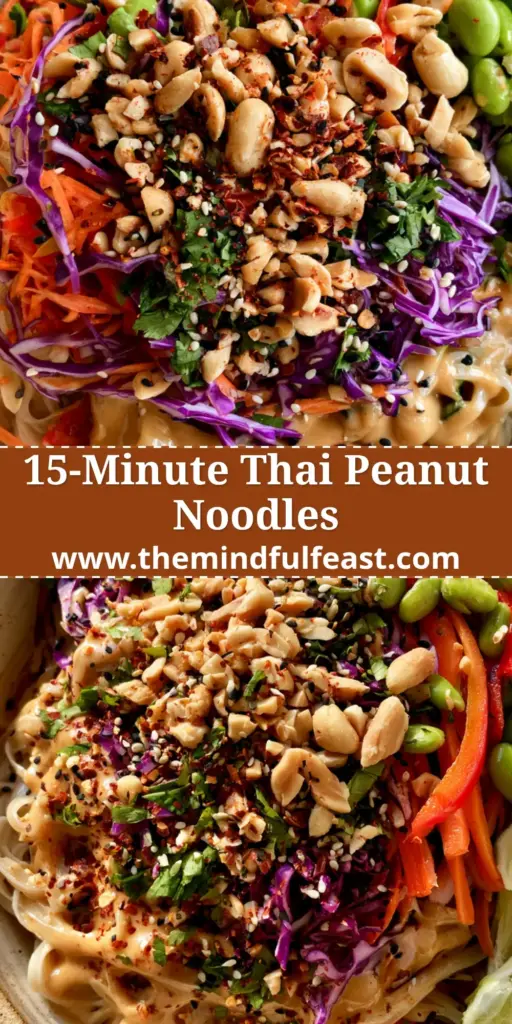
Creating this Thai Peanut Noodle Salad is an exercise in balancing texture, color, and flavor. From the glossy tan sauce to the vibrant crunch of julienned vegetables, every element is designed to provide a restaurant-quality experience at home. The combination of silky noodles and hearty peanuts creates a satisfying meal that looks just as good as it tastes.
If you enjoyed making this visual masterpiece, please leave a comment below and let us know how your rainbow bowl turned out! Don’t forget to follow us on Pinterest for more culinary inspiration and share your photos with the community.