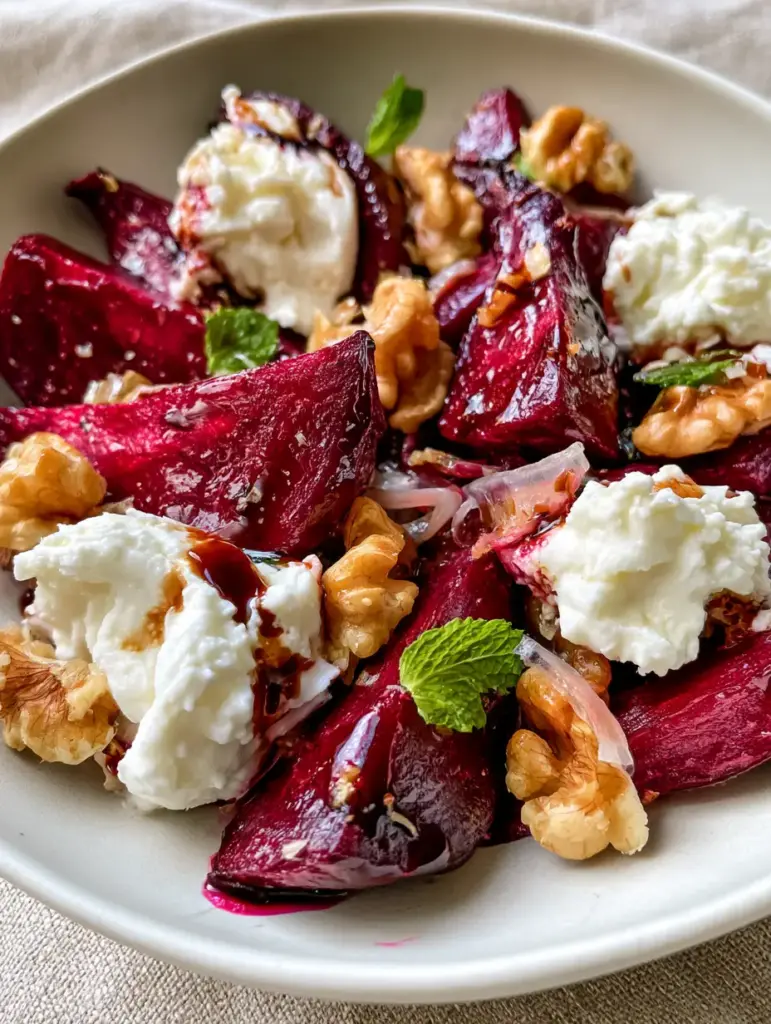
There is a specific kind of culinary magic that happens when earthy, oven-roasted roots meet the sharp, velvety tang of artisan dairy. This Beet Salad is not just a side dish; it is a masterclass in texture, color, and balanced flavor profiles. When you pull those ruby red beet wedges out of the oven, their edges slightly caramelized and glossy, you are holding the centerpiece of a gourmet dining experience.
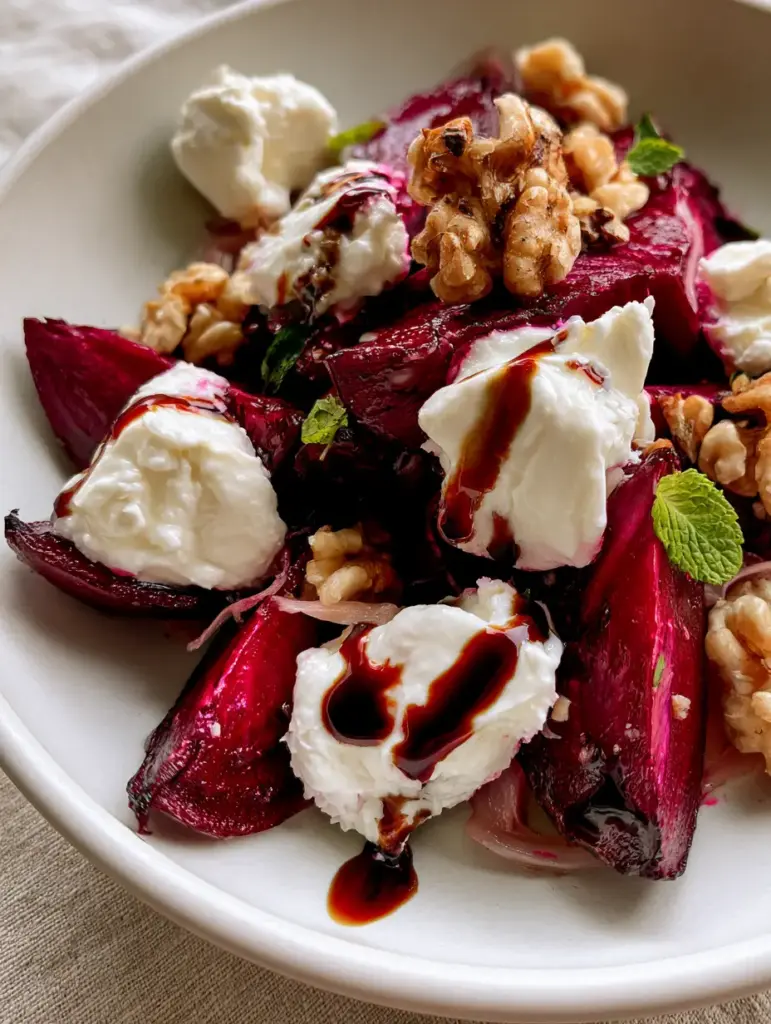
Inspired by the vibrant, macro-photography of modern fine dining, this recipe focuses on the visual harmony of deep reds, vibrant greens, and snowy whites. Every element, from the translucent slivers of shallots to the golden toasted walnut halves, has been selected to create a tangible sense of freshness. Whether you are hosting a formal dinner or simply looking to elevate your lunch routine, this salad delivers a professional-grade result every time.
The Visual and Flavor Blueprint of a Gourmet Salad
- Vibrant Color Contrast: The deep ruby red of the roasted beets pops against the matte white of a ceramic bowl and the wild green of fresh arugula.
- Textural Complexity: You get the snap of toasted walnuts, the silkiness of creamy goat cheese, and the tender bite of perfectly roasted beet wedges.
- Aromatic Balance: Fresh mint leaves provide a cooling top note that cuts through the rich, earthy sweetness of the balsamic glaze.
- Chef-Level Presentation: Using translucent, paper-thin shallots adds a professional touch that mimics high-end restaurant plating.
If you enjoy the earthy profile of this dish, you might also love our Roasted Beet and Chickpea Salad for a boost of plant-based protein. For those seeking something lighter and more refreshing, our Beet and Cucumber Salad offers a crisp alternative that highlights the vegetable’s versatility.
Essential Ingredients for the Perfect Roasted Beet Salad
Fresh Ruby Red Beets: Choose medium-sized, firm beets with smooth skins. Roasting them in wedges allows the natural sugars to concentrate, creating that iconic glossy, vibrant finish.
Creamy Goat Cheese: Look for a high-quality, soft chèvre. Large, soft crumbles provide the necessary richness to balance the acidity of the balsamic drizzle.
Raw Walnut Halves: We use halves rather than pieces for a more substantial crunch and a better visual presence. Toasting them is non-negotiable for unlocking their deep, woody aroma.
Wild Arugula: This provides a peppery foundation that prevents the salad from becoming overly sweet. Its wispy structure adds height and volume to the plate.
Balsamic Glaze: This is a reduction of balsamic vinegar, providing a thick, syrupy consistency. It should glisten under the light, offering a deep, dark contrast to the bright beets.
Fresh Mint Leaves: Small, vibrant green leaves add a necessary floral note. They act as a palate cleanser between the rich cheese and earthy beet bites.
Shallots: These must be sliced into translucent slivers. Shallots offer a milder, more sophisticated onion flavor that won’t overwhelm the delicate mint.
Extra Virgin Olive Oil (Invisible Foundation): You will need 2 tbsp (30ml) of high-quality oil to coat the beets before roasting. This is the secret to achieving those slightly caramelized, glossy edges.
Kosher Salt and Cracked Black Pepper: Essential for seasoning the beets during the roasting process to draw out their inherent sweetness.
Must-Have Kitchen Tools for Professional Plating
To achieve the “gourmet” look described in our visual blueprint, you will need a few specific tools. A sharp chef’s knife or a mandoline is essential for achieving the translucent slivers of shallot. For the beets, a heavy-duty rimmed baking sheet ensures even heat distribution, while aluminum foil is used to steam the beets initially, keeping them tender before the final sear.
A modern matte white ceramic bowl is the ideal vessel for this Beet Salad. The neutral, non-reflective surface allows the glossy textures of the balsamic glaze and the vibrant reds of the beets to take center stage without distracting glares.
How to Master the Roast: Step-by-Step Instructions
Step 1: Preparing the Ruby Red Wedges
Preheat your oven to 400°F (200°C). Scrub 1 lb (450g) of beets thoroughly to remove any dirt. Do not peel them yet; roasting them in their skins preserves the vibrant color and moisture.
Cut the beets into uniform wedges, roughly 1 inch (2.5cm) thick at the widest part. Toss them in a bowl with 2 tbsp (30ml) of olive oil, 1/2 tsp (3g) of salt, and 1/4 tsp (1g) of black pepper. The oil is what creates the “glossy” finish you see in professional food photography.
Step 2: The Roasting Process
Spread the wedges on a baking sheet and cover tightly with foil. Roast for 35 minutes. Remove the foil and roast for another 10-15 minutes. This two-step process ensures the interior is tender while the edges become “slightly caramelized.”
You will know they are ready when a fork slides into the center with zero resistance and the edges look dark and concentrated. Let them cool slightly before assembling; warm beets will melt the goat cheese too quickly.
Step 3: Toasting the Golden Walnuts
While the beets roast, place 1/2 cup (65g) of walnut halves in a small dry skillet over medium heat. Stir constantly for 3-5 minutes until they smell nutty and appear golden brown. Immediately remove them from the hot pan to stop the cooking process.
Step 4: Creating the Translucent Shallot Slivers
Peel one large shallot and slice it as thinly as possible. If you can see through the slice, you have achieved the “translucent” look required for this dish. Soak the slices in ice water for 5 minutes to remove any harsh “bite,” then pat dry.
Step 5: The Art of Assembly
Lay a generous bed of 3 cups (60g) wild arugula in your matte white bowl. Arrange the roasted beet wedges artfully over the greens. Scatter 4 oz (115g) of large goat cheese crumbles and the toasted walnut halves across the top.
Finish by scattering the tiny mint leaves and shallot slivers. Finally, perform the “balsamic drizzle”—start from one side of the bowl and move in a zig-zag motion to create glistening streaks across the glossy beets.
Expert Tips for a Picture-Perfect Salad
- Temperature Control: Serve the beets at room temperature. If they are too hot, the goat cheese will turn into a messy sauce rather than staying in distinct, soft crumbles.
- The “Gloss” Factor: If your beets look dull after cooling, toss them in a teaspoon of fresh olive oil just before plating to restore that vibrant, camera-ready sheen.
- Shallot Mellowing: If you find raw shallots too pungent, a quick toss in a teaspoon of white vinegar will soften their flavor while maintaining their translucent structure.
- Mint Freshness: Only pluck the mint leaves from the stem seconds before serving to prevent the edges from turning brown or wilting.
Storage and Meal Prep Advice
This Beet Salad is best enjoyed immediately after assembly to maintain the crispness of the arugula and the crunch of the walnuts. However, you can roast the beets up to 3 days in advance. Store the roasted wedges in an airtight container in the refrigerator.
To meal prep, keep the components separate: roasted beets in one container, washed arugula in a produce bag, and the cheese/nuts in small containers. Assemble just before eating. Do not freeze this salad, as the textures of the goat cheese and fresh greens will be compromised.
What to Serve with Your Gourmet Beet Salad
This salad is substantial enough to be a light lunch, but it also pairs beautifully with hearty proteins. For a balanced dinner, serve it alongside our Ground Beef Zucchini Boats or a flavorful Cajun Chicken Rice Bowl.
If you are exploring more vegetable-forward options, consider this salad as a starter for an Asian Sesame Noodle Salad for a fusion-style luncheon. The earthy sweetness of the beets acts as a perfect foil for savory, soy-based dishes.
Frequently Asked Questions
While convenient, canned beets won’t achieve the caramelized edges or firm texture of fresh roasted wedges. For the visual and flavor profile of this gourmet salad, fresh beets are essential.
The secret is tossing the wedges in high-quality extra virgin olive oil before roasting and again just before plating. The oil coats the natural sugars, creating a vibrant, glistening finish.
Ensure the beets have cooled to at least room temperature before adding the cheese. Cold or room-temp beets won’t ‘bleed’ as much, keeping the goat cheese crumbles bright white.
Use a mandoline set to its thinnest setting or a very sharp chef’s knife. Soaking the thin slices in ice water for 5 minutes makes them even more crisp and translucent while mellowing the flavor.
Wild arugula has a peppery bite that provides a necessary flavor contrast to the sweet beets and balsamic. Its structure also holds up better under the weight of the roasted wedges.
The Ultimate Roasted Beet Salad Recipe
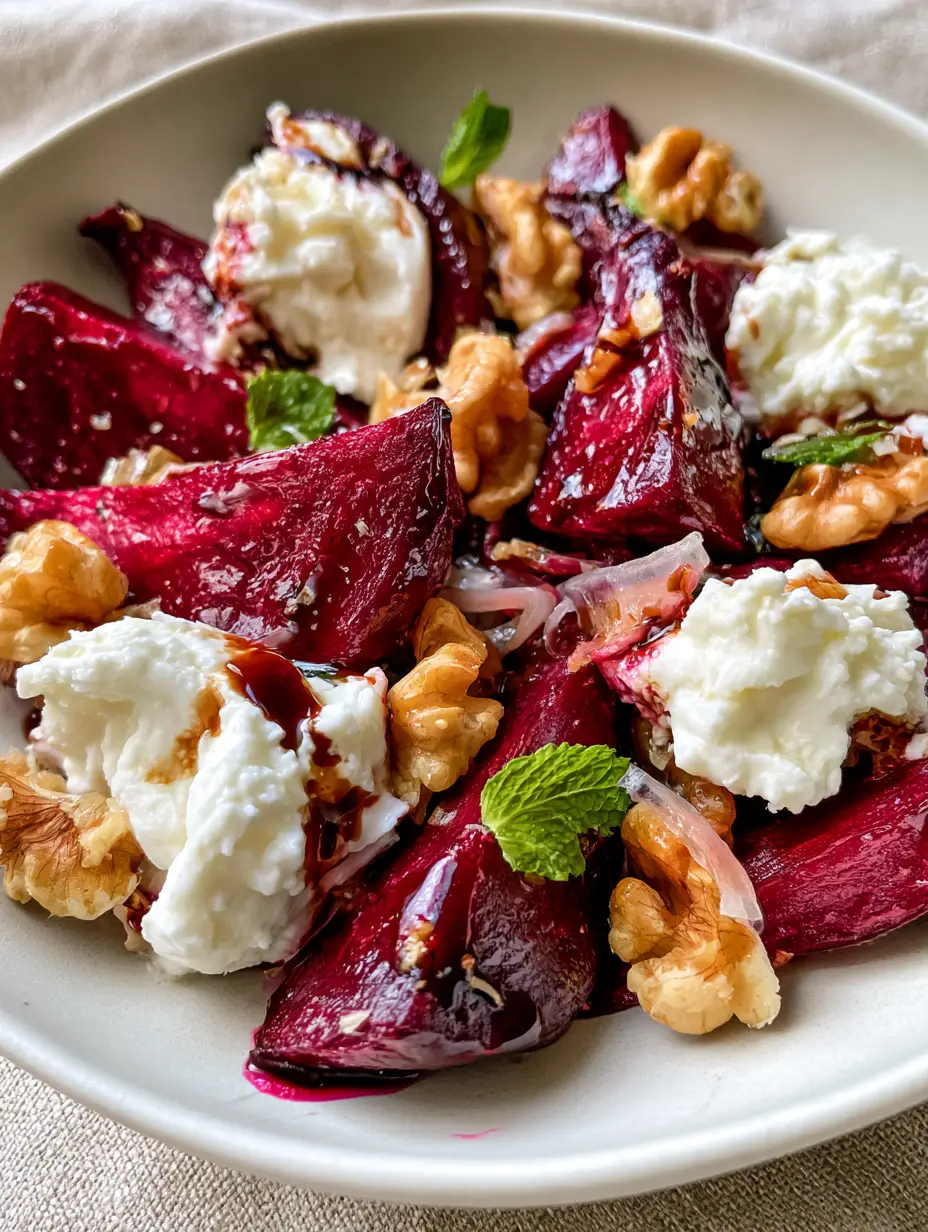
Beet Salad with Roasted Ruby Wedges and Creamy Goat Cheese
Ingredients
Equipment
Method
- Preheat oven to 400°F (200°C). Scrub beets and cut into 1-inch wedges. Toss with olive oil, salt, and pepper until glossy.
- Place on a baking sheet, cover tightly with foil, and roast for 35 minutes until tender.
- Remove foil and roast for another 10-15 minutes until edges are slightly caramelized and centers are soft.
- Toast walnut halves in a dry skillet over medium heat for 3-5 minutes until golden and aromatic.
- Arrange arugula in a bowl. Top with warm or room-temp beet wedges, goat cheese crumbles, toasted walnuts, and shallot slivers.
- Drizzle with thick balsamic glaze and scatter fresh mint leaves over the top. Serve immediately.
Notes
Soak shallot slivers in ice water for 5 minutes to remove the harsh raw onion bite.
Bring the Gourmet Experience Home
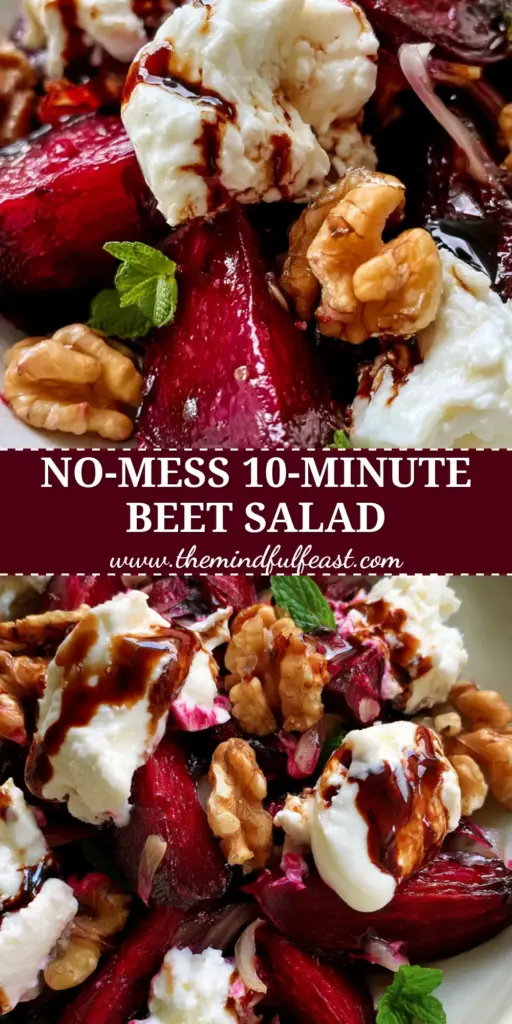
The beauty of this Beet Salad lies in its simplicity and the high-quality execution of every ingredient. By following the visual cues of caramelized edges and translucent shallots, you are creating more than a meal—you are creating a sensory experience. We invite you to share your results and tag us in your culinary creations!
If you loved this recipe, please leave a comment below and share it with your friends. For more visual inspiration and gourmet home cooking tips, follow us on Pinterest. Happy roasting!