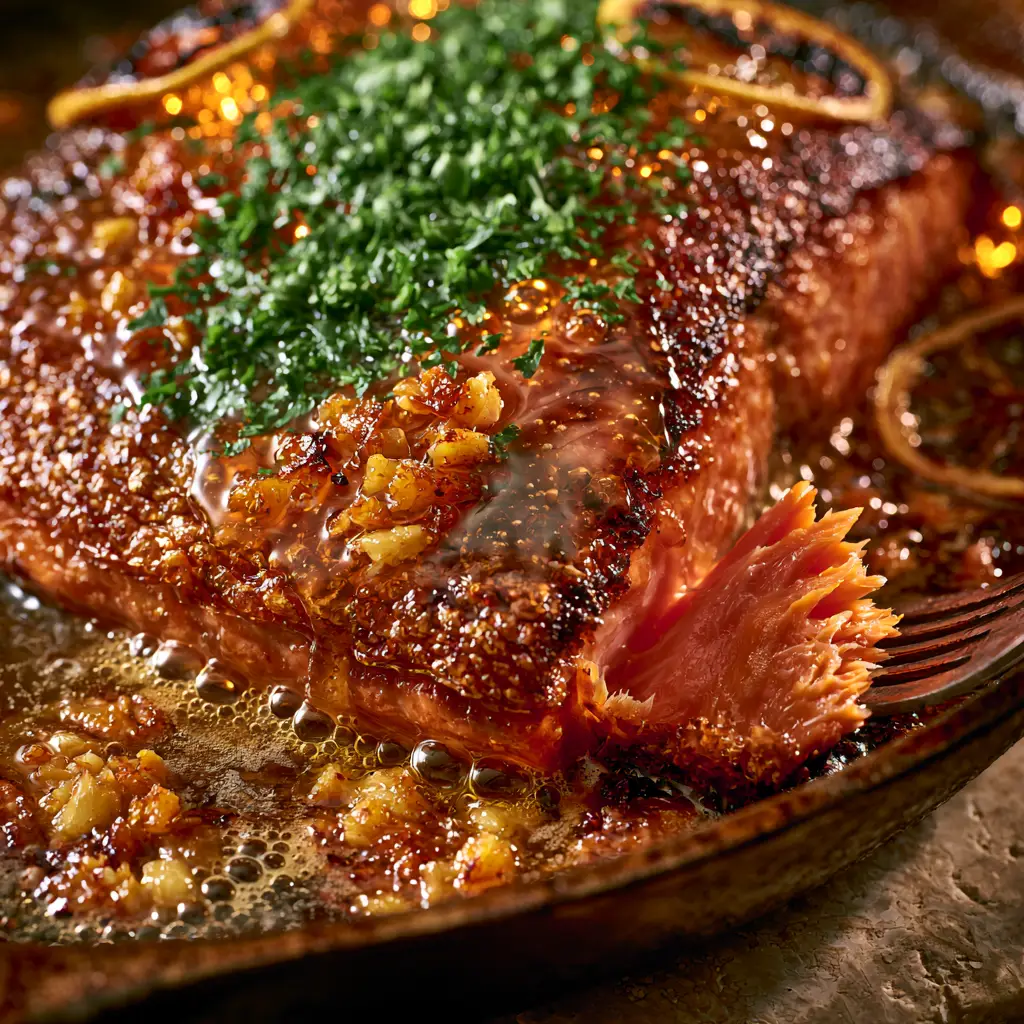
There is nothing quite as satisfying as a perfectly executed seared salmon fillet hitting a screaming hot cast iron skillet. Imagine a piece of fish so precisely cooked that the skin shatters like glass under your fork, while the interior remains a buttery, vibrant pink. This isn’t just a meal; it’s a masterclass in texture and temperature contrast.
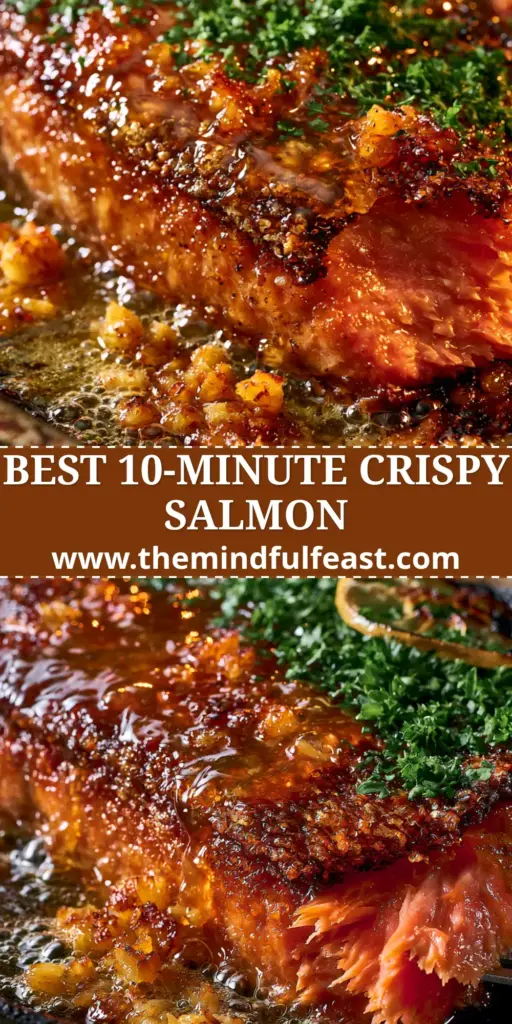
In this recipe, we are bridging the gap between restaurant-quality technique and home-kitchen accessibility. We focus on achieving that iconic deep golden-brown crust and a thick, translucent, bubbling amber-colored honey garlic butter glaze that catches the light perfectly. Whether you are a seasoned home cook or just starting your culinary journey, this method ensures success every single time.
By using a rustic cast iron skillet, we leverage superior heat retention to create fried minced garlic bits and charred lemon slices that elevate the dish from simple to sensational. Let’s dive into the science and soul of the ultimate seared salmon.
Why This Crispy Honey Garlic Seared Salmon Works
- The Ultimate Crunch: We utilize specific moisture-wicking techniques to ensure the salmon skin is exceptionally crispy, golden-brown, and crackling.
- Balanced Flavor Profile: The bubbling honey garlic butter glaze provides a sweet and savory counterpoint to the rich, fatty notes of the fish.
- Visual Sophistication: Garnished with thin, charred lemon half-moons and a heavy sprinkle of finely chopped bright green parsley, this dish looks as good as it tastes.
- Textural Harmony: The contrast between the fried garlic bits and the moist, tender, vibrant pink interior creates a multi-sensory dining experience.
Essential Components for the Perfect Honey Garlic Seared Salmon
Fresh Salmon Fillets (6 oz / 170g each): Look for thick, center-cut fillets with the skin on; the skin acts as a natural insulator, protecting the delicate flesh during the high-heat sear. Higher fat content in varieties like King or Atlantic salmon yields a more succulent, flaky pink interior.
Kosher Salt (1 tsp / 6g): Salt is essential for drawing out surface moisture from the skin, which is the secret to achieving a professional-grade crackle. It also seasons the fish deeply, enhancing its natural oceanic sweetness.
Avocado Oil (2 tbsp / 30ml): We use avocado oil for its exceptionally high smoke point, allowing us to sear at high temperatures without the oil breaking down or tasting burnt. This is a foundational “invisible” ingredient required for that deep golden crust.
Unsalted Butter (3 tbsp / 45g): Butter provides the fat base for our glaze, creating tiny bubbles of sizzling liquid that carry the flavors of garlic and honey into every crevice of the fish. We use unsalted to maintain total control over the final seasoning.
Raw Honey (2 tbsp / 42g): Honey provides the sugars necessary for rapid caramelization, resulting in that thick, translucent, bubbling amber-colored honey garlic butter glaze seen in professional food photography. It adds a floral sweetness that cuts through the richness of the butter.
Fresh Garlic (4 cloves / 20g): When minced and tossed into the hot butter, these become golden-fried minced garlic bits that add a nutty, pungent crunch. Avoid jarred garlic, as it lacks the sulfurous punch needed for this high-impact sauce.
Fresh Lemons (1-2 large): Half of the lemon is juiced for the sauce, while the other half is sliced into thin half-moons to be charred in the skillet for a concentrated, smoky citrus note. The acid is crucial for balancing the heavy honey-butter profile.
Fresh Parsley (2 tbsp / 8g): Finely chopped bright green parsley offers a necessary herbaceous finish and a pop of color against the amber glaze. It provides a clean, peppery contrast to the fried garlic and sweet honey.
Tools for Achieving a Professional Gastropub Sear
To achieve the “Extreme macro” results described in our visual blueprint, a rustic cast iron skillet is non-negotiable. Its thermal mass ensures that when the cold fish hits the pan, the temperature doesn’t drop, allowing for an immediate and even sear. Unlike non-stick pans, cast iron encourages the Maillard reaction, giving you those deep brown hues and fried garlic textures.
You will also need a flexible fish spatula. This tool allows you to get underneath the delicate skin without tearing it, ensuring the “exceptionally crispy” result remains intact from pan to plate. A small spoon is also required for constant basting once the glaze begins to bubble and sizzle.
Mastering the Cast Iron Sear: Step-by-Step Guide
Preparing the Fish for Maximum Crispness
Remove your salmon fillets from the refrigerator 15 minutes before cooking. Use a paper towel to pat the skin extremely dry; any residual moisture will create steam, preventing the skin from becoming crackling and golden-brown. Season the skin side generously with kosher salt.
If you enjoy exploring different flavor profiles, you might also be interested in our teriyaki salmon bowls for a different take on glazed seafood. However, for this recipe, we are keeping the seasoning focused on salt to let the honey-garlic shine.
Executing the High-Heat Sear
Place your cast iron skillet over medium-high heat and add the avocado oil. Once the oil is shimmering and just beginning to wisps of smoke, place the salmon fillets skin-side down. Press down firmly with your spatula for 10 seconds to ensure the skin makes full contact with the metal.
Search for the visual cue: the skin should be sizzling aggressively, and you will see the opaque color of the cooked fish slowly climbing up the sides of the fillet. Do not touch the fish for 4-5 minutes. You are looking for an exceptionally crispy, golden-brown crust that releases naturally from the pan.
Developing the Bubbling Honey Garlic Glaze
Flip the salmon carefully. The top should now be exposed, ready for the glaze. Reduce the heat to medium and move the fillets to one side of the skillet. Add the butter, minced garlic, and lemon half-moons to the empty space. As the butter melts and starts sizzling, whisk in the honey and lemon juice.
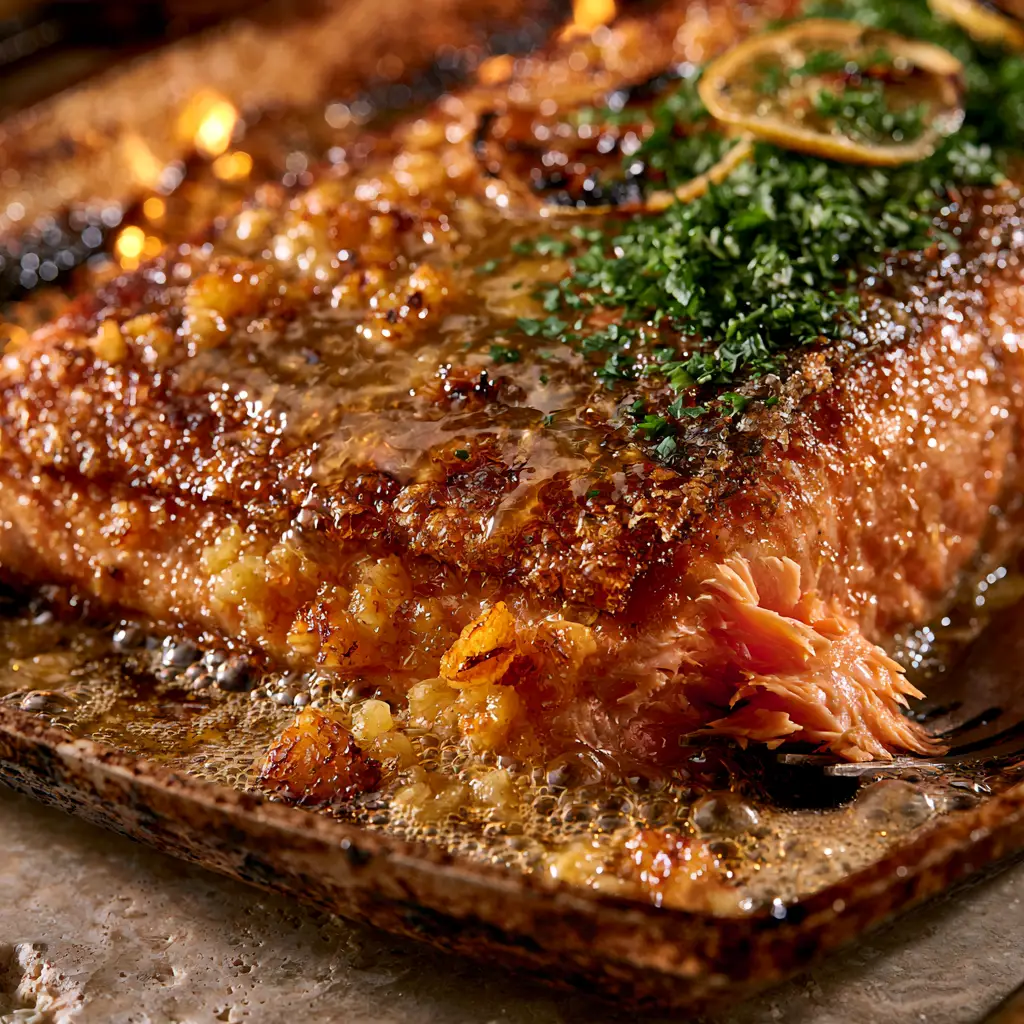
Use a spoon to continuously pour the bubbling amber-colored honey garlic butter glaze over the salmon. Watch as the garlic turns into golden-fried minced garlic bits. This basting process finishes cooking the interior while building a thick, translucent coating on the fish.
The Final Char and Flaky Finish
Check the lemon slices; they should be developing dark, charred edges. The salmon is done when it reaches an internal temperature of 125°F (52°C) for medium-rare. At this point, the interior will be a moist, tender, vibrant pink. If you prefer a more well-done fish, like in our stuffed salmon recipe, cook for an additional 2 minutes.
Remove the skillet from the heat. The residual heat will continue to bubble the sauce around the edges of the fish. Sprinkle the heavy garnish of finely chopped bright green parsley over the top to catch the light against the high-gloss glow of the glaze.
Expert Tips for the Ultimate Seared Salmon
- Cold vs. Room Temp: Never sear ice-cold salmon. Taking the chill off for 15 minutes prevents the muscle fibers from seizing up, ensuring a flakier, tender interior.
- The Dryness Factor: If you think the skin is dry, pat it one more time. Moisture is the enemy of the “crackling” texture we are aiming for.
- Butter Management: If the butter begins to smell like it is burning rather than browning, add a teaspoon of water or a squeeze of lemon juice to immediately drop the temperature.
- Don’t Overcrowd: Cook in batches if necessary. Overcrowding the skillet causes the temperature to drop, leading to steamed fish instead of seared salmon.
Storage, Reheating, and Make-Ahead Advice
While seared salmon is best enjoyed immediately to preserve the crispy skin, leftovers can be stored in an airtight container for up to 2 days. To reheat, avoid the microwave, which will turn the fish rubbery and soften the skin. Instead, place it in a toaster oven at 300°F (150°C) until warmed through.
If you have leftover glazed salmon, it works beautifully flaked over a fresh salad or incorporated into honey sriracha salmon bowls for a quick lunch the next day. We do not recommend freezing the cooked salmon, as the delicate texture of the glaze and the crispness of the skin will be lost upon thawing.
What to Serve with Honey Garlic Salmon
This rich, savory dish pairs perfectly with light, acidic, or starchy sides that can soak up the extra bubbling glaze. A simple bed of jasmine rice or quinoa is excellent. For a lower-carb option, consider serving it alongside roasted asparagus or a zesty cucumber salad.
If you are looking for a complete meal transformation, try serving the salmon alongside our creamy cajun salmon orzo for a double-dose of seafood excellence. The brightness of the charred lemons also pairs wonderfully with a crisp Sauvignon Blanc or a light pilsner.
Frequently Asked Questions
Yes, but it must be completely thawed and brought to room temperature for 15 minutes before cooking. Ensure you wipe away all excess moisture that occurs during the thawing process.
Ensure your cast iron skillet is preheated until the oil is shimmering and just starting to smoke. Most importantly, pat the salmon skin completely dry with paper towels before placing it in the pan.
Visual cues include the flesh turning opaque. For a moist, pink interior, aim for an internal temperature of 125°F (52°C). The fish should flake easily with a fork.
Always sear with the skin on. The skin protects the delicate flesh from the high heat of the cast iron and provides the iconic crispy texture that defines a perfect seared salmon.
Honey contains high amounts of sugar which burns quickly. Add the honey and butter only after flipping the salmon and reducing the heat to medium to ensure a bubbling amber glaze instead of a burnt one.
The Ultimate Seared Salmon Recipe Card
Seared Salmon with Bubbling Honey Garlic Butter and Crispy Skin
Ingredients
Equipment
Method
- Pat the salmon fillets extremely dry with paper towels, especially the skin. Season the skin side with salt.
- Heat avocado oil in a cast iron skillet over medium-high heat until shimmering. Place salmon skin-side down and sear for 4-5 minutes until exceptionally crispy and golden-brown.
- Flip the salmon. Add butter, garlic, honey, and lemon slices to the pan. Baste the salmon with the bubbling amber glaze for 2-3 minutes.
- Once the garlic is fried golden and lemons are charred, remove from heat. Garnish heavily with fresh parsley and serve immediately.
Notes
Ensure the honey is added towards the end to prevent the sugars from burning.
Start Searing Like a Pro Today
Mastering the seared salmon is a rite of passage for any home cook. The combination of the shatteringly crispy skin and the luscious honey garlic butter glaze creates a profile that is both sophisticated and incredibly comforting. Once you see those bubbling amber bubbles in your own cast iron skillet, you’ll never go back to basic baked fillets.
We would love to see your culinary creations! Tag us or leave a comment below with your results. For more visual inspiration and recipe videos, be sure to follow us on Pinterest and share this recipe with your fellow foodies.