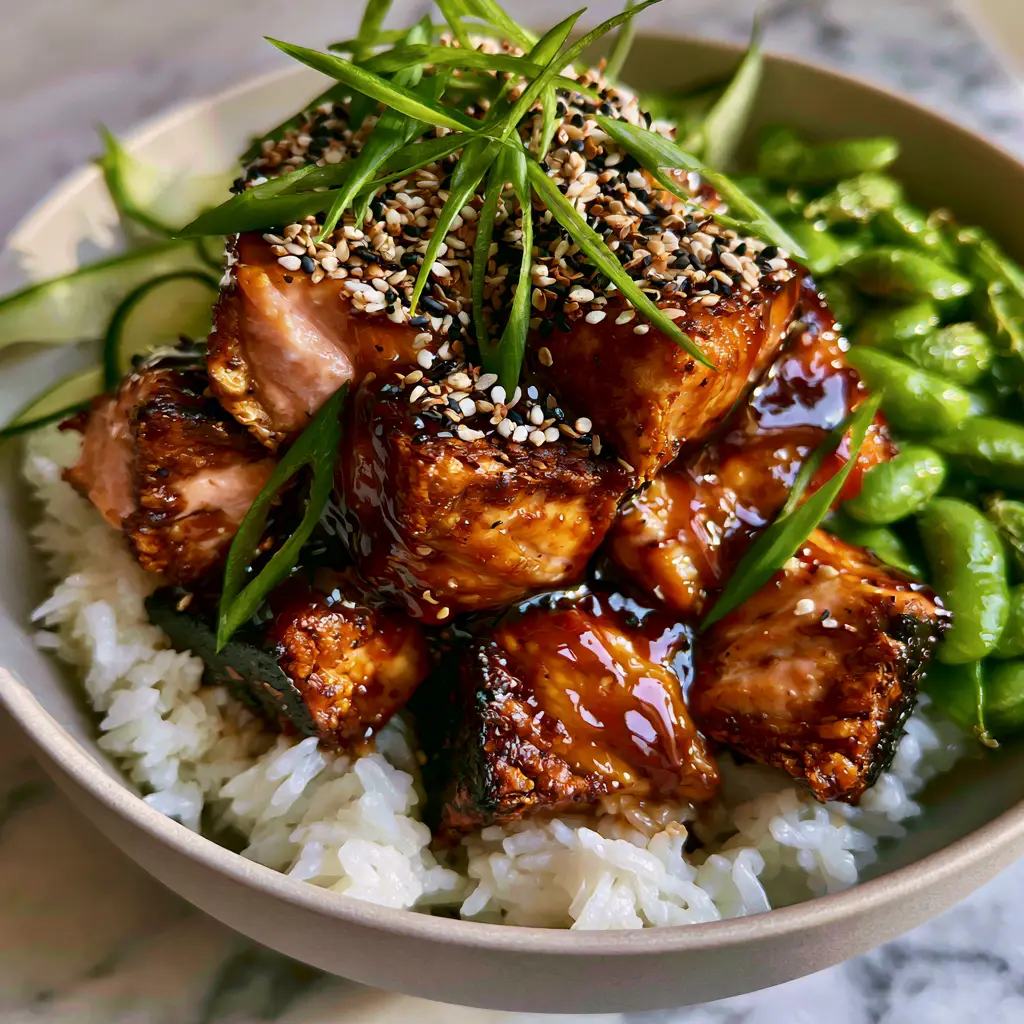
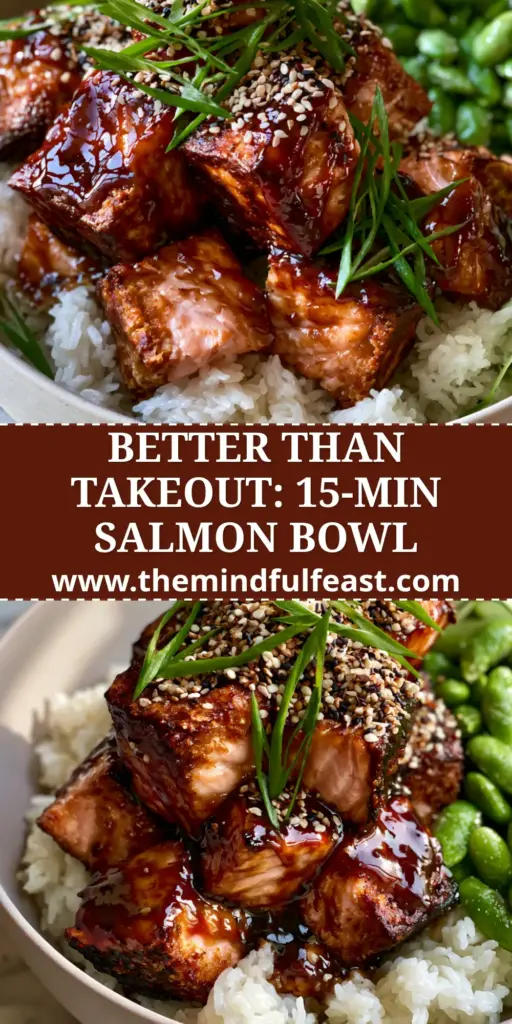
Teriyaki Salmon Bowls are the ultimate solution for anyone craving a high-protein, restaurant-quality meal that looks as stunning as it tastes. Imagine biting into a perfectly air-fried salmon cube that boasts a deeply charred, crispy exterior while remaining buttery and tender in the center.
This recipe transforms humble ingredients into a vibrant masterpiece, layering glossy, dark amber glaze over fluffy jasmine rice and fresh, crunchy vegetables. Whether you are a meal prep enthusiast or looking for a weeknight dinner that feels like a luxury, these bowls deliver on every sensory front.
The secret lies in the contrast of textures: the snap of julienned cucumber ribbons, the pop of blanched edamame, and the sticky sweetness of a homemade teriyaki reduction. By the time you finish this guide, you will be able to replicate the handheld smartphone photography aesthetic that makes these bowls go viral.
Why You Will Crave These Crispy Teriyaki Salmon Bowls
- Textural Contrast: You get the crunch of air-fried “burnt ends” paired with the softness of steaming jasmine rice.
- Viscous Umami Glaze: Our dark amber sauce is thick enough to coat a spoon and cling to every crevice of the salmon.
- Visual Vibrancy: The combination of bright green scallions and edamame against the deep orange salmon is a feast for the eyes.
- Effortless Technique: Using an air fryer ensures that charred edges are achieved in minutes without drying out the fish.
The Essential Components for a Professional-Grade Bowl
To achieve the specific visual result described in our blueprint, every ingredient serves a dual purpose: flavor and structural integrity. Using high-quality salmon is non-negotiable for that tender pink center.
Fresh Atlantic Salmon Fillets: You need about 1.5 lbs (680g) of skinless salmon, cut into uniform 1-inch (2.5cm) cubes to ensure even air-frying. Unlike a traditional seared salmon fillet, cubing the fish increases the surface area for the glaze to cling to.
Jasmine Rice: Use 1.5 cups (300g) of dry jasmine rice. This variety provides the necessary floral aroma and fluffy, non-sticky texture that acts as the perfect absorbent base for the viscous sauce.
Cornstarch (The Secret Logic): 1 tbsp (8g) of cornstarch is the “invisible” ingredient required to get those crispy edges in the air fryer. It creates a micro-thin crust that traps moisture while facilitating the charring process.
Low-Sodium Soy Sauce: 1/2 cup (120ml) forms the base of our dark amber glaze. Using low-sodium allows us to reduce the sauce significantly to reach a viscous state without it becoming overly salty.
Honey and Mirin: 1/4 cup (85g) honey and 2 tbsp (30ml) mirin provide the sugars necessary for the glaze to achieve that “glossy window light” reflection. This combination creates a complex sweetness that balances the ginger and garlic.
Aromatic Foundation: 1 tbsp (15g) freshly grated ginger and 3 cloves of minced garlic. These elements infuse the oil and sauce, providing the signature scent of a classic teriyaki salmon bites recipe.
The “Green” Elements: 1 cup (150g) frozen shelled edamame and 1 large English cucumber. The cucumber should be julienned into thin ribbons using a vegetable peeler to provide a professional, high-end presentation.
Finishing Touches: A heavy sprinkle of toasted black and white sesame seeds and two scallions, sliced on a sharp 45-degree bias. The bias cut exposes more surface area of the scallion, making it look much more appetizing than standard rounds.
Professional Tools for Culinary Accuracy
Achieving a “handheld smartphone photo” look requires more than just good lighting; it requires the right tools to prep the food correctly. A standard air fryer is the most important piece of equipment here.
A high-quality vegetable peeler is essential for creating the cucumber ribbons described in the visual blueprint. Standard slicing won’t give you the same delicate, draped look that catches the light in the bowl.
You will also need a small saucepan to reduce the teriyaki glaze. To reach that “dark amber” and “viscous” state, you need consistent heat and a whisk to prevent the honey from scorching.
Step-by-Step Mastery: Building the Ultimate Teriyaki Salmon Bowls
1. Preparing the Jasmine Rice Foundation
Start by rinsing 1.5 cups (300g) of jasmine rice under cold water until the water runs clear. This removes excess surface starch, ensuring the rice is fluffy rather than gummy.
Combine the rice with 2.25 cups (540ml) of water and a pinch of salt in a pot. Bring to a boil, then reduce to a low simmer, cover, and cook for 15 minutes before fluffing with a fork.
2. Crafting the Viscous Dark Amber Glaze
In a small saucepan, combine the soy sauce, honey, mirin, grated ginger, and minced garlic. Whisk over medium heat until the mixture begins to bubble.
Simmer the sauce for 8-10 minutes. You are looking for a sensory cue: the bubbles will become larger and slower, and the liquid will thicken until it coats the back of a spoon in a dark, glossy sheet.
3. Air-Frying for Charred Crispy Edges
Pat the salmon cubes completely dry with paper towels. Toss them in a bowl with 1 tbsp (15ml) of avocado oil, a pinch of salt, and the cornstarch until evenly coated.
Arrange the cubes in a single layer in the air fryer basket at 400°F (200°C). Air fry for 7-9 minutes, shaking halfway through. You want to see the edges turning a deep golden-brown, almost blackened in spots, while the center remains a succulent pink.
4. The Glazing Technique
Once the salmon is crispy, transfer it to a bowl and pour half of the thickened teriyaki glaze over it. Gently toss to coat; the heat from the salmon will help the viscous glaze adhere instantly.
Reserve the remaining glaze to drizzle over the final bowl. This ensures that the rice also gets a hit of that intense umami flavor.
5. Prepping the Fresh Garnishes
Blanch the edamame in boiling water for 3 minutes, then immediately shock in ice water. This preserves the “vibrant green” color mentioned in the visual prompt.
Use a vegetable peeler to shave the cucumber into long, thin ribbons. Stop when you reach the watery seeds in the middle to keep the ribbons crisp and structural.
Expert Tips for Visual and Culinary Success
- Dry the Fish: Moisture is the enemy of the char. If the salmon is wet, it will steam instead of crisping up in the air fryer.
- Don’t Overcrowd: If the salmon cubes are touching, they won’t develop those “crispy golden-brown edges.” Cook in batches if necessary.
- The Sauce Test: If your glaze is too thin, it will soak into the rice and disappear. If it’s too thick, it will be gloopy. It should look like warm maple syrup.
- Bias-Cut Scallions: Cutting scallions at an angle isn’t just for looks; it releases more aromatic oils, enhancing the overall scent of the bowl.
Creative Variations and Substitutions
If you prefer a bit of heat, you can easily transition this recipe into honey sriracha salmon bowls by adding 1 tbsp of sriracha to the glaze. The spice cuts through the richness of the salmon beautifully.
For those looking for a different protein, the same glazing and rice technique works perfectly for ground turkey teriyaki rice bowls. Simply brown the turkey in a skillet before adding the reduced sauce.
If you have leftover salmon, consider using it for a smoked salmon recipe breakfast or flaking it into stuffed salmon recipe fillings for a different meal later in the week.
Storage and Reheating Advice
Teriyaki Salmon Bowls are best enjoyed fresh to maintain the texture of the crispy salmon. However, you can store the components separately in airtight containers for up to 3 days.
To reheat, place the salmon in the air fryer at 350°F (175°C) for 3-4 minutes to restore the crunch. Microwave the rice with a damp paper towel over it to keep it from drying out.
What to Serve With Your Salmon Bowls
These bowls are a complete meal on their own, but they pair excellently with a side of steamed bok choy or a light miso soup. If you are looking for other bowl-style inspirations, check out our spicy tuna bowls for a raw fish alternative.
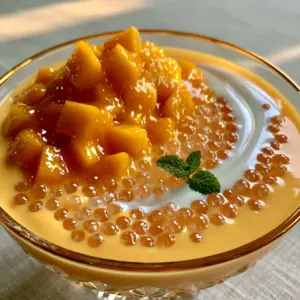
For a refreshing dessert after the salty-sweet teriyaki, try a mango coconut chia pudding to cleanse the palate. The tropical flavors complement the ginger and soy perfectly.
Frequently Asked Questions
While you can, store-bought sauces are often too thin. If using store-bought, simmer it in a saucepan until it reduces and thickens to a viscous, dark amber consistency to match the visual blueprint.
The key is patting the salmon completely dry and tossing it with a small amount of cornstarch. This creates a dry surface that chars quickly at 400°F (200°C) without overcooking the inside.
Use a standard vegetable peeler to shave long, thin strips down the length of the cucumber. Rotate the cucumber as you go and stop once you reach the watery seeds for the best texture.
Yes, jasmine rice is ideal because it remains fluffy and aromatic. Its structure holds up well under the heavy, sticky teriyaki glaze without becoming mushy.
For these specific bowls, skinless salmon is preferred. This allows every side of the cube to develop a crispy, charred crust and ensures the glaze coats the fish evenly.
The Ultimate Teriyaki Salmon Bowl Recipe Card
Teriyaki Salmon Bowls with Crispy Air-Fried Salmon and Jasmine Rice
Ingredients
Equipment
Method
- Rinse jasmine rice until water is clear. Combine with water and a pinch of salt. Bring to boil, simmer covered for 15 mins.
- Whisk soy sauce, honey, mirin, ginger, and garlic in a saucepan. Simmer for 8-10 minutes until dark amber and viscous.
- Toss dry salmon cubes with oil and cornstarch. Air fry at 400°F (200°C) for 7-9 mins until edges are charred and crispy.
- Toss hot salmon cubes in half of the teriyaki reduction until glossy.
- Layer rice, topped with salmon, cucumber ribbons, and edamame. Drizzle remaining glaze and garnish with sesame seeds and bias-cut scallions.
Notes
Use a vegetable peeler for the cucumber to get professional-looking ribbons.
Closing Thoughts & Join the Community
Mastering these Teriyaki Salmon Bowls will elevate your weeknight dinner game to a professional level. The combination of the air-fried texture and the glossy dark amber glaze makes this a recipe you will return to again and again.
If you enjoyed this recipe, please leave a comment below and let us know how your salmon turned out! Don’t forget to share your photos and follow us on Pinterest for more culinary inspiration.