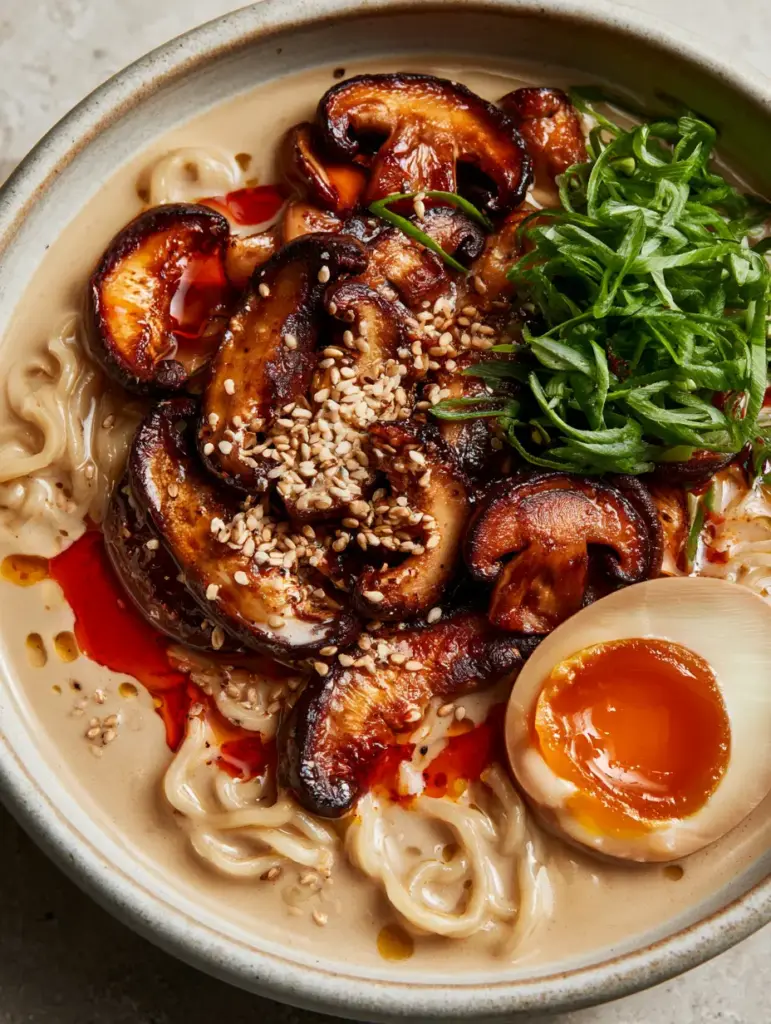
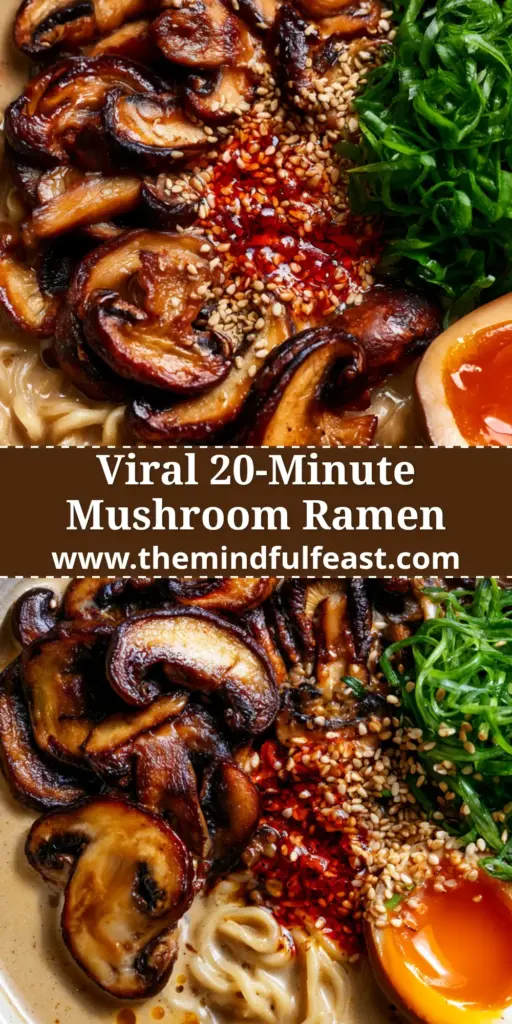
There is a specific kind of magic that happens when a bowl of Mushroom Ramen Noodles hits the table, especially when the broth is so thick and velvety that it clings to every springy strand. This isn’t your average quick-fix noodle soup; it is a deep dive into the world of umami, featuring pan-seared cremini and shiitake mushrooms that boast caramelized, golden-brown edges. The centerpiece is a perfectly soft-boiled egg, its bright orange yolk ready to mingle with a drizzle of spicy red chili oil.
Capturing the essence of a high-end ramen shop at home requires attention to texture and visual detail. In this guide, we are recreating the exact aesthetic of a professional macro shot: glistening oil droplets, a mountain of vivid green scallions, and the earthy, light-brown hue of a cream-based broth. Whether you are a seasoned home cook or a noodle enthusiast, this recipe delivers a sensory experience that looks just as incredible as it tastes.
Why This Creamy Mushroom Noodle Bowl Works
- The Velvety Texture: By combining a savory vegetable base with a touch of soy milk and white miso, we achieve a broth that is thick, rich, and naturally creamy without feeling heavy.
- Dual-Mushroom Intensity: Using both cremini for their meaty texture and shiitakes for their smoky depth ensures every bite is packed with forest-floor flavor.
- Visual Contrast: The bright orange of the jammy yolk against the deep greens of the scallions and the red of the chili oil creates a restaurant-quality presentation.
- Springy Noodle Integrity: We focus on the “alkaline” bounce of the ramen, ensuring they provide a chewy resistance to the silky liquid.
The Foundation: Ingredients for the Ultimate Umami Experience
Every element in these Mushroom Ramen Noodles serves a specific purpose, from the structural integrity of the noodles to the aromatic profile of the garnishes. To achieve the professional results seen in our visuals, quality is paramount.
Fresh Ramen Noodles: You need 10 oz (285g) of fresh or high-quality dried ramen noodles. Look for noodles that feel springy to the touch; they contain alkaline salts which provide that signature yellow tint and chewy “snap” when bitten.
Cremini and Shiitake Mushrooms: We use 8 oz (225g) of each. The cremini provide the bulk and a “seared steak” mouthfeel, while the shiitakes offer a concentrated earthy aroma that defines the broth’s character.
Unsweetened Soy Milk or Heavy Cream: 1 cup (240ml) is essential for the “velvety mushroom cream broth” look. Soy milk is traditional for creamy vegetarian ramen, providing a clean, nutty finish that doesn’t mask the mushrooms.
White Miso Paste: 2 tbsp (30g) adds the fermented funk and saltiness required to balance the creaminess. It acts as the “glue” that binds the vegetable stock to the creamy elements.
Vegetable Stock: 3 cups (710ml) of high-quality, low-sodium stock serves as our liquid base. If you enjoy deep savory flavors, you might also find inspiration in our creamy mushroom chicken casserole which utilizes similar flavor profiles.
Aromatic Base: 3 cloves of garlic and 1 inch (2.5cm) of fresh ginger. These should be finely minced to melt into the broth, providing a back-note of heat and fragrance.
The Jammy Eggs: 2 large eggs, boiled for exactly six and a half minutes. This timing ensures the whites are set while the yolk remains a “vibrant orange” liquid gold.
Garnish Essentials: 2 tbsp (30ml) red chili oil for spice, 1 tbsp (15g) toasted white sesame seeds for crunch, and 1/2 cup (50g) finely chopped scallions for a fresh, vivid green pop.
Foundational Fats and Seasoning: 2 tbsp (30ml) neutral oil (like avocado or grapeseed) for searing, 1/2 tsp (3g) cracked black pepper, and sea salt to taste. These “invisible” ingredients are what allow the mushrooms to develop those caramelized edges.
Essential Tools for Ramen Success
To recreate the macro-shot aesthetic, you need tools that handle high heat and delicate simmering. A cast-iron skillet is highly recommended for the mushrooms to ensure they don’t steam, but rather sear to a deep golden-brown.
A heavy-bottomed Dutch oven or stockpot is ideal for the broth, as it maintains a consistent temperature when the cream and miso are added. You will also need a fine-mesh strainer for the noodles and a timer for the perfect jammy egg.
Mastering the Sear: Step-by-Step Instructions
Perfecting the 6.5-Minute Jammy Egg
Bring a small pot of water to a rolling boil. Carefully lower the cold eggs into the water using a slotted spoon to prevent cracking. Boil for exactly 6 minutes and 30 seconds.
Immediately transfer the eggs to an ice bath (a bowl filled with cold water and ice cubes). Let them sit for 5 minutes; this stops the cooking process and ensures the yolk stays bright orange and jammy. Peel gently and set aside.
Achieving the Golden-Brown Mushroom Sear
Clean your cremini and shiitakes with a damp cloth—never soak them in water. Slice the cremini into thick quarters and the shiitakes into 1/4 inch (6mm) slices. Heat 1 tbsp (15ml) of oil in a skillet over medium-high heat.
Place the mushrooms in a single layer; do not overcrowd the pan. Let them sit undisturbed for 3-4 minutes until a deep golden-brown crust forms on the bottom. Flip and sear for another 2 minutes until the edges are visibly caramelized. Season with cracked black pepper and a pinch of salt.
Building the Velvety Cream Broth
In a large pot, sauté the minced garlic and ginger in the remaining oil until fragrant, about 1 minute. Pour in the vegetable stock and bring to a gentle simmer. Do not let it reach a violent boil, as this can break the delicate flavors.
In a small bowl, whisk the miso paste with a splash of the warm stock until smooth, then stir it back into the pot. Pour in the 1 cup (240ml) of soy milk or cream. Stir constantly until the broth turns a beautiful, light-brown velvety color. Keep it on low heat.
Noodle Preparation and Assembly
Cook your ramen noodles in a separate pot of boiling water according to the package instructions—usually 2-3 minutes for fresh noodles. Drain well. Never cook the noodles directly in the broth, as the starch will turn the velvety broth into a thick paste.
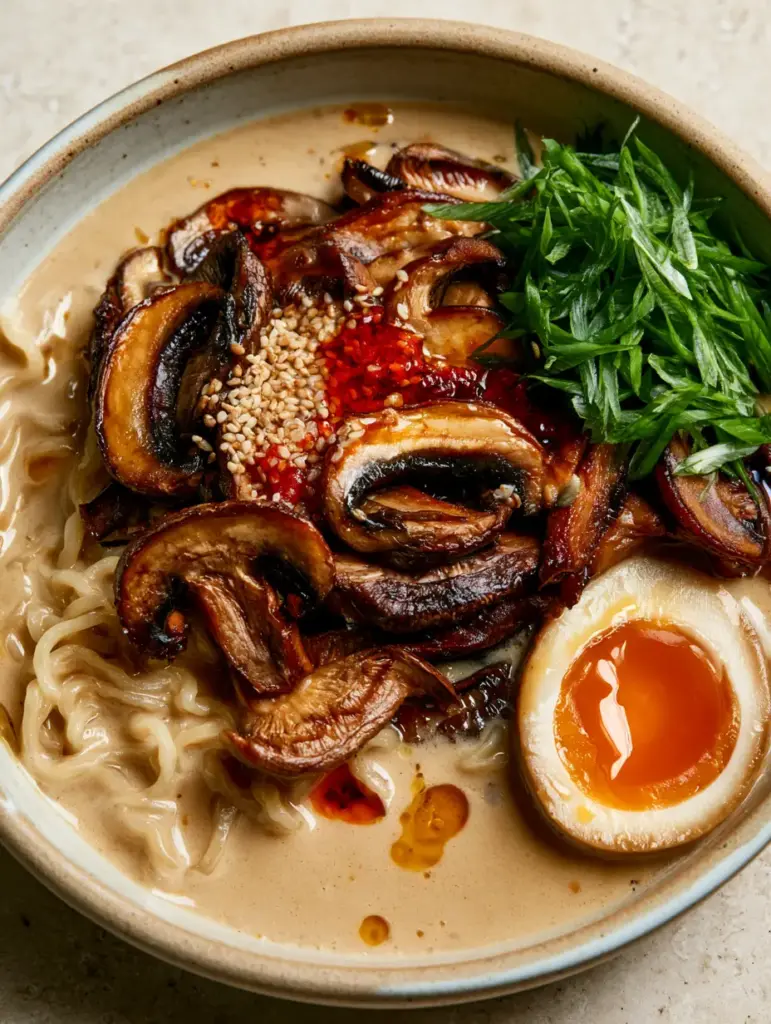
Place a portion of noodles into a ceramic bowl. Ladle the hot mushroom broth over the noodles, swirling them gently with chopsticks to ensure they are glossy and coated. Arrange the seared mushrooms on one side of the bowl.
The Final Flourish: Garnishing for Impact
Slice the jammy eggs in half lengthwise and place them atop the noodles. The orange yolk should look vibrant and slightly liquid. Sprinkle a mountain of finely sliced scallions in the center.
Drizzle the bright red chili oil in a circular motion, letting the tiny droplets of oil glisten on the surface of the broth. Finish with a generous sprinkle of toasted white sesame seeds and a final crack of black pepper.
Expert Tips for the Best Mushroom Ramen Noodles
- The Secret to Creaminess: If using soy milk, ensure it is “unsweetened” and “plain.” The vanilla flavor in some brands will ruin the umami profile of the ramen.
- Miso Management: Never boil miso paste. High heat destroys the probiotics and alters the subtle sweetness of the paste. Always whisk it in at the very end.
- Noodle Texture: Aim for “katamen” (firm noodles). They will continue to soften slightly once they hit the hot broth, so undercooking them by 30 seconds is a pro move.
- Mushroom Variety: If you can’t find shiitakes, oyster mushrooms make an excellent substitute, providing a similar silky texture when sautéed. You can see how we handle different mushroom types in our chicken piccata with mushroom pasta.
Storage and Reheating Advice
Ramen is best enjoyed immediately to preserve the springy texture of the noodles. However, if you have leftovers, store the broth and the noodles in separate airtight containers. The broth will keep for up to 4 days in the refrigerator.
To reheat, warm the broth on the stovetop until simmering. Briefly dip the cold noodles in boiling water for 30 seconds to revive their texture before combining. The eggs should not be reheated; enjoy them cold or let them come to room temperature to keep the yolk jammy.
What to Serve With Creamy Ramen
While these Mushroom Ramen Noodles are a complete meal, they pair beautifully with light, acidic sides to cut through the richness of the cream broth. A simple cucumber salad or a side of steamed edamame works perfectly.
If you are looking for more noodle-based dinner inspiration, consider our garlic chicken zucchini noodles for a low-carb alternative. For those who prefer a more traditional stir-fry feel, our Japanese BBQ chicken fried rice is a fantastic side or follow-up meal for the week.
Frequently Asked Questions
Yes! Simply omit the soft-boiled egg or replace it with seared tofu. Ensure your ramen noodles are egg-free (most traditional alkaline ramen noodles are) and use soy milk for the creaminess.
Absolutely. While cremini and shiitakes are recommended for their umami depth, oyster mushrooms, maitake, or even portobellos work well. Just ensure you sear them thoroughly for the best texture.
Use a high-heat cast iron skillet and do not crowd the pan. Mushrooms release water; if they are too close together, they steam instead of searing. Give them space to caramelize.
The combination of white miso paste and unsweetened soy milk (or heavy cream) creates the thick, velvety texture. Whisking the miso separately before adding it prevents clumps and ensures a smooth finish.
Cooking noodles in the broth releases too much starch, which will turn your velvety soup into a gummy, thick liquid. Boiling them separately ensures the broth stays clean and the noodles stay springy.
The Ultimate Mushroom Ramen Noodles Recipe
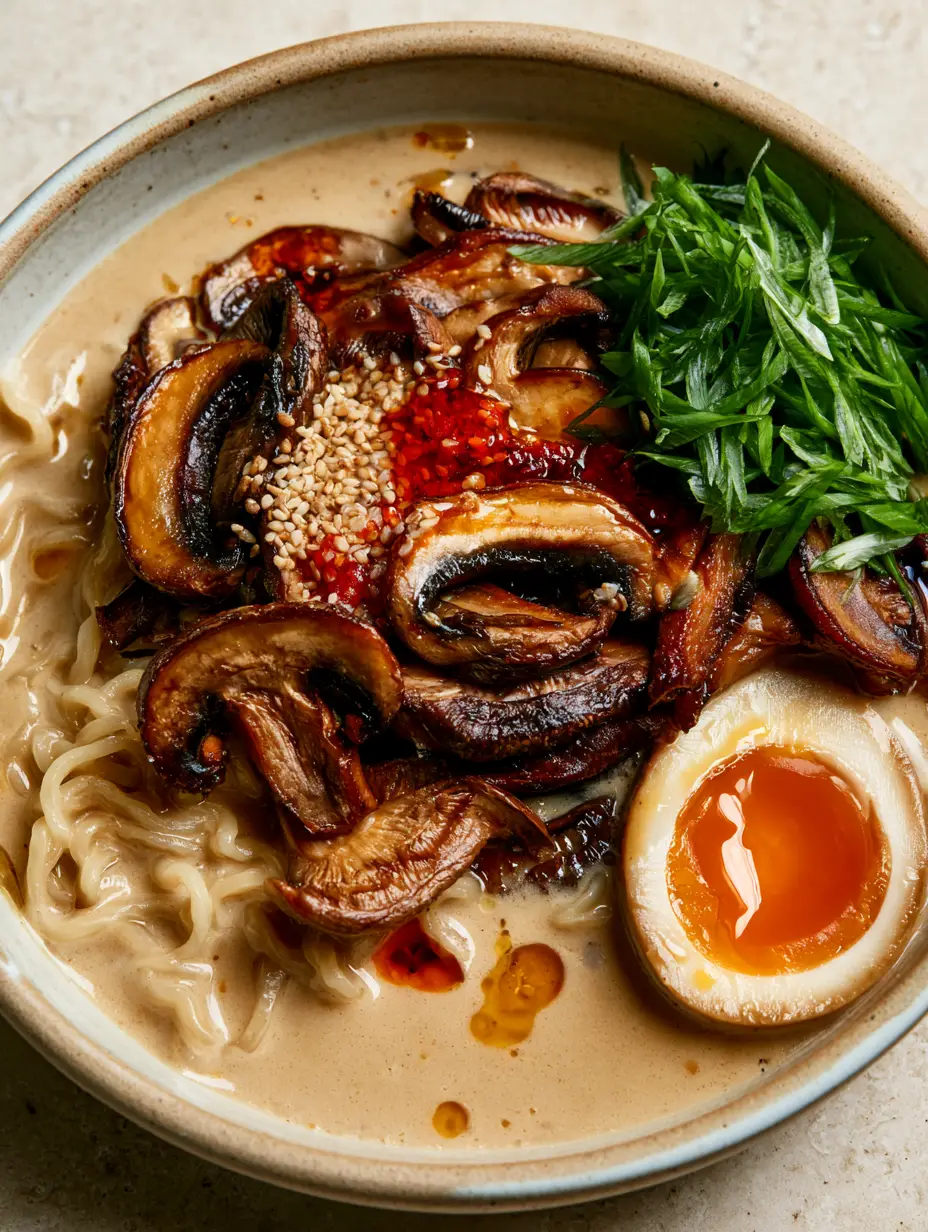
Mushroom Ramen Noodles with Velvety Umami Broth and Jammy Eggs
Ingredients
Equipment
Method
- Boil water, lower eggs in, and cook for 6.5 minutes. Transfer to ice bath immediately.
- Sauté cremini and shiitake in a hot skillet until golden-brown and caramelized at the edges.
- Sauté aromatics, add stock and miso, then stir in soy milk until velvety and light brown.
- Combine cooked noodles and broth in a bowl. Top with mushrooms, sliced jammy eggs, scallions, chili oil, and seeds.
Notes
Do not boil the broth after adding miso to preserve flavor.
Closing & Call to Action
Crafting these Mushroom Ramen Noodles is an exercise in culinary mindfulness. From the sizzle of the shiitakes to the swirling of the velvety broth, every step leads to a bowl that is a true work of art. We hope this recipe brings a touch of authentic ramen-shop flavor to your home kitchen.
Did you achieve that perfect jammy yolk? We want to see your creations! Leave a comment below or share your photos on Pinterest to inspire other home cooks. Don’t forget to sign up for our newsletter for more deep-dive recipes and culinary techniques.