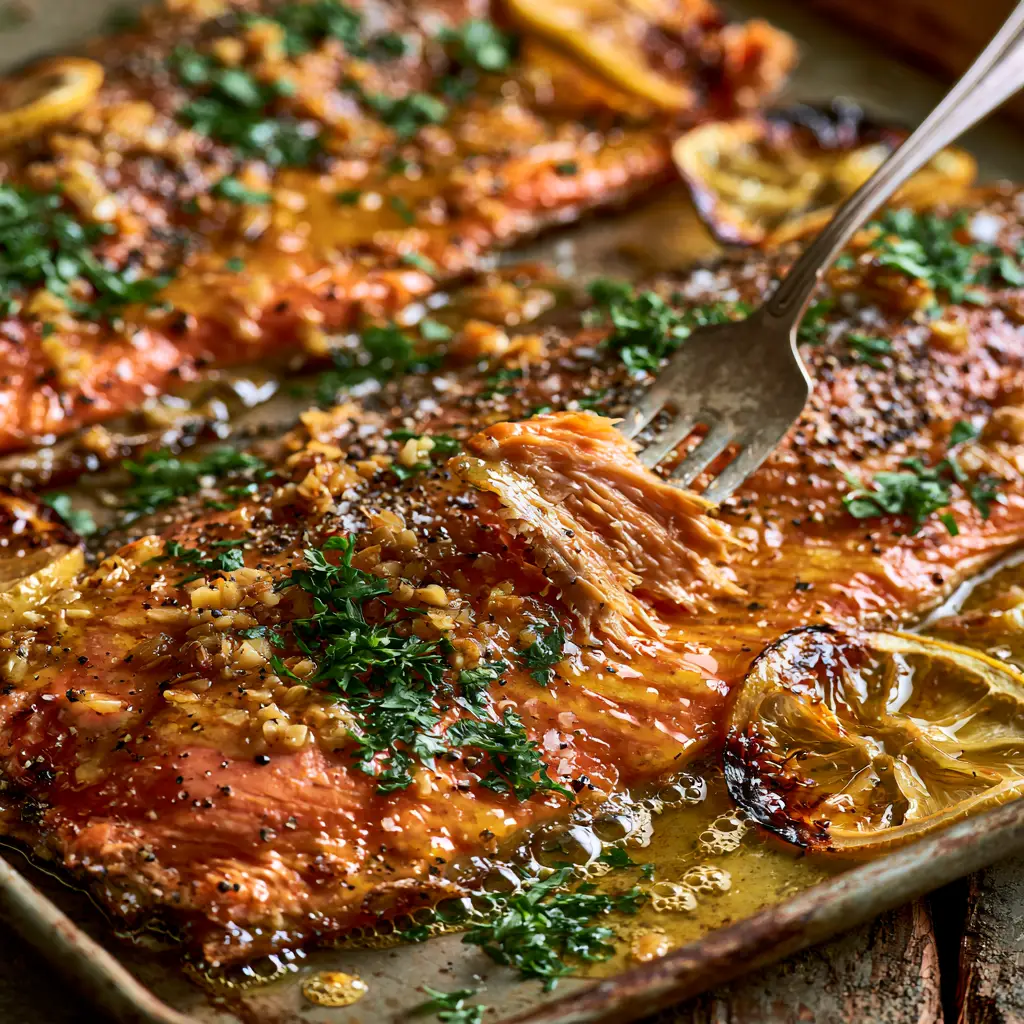
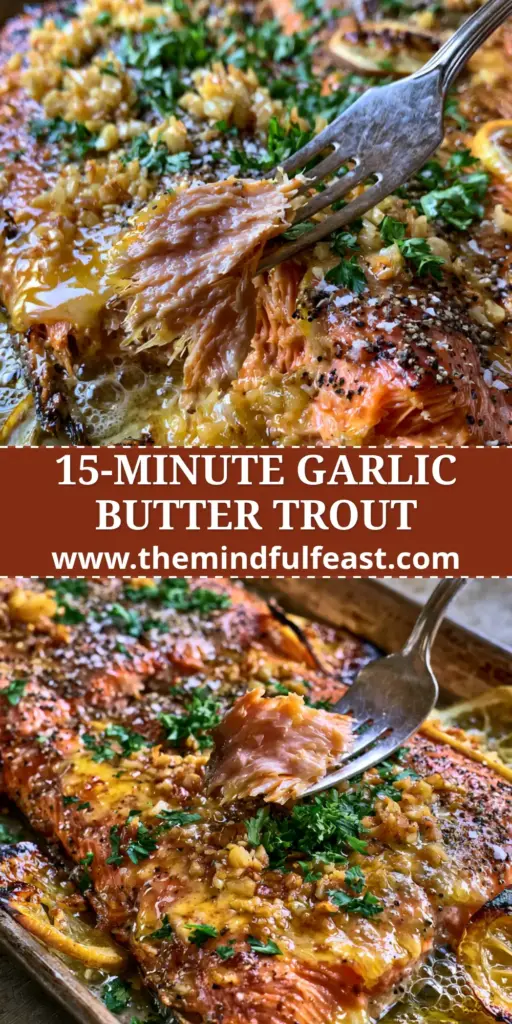
There is nothing quite like the sight of a garlic butter trout sizzling on a golden-charred sheet pan. Imagine two large, juicy trout fillets resting in a pool of bubbling, melted golden garlic butter, their deep pink-orange flesh flaking effortlessly under the pressure of a silver fork. This is not just a meal; it is a sensory experience designed to bring restaurant-quality elegance to your home kitchen in under twenty minutes.
This recipe focuses on achieving that perfect contrast between a glistening, thick garlic glaze and the tender, moist interior of the fish. Every bite is punctuated by the crunch of coarse sea salt flakes and the sharp, aromatic heat of cracked black pepper. Whether you are a seasoned home cook or a beginner, this guide will ensure your trout is perfectly charred and incredibly flavorful every single time.
The visual appeal of this dish is undeniable, featuring charred lemon wheels tucked around the fillets and a generous scattering of finely chopped vibrant green parsley. The sheet pan drippings, rich with sautéed minced garlic bits, serve as the perfect sauce to drizzle over your final plate. Let’s dive into how to recreate this hyper-realistic culinary masterpiece in your own kitchen.
Visualizing the Perfect Golden-Charred Fillet
To achieve the result seen in high-end culinary photography, we must focus on the specific textures and colors that define a premium garlic butter trout. The fish should exhibit a vibrant orange-pink hue, indicating it has been cooked just enough to remain moist while developing a firm flake. Here is what we are aiming for in the final result:
- Glistening Glaze: A thick, golden coating of melted butter that clings to the ridges of the fish.
- Aromatic Garlic: Copious amounts of sautéed minced garlic that have turned a light golden brown without burning.
- Charred Citrus: Lemon wheels with blackened, caramelized edges that provide a smoky acidity.
- Textural Contrast: A combination of soft, flaky fish and the crunch of coarse sea salt and cracked black pepper.
- Vibrant Finish: A shower of fresh parsley that adds a pop of color and a clean, herbaceous top note.
Essential Pantry Staples for a Thick Garlic Glaze
Achieving the perfect garlic butter trout requires a balance of high-quality fats and fresh aromatics. Each ingredient plays a scientific role in the final texture and flavor profile of the dish.
Trout Fillets (approx. 1.5 lbs / 680g): Choose fillets with the skin on for better structural integrity during the searing process. The skin also helps retain moisture within the delicate flesh.
Unsalted Butter (4 tbsp / 57g): Butter provides the “tiny bubbles” and the rich mouthfeel. Using unsalted allows you to control the seasoning precisely with sea salt flakes later.
Fresh Garlic (6 cloves / 30g): Hand-minced garlic is essential here; pre-minced jars lack the sulfurous compounds needed for that signature pungent aroma. You want visible bits of sautéed garlic scattered across the fish.
Lemon (1 large): Thinly sliced into wheels. These will be charred on the pan to release concentrated oils and juice, which mix with the butter for a natural pan sauce.
Fresh Parsley (1/4 cup / 10g): Finely chopped flat-leaf parsley adds the necessary vibrant green contrast against the golden butter glaze. It cuts through the richness of the fats.
Avocado Oil (1 tbsp / 15ml): A high-smoke point oil is the “invisible” hero that allows you to sear the fish at high heat without the butter burning prematurely.
Coarse Sea Salt and Cracked Black Pepper: These are not just seasonings; they are textural elements. The salt flakes provide a crystalline crunch, while the cracked pepper adds floral heat.
The Best Sheet Pan and Skillet for Searing
To get those “golden-charred” edges, the type of equipment you use matters as much as the heat level. A heavy-duty rimmed sheet pan is the foundation for this recipe, as it catches all those precious garlic butter trout drippings.
I recommend using a pre-heated cast-iron skillet or a heavy stainless steel pan for the initial sear if you aren’t doing the entire process in the oven. The metal needs to be thick enough to hold heat, ensuring that when the fish hits the surface, it immediately begins the Maillard reaction. This creates the “golden-charred” exterior described in our visual blueprint.
A thin, flexible fish spatula is also a must-have tool. It allows you to get under the delicate fillets without breaking the flaky flesh, especially when you are ready to lift that first perfect bite. Having a silver fork ready for testing the “flakiness” is a classic pro-move for checking doneness.
Step-by-Step Mastery: How to Achieve Flaky Perfection
Preparing the Fish for the Heat
Start by patting your trout fillets extremely dry with paper towels. Any moisture on the surface of the fish will create steam, preventing that glistening, charred crust we are looking for. Season the fillets generously with coarse sea salt and cracked black pepper on both sides.
The Art of the Initial Sear
Heat 1 tbsp (15ml) of avocado oil in a large skillet over medium-high heat. Once the oil is shimmering and just starting to smoke, place the trout fillets skin-side down. Press gently with a spatula to ensure even contact. Sear for 2-3 minutes until the skin is crispy and the edges of the flesh start to turn opaque.
Creating the Bubbling Garlic Butter Glaze
Reduce the heat to medium and add 4 tbsp (57g) of butter to the pan along with the minced garlic and lemon wheels. As the butter melts, it will begin to foam and form tiny bubbles. Use a large spoon to continuously baste the fillets with the hot garlic butter. This technique, known as “arroser,” cooks the top of the fish while infusing it with deep garlic flavor.
The Final Char in the Oven
Transfer the fillets and the lemon wheels to a sheet pan (or keep them in the skillet if oven-safe). Place under a high broiler for 2-3 minutes. Watch closely! You want the lemon wheels to develop charred edges and the garlic bits to turn a deep golden brown. The butter glaze should be thick and bubbling around the fish.
Finishing with Fresh Herbs
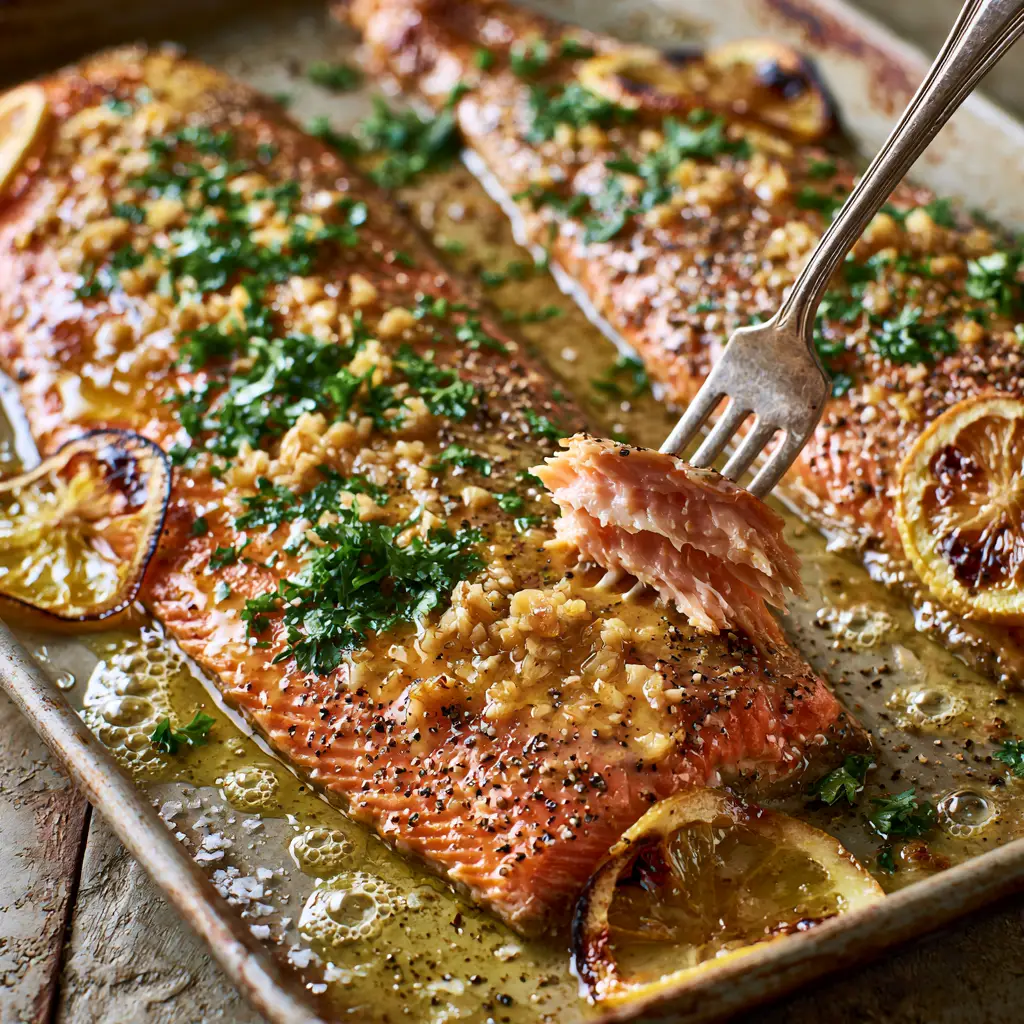
Remove the pan from the oven. The trout should be perfectly flaky, showing that deep pink-orange interior. Immediately scatter the finely chopped parsley over the top. The residual heat will wake up the parsley’s oils without wilting it into a dark mush. Drizzle any remaining sheet pan drippings over the fillets before serving.
Pro-Tips for That Restaurant-Style Char
- Cold Butter vs. Room Temp: Use cold butter when starting the glaze in the pan. It melts more slowly, allowing the garlic to sauté and soften without the milk solids in the butter burning too quickly.
- The Fork Test: To check for that “moist interior texture,” insert a silver fork into the thickest part of the fillet and twist slightly. If the flesh separates easily into large flakes, it is done.
- Don’t Crowd the Pan: If you are cooking more than two fillets, use a larger sheet pan. Crowding leads to steaming, which kills the “golden-charred” visual we want for our garlic butter trout.
- Acid Balance: If the glaze feels too heavy, squeeze one of those charred lemon wheels directly over the fish right before eating to brighten the flavors.
Optimal Storage and Reheating Techniques
While seafood is always best enjoyed fresh from the pan, you can store leftover garlic butter trout in an airtight container in the refrigerator for up to two days. To maintain the texture, avoid the microwave, which can make the fish rubbery and “fishy” in aroma.
The best way to reheat is in a 300°F (150°C) oven. Place the trout on a piece of foil, add a tiny pat of fresh butter on top to replenish the glaze, and cover loosely. Heat for 8-10 minutes until just warmed through. This preserves the moist interior and prevents the garlic from becoming bitter.
Freezing is not recommended for this specific preparation. The delicate cell structure of trout breaks down when frozen after being cooked, leading to a mushy texture upon thawing that won’t hold that beautiful flake we’ve worked so hard to achieve.
What to Serve with Your Pan-Seared Trout
Because this garlic butter trout is so rich and flavorful, you want side dishes that can either soak up the extra butter glaze or provide a refreshing contrast. A side of aromatic garlic butter rice is a natural companion, as the grains will absorb every drop of that liquid gold from the sheet pan.
For a lighter option, consider a crisp green salad or some crispy air fryer potato wedges (coming soon) to add another layer of crunch to the meal. If you’re looking for more seafood inspiration, you might also enjoy a variation of lemon herb butter trout for your next dinner party.
If you have extra garlic on hand, this recipe pairs beautifully with a quick shrimp scampi for a surf-and-surf feast. For those nights when you want to keep things lean, choosing from a variety of vegetarian dinners (coming soon) to serve alongside the fish can balance the plate perfectly.
Deep Dive into Trout Selection and Quality
Not all trout is created equal. For this specific visual and flavor profile, Rainbow Trout or Steelhead Trout are the best choices. Steelhead, in particular, has that striking pink-orange color that mimics salmon but offers a much more delicate, nutty flavor that pairs perfectly with garlic and butter.
When shopping, look for fillets that are firm to the touch and have a clean, oceanic smell. Avoid any fish that looks dull or has “gapping” (where the muscle fibers are already separating). Freshness is the key to ensuring that when you lift a flake with your fork, the interior remains glistening and moist rather than dry and chalky.
Sustainable sourcing is also vital. Look for “Best Choice” ratings from seafood watch programs. High-quality, sustainably farmed trout often has better fat marbling, which contributes to those “tiny bubbles of hot butter” we see during the cooking process.
Frequently Asked Questions
Absolutely! Both work beautifully. Steelhead trout has a deeper orange color and higher fat content, making it extra succulent, while Rainbow trout is milder and leaner.
Use a fork to gently pull at the thickest part. If it separates into moist, opaque flakes and the internal temperature reaches 145°F (63°C), it is done.
Add the garlic only after reducing the heat to medium. The butter acts as a buffer, but keep the aromatics moving to ensure they turn golden rather than brown.
Start skin-side down in a hot pan to crisp the skin and protect the delicate flesh. This also helps the fillet hold its shape during the glazing process.
Any high-smoke point oil like grapeseed or light olive oil works. Avoid extra virgin olive oil for the initial sear as it can smoke and become bitter at high temperatures.
The Master Recipe for Garlic Butter Trout
Garlic Butter Trout: The Ultimate 15-Minute Pan-Seared Masterpiece
Ingredients
Equipment
Method
- Pat the trout fillets extremely dry with paper towels. Season both sides generously with sea salt and cracked black pepper.
- Heat avocado oil in a heavy skillet over medium-high heat. Place fillets skin-side down and sear for 2-3 minutes until skin is golden and crispy.
- Reduce heat to medium. Add butter, minced garlic, and lemon wheels. Baste the fish continuously with the bubbling butter for 2 minutes.
- Transfer pan to oven and broil for 2-3 minutes until lemon edges are charred and the garlic is golden. Garnish with fresh parsley.
Notes
Always use fresh garlic over the jarred variety for better flavor depth.
Closing & Call to Action
This garlic butter trout is a testament to how simple ingredients, when treated with the right culinary techniques, can produce an extraordinary result. The combination of the golden-charred skin, the bubbling garlic butter, and the bright pop of lemon makes this a recipe you will return to time and time again. It’s fast enough for a Tuesday but elegant enough for a Saturday night dinner guest.
If you enjoyed this recipe, please leave a comment below and let me know how your trout turned out! Don’t forget to sign up for our newsletter for more restaurant-quality recipes delivered straight to your inbox. You can also save this recipe to your favorite boards on Pinterest to ensure you always have it on hand when the craving for perfectly flaky fish hits.