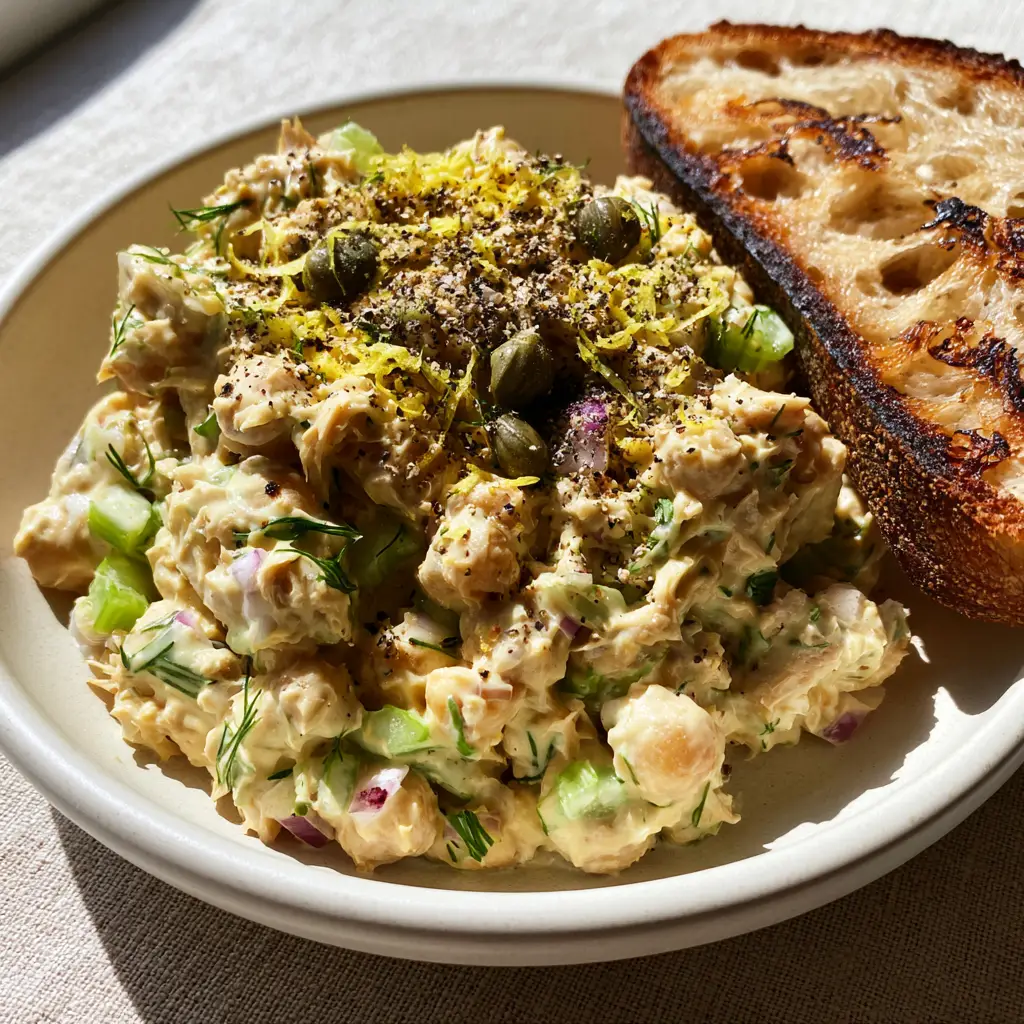
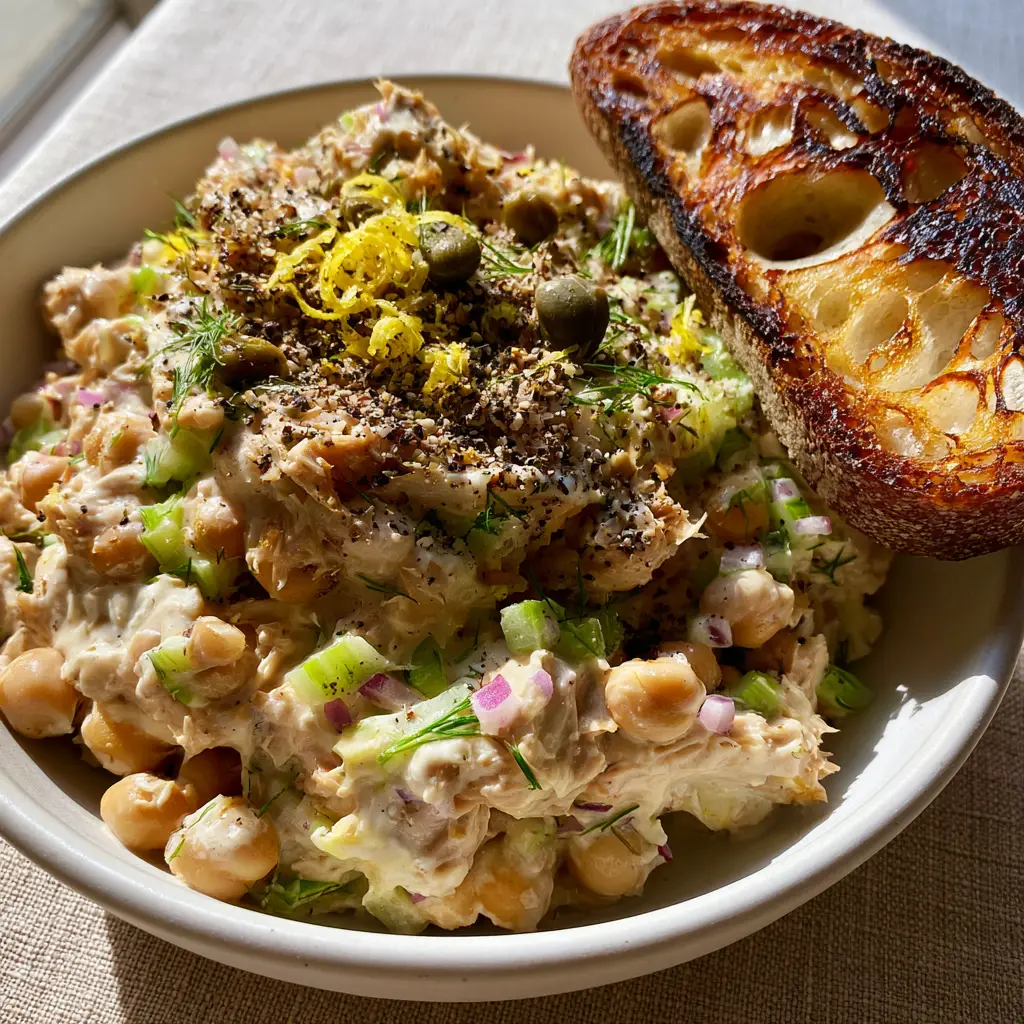
When you first set eyes on this vibrant chickpea tuna salad, you might be forgiven for thinking it came straight from a seaside bistro. Bathed in a soft, diffused morning sunlight, the salad sits elegantly in a minimalist off-white ceramic bowl, its textures popping against a neutral linen backdrop. The visual appeal is immediate: roughly mashed chickpeas that mimic the fibrous flakes of traditional seafood, all bound together by a thick, pale-ivory dressing that looks as indulgent as it is wholesome.
This isn’t just another pulse-based mash; it is a carefully engineered culinary experience designed to satisfy the cravings of enthusiasts and skeptics alike. Every bite offers a symphony of contrasts—from the crunch of finely diced celery to the briny pop of whole capers and the citrusy brightness of fresh lemon zest curls. Paired with a thick-cut slice of toasted sourdough featuring a charred, bubbly crust, this meal represents the pinnacle of plant-based lunching.
Why This Plant-Based Mash Outshines the Original
- Perfectly Engineered Texture: By roughly mashing the legumes, we achieve a flaky, fibrous consistency that captures the dressing just like real tuna.
- Nutrient-Dense Profile: High in plant-based protein and fiber, this chickpea tuna salad keeps you satiated much longer than a standard processed sandwich.
- Visual Sophistication: Garnished with fresh dill, cracked black pepper, and bright lemon zest, this is a dish you will be proud to serve at any brunch or gathering.
- Complex Umami Depth: The secret combination of creamy tahini and briny capers provides a savory depth that mimics the sea without the fish.
Essential Elements for the Perfect Plant-Based Mash
To achieve the specific visual and textural results seen in our “Visual Recipe Blueprint,” every ingredient has been selected for its specific culinary function. While the base is simple, the quality of these components determines the final outcome.
Canned Chickpeas (Garbanzo Beans): 2 cans (880g total). These provide the bulk and the “fibrous” texture; ensure they are rinsed and dried thoroughly to prevent a soggy salad.
Creamy Tahini: 2 tbsp (30g). This is the secret to the “pale-ivory” dressing, adding a nutty richness that bridges the gap between the mayo and the beans.
High-Quality Mayonnaise: 1/2 cup (120ml). Whether you use traditional or vegan mayo, this creates the thick, luscious base required for that handheld photo aesthetic.
Finely Diced Celery: 2 medium stalks (approx. 100g). This provides the essential “crunchy gems” interspersed throughout the creaminess.
Minced Red Onion: 1/4 small onion (approx. 40g). Added for a sharp, pungent bite and a beautiful pop of purple color against the ivory dressing.
Fresh Chopped Dill: 3 tbsp (10g). Freshness is key here; the dill provides that “bright green” visual marker and an unmistakable herbal aroma.
Capers in Brine: 1 tbsp (15g). These whole capers provide the briny, salty bursts that characterize a traditional tuna salad profile.
Lemon Zest and Juice: 1 large lemon. The zest provides the “yellow curls” for garnish, while the juice cuts through the fat of the tahini-mayo blend.
Cracked Black Pepper: 1 tsp (to taste). Use a coarse grind to ensure the pepper is visible on top, as seen in the minimalist off-white bowl presentation.
Foundational Salt: 1/2 tsp (3g). Essential for drawing out the flavors of the vegetables and seasoning the beans deeply.
Thick-Cut Sourdough: 2-4 slices. Look for a loaf with a wild ferment to ensure those “charred, bubbly” edges when toasted under a broiler.
The Tools for Professional Food Prep
Achieving the right texture for your chickpea tuna salad requires more than just a spoon. You need a large mixing bowl to allow for aggressive mashing without spilling. A handheld potato masher or a heavy-duty fork is vital for creating that flaky, fibrous look rather than a smooth hummus-like paste.
For the vegetables, a sharp chef’s knife is non-negotiable to achieve the “finely diced” and “minced” precision described in the blueprint. Finally, a microplane or fine grater is needed to create those delicate lemon zest curls that crown the finished dish.
Step-by-Step Evolution of the Salad
Preparing the Fibrous Base
Drain and rinse your chickpeas thoroughly. Place them in a large bowl and use a fork to crush about 75% of the beans. You are looking for a “rough mash”—some beans should remain whole for structure, while others should be shredded into flaky layers that resemble tuna flakes.
Constructing the Ivory Dressing
In a separate small bowl, whisk together the mayonnaise, tahini, lemon juice, salt, and half of the cracked black pepper. The dressing should be thick and pale-ivory. If it feels too stiff, add a teaspoon of water or additional lemon juice until it reaches a pourable but heavy consistency.
Incorporating Texture and Aromatics
Fold in the diced celery, minced red onion, and 2 tablespoons of the fresh dill. Pour the dressing over the mashed chickpeas. Use a spatula to fold the ingredients together until every fibrous nook and cranny is coated in the creamy ivory sauce. Be gentle to maintain the structural integrity of the “gems” of onion and celery.
The Perfect Charred Sourdough
Brush your sourdough slices with a little olive oil. Heat a cast-iron skillet or turn on your broiler. Toast the bread until the edges are dark brown and the surface is covered in bubbly, charred spots. This provides the necessary crunch to contrast the creamy chickpea tuna salad.
Plating for Visual Impact
Transfer the salad to a minimalist off-white ceramic bowl. Garnish the top with a generous sprinkle of the remaining cracked black pepper, the lemon zest curls, the rest of the fresh dill, and a few whole capers. Place the charred sourdough slice leaning against the bowl to capture that authentic handheld smartphone photo style.
Expert Tips for Culinary Success
- Avoid Over-Mashing: If you process the chickpeas in a blender, you will end up with hummus. Stick to a hand masher to preserve the “fibrous texture” seen in the photos.
- Cold Is Better: Let the salad chill in the refrigerator for at least 30 minutes before serving. This allows the flavors of the red onion and dill to meld into the dressing.
- The Tahini Quality Matters: Use a runny, high-quality tahini. If your tahini is bitter or chunky, it will ruin the smooth “pale-ivory” appearance of the dressing.
- Zest Before You Juice: Always zest the lemon while it is whole and firm; it is much harder to get those beautiful curls once the lemon has been squeezed.
Preserving Your Masterpiece
This chickpea tuna salad holds up remarkably well, making it a dream for meal prep. Store it in an airtight glass container in the refrigerator for up to 4 days. Unlike real fish, the flavors actually improve on day two as the capers and lemon juice infuse the beans.
We do not recommend freezing this salad. The mayonnaise and tahini dressing will separate and become grainy upon thawing, and the celery will lose its characteristic “crunchy gem” texture. If you need to prep far in advance, mash the beans and chop the veggies, but whisk the dressing fresh before serving.
What to Serve With This Plant-Based Delight
While the charred sourdough is the classic pairing, this salad is incredibly versatile. For a lighter lunch, you might serve it alongside a crisp green bean salad or a refreshing peach salad recipe. If you are hosting a larger spread, it fits perfectly next to a Mediterranean chicken pasta salad for those who prefer meat options.
If you love the flavor profile of this dish, you should also try our creamy tuna egg salad or explore different textures with a crunchy Thai chickpea salad. For a warm evening meal, these flavors translate beautifully into tuna meatballs.
Common Questions About Chickpea Salad
Yes, you can substitute the mayonnaise with extra tahini and a splash of water, or use a thick Greek yogurt if you aren’t strictly vegan. The tahini provides the necessary ivory color and richness.
The secret is using a handheld potato masher or a fork rather than a food processor. Mashing by hand leaves some chickpeas partially whole and shreds others, creating a fibrous texture that mimics tuna flakes.
It stays fresh for up to 4 days when stored in an airtight container. In fact, it often tastes better on the second day as the flavors of the dill, onion, and lemon have more time to meld.
The salad itself is naturally gluten-free. To keep the whole meal gluten-free, simply swap the toasted sourdough bread for your favorite gluten-free bread or serve it in lettuce wraps.
If you don’t have capers, finely chopped dill pickles or green olives provide a similar briny, salty pop that is essential for mimicking the flavor profile of a traditional tuna salad.
The Ultimate Chickpea Tuna Salad Recipe
Chickpea Tuna Salad: The Ultimate Creamy Plant-Based Sandwich Filler
Ingredients
Equipment
Method
- In a large bowl, roughly mash the chickpeas with a fork or potato masher until they reach a flaky, fibrous consistency, leaving some beans whole.
- Whisk together mayonnaise, tahini, lemon juice, salt, and half the pepper until a thick ivory dressing forms.
- Fold in the diced celery, red onion, capers, and dill. Mix thoroughly until the chickpeas are well-coated.
- Toast sourdough slices until they have a charred, bubbly crust.
- Top with lemon zest curls, remaining dill, and cracked black pepper. Serve in an off-white bowl with toasted bread.
Notes
Chill for 30 minutes to let flavors meld.
Closing & Call to Action
This chickpea tuna salad is more than just a substitute; it is a vibrant, textured, and deeply satisfying meal that stands on its own merits. Whether you are eating it off a toasted sourdough slice or straight out of the bowl, the combination of creamy tahini and zesty lemon is sure to become a new favorite in your kitchen.
If you enjoyed this recipe, please leave a comment below and let us know how yours turned out! Don’t forget to follow us on Pinterest for more authentic flavor finds and visual recipe inspiration. Share your photos and tag us—we love seeing your charred sourdough crusts and lemon zest curls!