Egusi Soup is more than just a meal; it is a cultural cornerstone of West African cuisine. This rich, nutty, and savory stew is celebrated for its unique texture and the deep, complex flavors that arise from slow-simmered proteins and toasted melon seeds. In this guide, we will master the art of creating the perfect bowl, characterized by those coveted “lumpy” melon seed clusters and a vibrant red palm oil finish.
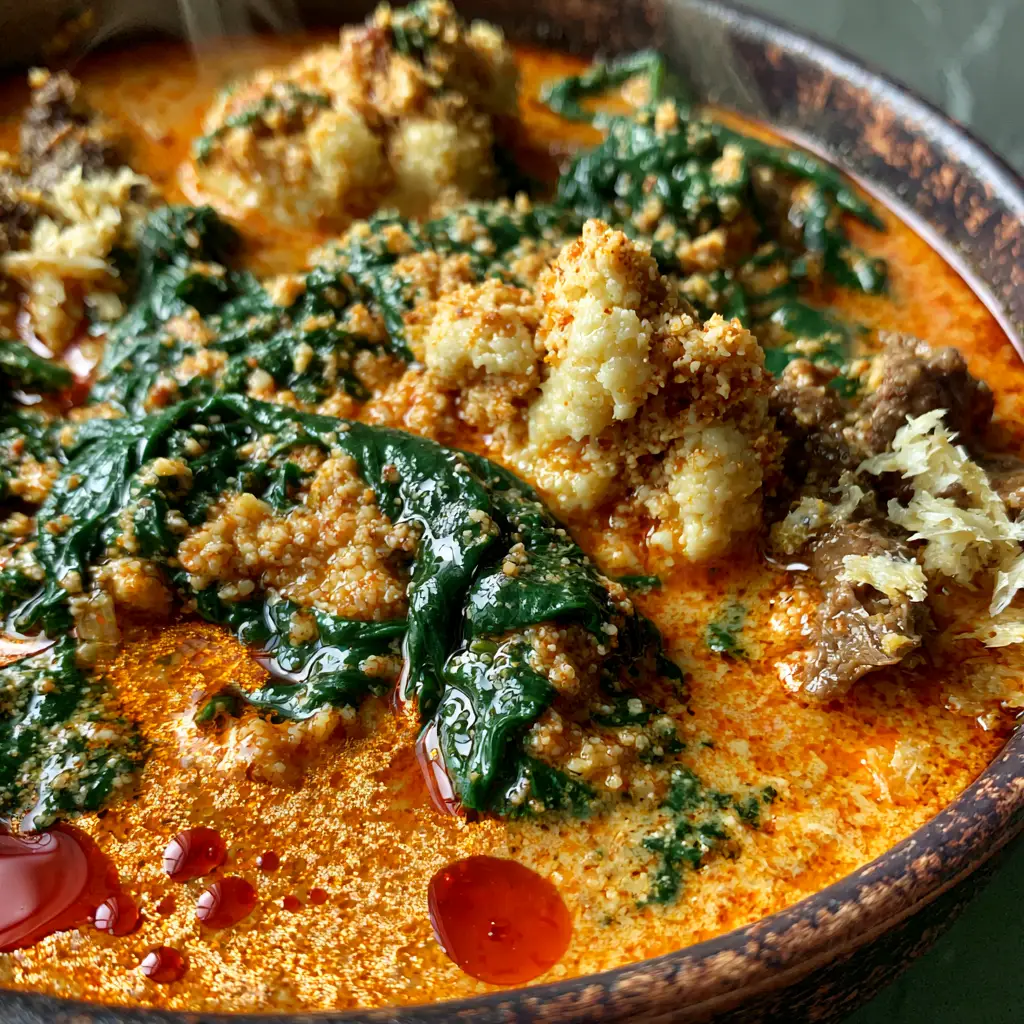
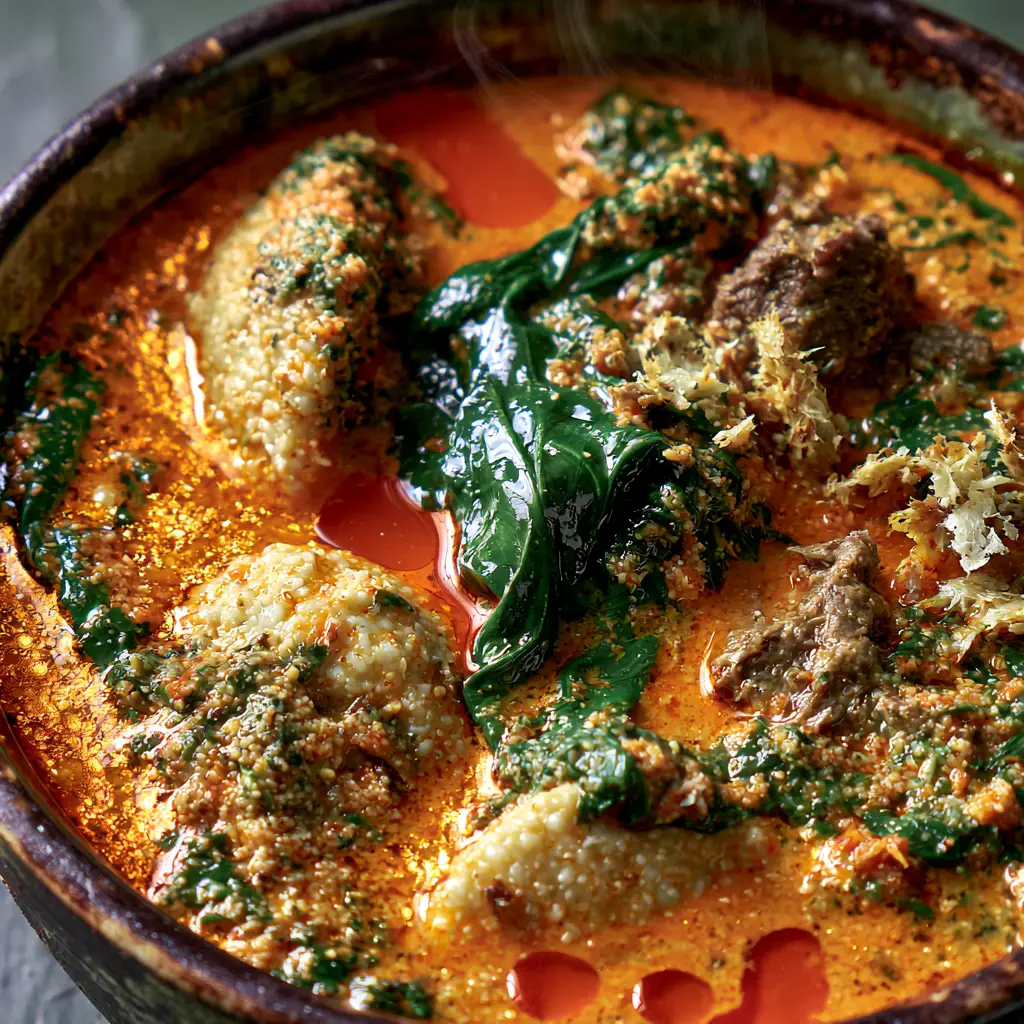
When you look at a bowl of authentic Egusi Soup, the visual cues tell the story of the flavor. You’ll see shimmering droplets of red palm oil pooling on the surface, catching the light alongside vibrant, dark green wilted spinach. The heart of the dish lies in the coarse, creamy-white melon seed lumps that provide a structural bite, contrasting perfectly with tender, succulent chunks of slow-cooked beef and flaked stockfish. Each spoonful should be steaming hot, releasing a nutty, earthy aroma that fills the kitchen.
Why This Authentic Lumpy Egusi Soup Recipe Works
- The Perfect Texture: We utilize the “frying and clumping” method to ensure you get those distinct, large melon seed clusters rather than a grainy consistency.
- Nutrient-Dense Powerhouse: Combining high-protein melon seeds with fiber-rich spinach and collagen-heavy stockfish makes this a balanced nutritional powerhouse.
- Visual Forensics: This recipe is designed to produce the exact shimmering orange-red sauce and蒸汽-trailed surface seen in high-end Nigerian food photography.
- Depth of Umami: By braising the beef with stockfish, we build a foundational broth that infuses the melon seeds with incredible savory depth.
The Protein Foundation and Flavor Building Blocks
Every ingredient in this Egusi Soup serves a specific culinary purpose. From the fats that carry the spice to the seeds that provide the body, here is what you will need for success.
Ground Egusi Seeds: 2.5 cups (375g) of melon seeds, ground into a coarse powder. These seeds provide the nutty flavor and the “egg-like” protein structure that forms the signature lumps.
Red Palm Oil: 1/2 cup (120ml) of sustainably sourced red palm oil. This oil is essential for the vibrant orange-red hue and provides a distinct earthy flavor that vegetable oils cannot replicate.
Tender Braised Beef: 1 lb (450g) of beef chuck or tripe, cut into bite-sized chunks. Slow-cooking the beef ensures it is succulent and releases natural juices into the stew base.
Flaked Dried Stockfish: 1 cup (approx. 100g) of pre-soaked and flaked stockfish. This delivers an intense, smoky umami flavor that is the hallmark of traditional West African stews.
Red Bell Pepper Base: 3 large red bell peppers (tatashe) and 2 scotch bonnet peppers blended together. This creates the thick, aromatic vegetable base that gives the soup its body and mild heat.
Wilted Savory Spinach: 3 cups (approx. 200g) of fresh spinach leaves, chopped. The spinach adds a pop of color and a fresh, mineral contrast to the rich fats of the oil and seeds.
Aromatic Supports: 1 large onion, finely diced, and 2 tbsp (30g) of ground crayfish. The crayfish acts as a natural flavor enhancer, bridging the gap between the beef and the melon seeds.
Essential Tools for a Professional Result
To achieve the “extreme macro” quality of a professional kitchen, you need the right gear. A heavy-bottomed Dutch oven or a traditional cast-iron pot is preferred to maintain the steady, even heat required for clumping the seeds without burning them.
You will also need a high-speed blender to pulse your peppers and onions into a smooth paste. A sturdy wooden spoon is vital for “folding” the spinach without bruising the leaves too much, preserving that vibrant green visual.
Mastering the Braise: Preparing the Proteins
Step 1: Developing the Base Broth
Start by placing your 1 lb (450g) of beef chunks and flaked stockfish into your pot. Add half of your diced onion and a generous pinch of salt. Cover with just enough water to submerge the meat and simmer over medium heat for 35-45 minutes. You are looking for the beef to be “fork-tender” and for the stockfish to have softened significantly, releasing its smoky aroma.
Step 2: Crafting the Pepper Base
While the meat simmers, blend your red bell peppers and scotch bonnets with the remaining onion. Use as little water as possible to ensure a thick, concentrated paste. This thickness is crucial for the shimmering oil droplets to separate correctly later in the cooking process.
The Secret to Perfectly Lumpy Melon Seeds
Step 3: The Clumping Technique
In a small bowl, mix your 2.5 cups (375g) of ground egusi with a few tablespoons of your warm meat stock. Stir until it forms a thick, paste-like consistency, similar to damp sand. This “pre-clumping” ensures that when added to the hot oil, the seeds stay together in those beautiful creamy-white clusters seen in our visuals.
Step 4: Frying the Aromatics
Heat your 1/2 cup (120ml) of red palm oil in a separate large pot for 2 minutes. Do not let it smoke; you want it hot enough to shimmer. Add your pepper paste and fry for 10-12 minutes. You will know it is ready when the oil begins to rise to the top and the paste turns a deep, rich red. If you’re looking for a lighter meal earlier in the day, you might consider our fluffy pancake recipe, but for dinner, this rich stew is unmatched.
Step 5: Setting the Lumps
Drop small spoonfuls of your egusi paste into the frying pepper base. Do not stir! Cover the pot and let it steam for 5-8 minutes. The heat will cause the proteins in the melon seeds to coagulate into firm, distinct lumps. Once set, gently fold them into the sauce using a wooden spoon, being careful not to break them into a powder.
Final Assembly and Sensory Cues
Step 6: Harmonizing the Stew
Add your cooked beef, stockfish, and the remaining concentrated broth into the pot with the egusi lumps. Stir in the ground crayfish. Simmer on low for another 10 minutes. Watch for the “shimmering oil droplets” to pool on the surface—this is the visual signal that the flavors have fully melded.
Step 7: Folding the Spinach
Finally, add your chopped spinach. Fold it in gently until it is just wilted and glistening with moisture. This should take no more than 2 minutes. The contrast of the dark green against the orange-red sauce is breathtaking. Much like how a zucchini spinach feta casserole relies on the freshness of the greens, this soup thrives on the spinach being added at the very last second.
Expert Tips for Success
- Don’t Over-Stir: The biggest mistake is stirring the egusi too early. Patience is what creates the lumps.
- Sourcing Stockfish: If you cannot find traditional stockfish, smoked mackerel or dried shrimp can serve as a substitute to maintain that umami profile.
- Palm Oil Temperature: If the oil is too hot, it will bleach and lose its red color. Keep it at a steady shimmer.
- The “Oil Rise”: If you don’t see oil pooling at the top, the water hasn’t evaporated enough. Continue to simmer uncovered for 5 minutes.
Storing and Reheating Your Egusi Soup
Egusi Soup actually tastes better the next day as the melon seeds continue to absorb the spicy broth. Store in an airtight container in the refrigerator for up to 4 days. When reheating, do so on the stovetop over low heat. You may need to add a splash of water (1/4 cup or 60ml) to loosen the consistency, as the seeds will thicken the sauce while cold.
For long-term storage, this soup freezes exceptionally well for up to 3 months. Thaw overnight in the fridge before reheating slowly to maintain the integrity of the beef and egusi lumps.
Perfect Pairings for a Nigerian Feast
Egusi Soup is traditionally served with “swallow”—starchy sides like Pounded Yam, Fufu, or Eba. The neutral flavor of the swallow acts as the perfect vessel for the rich, oily stew. If you are serving this as part of a larger spread, a refreshing cucumber onion salad can provide a crisp, acidic palate cleanser between bites of the rich soup.
For those who prefer a more Western pairing, this soup is incredible over a bed of white rice or alongside some slow cooker baby potatoes for a fusion experience that hits every comfort note.
Frequently Asked Questions
While you can use vegetable oil, you will lose the signature orange-red color and the specific earthy flavor profile that makes Egusi Soup authentic. Palm oil is highly recommended for the traditional experience.
The secret is to mix the ground seeds with a little liquid to form a paste, then drop spoonfuls into the hot pepper base and cover the pot to steam for 5-8 minutes without stirring.
It has a mild to moderate heat depending on how many Scotch Bonnet peppers you include in your base. The richness of the seeds and oil usually balances the spice beautifully.
Egusi seeds come from a specific type of protein-rich melon (Citrullus lanatus) native to West Africa. They are dried and ground into a meal that acts as both a thickener and a protein source in stews.
Bitterness usually occurs if the melon seeds were not fresh or if the pepper base wasn’t fried long enough to remove the raw taste of the onions and peppers. Ensure your seeds are stored in a cool, dry place.
Authentic Lumpy Nigerian Egusi Soup Recipe
Egusi Soup: The Ultimate Guide to Authentic Nigerian Lumpy Melon Seed Stew
Ingredients
Equipment
Method
- Simmer beef and stockfish with onions and salt in water for 45 minutes until tender.
- Mix ground egusi with a small amount of broth to form a thick, damp-sand-like paste.
- Heat palm oil, add blended peppers, and fry until oil pools on the surface (about 12 minutes).
- Drop spoonfuls of egusi paste into the pot. Cover and steam for 8 minutes without stirring.
- Add meats and broth. Simmer for 10 minutes, then fold in spinach for 2 minutes until wilted.
Notes
Use stockfish for the most authentic smoky flavor profile.

Share the Flavor of West Africa
We hope this Egusi Soup brings a touch of authentic Nigerian warmth to your kitchen. The combination of coarse melon seed lumps and rich palm oil is a sensory experience like no other. If you enjoyed this recipe, please leave a comment below and tell us how your lumps turned out! Don’t forget to sign up for our newsletter for more deep dives into global culinary traditions and share your beautiful creations on Pinterest.