There is a specific, almost magical transformation that happens when the humble tuber meets the intense, dry heat of a Mediterranean oven. These Greek potatoes aren’t just a side dish; they are a masterclass in textural contrasts. Imagine a wedge so crispy on the outside it shatters like glass, revealing a steaming, buttery-soft yellow interior that melts the moment it hits your tongue.
Inspired by the rustic tavernas of the Peloponnese, this recipe focuses on the forensic details that separate average roasted spuds from elite culinary art. We are looking for those signature charred dark brown edges and a vibrant oily sheen that carries the essence of lemon and oregano. Whether you are serving these alongside a perfectly seared steak or as the star of a plant-based feast, the result is always the same: pure, golden perfection.
The Anatomy of a Perfect Mediterranean Potato Wedge
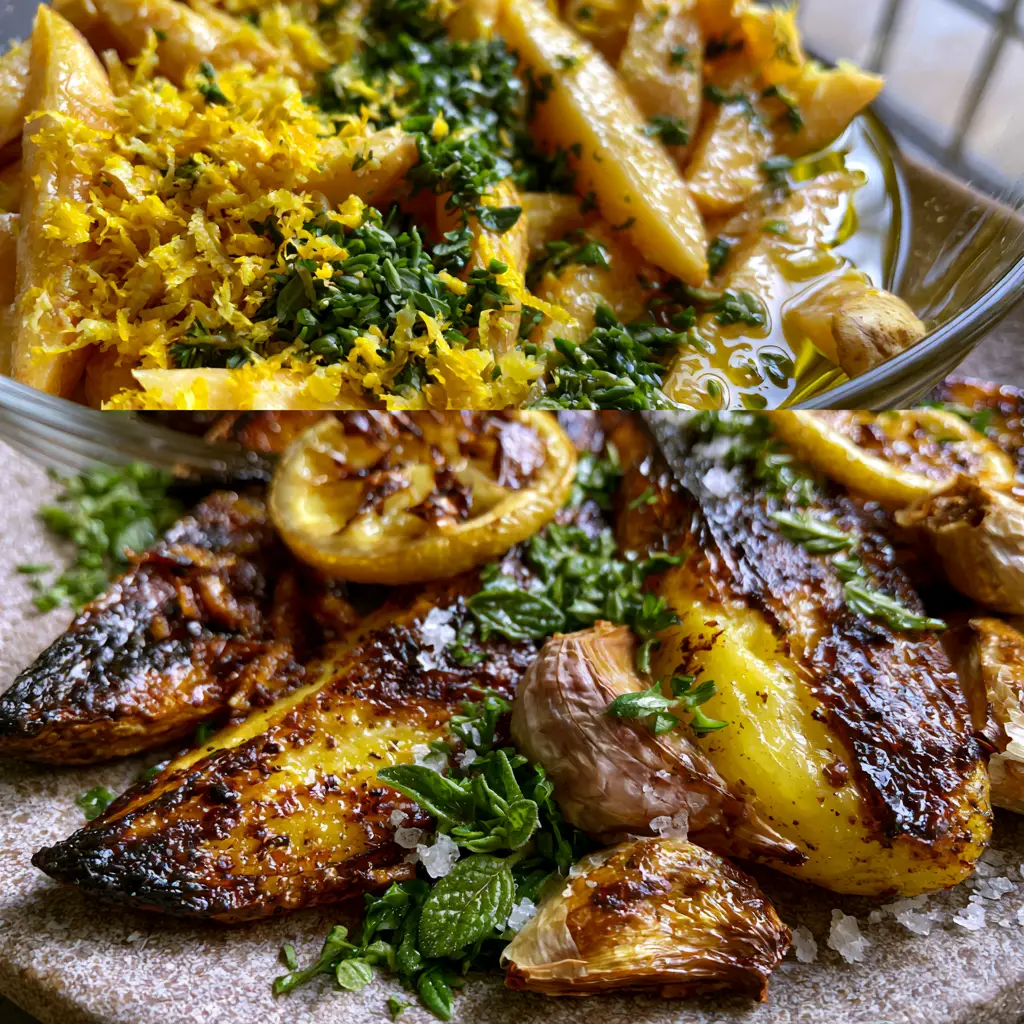
To achieve the visual and sensory results described in our professional blueprint, we must focus on three pillars: starch management, fat emulsification, and aromatic timing. We don’t just toss potatoes in oil; we build a flavor crust. This recipe ensures every bite is infused with the bright acidity of blistered lemons and the earthy depth of whole roasted garlic cloves.
- The Glass-Like Surface: Accomplished through a specific parboiling technique that creates a starchy slurry on the potato exterior.
- The Buttery Interior: We utilize Yukon Gold potatoes for their natural yellow hue and high moisture content, ensuring they remain soft while the outside chars.
- Charred Aromatics: By roasting whole garlic cloves in their papery skins, we protect the garlic from burning while allowing it to become sweet and spreadable.
- Vibrant Herbaceous Finish: A dual-stage oregano application ensures deep-cooked flavor and fresh, emerald-green visual appeal.
The Aromatic Mediterranean Pantry: What You’ll Need
3 lbs (1.36kg) Yukon Gold Potatoes: These are non-negotiable for achieving that buttery soft yellow interior. Their medium-starch content allows them to hold their wedge shape while developing a superior crust compared to Russets.
1/2 cup (120ml) Extra Virgin Olive Oil: Use a high-quality oil, as this creates the signature sheen and provides the conductive heat necessary for deep browning. It acts as the primary flavor carrier for the lemon and herbs.
2 Large Lemons: We use both the zest for the raw toss and thin slices for blistering in the oven. The acid cuts through the richness of the oil, providing that quintessential Greek brightness.
10-12 Whole Garlic Cloves: Keep the papery skins on! This is a culinary secret for roasting; the skins act as a mini-oven, steaming the garlic into a custard-like consistency while the potato edges char.
3 tbsp (9g) Fresh Oregano: Chopped finely for the roast and kept in whole leaves for the final garnish. The heat-treated oregano becomes earthy, while the fresh leaves provide a pop of emerald green color.
1 tsp (5g) Baking Soda: This is our secret scientific weapon. Adding baking soda to the parboiling water breaks down the potato’s pectin, creating a starchy surface that roasts into a thick, crunchy crust.
Coarse Sea Salt and Cracked Black Pepper: Large crystals are essential for the final visual aesthetic and provide bursts of salinity that contrast with the creamy potato interior.
Essential Tools for High-Heat Roasting
To achieve the dark golden-brown charred edges, you need a heavy-duty rimmed baking sheet. A matte textured stone dish or a dark metal pan conducts heat more efficiently than glass, which is vital for the Maillard reaction. You will also need a large glass bowl for tossing the raw wedges to ensure every nook and cranny is coated in the lemon-oregano emulsion.
A sharp chef’s knife is required to get clean, uniform wedges. If your wedges are uneven, the smaller ones will burn before the larger ones reach that buttery-soft yellow stage. Consistency in cutting is the hallmark of a professional-grade dish.
The Forensic Path to the Perfect Golden Wedge
1. The Starch Activation Parboil
Start by peeling your Yukon Golds and slicing them into thick, uniform wedges. Bring a large pot of water to a boil and add a generous pinch of salt and the 1 tsp (5g) of baking soda. Boil the wedges for exactly 8-10 minutes until the edges are just starting to soften but the center remains firm.
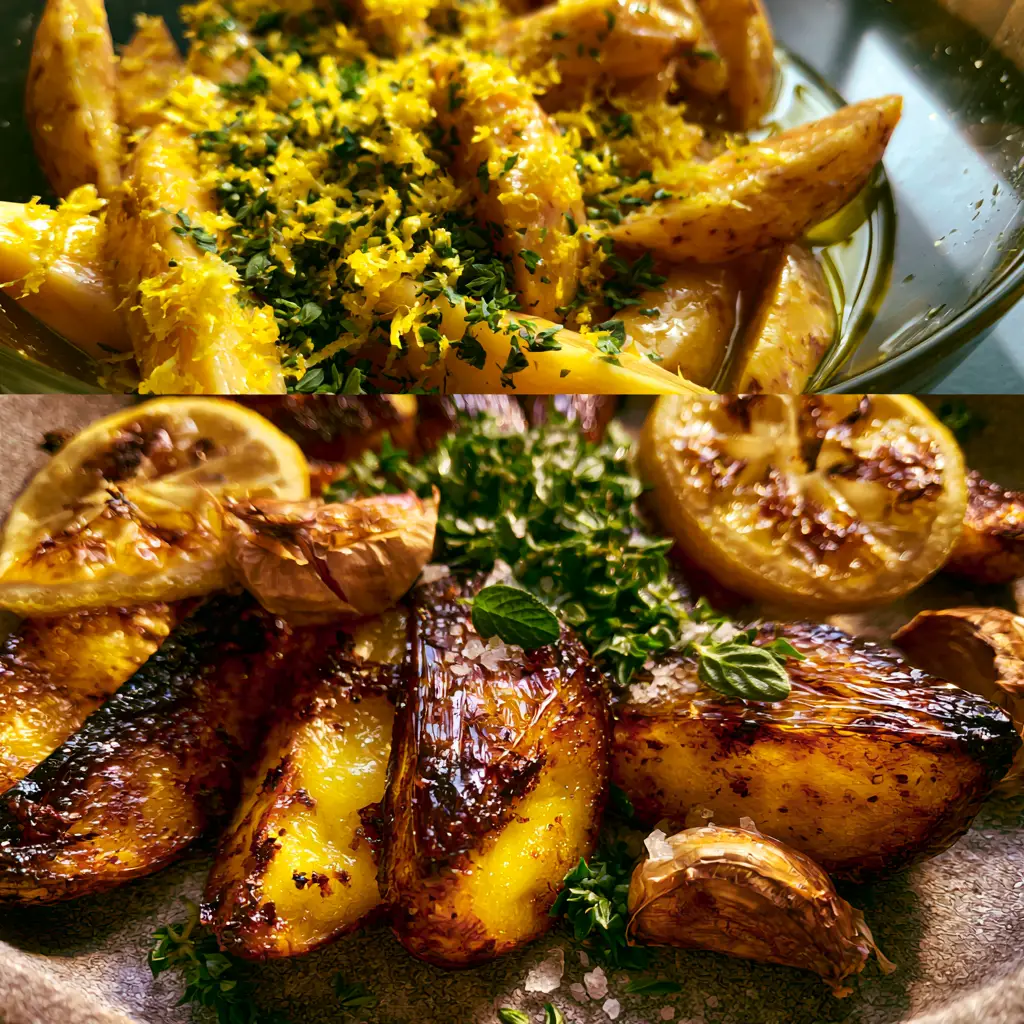
Drain the potatoes and let them steam dry for 2 minutes. This is critical; moisture is the enemy of crispiness. Once dry, transfer them to a glass bowl. Shake the bowl vigorously until a thick, mashed-potato-like slurry forms on the surface of the wedges.
2. Creating the Lemon-Oregano Emulsion
Zest one lemon directly over the warm potatoes. Add 1/4 cup (60ml) of the olive oil, half of the chopped oregano, a teaspoon of sea salt, and plenty of cracked black pepper. Toss well until the starchy slurry has absorbed the oil and herbs, creating a vibrant yellow, textured coating.
3. The High-Heat Roasting Phase
Preheat your oven to 425°F (220°C). Pour the remaining 1/4 cup (60ml) of olive oil onto your baking sheet and place it in the oven for 5 minutes to get the oil shimmering hot. Carefully spread the wedges onto the hot tray in a single layer, ensuring they aren’t crowded.
Nestle the whole, unpeeled garlic cloves and thin lemon slices between the wedges. The lemon slices should be in direct contact with the pan to ensure they blister and caramelize rather than just steaming.
4. Achieving the Deep Golden Char
Roast for 20 minutes, then use a metal spatula to flip the potatoes. You should already see dark brown charred edges forming where the potato touched the metal. Continue roasting for another 15-20 minutes. Look for the “glass-like” surface—a visual cue that the starch has fully dehydrated into a crunch.
5. The Final Aesthetic Garnish
Remove the tray from the oven. The lemon slices should be dark and blistered, and the garlic skins should be slightly papery and browned. Transfer everything to a matte stone dish. Scatter the remaining fresh oregano leaves and an extra sprinkle of coarse sea salt crystals over the top to catch the light.
Chef-Level Secrets for a Glass-Like Potato Crust
- Don’t Overcrowd: If the wedges are touching, they will steam instead of roast. Use two pans if necessary to ensure the air can circulate around each charred edge.
- Temperature Control: If your oven runs cool, increase the heat to 450°F (230°C). We need intense heat to caramelize the exterior before the interior turns to mush.
- The Fat Choice: While extra virgin olive oil is traditional for Greek potatoes, adding a tablespoon of rendered beef tallow or duck fat can increase the crunch factor exponentially.
- Acid Balance: If the potatoes feel too heavy after roasting, a final squeeze of fresh lemon juice just before serving will brighten the entire profile.
Storage, Reheating, and Make-Ahead Advice
These potatoes are best enjoyed immediately while the surface is at its peak crispiness. However, if you have leftovers, store them in an airtight container in the refrigerator for up to 3 days. To reheat, avoid the microwave at all costs, as it will turn the crust rubbery.
For the best results, reheat the Greek potatoes in a 400°F (200°C) oven or an air fryer for 5-7 minutes. This will reactivate the oils and restore that signature crunch. You can also parboil the potatoes a day in advance and keep them refrigerated until you are ready for the final roasting phase.
What to Serve with Mediterranean Roasted Potatoes
These versatile wedges pair beautifully with almost any protein. They are a natural fit for a Paleo gyro bowl or served alongside a zesty grilled shrimp. Because of their rich, buttery interior, they also act as a fantastic base for a hearty weekday dinner.
If you are looking for a lighter pairing, try serving them with a crisp green bean salad or a refreshing summer peach salad. The acidity of the salad helps balance the roasted garlic and olive oil sheen of the potatoes.
Common Questions About Authentic Greek Potatoes
Yes, but use only 1 tablespoon of dried oregano as it is more potent. Fresh oregano is recommended for the final garnish to provide a vibrant visual pop.
Yukon Golds are preferred for their buttery yellow interior and ability to hold their shape. Russets will be fluffier but won’t provide the same creamy texture.
Baking soda raises the pH of the water, breaking down the potato’s pectin and creating a starchy surface that crisps up significantly more than plain water.
Lack of crispiness is usually due to overcrowding the pan or too much moisture. Ensure you steam-dry the potatoes after parboiling and use enough olive oil to conduct high heat.
Roasting garlic at high temperatures can make it bitter and burnt. Leaving the papery skins on protects the clove, allowing it to steam into a sweet, spreadable paste.
The Ultimate Greek Roasted Potato Recipe
Greek Potatoes with Crispy Charred Edges and Roasted Garlic
Ingredients
Equipment
Method
- Place potato wedges in a pot with water, salt, and baking soda. Boil 8-10 minutes until edges are tender. Drain and steam dry.
- Transfer potatoes to a glass bowl and shake vigorously until a thick starchy slurry forms on the surface of the wedges.
- Add lemon zest, half the oil, and half the oregano to the bowl. Toss to coat every wedge in a thick yellow emulsion.
- Place potatoes on a hot, oiled baking sheet with whole garlic cloves and lemon slices. Do not overcrowd.
- Roast at 425°F (220°C) for 20 minutes, flip, and roast for another 20 minutes until dark brown charred edges appear.
- Plate on a stone dish, garnish with remaining fresh oregano, blistered lemons, and coarse sea salt.
Notes
Keep garlic skins on to prevent burning during the high-heat roast.

Bring the Flavors of the Mediterranean Home
Mastering the art of Greek potatoes is a rewarding journey for any home cook. The combination of charred edges, roasted garlic, and that unmistakable lemon-oregano aroma creates a sensory experience that is hard to beat. When you pull that tray out of the oven and see the glistening oily sheen and the vibrant green herbs, you’ll know you’ve created something truly special.
Did you achieve that perfect glass-like crunch? We want to hear about it! Leave a comment below and share your results. Don’t forget to follow us on Pinterest for more authentic flavor inspiration and professional culinary tips.