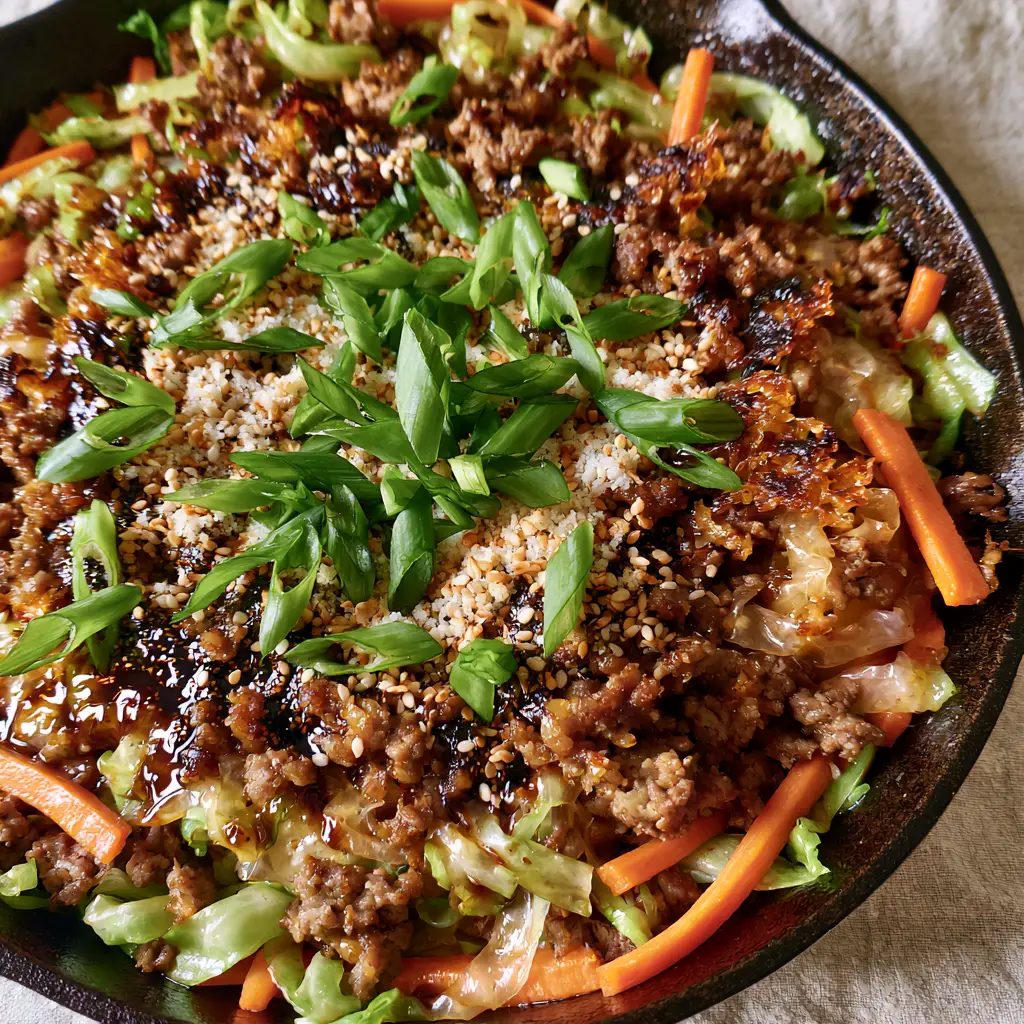
There is nothing quite like the sound of a seasoned cast iron skillet meeting high heat, followed by the immediate, savory sizzle of a ground beef cabbage stir fry. This dish is the ultimate solution for busy weeknights when you crave something that looks like a professional restaurant plate but takes less than half an hour to prepare. Imagine deeply browned, crispy-edged crumbles of beef mingling with translucent, tender-crisp ribbons of cabbage and vibrant julienned carrots.
Every bite of this ground beef cabbage stir fry is a masterclass in texture and flavor contrast. We are moving beyond the basic “egg roll in a bowl” and elevating it with a glossy, dark soy-ginger reduction that coats every ingredient in a shimmering glaze. Garnished with a snowy dusting of toasted white sesame seeds and the sharp brightness of fresh green onions, this dish is as visually stunning as it is delicious.
Whether you are a seasoned home cook or just looking for a reliable addition to your rotation of easy ground beef skillet recipes, this technique-driven guide will ensure your cabbage stays crisp and your beef gets that essential Maillard-reaction crust. Let’s dive into the science of the perfect stir fry.
Why This Ground Beef Cabbage Stir Fry Wins Dinner Tonight
- Textural Harmony: You get the crunch of julienned carrots, the tender-crisp bite of cabbage, and the specific “snap” of crispy beef crumbles.
- Glossy Reduction: Unlike watery stir-fries, our soy-ginger glaze is reduced until it catches the light, providing a professional, shimmering finish.
- Nutrient-Dense: This recipe packs a massive amount of cruciferous vegetables and high-quality protein into a single pan.
- Budget-Friendly Elegance: It uses humble ingredients like green cabbage and ground beef but presents them with high-end culinary flair.
Essential Components for the Perfect Cabbage and Beef Skillet
To achieve the visual and flavor profile described in our blueprint, every ingredient serves a specific structural purpose. Here is what you will need for your ground beef cabbage stir fry.
Lean Ground Beef: Use 1 lb (450g) of 90/10 lean ground beef to ensure you get plenty of browning without excessive grease drowning your vegetables. The goal is to create crispy, browned crumbles that hold their shape.
Green Cabbage: 6 cups (approx. 500g) of thinly shredded green cabbage provides the bulk and the “translucent ribbon” texture once sautéed. It absorbs the soy-ginger sauce perfectly while maintaining a slight structural integrity.
Julienned Carrots: 1 cup (100g) of thin, matchstick-sized orange carrots adds a pop of vibrant color and a natural sweetness that balances the salty soy sauce. Their shape allows them to cook at the same rate as the cabbage.
The Aromatic Base: 1 tbsp (15g) of freshly grated ginger and 3 cloves (approx. 15g) of minced garlic are essential for that signature Asian-inspired fragrance. These should be fresh rather than powdered for the most impact.
Soy-Ginger Reduction: A mix of 1/4 cup (60ml) low-sodium soy sauce and 1 tbsp (15ml) toasted sesame oil creates the base of our glossy glaze. A teaspoon of honey or brown sugar is the secret “invisible” ingredient that ensures the sauce shimmers and sticks to the beef.
Visible Garnishes: 2 tbsp (18g) toasted white sesame seeds and 3 thinly sliced green onions (scallions) provide the final layer of texture and visual contrast. These are non-negotiable for achieving that “smartphone food photography” look.
Cooking Fat & Seasoning: 1 tbsp (15ml) of high-smoke point oil (like avocado or vegetable oil) is needed to sear the beef, along with 1/2 tsp (3g) kosher salt to draw out moisture from the cabbage.
Must-Have Tools for Professional Searing
A seasoned black cast iron skillet is the preferred vessel for this ground beef cabbage stir fry. Cast iron retains heat exceptionally well, which is necessary to achieve those crispy-edged beef crumbles without steaming the meat in its own juices.
You will also need a sharp chef’s knife for those precise julienned carrots and translucent cabbage ribbons. A sturdy wooden spatula or metal turner is vital for scraping the flavorful “fond” (browned bits) off the bottom of the pan during the deglazing process.
Mastering the Sear: Step-by-Step Instructions
Phase 1: Achieving the Perfect Beef Crust
Heat your cast iron skillet over medium-high heat until a drop of water flicked onto the surface dances and evaporates immediately. Add 1 tbsp (15ml) of oil and swirl to coat the bottom. Add the 1 lb (450g) of ground beef in a single, flat layer.
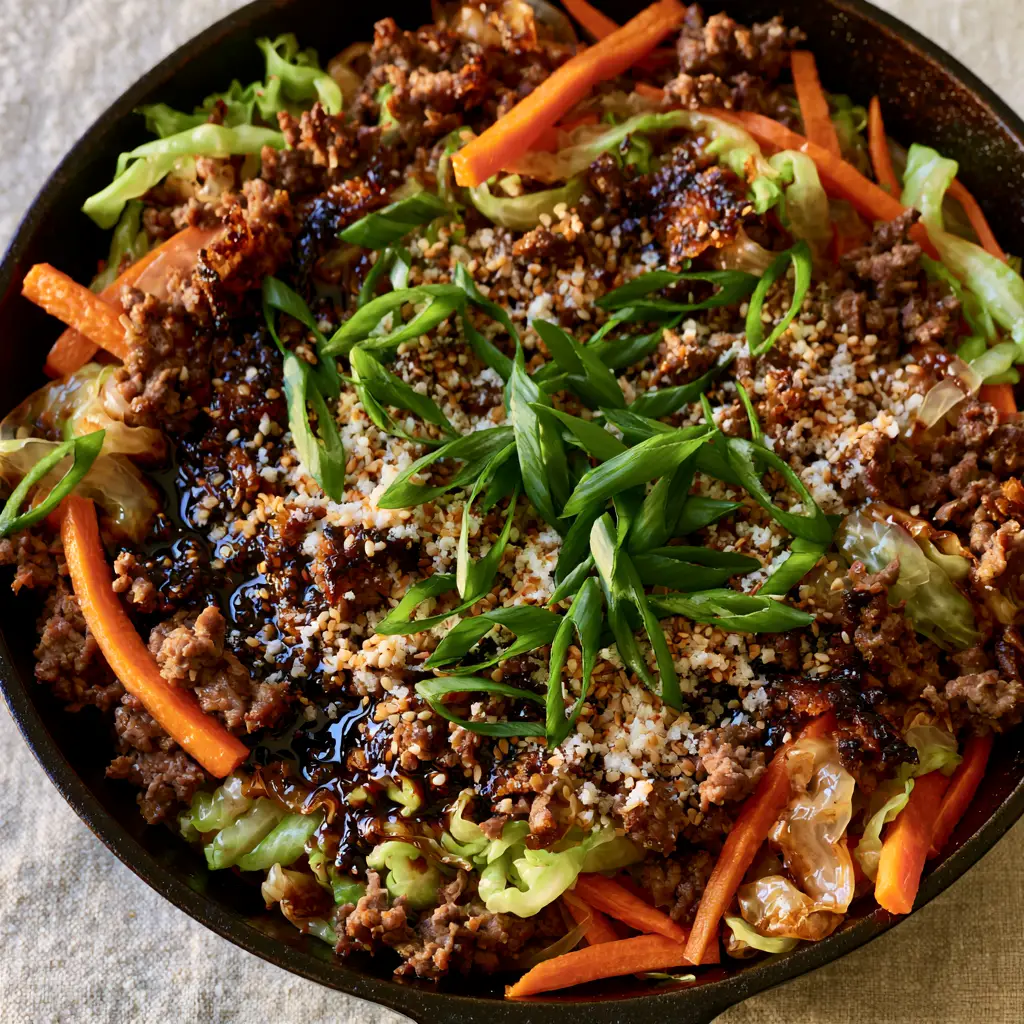
Visual Cue: Do not break the meat up immediately. Let it sit undisturbed for 3-4 minutes until a deep, golden-brown crust forms on the bottom. Use your spatula to break the beef into bite-sized crumbles, ensuring the edges get crispy and dark.
Phase 2: Developing Aromatics and Vegetable Texture
Push the beef to the outer edges of the skillet and add the minced garlic and grated ginger to the center. Sauté for 30-60 seconds until the fragrance fills your kitchen. Now, toss in the 6 cups (500g) of shredded cabbage and 1 cup (100g) of julienned carrots.
Sauté the mixture, tossing frequently. You are looking for a specific sensory cue: the cabbage should transition from opaque white to a translucent, tender-crisp state. This usually takes about 5-7 minutes of active cooking.
Phase 3: The Glossy Reduction and Finishing
Whisk together the soy sauce, sesame oil, and optional sweetener. Pour this mixture over the skillet contents. The liquid will immediately begin to bubble and steam. Stir constantly as the sauce reduces and emulsifies with the small amount of fat in the pan.
Visual Cue: Watch for the sauce to transform into a “shimmering dark reduction” that clings to every ribbon of cabbage and every beef crumble. Once the mixture looks glossy and there is no liquid pooling at the bottom, remove from heat.
Pro-Level Secrets for Culinary Success
- Cold Cabbage is Key: Keep your shredded cabbage in the fridge until the moment it goes into the pan to ensure it stays crisp rather than turning mushy.
- Avoid Overcrowding: If using a smaller skillet, cook the beef and vegetables in two batches. Overcrowding leads to steaming, which prevents those crispy edges we want.
- Dual-Unit Precision: Always measure your liquids! 1/4 cup (60ml) of soy sauce is the “sweet spot” for flavor without making the dish overly salty.
- The Garnish Layering: Apply the toasted sesame seeds first so they stick to the glaze, then scatter the green onions on top for a fresh, bright green pop.
Storing and Reheating Your Leftovers
This ground beef cabbage stir fry holds up remarkably well for meal prep. Store leftovers in an airtight container in the refrigerator for up to 4 days. When reheating, use a skillet over medium heat rather than a microwave to maintain the texture of the beef.
If you find the cabbage has released a little extra moisture during storage, simply sauté it for 2 minutes on high heat to re-reduce the sauce until it is glossy again. We do not recommend freezing this dish, as the cabbage will lose its tender-crisp structure upon thawing.
Complementary Pairings and Serving Ideas
While this stir fry is a complete meal on its own, you can elevate the experience by serving it alongside other flavorful dishes. If you enjoy the combination of beef and aromatics, you might also love our savory beef and onion stir fry for a different take on skillet cooking.
For those looking for more protein variety, this recipe works exceptionally well as a base for ground turkey teriyaki bowls. If you have extra cabbage, consider making a side of tangy Korean cabbage salad to add a fermented, acidic punch to the meal. For a quick weeknight backup, check out our collection of simple beef recipes that require minimal cleanup.
Answering Your Top Kitchen Questions
Yes, purple cabbage works perfectly. However, be aware that it may slightly discolor the ground beef with a bluish tint, though the flavor remains identical.
The secret is using a cast iron skillet and letting the beef sit undisturbed in the hot oil for 3-4 minutes before breaking it up. This allows the Maillard reaction to create those dark, crispy edges.
Yes! This dish is naturally low-carb. To keep it strictly keto, simply omit the honey in the sauce reduction or use a sugar-free sweetener alternative.
You can use a mandoline slicer with a julienne blade, a specialized julienne peeler, or simply cut thin planks with a chef’s knife and slice them into matchsticks.
Watery stir fry usually happens if the cabbage is cooked over too low a heat or if the pan is overcrowded. High heat is essential to evaporate moisture as the cabbage softens.
The Official Recipe for Ground Beef Cabbage Stir Fry
Ground Beef Cabbage Stir Fry: A 20-Minute Crispy Skillet Masterpiece
Ingredients
Equipment
Method
- Heat 1 tbsp oil in a cast iron skillet over medium-high heat. Add ground beef in a flat layer and sear undisturbed for 3-4 minutes until a crispy brown crust forms. Break into crumbles and cook until no longer pink.
- Push beef to the edges, add garlic and ginger to the center for 30 seconds. Toss in the cabbage and carrots. Sauté for 5-7 minutes until cabbage ribbons are translucent and tender-crisp.
- Pour in the soy sauce, sesame oil, and honey. Stir constantly for 1-2 minutes until the sauce reduces into a dark, glossy glaze that coats everything. Remove from heat and top with toasted sesame seeds and green onions.
Notes
For a spicier version, add 1 tsp of red pepper flakes during the aromatic stage.
Closing Thoughts & Community
Creating a restaurant-quality ground beef cabbage stir fry at home is all about the balance of high heat and fresh ingredients. The contrast between the crispy beef and the translucent cabbage ribbons creates a dining experience that is both comforting and sophisticated. We hope this becomes a staple in your kitchen!
Did you make this recipe? We would love to hear how your “crispy edges” turned out! Please leave a comment below and share your photos with us. Don’t forget to follow us and save this recipe to your favorite boards on Pinterest for your next meal planning session.