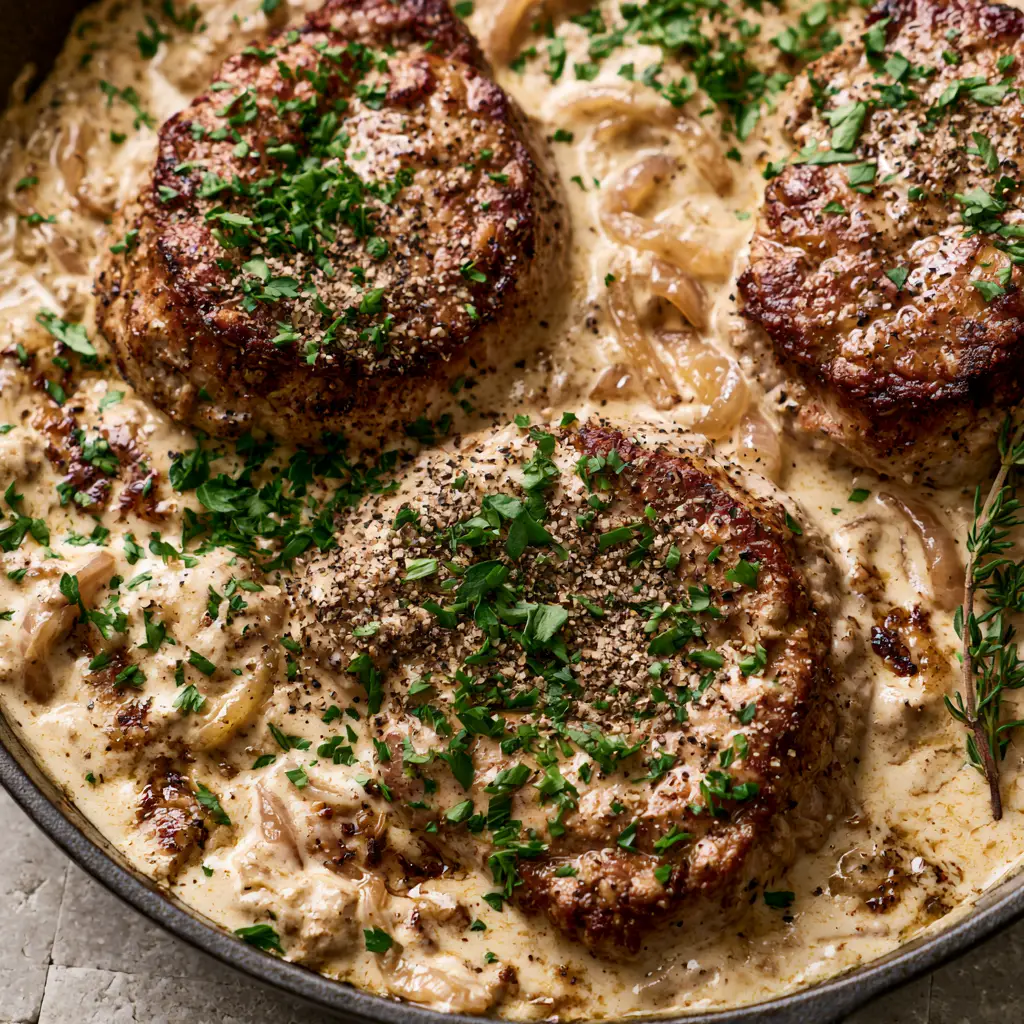
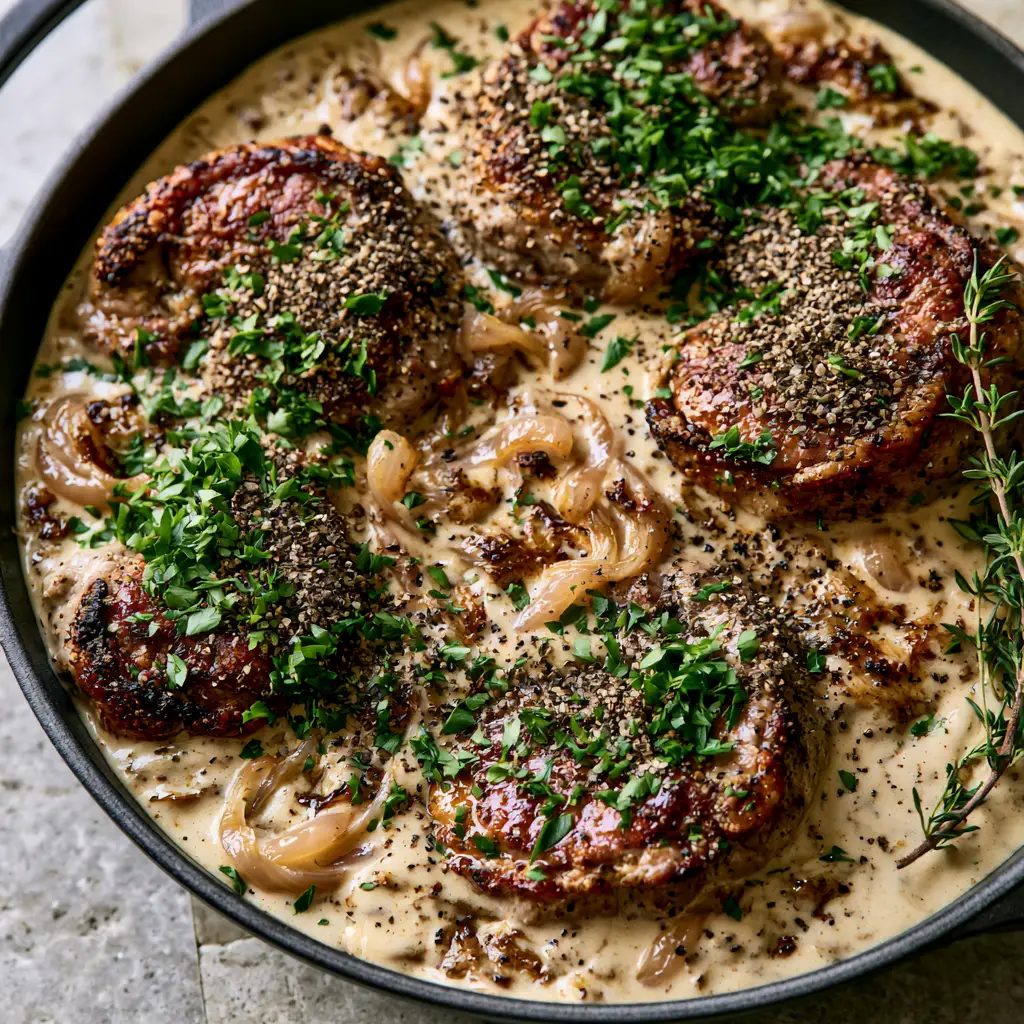
There is a specific culinary magic that happens when high heat meets a well-seasoned cast iron skillet. These pork medallions with onion gravy represent the pinnacle of home-cooked comfort, bridging the gap between a quick weeknight meal and a sophisticated bistro-style entree. The visual appeal is undeniable: thick-cut tenderloin with a crusty, golden-brown exterior and a center that remains glistening and succulent.
The soul of this dish lies in the contrast of textures. You have the structural integrity of the pan-seared pork paired with a velvety, warm ivory cream sauce that clings to every bite. Soft, translucent yellow onion slivers provide a delicate sweetness, while the heavy dusting of coarse-ground black pepper cuts through the richness of the heavy cream reduction. It is a sensory experience that begins the moment the pork hits the hot fat and ends with a clean plate.
Whether you are looking to expand your repertoire of tender pork recipes or simply want a meal that looks as good as it tastes, this recipe delivers. By following professional searing techniques and mastering the art of the pan-sauce reduction, you will achieve a result that looks exactly like a high-end food photograph—complete with those characteristic golden pan drippings and bright pops of fresh Italian parsley.
Why You Will Crave These Pan-Seared Medallions
- Perfectly Balanced Textures: The combination of a hard sear and a soft, translucent onion reduction creates a professional mouthfeel.
- One-Pan Efficiency: We utilize the “fond”—those browned bits at the bottom of the skillet—to build a deep, complex gravy without extra dishes.
- Visual Sophistication: With bright green minced parsley and fresh thyme sprigs, this dish is naturally photogenic and dinner-party ready.
- Reliable Juiciness: By cutting the tenderloin into thick medallions, we ensure the meat stays tender while achieving a deep golden crust.
The Essential Elements for Perfect Pork
To achieve the specific visual and flavor profile of these pork medallions with onion gravy, each ingredient serves a scientific and aesthetic purpose. Do not skip the fresh herbs; they provide the essential aromatic lift to the heavy cream.
Pork Tenderloin: 1.5 lbs (680g) of pork tenderloin, trimmed and cut into 1.5-inch (4cm) thick medallions. This cut is lean but incredibly tender when cooked quickly over high heat to a perfect medium-blush center.
Yellow Onions: 2 medium (300g) yellow onions, peeled and sliced into very thin slivers. These will transform into translucent ribbons that provide the structural bulk of your savory gravy.
Heavy Cream: 1 cup (240ml) of heavy whipping cream. This is the base of our ivory sauce, providing a luxurious mouthfeel that bouillon alone cannot replicate.
Unsalted Butter & Oil: 2 tbsp (30g) butter and 1 tbsp (15ml) neutral oil. The oil prevents the butter from burning at high temperatures, allowing for that deep, crusty sear on the pork.
Chicken or Beef Stock: 1/2 cup (120ml) of high-quality stock. This is used to deglaze the pan, lifting the golden pan drippings and incorporating them into the gravy.
Fresh Italian Parsley: 1/4 cup (10g) finely minced bright green flat-leaf parsley. The color contrast against the ivory sauce is essential for the finished look of the dish.
Coarse Black Pepper & Salt: 1 tsp (6g) coarse cracked black pepper and kosher salt to taste. The coarse pepper provides visible flecks and a sharp bite that balances the cream.
Fresh Thyme: 3-4 sprigs of fresh thyme. One sprig is used for the final garnish, while the others infuse the sauce with earthy, floral notes during the reduction.
Must-Have Tools for a Professional Finish
To replicate the visual result of a matte charcoal cast iron skillet finish, the choice of cookware is paramount. A 12-inch (30cm) cast iron skillet is the gold standard here because of its heat retention and ability to produce an even Maillard reaction across the meat.
You will also need a sharp chef’s knife for creating those uniform translucent onion slivers and finely minced parsley. A sturdy pair of stainless steel tongs will allow you to flip the pork without piercing the meat, ensuring the juices stay inside where they belong. Finally, a flat-edged wooden spoon is the best tool for scraping the fond during the deglazing process.
Step-by-Step Mastery of Pork Medallions with Onion Gravy
Preparing the Medallions for the Sear
Start by patting the pork tenderloin medallions completely dry with paper towels. Any moisture on the surface of the meat will create steam, preventing the formation of that deep, golden-brown crusty edge described in our visual blueprint. Season generously on both sides with salt and a portion of the coarse cracked black pepper.
Achieving the Golden-Brown Crust
Place your cast iron skillet over medium-high heat and add the oil and 1 tablespoon (15g) of butter. Once the butter is foaming and just starting to turn nut-brown, add the pork medallions. Do not crowd the pan; work in batches if necessary. Sear for 3-4 minutes per side until a visible, crusty golden exterior forms. The centers should remain glistening and slightly undercooked at this stage, as they will finish in the sauce.
Caramelizing the Translucent Onion Slivers
Remove the pork to a plate and lower the heat to medium. Add the remaining butter and the yellow onion slivers to the skillet. Use your wooden spoon to stir, coating them in the golden pan drippings. Sauté for 8-10 minutes. You are looking for a specific visual cue: the onions should be soft and translucent with slightly browned edges, but not fully dark brown or mushy.
Deglazing and Building the Ivory Cream Sauce
Pour in the stock to deglaze the pan, scraping vigorously to release all the browned pan bits. This is where the flavor lives! Once the liquid has reduced by half, pour in the heavy cream and add the thyme sprigs. Simmer gently until the sauce thickens into a velvety, warm ivory consistency that coats the back of a spoon.
The Final Fusion
Slide the pork medallions and any accumulated juices back into the skillet. Spoon the velvety sauce and onion slivers over the meat. Simmer for just 2 minutes to allow the pork to reach a safe internal temperature of 145°F (63°C). The sauce should be bubbling gently around the partially submerged medallions.
Expert Tips for Culinary Success
- The Temperature Trick: Always let your pork sit at room temperature for 20 minutes before searing. Cold meat drops the pan temperature, ruining your chances of a crusty edge.
- Don’t Rush the Onions: Translucent onions require patience. If they start to char too quickly, add a tablespoon of water to the pan to slow down the cooking.
- Coarse vs. Fine: Use a pepper grinder on the coarsest setting. The large shards of pepper are a key visual element and provide a different flavor profile than fine powder.
- Rest the Meat: Even when submerged in sauce, the meat benefits from a few minutes of resting before serving to ensure maximum juiciness.
Storage and Reheating Guidelines
These pork medallions with onion gravy are best enjoyed fresh from the skillet, but leftovers are wonderful. Store in an airtight container in the refrigerator for up to 3 days. When reheating, do so gently on the stovetop over low heat. Add a splash of milk or stock to loosen the cream sauce, as it will thicken significantly when cold.
We do not recommend freezing this dish. The heavy cream reduction can break and become grainy upon thawing, losing that velvety, warm ivory texture that makes the dish so special.
Perfect Pairings for a Complete Meal
To soak up every drop of that caramelized onion gravy, consider serving this over a bed of garlic butter rice. The simple flavors of the rice won’t compete with the rich cream sauce. If you prefer a lower-carb option, a bright Moroccan-inspired salad provides a zesty contrast to the savory pork.
For a true comfort food feast, pair the medallions with a side of Southern-style sides (coming soon) or a simple roasted vegetable medley. The acidity in a vinaigrette-based side dish helps cleanse the palate between bites of the rich, pepper-dusted gravy.
Common Questions About Pork Medallions
Pork loin chops can be used, but they may require a slightly longer cooking time and may not be as tender as the tenderloin medallions.
While you can, the sauce will not be as thick or velvety. Heavy cream has a higher fat content which allows it to reduce into a stable, warm ivory sauce without curdling under heat.
While not strictly required, cast iron is highly recommended for these pork medallions with onion gravy because it provides the even, high heat necessary for the signature golden-brown crust.
The key is to sear quickly over high heat and use a meat thermometer. Pork tenderloin is lean, so pull the medallions when they reach an internal temperature of 145°F (63°C) to ensure they remain juicy.
Cut the onions pole-to-pole into very thin slivers rather than rings. This allows them to soften into the sauce more effectively, creating a better visual texture for the gravy.
Pork Medallions with Onion Gravy: The Recipe Card
Pork Medallions with Onion Gravy: A Creamy One-Pan Masterpiece
Ingredients
Equipment
Method
- Pat the pork medallions dry and season generously with salt and coarse black pepper.
- In a hot cast iron skillet with oil and butter, sear pork for 3-4 minutes per side until a deep golden-brown crust forms. Remove to a plate.
- Add onions to the pan drippings and sauté until translucent and soft, about 8-10 minutes.
- Add stock to deglaze, then pour in heavy cream and thyme. Simmer until the sauce is a thick, warm ivory color.
- Return pork to the skillet, coating with the sauce. Garnish with minced parsley, extra black pepper, and a fresh thyme sprig.
Notes
If the sauce thickens too much, whisk in a tablespoon of stock to reach desired consistency.

Closing & Call to Action
Mastering the art of pork medallions with onion gravy is a gateway to professional-level home cooking. The combination of precise pan-searing and a classic cream reduction creates a dish that is as visually stunning as it is delicious. If you enjoyed this one-pan wonder, please leave a comment below and let us know how your sear turned out! Don’t forget to follow us and share your creations on Pinterest for more culinary inspiration.