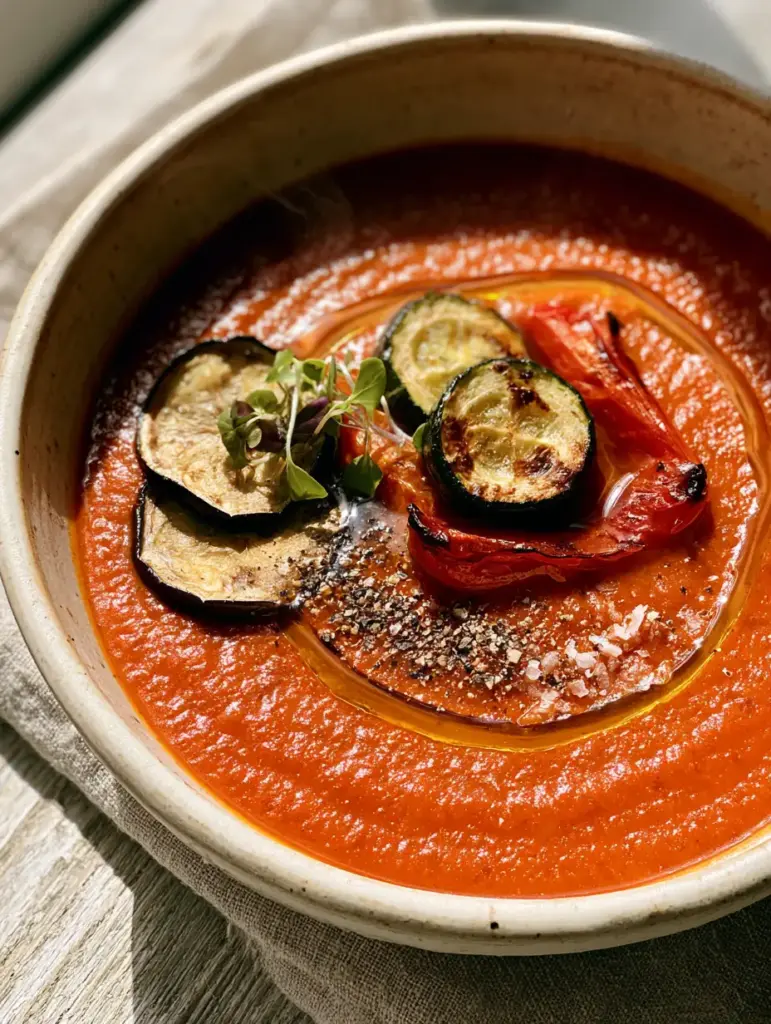
If you have ever craved the sun-drenched flavors of a Provencal summer but desired the comforting warmth of a velvety bowl, this ratatouille soup is your answer. Unlike traditional chunky stews, this version elevates humble ingredients through the power of high-heat roasting and precise garnishing techniques. Imagine a thick, vibrant deep-orange and red base that carries the concentrated essence of garden-fresh produce in every spoonful.
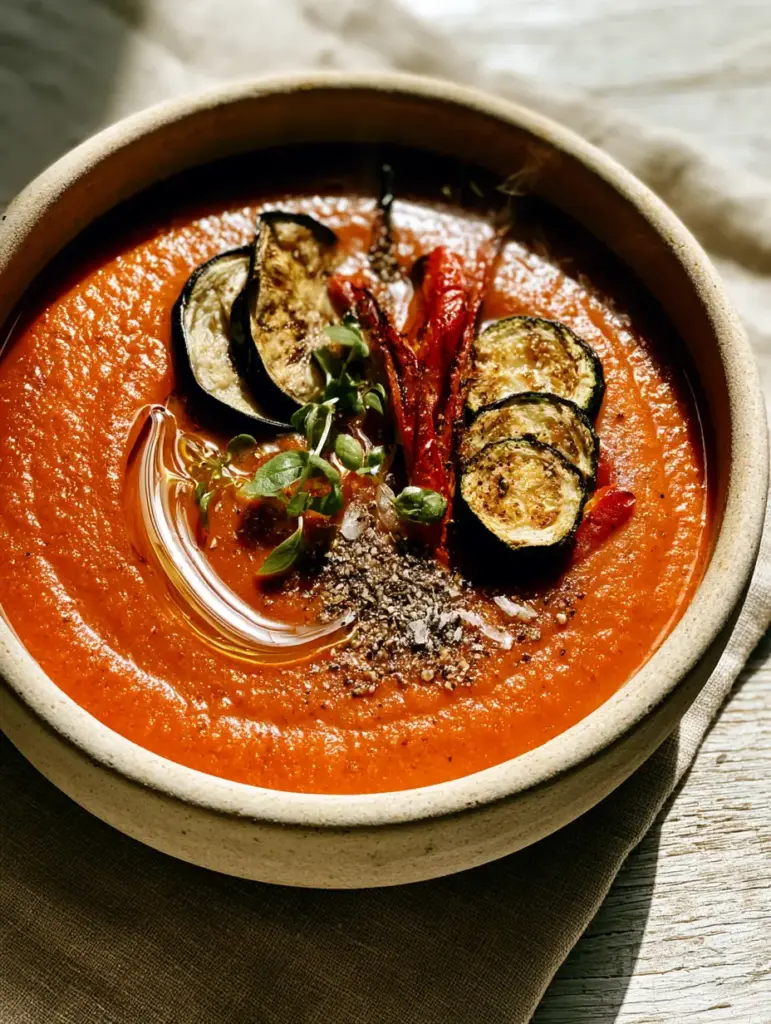
The magic of this dish lies in the contrast of textures. We start with a base of pureed roasted tomatoes and red peppers to create a silky, textured, and velvety mouthfeel. Then, we crown the bowl with artfully arranged charred eggplant discs and caramelized zucchini rounds that provide a smoky, savory counterpoint to the bright acidity of the soup. It is a visual and culinary masterpiece that brings elite restaurant quality to your home kitchen.
Why This Vibrant Roasted Ratatouille Soup Works
- Concentrated Depth: Roasting the tomatoes and peppers first caramelizes their natural sugars, providing a depth of flavor that simmering alone cannot achieve.
- Textural Contrast: The velvety smooth pureed base paired with the firm, charred edges of the eggplant and zucchini creates a sophisticated dining experience.
- Visually Stunning: With glistening extra virgin olive oil and micro-basil, this dish is designed to be the centerpiece of any dinner table.
- Nutrient Dense: This recipe is a powerhouse of vitamins A and C, antioxidants, and fiber, making it one of our favorite healthy dinner ideas.
The Anatomy of an Authentic Ratatouille Soup
Every ingredient in this recipe serves a specific forensic purpose to match the visual and flavor profile of a professional-grade dish. We do not just toss vegetables in a pot; we treat each one with respect to maximize its potential.
The Foundational Produce
Roma or Vine-Ripened Tomatoes (3 lbs / 1.36kg): These form the bulk of our pureed roasted tomatoes base. Their high pectin content ensures the soup is naturally thick and velvety without needing added starches.
Red Bell Peppers (3 large / 750g): Roasted until blistered, these provide the deep orange-red hue and a smoky sweetness that defines the ratatouille soup profile.
Eggplant (1 large / 450g): While some goes into the base, the star is the charred eggplant discs used for garnishing. We look for a deep purple skin and firm flesh that holds its shape under high heat.
Zucchini (2 medium / 400g): These are sliced into rounds and seared until golden-brown marks appear. They offer a mild, earthy sweetness that balances the acidic tomatoes.
The Aromatic and Structural Essentials
Extra Virgin Olive Oil (1/2 cup / 120ml): Used both for roasting and for that signature glistening spiral drizzle. A high-quality oil adds a peppery finish and luxurious mouthfeel.
Fresh Basil Leaves and Micro-Basil: The larger leaves are blended into the base, while the micro-basil provides a fresh, herbal pop as a final garnish.
Vegetable Stock (3 cups / 710ml): This provides the necessary liquid to reach the perfect consistency. Ensure it is low-sodium so you can control the final seasoning with sea salt flakes.
Garlic and Shallots: These foundational aromatics provide a savory backbone that prevents the soup from tasting one-dimensionally sweet.
Essential Equipment for Professional Results
To achieve the “textured and velvety” surface described in our visual blueprint, a standard blender or immersion blender is required. You will also need two large rimmed baking sheets to ensure the vegetables have enough space to roast rather than steam.
For the garnishes, a heavy-bottomed cast iron skillet is the best tool for creating those specific charred edges on the eggplant and golden-brown sear marks on the zucchini. A mandoline slicer is optional but recommended for ensuring the eggplant and zucchini rounds are of uniform thickness for even cooking.
Step-by-Step Evolution of the Ratatouille Soup
Roasting the Base Elements
Preheat your oven to 425°F (220°C). Halve the tomatoes and remove the seeds from the red bell peppers, cutting them into wide strips. Toss them with 2 tbsp (30ml) of olive oil and a pinch of salt.
Spread them on a baking sheet, skin-side up. Roast for 30-35 minutes until the pepper skins are blistered and charred. This step is crucial for developing the deep-orange and red color of the final ratatouille soup.
Perfecting the Puree
Once roasted, let the vegetables cool slightly. Peel the charred skins off the peppers if they are loose, though leaving some on adds to the smoky flavor. Transfer the roasted tomatoes, peppers, and any accumulated juices into a high-speed blender.
Add the sautéed shallots, garlic, and fresh basil leaves. Blend on high until the mixture is velvety smooth. Gradually stream in the vegetable stock until you reach a thick, textured consistency that clings to the back of a spoon.
Engineering the Signature Garnishes
While the soup base simmers on low heat to meld flavors, prepare the “hero” vegetables. Slice the eggplant into 1/2-inch (1.25cm) discs and the zucchini into 1/4-inch (0.6cm) rounds.
Heat a skillet with 1 tbsp (15ml) of oil over medium-high heat. Sear the eggplant slices until they develop charred edges and a soft center. In the same pan, sear the zucchini rounds until golden-brown sear marks appear on both sides. These are the visual markers of an authentic ratatouille soup.
The Final Assembly
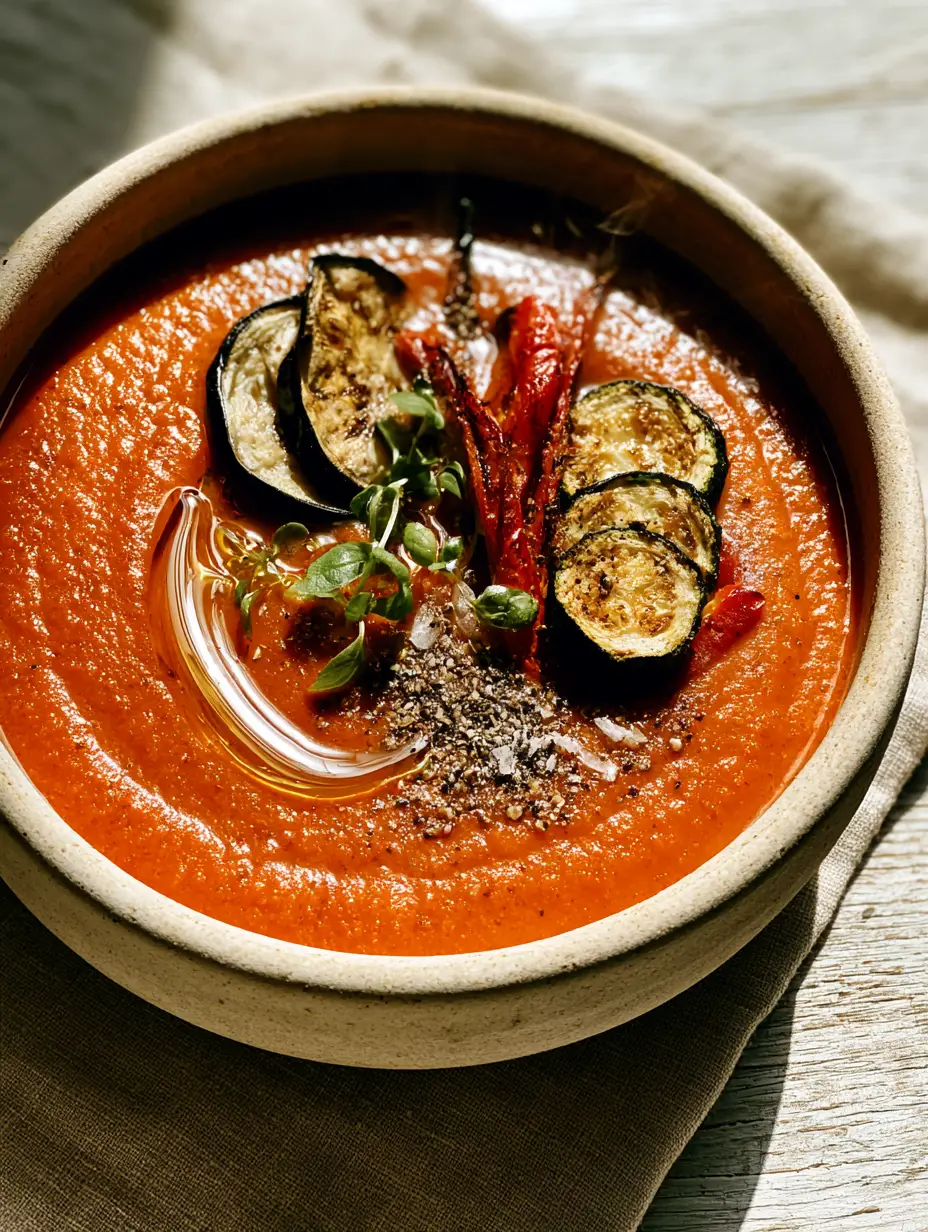
Ladle the hot soup into rustic, heavy matte-cream stoneware bowls. The surface should look textured and vibrant. Carefully place two eggplant discs and three zucchini rounds on top.
Add a few strips of the reserved blistered red bell peppers. Finish with a glistening spiral of extra virgin olive oil, micro-basil leaves, a generous pinch of coarse-cracked black pepper, and sea salt flakes. Serve immediately while steam is still rising from the bowl.
Expert Tips for Culinary Success
- Salty Science: Use sea salt flakes at the very end. The flat crystals provide a focused burst of flavor and a beautiful visual sparkle that table salt lacks.
- The Sear Secret: Do not overcrowd the pan when charring your garnishes. If the vegetables are too close, they will release moisture and steam instead of developing that golden-brown crust.
- Temperature Control: If the soup is too thick after blending, add stock 1/4 cup (60ml) at a time. The final result should be thick enough to support the weight of the garnishes without them sinking immediately.
- Herb Preservation: Only add the micro-basil at the absolute last second. The residual heat from the soup will wilt them quickly, so serving promptly ensures they stay vibrant green.
Storage, Reheating, and Meal Prep
This ratatouille soup base actually tastes better the next day as the flavors continue to develop. Store the pureed base in an airtight container in the refrigerator for up to 5 days. It also freezes beautifully for up to 3 months.
For the best experience, store the garnishes (eggplant and zucchini) separately from the soup. When reheating, warm the soup on the stovetop and quickly re-sear the garnishes in a pan for 1 minute to restore their texture and charred appearance.
What to Serve With Ratatouille Soup
Because this soup is so rich and flavorful, it pairs perfectly with simple, crusty breads or light salads. If you are looking for a complete Mediterranean feast, consider serving this alongside some sautéed vegetables for extra crunch.
For those who want a heartier meal, a side of smashed baby potatoes provides a wonderful textural contrast. If you have extra garden produce, you might even consider making a batch of stuffed zucchini to serve as a secondary course.
Frequently Asked Questions
While you can cook the base in a slow cooker, you will miss the deep caramelization and charred edges that roasting and searing provide. For the best flavor, follow the roasting method.
You can, but the flavor won’t be as vibrant. If using canned, choose high-quality fire-roasted tomatoes to mimic the smoky depth of the oven-roasted fresh version.
The secret is using a high-speed blender and roasting the tomatoes until they are very soft. If you want an even finer texture, you can pass the puree through a fine-mesh sieve.
Yes, this recipe is naturally vegan (using vegetable stock) and gluten-free, making it an excellent choice for diverse dietary needs.
Ratatouille stew is traditionally chunky with all vegetables cooked together. This soup version purees the base for a silky texture and uses the classic vegetables as distinct, charred garnishes.
The Ultimate Roasted Ratatouille Soup Recipe
Ratatouille Soup: The Ultimate Roasted Vegetable Experience
Ingredients
Equipment
Method
- Preheat oven to 425°F (220°C). Arrange tomatoes and red peppers on baking sheets, drizzle with olive oil, and season with salt.
- Roast for 30-35 minutes until the pepper skins are blistered and tomatoes are softened and slightly charred.
- Transfer roasted tomatoes and peppers to a blender. Add fresh basil and half the stock. Blend until velvety smooth.
- Pour the mixture into a pot, add remaining stock to reach desired thickness, and simmer on low for 10 minutes.
- In a cast iron skillet over medium-high heat, sear eggplant discs until charred edges form. Sear zucchini rounds until golden-brown sear marks appear.
Notes
Don't skip the sea salt flakes; they provide essential crunch and flavor pops.
Bring the Flavors of Provence Home
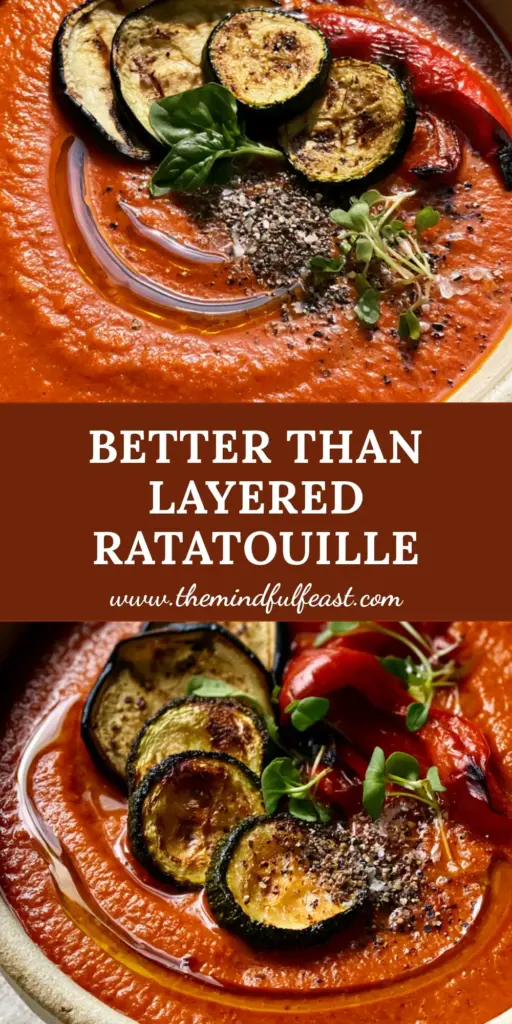
This roasted ratatouille soup is more than just a meal; it is a sensory journey through the best flavors of the Mediterranean. From the smoky charred eggplant to the velvety tomato base, every element is designed to delight. We hope this becomes a staple in your kitchen!
Did you make this recipe? We would love to hear how it turned out! Leave a comment below, share your photos on Instagram, and don’t forget to save this recipe to your boards on Pinterest for later.