As the mercury rises and the midday sun stretches across the kitchen floor, the desire for heavy, steaming meals evaporates. This is the season where Summer soups take center stage, offering a refreshing sanctuary from the heat. Our Chilled Persian Cucumber and Greek Yogurt Soup is more than just a meal; it is a sensory experience designed to cool the body and delight the palate.
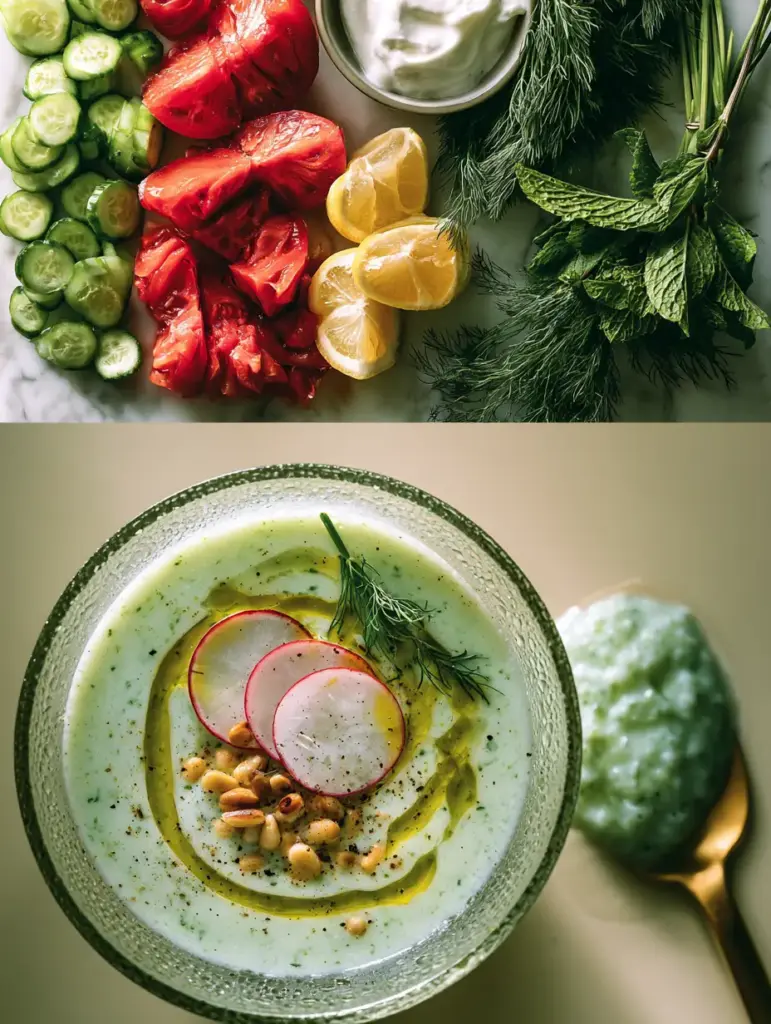
Inspired by the traditional flavors of the Mediterranean and the Levant, this recipe captures the essence of a dew-covered garden. Imagine a pale green, velvety liquid served in a frosted glass bowl, shimmering with condensation droplets that promise immediate relief. Each spoonful is a masterclass in balance: the cooling crunch of cucumbers, the tang of Greek yogurt, and the aromatic lift of fresh dill and mint.
Whether you are hosting a sophisticated garden party or seeking a quiet, restorative lunch, this dish delivers visual elegance and culinary depth. We have meticulously crafted this guide to ensure your final result matches the stunning deconstructed beauty of vibrant heirloom tomatoes and crisp radishes. Let’s dive into the botanical bounty of the season.
The Visual and Culinary Appeal of This Refreshing Masterpiece
- Velvety Texture: By blending high-fat Greek yogurt with seedless Persian cucumbers, we achieve a texture that is impossibly smooth yet light on the tongue.
- Vibrant Color Palette: The contrast between the pale green soup base and the deep reds of heirloom tomatoes creates a professional-grade presentation.
- Temperature Contrast: Served ice-cold in chilled glassware, this soup provides a visceral “cool-down” effect that hot soups simply cannot match.
- Aromatic Complexity: The combination of fresh dill, mint, and lemon zest ensures every bite has a clean, citrusy finish.
The Botanical Bounty: Every Ingredient You Will Need
Persian Cucumbers (1.5 lbs / 680g): These are essential for their thin skins and lack of bitter seeds. They provide the foundational “green” flavor and the characteristic pale hue of the soup.
Full-Fat Greek Yogurt (2 cups / 480ml): Do not opt for fat-free here. The fat content is scientifically necessary to carry the fat-soluble flavors of the herbs and provide the velvety mouthfeel seen in the macro photography.
Heirloom Tomatoes (2 large / 400g): These vibrant red beauties are used as a fresh topping or side. Their natural acidity cuts through the creaminess of the yogurt perfectly.
Fresh Dill (1 large bunch): Dill provides a feathery, anise-like aroma. We use it both in the blend and as a single sprig garnish to match our visual blueprint.
Fresh Mint Leaves (1/2 cup / 15g): Mint adds an “ice” factor to the flavor profile. It enhances the cooling properties of the cucumber.
Extra Virgin Olive Oil (3 tbsp / 45ml): A high-quality oil is vital for the finishing “precise swirl.” It adds a luxurious, peppery finish to the dish.
Radishes (3-4 small): Sliced into paper-thin rounds, these provide a sharp, peppery bite and a beautiful visual geometry on the surface of the soup.
Toasted Pine Nuts (2 tbsp / 20g): These add the necessary “crunch” factor. Toasting them brings out essential oils that harmonize with the olive oil garnish.
Lemon Zest and Juice (1 lemon): The juice provides the bright acid needed to wake up the cucumbers, while the zest contains the aromatic oils for the scent.
Garlic (1 clove, minced): An “invisible” foundational ingredient. One small clove adds depth without overpowering the delicate herbs.
Sea Salt and Cracked Black Pepper (to taste): Essential for seasoning. The black pepper should be freshly cracked to provide those visible dark flecks in the final close-up.
Cold Water (1/2 cup / 120ml): Used to adjust the consistency. We want a pourable soup that still coats the back of a spoon.
Essential Kitchen Tools for Professional Results
To achieve the smooth, condensation-ready finish of high-end Summer soups, you will need a few specific tools. A high-speed blender is non-negotiable for that velvety texture. You will also need a fine-mesh sieve if you prefer an ultra-refined finish, though Persian cucumbers usually blend well enough to skip this.
For the toppings, a mandoline slicer is the secret to those “thin radish slices” that float perfectly on the surface. Finally, a small stainless steel pot is perfect for gently toasting your pine nuts until they reach a golden brown without burning.
Mastering the Chill: Step-by-Step Culinary Guidance
Phase 1: Preparing the Cucumber Base
Wash your Persian cucumbers thoroughly. You may choose to peel them entirely for a paler green color, or leave thin strips of skin (zebra peeling) for more nutritional fiber. Roughly chop the cucumbers into 1-inch (2.5cm) pieces.
Place the cucumbers, Greek yogurt, minced garlic, lemon juice, and half of the fresh dill and mint into your blender. Blend on high for 60-90 seconds. Look for a visual cue: the mixture should transition from chunky to a completely uniform, pale green liquid with no visible herb flecks larger than a pinhead.
Phase 2: Seasoning and Consistency
Taste the base. Add your sea salt and half of the lemon zest. If the soup feels too thick—more like a dip than a soup—slowly drizzle in the cold water (120ml) while the blender is on its lowest setting. It should be “creamy and velvety” as it pours.
Transfer the soup to a glass container and refrigerate for at least 2 hours. This is not just for temperature; the flavors of the mint and dill need time to infuse into the yogurt’s fat molecules.
Phase 3: The Toppings and Finishing Touches
While the soup chills, prepare your garnishes. Thinly slice the radishes using a mandoline. Toast the pine nuts in a stainless steel pot over medium heat for 3-4 minutes, tossing constantly until they smell buttery and look golden.
Slice your heirloom tomatoes into vibrant wedges or small cubes. These will be served as a deconstructed element or a fresh side to provide a flavor contrast to the creamy soup base.
Phase 4: Plate for the “Macro” Effect
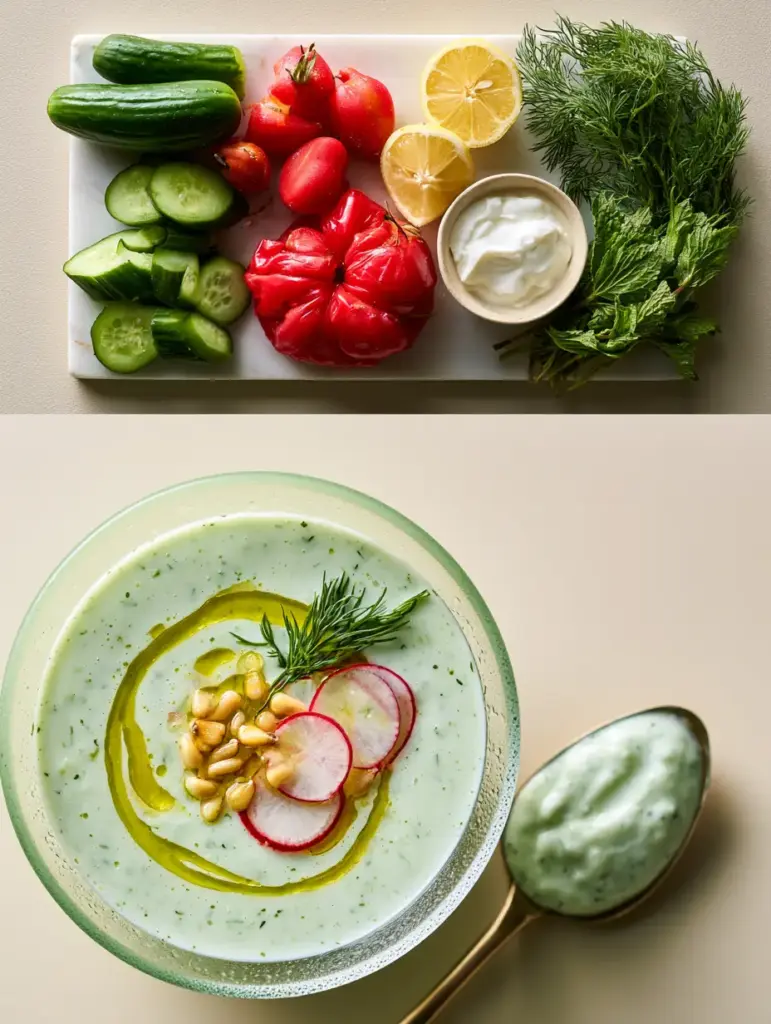
Retrieve your frosted glass bowls from the freezer (a 10-minute quick chill in the freezer creates those beautiful condensation droplets). Pour the soup into the center of the bowl. Using a spoon, carefully place a precise swirl of extra virgin olive oil on the surface.
Top with exactly three thin radish rounds, a sprinkle of toasted pine nuts, a pinch of cracked black pepper, and the remaining lemon zest. Place a single, fresh sprig of dill slightly off-center for a professional, unedited smartphone photo look.
Expert Tips for Success
- Control the Garlic: Raw garlic intensifies as it sits. If you are making this soup a day in advance, use only half a clove to prevent it from becoming spicy.
- The “Frosted” Secret: For the best photos and eating experience, put your serving bowls in the freezer 20 minutes before serving. The temperature difference creates the condensation seen in the “macro close-up.”
- Keep it Cold: If serving outdoors, place the glass bowl inside a larger bowl filled with crushed ice to maintain that refreshing chill.
- Texture Hack: If your yogurt is particularly watery, strain it through cheesecloth for 30 minutes before blending to ensure the soup remains thick and luxurious.
Shelf Life and Storage Advice
This chilled soup is best enjoyed the day it is made to preserve the brightness of the fresh herbs. However, it can be stored in an airtight container in the refrigerator for up to 2 days. Give it a vigorous whisk before serving, as slight separation is natural.
We do not recommend freezing this soup. The cellular structure of the cucumbers will break down upon thawing, and the Greek yogurt may curdle, destroying that velvety texture we worked so hard to achieve.
What to Serve With Summer Soups
To turn this refreshing soup into a full meal, pair it with light, crisp textures. A hearts of palm salad offers a wonderful crunch that complements the creamy soup. If you want to lean into the cucumber theme, a classic Greek cucumber salad with feta is a natural companion.
For those who need a bit more substance, these Summer soups pair beautifully with a light grain dish or quick 5-minute snacks like toasted pita bread with hummus. The acidity of the soup also makes it a great starter for a heavier main course like grilled fish.
Frequently Asked Questions
Absolutely. Chilled poached shrimp or flaked hot-smoked salmon make excellent additions that pair perfectly with the cucumber and dill flavors.
Yes! Substitute the Greek yogurt with a high-quality, unsweetened almond or cashew-based yogurt. Ensure it has a thick consistency to maintain the soup’s velvety texture.
It is best served within 24-48 hours. After two days, the fresh herbs lose their vibrancy and the garlic flavor can become overly dominant.
Place your empty glass bowls in the freezer for 10-15 minutes. Once you pour the ice-cold soup into them, the humidity in the air will naturally create those beautiful droplets.
Persian cucumbers have thinner skin and fewer seeds, which results in a smoother puree and a more delicate flavor without any bitterness.
The Ultimate Chilled Persian Cucumber Soup Recipe
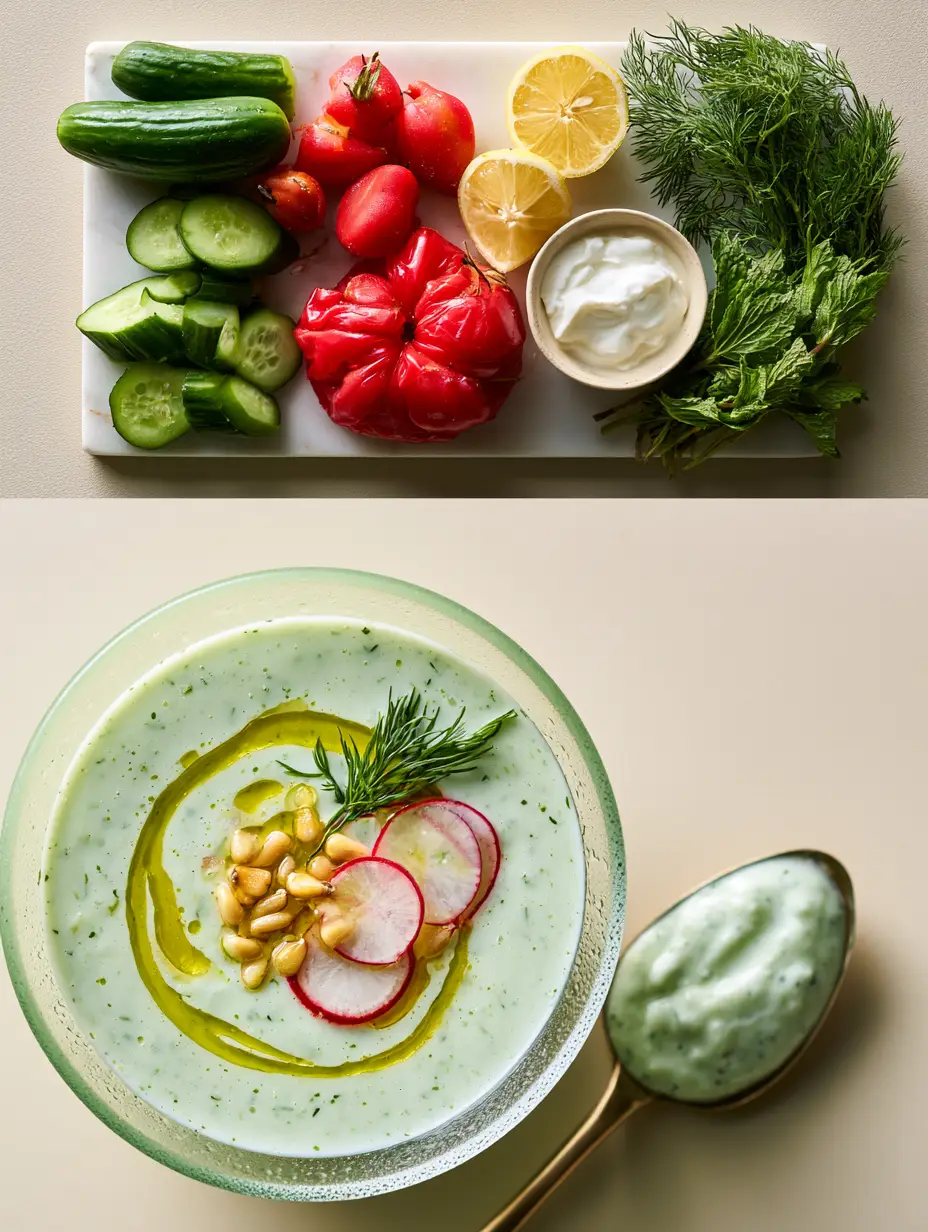
Summer Soups: Chilled Persian Cucumber and Heirloom Tomato Gazpacho with Greek Yogurt
Ingredients
Equipment
Method
- Combine cucumbers, yogurt, garlic, lemon juice, mint, and half the dill in a high-speed blender. Process for 90 seconds until a pale green, velvety texture is achieved.
- Adjust consistency with cold water if needed. Season with sea salt and black pepper. Refrigerate for 2 hours in a glass container to let flavors meld.
- Toast pine nuts in a stainless steel pot over medium heat until golden. Slice radishes into thin rounds and dice heirloom tomatoes.
- Pour chilled soup into frosted glass bowls. Add a swirl of olive oil, three radish rounds, toasted pine nuts, and a single sprig of dill.
Notes
Use only Persian cucumbers to avoid bitterness.

Closing & Call to Action
Nothing defines the ease of July and August like Summer soups that require minimal effort and offer maximum refreshment. This Chilled Persian Cucumber and Heirloom Tomato soup is a testament to how simple ingredients, when treated with professional technique, can become a gourmet experience. The combination of the frosted glass, the peppery radishes, and the velvety yogurt creates a dish you’ll want to make on repeat.
Did you try the “frosted bowl” trick? Let us know in the comments below! If you loved this recipe, please share it and follow us on Pinterest for more seasonal culinary inspiration.