Nigerian soups are the soul of West African cuisine, offering a complex tapestry of flavors that are as visually stunning as they are delicious. Among these culinary treasures, Egusi soup stands as a towering icon, beloved for its unique texture and rich, nutty profile. This isn’t just a meal; it’s a sensory experience that combines the earthy aroma of toasted melon seeds with the fiery kick of scotch bonnet peppers.
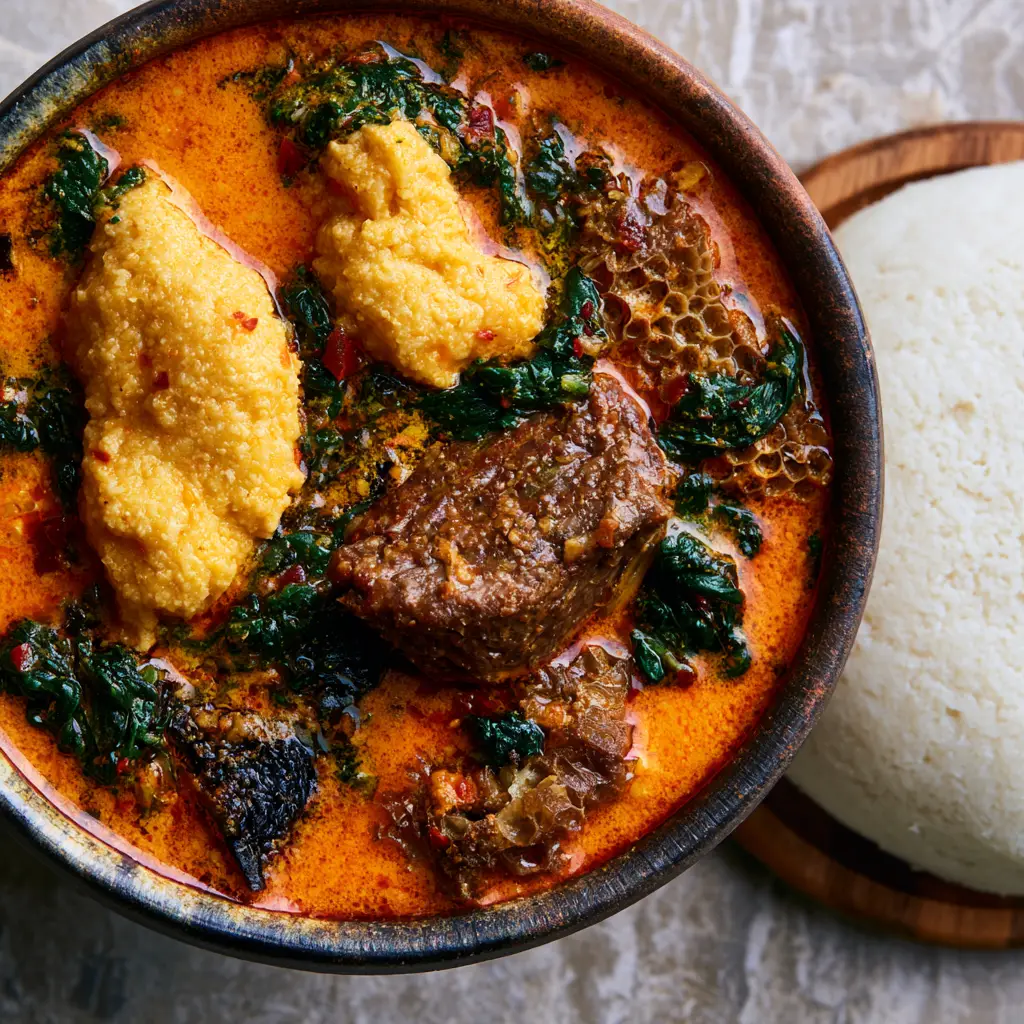
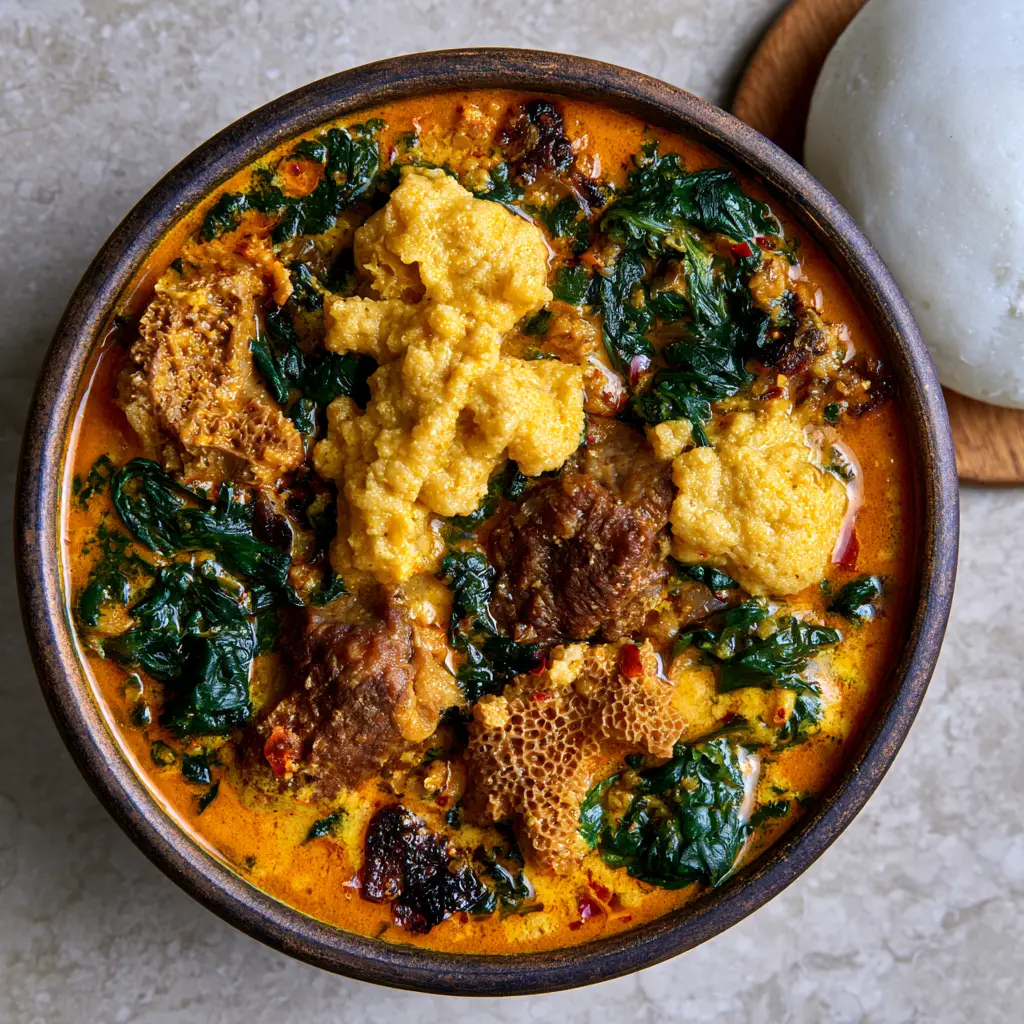
In this recipe, we are focusing on the “lumpy” style of Egusi, characterized by those distinct, pale-yellow toasted melon seed clumps that rise above a glossy, deep orange palm oil sauce. Whether you are a seasoned pro or new to Nigerian recipes, this guide will help you achieve that professional, high-gloss finish seen in the finest Lagos kitchens.
From the succulent chunks of browned beef to the intricate texture of honeycomb tripe, every element of this dish is designed to satisfy. When paired with a perfectly smooth, white mound of pounded yam swallow, you have a meal that defines comfort. Let’s dive into the forensics of this masterpiece.
Why This Thick and Hearty Egusi Soup Stands Out
- Textural Mastery: We use a specific “pasting” technique to ensure large, toasted melon seed clumps that provide a satisfying bite rather than a grainy broth.
- Visual Brilliance: A vibrant, deep orange palm oil base creates a glossy sheen that beautifully coats the wilted dark green spinach.
- Protein Complexity: The combination of browned beef, textured honeycomb tripe, and dark bits of dried fish creates layers of umami flavor.
- The Perfect Swallow: We provide tips for achieving that signature smooth, elastic, and white pounded yam that is essential for scooping.
The Anatomy of Authentic Nigerian Soups: Essential Ingredients
To recreate the visual and flavor profile of authentic Nigerian soups, you need the right building blocks. Each ingredient serves a scientific and aesthetic purpose in the pot.
The Nutty Foundation
2.5 cups (375g) Egusi (Melon Seeds): These are the star of the show. When ground and toasted, they provide the thick, hearty body and those iconic pale-yellow clumps described in our visual blueprint.
The Vibrant Base and Aromatics
1 cup (240ml) Red Palm Oil: This provides the “glossy red sauce” effect. It’s not just for fat; it adds a distinct earthy flavor and that vibrant deep orange hue that characterizes premium Nigerian soups.
3-4 (45g) Scotch Bonnet Peppers: Minced finely, these provide the “tiny red flakes” visible throughout the soup and deliver the heat that cuts through the richness of the oil.
2 medium (300g) Red Onions: Half are blended for the base, and half are sliced to provide sweetness and texture during the initial sear.
The Protein Powerhouse
1 lb (450g) Beef Chuck: Cut into large, succulent chunks and browned to a deep crust, these provide the “browned beef chunks” seen in the high-angle photo.
0.5 lb (225g) Honeycomb Tripe (Shaki): This adds the “textured” visual element. Its crevices hold onto the sauce, ensuring every bite is flavor-packed.
0.5 cup (50g) Dried Fish Flakes: These dark bits add a smoky depth and are clearly visible as dark accents in the final thick soup.
Vegetables and Seasoning
4 cups (120g) Fresh Spinach: Chopped and wilted at the very end to maintain a dark green color against the orange sauce.
2 tbsp (30g) Ground Crayfish: The “invisible” secret ingredient that provides the foundational umami required for traditional Nigerian soups.
2 bouillon cubes (10g) and Salt to taste: Essential for highlighting the natural flavors of the melon seeds and beef.
Must-Have Kitchen Tools for Soup Perfection
While you don’t need a professional kitchen, using a high-quality stainless steel pot is recommended for even heat distribution. This prevents the delicate melon seeds from scorching while you develop those large clumps.
You will also need a high-speed blender to achieve the smooth consistency of the pepper base and a heavy-duty wooden spoon (Orogun) to stir the pounded yam until it reaches that perfectly smooth, white, rounded mound appearance.
The Step-by-Step Forensic Cooking Method
1. Preparing the Proteins and Stock
Place your beef chunks and honeycomb tripe in a pot. Season with sliced onions, one bouillon cube, and salt. Cover with water and simmer until the meat is succulent and the tripe is tender.
Once cooked, remove the meat and sear it in a separate pan with a tablespoon of oil until a deep, browned crust forms. Reserve the stock; this is liquid gold for your soup base.
2. The Egusi Clumping Technique
Mix your ground egusi seeds with a small amount of warm water or stock to form a thick, dough-like paste. This is the secret to achieving the “large toasted melon seed clumps.”
Set this paste aside. In your main pot, heat the red palm oil on medium heat for 2 minutes—do not let it smoke. Add the remaining sliced onions and fry until translucent.
3. Developing the Glossy Red Sauce
Add your blended scotch bonnet peppers and onions to the oil. Fry this mixture until the water evaporates and the oil begins to separate and rise to the top, creating a glossy sheen.
Gently scoop small balls of the egusi paste into the frying oil. Do not stir immediately! Cover the pot and let the clumps steam and firm up for 5-7 minutes. This ensures they stay as distinct pale-yellow clumps.
4. The Long Simmer
Slowly pour in 2 cups (480ml) of the reserved beef stock. Add the dried fish flakes, browned beef, and tripe. Stir very gently so as not to break the egusi clumps.
Allow the soup to simmer for 15-20 minutes. You are looking for a thick, hearty texture where the oil sits beautifully on the surface. If it looks like summer soups, it’s too thin—keep simmering!
5. The Finishing Greenery
Fold in the chopped spinach. The heat of the soup will wilt the leaves in about 2 minutes. The contrast of the wilted dark green against the deep orange sauce is the hallmark of a visually perfect Egusi.
6. Crafting the Pounded Yam Swallow
Boil peeled yam chunks until very soft. Pound them using a mortar and pestle or a specialized food processor until the texture is smooth, white, and elastic. Shape into a rounded mound on a wooden board.
Expert Tips for the Ultimate Nigerian Soup Experience
- Temperature Control: If the palm oil is too hot when you add the peppers, it will lose its vibrant orange color. Keep it at a steady medium heat.
- The “Clump” Secret: If your clumps are dissolving, you might be stirring too much. Let them sit and fry in the oil undisturbed to set the proteins.
- Dried Fish Prep: Always soak your dried fish in hot salt water first to remove any sand and soften the flakes before adding them to the pot.
- Consistency Check: If you prefer a meal that rivals crockpot meals for ease, you can slow-cook the beef, but the egusi must always be fried for the best texture.
How to Store and Reheat Your Egusi
Nigerian soups like Egusi actually taste better the next day as the flavors meld. Store in an airtight container in the refrigerator for up to 4 days.
For long-term storage, Egusi freezes remarkably well for up to 3 months. To reheat, add a splash of water or stock to a pot and warm over low heat to maintain the glossy texture of the oil without burning the melon seed clumps.
Creative Pairings for Nigerian Soups
While Pounded Yam is the gold standard, this soup also pairs beautifully with Eba (processed cassava) or Amala. If you’re looking for a lighter side, a simple hearts of palm salad provides a crisp contrast to the rich, oily soup.
For those who enjoy a bit of fusion, the flavors of this soup are surprisingly complementary to other savory dishes. You might even find that the spicy-umami profile inspires you to try a steak sandwich with an African-inspired pepper sauce later in the week!
Frequently Asked Questions
Traditionally, Ugu (fluted pumpkin leaves) or Bitterleaf are used. Spinach is a great accessible substitute, but you can also use kale or collard greens, though they will require a slightly longer wilting time.
The secret is quality red palm oil. Ensure you don’t overheat or ‘bleach’ the oil; you want to fry the pepper base until the oil separates and rises to the top, which creates that beautiful sheen.
Wash the tripe thoroughly with warm water and lemon juice or vinegar to remove any scent. Scrape the surfaces with a knife and parboil it separately before adding it to your main soup pot.
Dried fish provides a smoky umami depth that is fundamental to the flavor profile of traditional West African soups. It also adds wonderful dark visual accents to the thick, pale-yellow melon seeds.
Graininess occurs when the ground melon seeds are added directly to the liquid. To get large clumps, mix the egusi with a little water to form a paste and fry it in the oil without stirring for several minutes until it sets.
The Master Recipe: Lumpy Egusi Soup and Pounded Yam
Nigerian Soups: The Ultimate Guide to Hearty Egusi with Pounded Yam
Ingredients
Equipment
Method
- Simmer beef and tripe with onions and salt until tender. Remove meat and sear in a pan until deep golden brown chunks form.
- Mix ground melon seeds with a little water to form a thick paste. Set aside.
- Heat palm oil, add pepper base, then drop small balls of egusi paste into the oil. Cover and steam without stirring for 7 minutes to form large clumps.
- Add beef stock, dried fish, and browned meats. Simmer for 20 minutes until the sauce is thick and glossy orange.
- Stir in chopped spinach and cook for 2 minutes until wilted and dark green.
Notes
Do not over-blend the peppers if you want visible red flakes in the sauce.

Bring the Taste of Nigeria to Your Kitchen
There is nothing quite like the pride of serving a bowl of Egusi that looks like it belongs on the cover of a culinary magazine. The contrast of the pale-yellow toasted melon seed clumps against the glossy orange sauce and vibrant green spinach is a testament to your skill. This dish is a cornerstone of Nigerian soups, offering a hearty, soul-warming experience that is perfect for family gatherings or a special weekend treat.
We hope this forensic breakdown helps you master the textures and flavors of West Africa. If you enjoyed this recipe, please leave a comment below and share your results! Don’t forget to follow us on Pinterest for more global culinary inspiration.