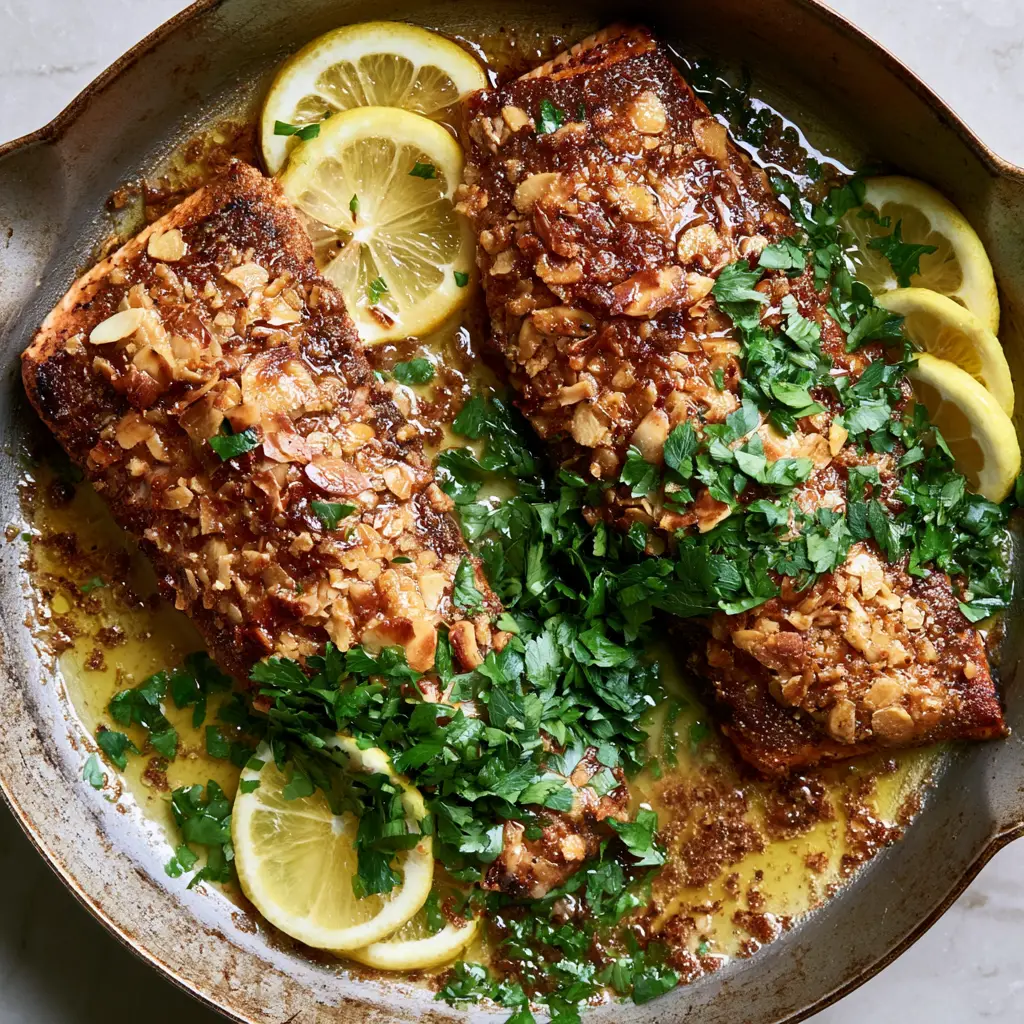
There is a specific kind of culinary magic that happens when a rustic carbon steel skillet meets a fresh fillet of fish. This rainbow trout almondine isn’t just a meal; it is a sensory experience defined by the high-pitched sizzle of a perfect sear and the nutty aroma of toasted almonds dancing in browned butter.
Inspired by the timeless French “Amandine” technique, this version focuses on achieving a deep golden-brown crust that shatters under the fork to reveal succulent, flakey pink flesh. We are moving beyond the basic pan-fry to create a restaurant-quality dish that looks as editorial as a professional food shoot.
Whether you are looking for a sophisticated weeknight meal or a centerpiece for a dinner party, the combination of shimmering lemon-butter sauce and vibrant flat-leaf parsley makes this dish an absolute showstopper. Let’s dive into the science of the perfect sear and the art of the butter sauce.
Why This Pan-Seared Trout Amandine Works
- The Ultimate Texture Contrast: You get a crunchy layer of toasted, sliced almonds against the tender, moist flakes of the rainbow trout.
- Brown Butter Depth: By allowing the butter to develop tiny brown solids (beurre noisette), we add a toasted, caramel-like complexity to the sauce.
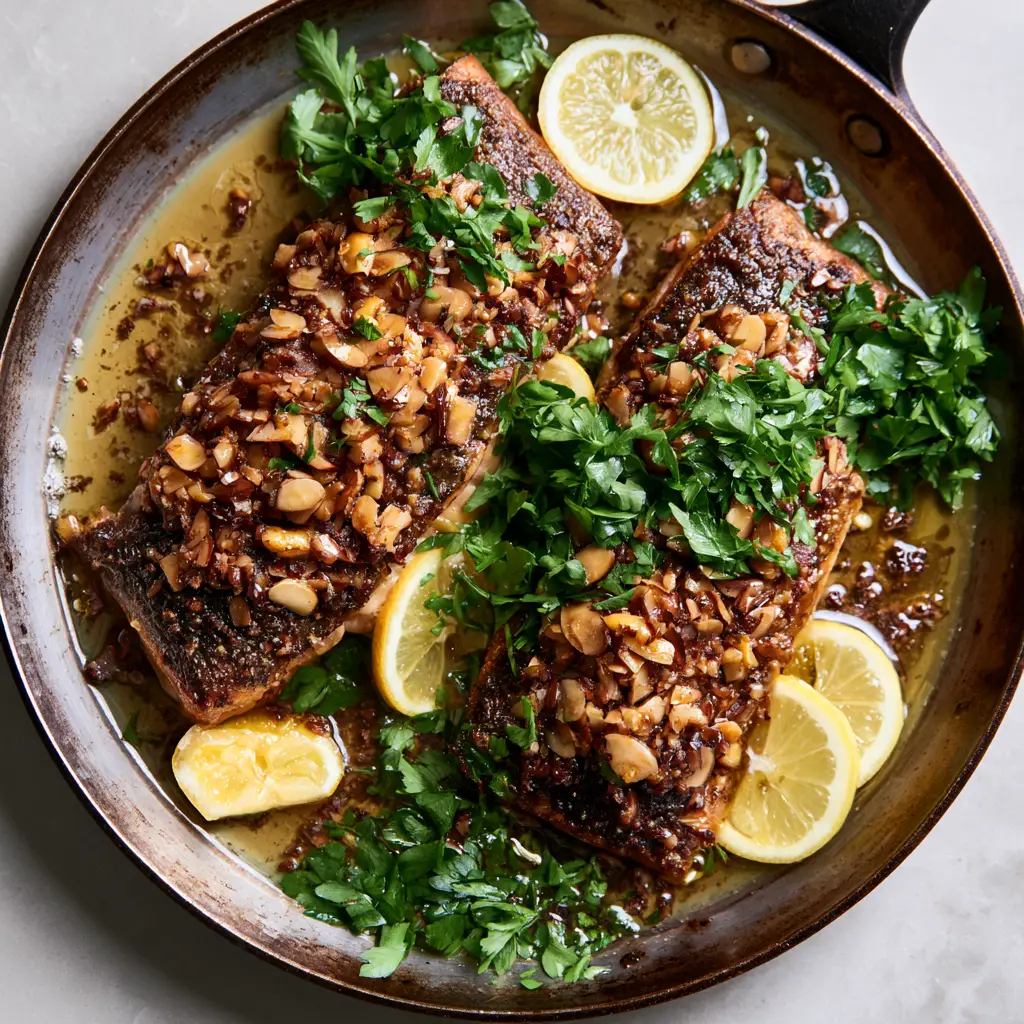
- Visual Vibrancy: The heavy scatter of bright green parsley and thin lemon half-moon slices provides a fresh acidity that cuts through the richness of the butter.
- Carbon Steel Conductivity: Using a rustic skillet ensures even heat distribution, which is the secret to that coveted deep golden-brown crust.
The Anatomy of an Authentic Trout Almondine
To achieve the result seen in professional kitchens, every ingredient serves a dual purpose: flavor and structure. Here is what you need to gather for your mise en place.
Fresh Rainbow Trout Fillets: You will need two large fillets (approx. 170g or 6oz each). Trout is leaner than salmon but richer than tilapia, making it the perfect vessel for butter-based sauces like those found in a quality salmon dish.
Sliced Almonds: Use 1/2 cup (50g) of blanched, sliced almonds. These provide the “crunchy layer” described in our visual blueprint and are essential for the “Almondine” identity.
Unsalted European-Style Butter: 4 tablespoons (56g) of high-fat butter is necessary. This will pool around the fish and create those beautiful, shimmering highlights in the pan.
Neutral High-Smoke Point Oil: 1 tablespoon (15ml) of grapeseed or avocado oil. This is a foundational invisible ingredient that allows us to sear the fish at high temperatures without burning the butter.
Fresh Lemon: You will need one large lemon. Half will be juiced for the sauce, and the other half should be sliced into very thin half-moons for the final garnish.
Flat-Leaf Parsley: A 1/4 cup (10g) “heavy scatter” of finely chopped parsley adds the necessary “bright green” visual pop and a clean, herbal finish.
All-Purpose Flour: 2 tablespoons (16g) for a very light dusting. This helps the skin and flesh develop that “shattering” golden-brown crust during the searing process.
Kosher Salt and Cracked Black Pepper: Critical for seasoning the proteins and drawing out the natural sweetness of the almonds.
Essential Tools for a Professional Finish
To replicate the visual blueprint exactly, the equipment matters as much as the ingredients. A rustic carbon steel skillet is preferred for its ability to reach high temperatures and develop a non-stick patina naturally.
You will also need a flexible fish spatula. This tool is thinner than a standard spatula, allowing you to slide under the delicate trout skin without tearing the crust you’ve worked so hard to build.
If you enjoy the precision of this dish, you might find yourself exploring other technical recipes like fluffy Japanese pancakes or even a complex savory meat pie.
Step-by-Step: Mastering the Sear and the Sauce
Preparing the Fish for Maximum Crispiness
First, use paper towels to pat the trout fillets extremely dry. Moisture is the enemy of a golden-brown crust; if the fish is damp, it will steam rather than sear.
Season both sides generously with salt and pepper, then lightly dredge the skin side in a dusting of flour, shaking off any excess. This creates a barrier that helps the skin stay intact in the hot carbon steel skillet.
Toasting the Almonds and Browning the Butter
Place your skillet over medium heat and add 1 tablespoon (14g) of butter. Once melted and foaming, add the sliced almonds.
Stir constantly for 2-3 minutes until they are fragrant and a pale golden hue. Transfer the almonds to a bowl immediately so they don’t over-cook; they will continue to darken slightly from the residual heat.
The High-Heat Sear
Wipe the skillet clean and increase the heat to medium-high. Add the neutral oil. Once you see a faint wisp of smoke, carefully lay the trout fillets into the pan, skin-side down (if applicable).
Press down gently with your fish spatula for 30 seconds to ensure even contact. Sear for 3-4 minutes until a deep golden-brown crust forms. Flip the fillets and cook for another 1-2 minutes until just opaque.
Creating the Shimmering Lemon Butter Sauce
Lower the heat to medium and add the remaining 3 tablespoons (42g) of butter to the pan. As it melts, it will begin to foam and then turn a light amber color.
Look for the “tiny brown butter solids” mentioned in the visual prompt—this is the milk solids caramelizing. Immediately whisk in the fresh lemon juice, which will stop the browning process and create a glossy, emulsified sauce.
Expert Tips for Success
- Cold Butter Secret: Whisking in a small piece of cold butter at the very end of the sauce-making process helps create that “shimmering” gloss that coats the fish perfectly.
- Don’t Overcrowd: If your carbon steel skillet isn’t large enough for two fillets, cook them in batches. Overcrowding drops the pan temperature and prevents the crust from forming.
- The “Sound” Cue: Listen for a consistent, vigorous sizzle. If the sound dies down, your heat is too low; if it starts to pop aggressively, turn it down slightly.
- Parsley Timing: Only chop and add the parsley at the very last second. This ensures it stays “bright green” rather than wilting into a dark olive color.
The Best Pairings for Trout Amandine
Because this dish is rich with butter and nuts, it pairs beautifully with light, acidic side dishes. A refreshing cucumber salad provides a cool contrast to the warm fish.
If you prefer a more hearty meal, consider serving the trout alongside a skillet-based vegetable medley or even a simple side of steamed green beans to keep the French theme alive.
For those who love seafood but want something more handheld, these flavors are a great precursor to learning how to make perfectly seasoned fish tacos.
Storage, Reheating, and Freezing
Trout is best enjoyed immediately to appreciate the “crunchy layer” of almonds. However, leftovers can be stored in an airtight container in the refrigerator for up to 2 days.
To reheat, avoid the microwave, as it will turn the fish rubbery. Instead, place the fillets in a cold oven and set it to 300°F (150°C). Once the oven reaches temperature, the fish should be warmed through and the almonds will regain some crispness.
Freezing is not recommended for this specific recipe, as the delicate lemon butter sauce will break (separate) upon thawing, losing its glossy, shimmering texture.
Common Questions About Rainbow Trout
While sliced almonds are traditional, you can use crushed hazelnuts or pecans for a similar nutty flavor, though the dish would no longer be a classic ‘Almondine’.
Yes, but ensure it is completely thawed and patted extremely dry. Frozen fish often contains more moisture, which can prevent that deep golden-brown crust from forming.
Trout is cooked when it reaches an internal temperature of 145°F (63°C) or when the flesh flakes easily with a fork and is no longer translucent in the center.
Leaving the skin on provides a structural base for the fillet, making it easier to flip without breaking. When seared correctly in a hot skillet, the skin becomes delicious and crispy.
They are the same! ‘Amandine’ is the French culinary term for a dish garnished with almonds, while ‘Almondine’ is the common English spelling.
The Ultimate Rainbow Trout Almondine Recipe
Rainbow Trout Almondine: A Crispy Pan-Seared Masterpiece in Lemon Butter Sauce
Ingredients
Equipment
Method
- Pat the trout fillets extremely dry with paper towels. Season with salt and pepper, then lightly dust the skin side with flour.
- In a carbon steel skillet over medium heat, melt 1 tbsp butter. Toast almonds for 2-3 minutes until golden. Remove and set aside.
- Add oil to the skillet over medium-high heat. Place fish skin-side down. Sear for 4 minutes until a deep golden-brown crust forms. Flip and cook 2 minutes.
- Lower heat, add remaining 3 tbsp butter. Let it foam until brown solids appear. Whisk in lemon juice to create a shimmering sauce.
- Pour sauce over fillets. Top with toasted almonds, a heavy scatter of parsley, and lemon half-moons.
Notes
Use high-quality European butter for more pronounced brown butter solids.
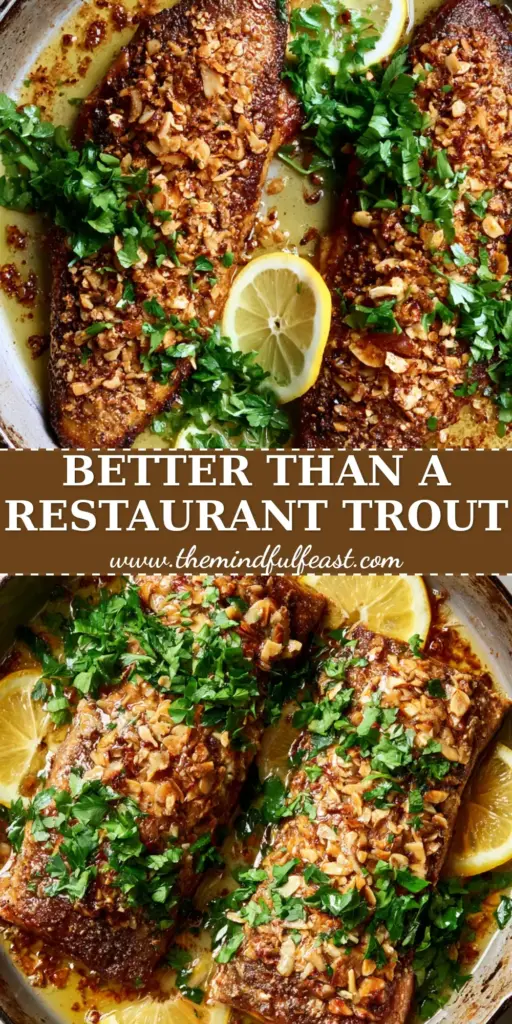
Take Your Culinary Skills Further
Mastering a classic like rainbow trout almondine is a milestone for any home cook. The combination of technical searing and delicate sauce-making creates a dish that is far more than the sum of its parts.
If you enjoyed this recipe, please leave a comment below and let us know how your crust turned out! Don’t forget to save this to your “Elegant Dinners” board on Pinterest so you can find it next time you want to impress.
For more inspiration, check out our guide to satisfying late-night cravings or browse our full dinner collection for your next kitchen adventure.