Experience a burst of Mediterranean sunshine with this vibrant greek chickpea salad, a dish that proves healthy eating can be both visually stunning and incredibly satisfying. This recipe transforms humble pantry staples into a gourmet experience, featuring glossy legumes, crisp vegetables, and a zesty, golden-hued dressing.
Whether you are looking for a quick lunch or a robust side dish, this salad delivers a professional culinary result in under ten minutes. The combination of textures—from the creamy feta to the crunchy English cucumbers—creates a harmonious bite that keeps you coming back for more.
This particular version of the greek chickpea salad is designed to mirror the authentic, rustic charm of a Greek seaside taverna. By following our specific prep techniques, you will achieve the exact “glossy” and “vibrant” look seen in our featured photography.
Why You Will Love This Vibrant Mediterranean Masterpiece
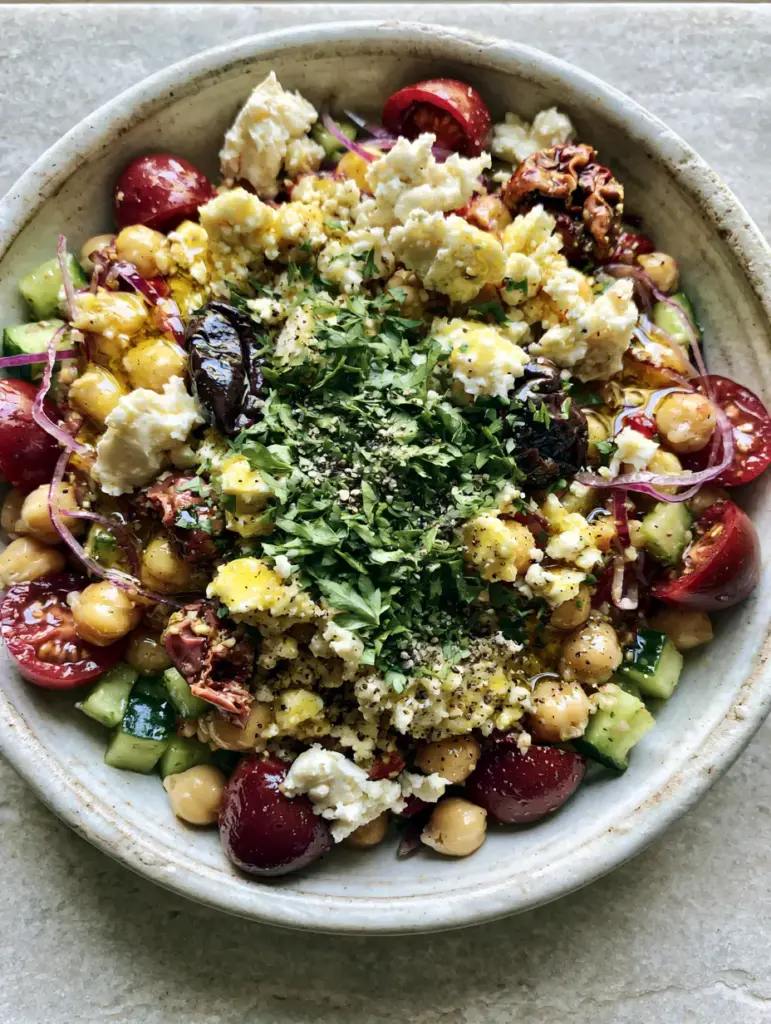
- Textural Contrast: Enjoy the interplay between plump, glossy chickpeas and the sharp, cooling crunch of diced English cucumbers.
- Bold Flavor Profile: Briny Kalamata olives and chunky crumbles of matte white feta cheese provide a savory depth that balances the citrusy vinaigrette.
- Visually Stunning: The deep reds of halved cherry tomatoes against the bright green parsley and purple red onion slivers make this a centerpiece-worthy dish.
- Nutrient-Dense: Packed with plant-based protein and fiber, this salad is as nourishing as it is beautiful.
Handpicked Ingredients for the Perfect Greek Texture
Canned Chickpeas (15oz / 425g): We use high-quality canned chickpeas for convenience and a specific glossy finish. Ensure they are rinsed thoroughly in cold water to remove excess starch and achieve that plump, handheld photo aesthetic.
English Cucumber (1/2 large / 200g): Chosen for its thin skin and minimal seeds, the English cucumber provides the “crunchy” element essential to this recipe. Dicing them into uniform 1/2-inch (1.25cm) cubes ensures a consistent mouthfeel in every spoonful.
Cherry Tomatoes (1 cup / 150g): Look for deep-red, “juicy” cherry tomatoes. Halving them lengthwise allows their natural juices to mingle with the vinaigrette, creating a built-in sauce for the salad base.
Red Onion (1/4 small / 40g): To achieve the “translucent slivers” described in our visual blueprint, use a sharp chef’s knife to cut the onion into paper-thin half-moons. If the bite is too sharp, soak them in ice water for five minutes before adding.
Kalamata Olives (1/2 cup / 85g): Pitted, wrinkled, and dark, these olives offer a fermented, salty punch. They should be left whole or halved to maintain their structural integrity within the rustic ceramic bowl.
Feta Cheese (4oz / 115g): Avoid pre-crumbled varieties; instead, purchase a block of high-quality sheep’s milk feta. Breaking it by hand results in the “large, chunky crumbles” that provide a superior matte white contrast.
Fresh Flat-Leaf Parsley (1/4 cup / 15g): Finely chopped parsley adds a “bright green” herbaceous finish. This isn’t just a garnish; it provides a necessary aromatic lift to the heavier legumes.
Extra Virgin Olive Oil (3 tbsp / 45ml): This is the foundation of our “glistening vinaigrette.” Use a cold-pressed oil with a peppery finish to mimic authentic traditional Greek recipes.
Fresh Lemon Juice (1.5 tbsp / 22ml): The acidity of fresh lemon brightens the entire dish and helps emulsify the oil. It reacts with the dried oregano to create a classic Mediterranean scent profile.
Dried Oregano & Black Pepper: A teaspoon (5g) of dried oregano is essential for that signature Greek aroma. A heavy dusting of coarse black pepper provides the final visual “pinch” that catches the light.
Essential Culinary Tools for Precision Prep
To recreate this 10-minute greek chickpea salad with professional accuracy, you will need a few basic tools. A large, shallow white ceramic bowl is preferred for presentation, as it allows the colors to pop against the neutral background.
A high-quality Chef’s knife is non-negotiable for achieving those thin, translucent onion slivers and precision-diced cucumbers. You will also need a fine-mesh strainer to rinse the chickpeas until they are perfectly glossy and free of canning liquid.
Finally, keep a small glass jar or a whisk and bowl handy for the lemon vinaigrette. Proper emulsification is the secret to getting that “golden-hued” coating on every single ingredient.
The Step-by-Step Blueprint to Culinary Perfection
Preparing the Legume Base
Begin by draining your canned chickpeas into a colander. Rinse them under cold running water for at least 30 seconds, shaking the colander gently.
This process removes the aquafaba (bean liquid), which can be dull and starchy. You want the chickpeas to appear “glossy” and plump before they ever touch the dressing.
Pat the chickpeas dry with a clean kitchen towel. This ensures the vinaigrette clings to the skin rather than sliding off due to excess water.
The Art of the Vegetable Dice
Slice the English cucumber into thick rounds, then stack them and cut into uniform cubes. The goal is “vibrant green” edges that provide a sturdy crunch against the softer chickpeas.
Halve the cherry tomatoes with a serrated knife to prevent squishing the delicate skins. They should look “juicy” and fresh, with the seeds visible in the cross-section.
For the red onion, cut the bulb in half and slice across the grain as thinly as possible. These “slivers” should be almost see-through, providing flavor without overpowering the other ingredients.
Crafting the Emulsified Lemon Vinaigrette
In a small bowl, whisk together the extra virgin olive oil, fresh lemon juice, and dried oregano. Add a pinch of sea salt to help the flavors meld.
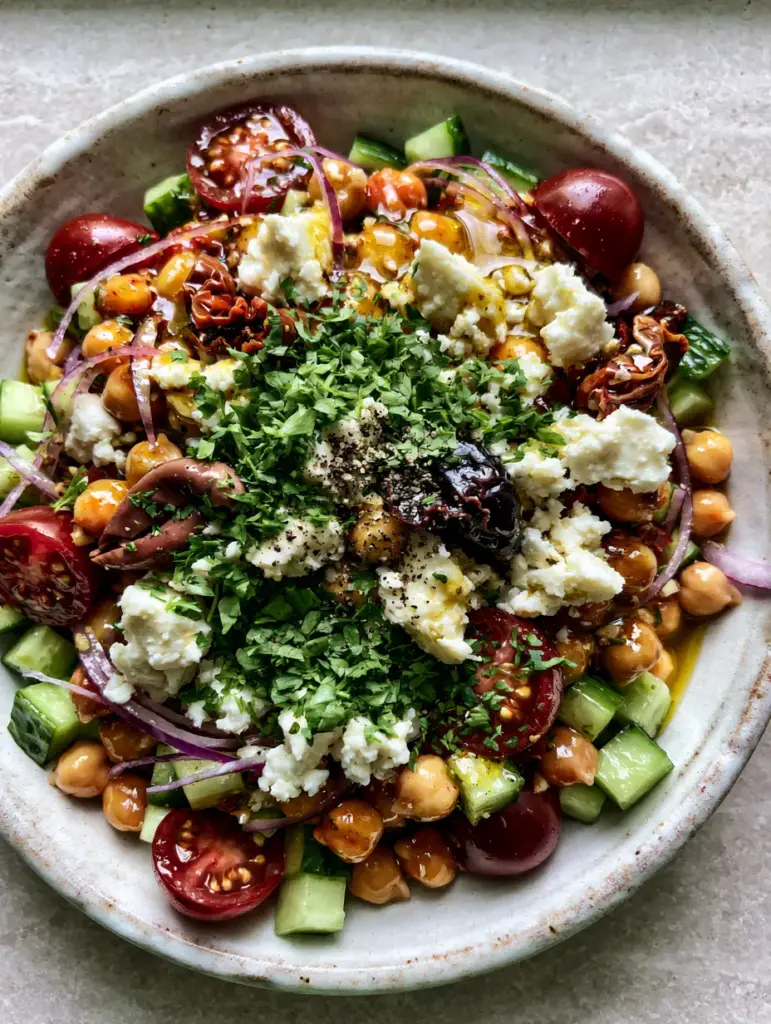
Whisk vigorously until the oil and lemon juice no longer separate. You are looking for a “glistening, golden-hued” liquid that appears slightly thickened.
This emulsification process is vital for ensuring that every olive and cucumber chunk is perfectly coated, catching the natural morning light as described in our photography prompt.
The Final Assembly and Garnish
Place the chickpeas and chopped vegetables in your rustic bowl. Pour the vinaigrette over the top and toss gently with large spoons to avoid bruising the tomatoes.
Top the mixture with the “large crumbles” of white feta and the whole Kalamata olives. Do not over-mix once the feta is added, or the cheese will turn the dressing cloudy.
Finish with a “heavy dusting” of chopped parsley and a final pinch of coarse black pepper. The result should be a vibrant, handheld-style masterpiece ready for the table.
Master Class: Tips for the Ultimate Salad Consistency
- The Onion Trick: If you find raw red onion too pungent, toss the slivers in a tablespoon of lemon juice for 5 minutes. This “macerates” the onion, turning it a bright pink and softening the bite.
- Cheese Temperature: Keep your feta in the refrigerator until the very last second. Cold feta crumbles into cleaner, more distinct “matte” chunks rather than turning into a paste.
- Chickpea Quality: For an even better texture, look for “Garbanzo beans” labeled as “organic” or “firm.” Some cheaper canned brands can be mushy, which ruins the “plump” visual goal.
- Dried vs Fresh Oregano: While fresh is usually better, this specific greek chickpea salad relies on dried oregano for that nostalgic, earthy flavor found in authentic Mediterranean deli salads.
Storage, Marinating, and Freshness Guidelines
This salad is remarkably resilient and often tastes better after sitting for 30 minutes. The chickpeas and onions absorb the lemon vinaigrette, deepening the overall flavor profile.
If you have leftovers, store them in an airtight container in the refrigerator for up to 3 days. Note that the cucumbers will lose some of their “crunchy” texture over time as they release water.
We do not recommend freezing this salad, as the cellular structure of the cucumbers and tomatoes will collapse upon thawing, resulting in a soggy texture that lacks the vibrancy of the original dish.
Elevate Your Table: What to Serve Alongside This Salad
While this greek chickpea salad is a meal on its own, it also pairs beautifully with other Mediterranean classics. For a high-protein feast, serve it alongside lemon-herb Greek chicken recipes or grilled lamb chops.
If you are hosting a larger dinner party, consider adding this to a spread featuring authentic Greek moussaka and a side of warm pita bread. It provides a refreshing acidic contrast to heavier, baked dishes.
For those who love a variety of greens, this recipe serves as a great base. You can even mix it with a simple cucumber salad recipe to stretch the servings for a crowd without losing that signature Greek flair.
Frequently Asked Questions About Mediterranean Chickpea Salads
Yes, you can use dried chickpeas. You will need to soak them overnight and boil them until tender. Ensure they are fully cooled and patted dry to maintain the ‘glossy’ appearance required for the salad.
Absolutely! It stays fresh in the fridge for up to 3 days. For the best texture, store the dressing separately and toss just before serving, although the chickpeas benefit from marinating in the vinaigrette.
Using English cucumbers is key because they have less water content. If you are making this in advance, salt the cucumber slices and let them sit for 10 minutes, then pat dry before dicing to remove excess moisture.
The base of the salad is vegan. To make the entire dish vegan, simply omit the feta cheese or replace it with a high-quality almond-based or coconut-based vegan feta alternative.
Use a very sharp Chef’s knife or a mandoline slicer on the thinnest setting. Cutting the onion against the grain helps the slivers stay delicate and provides a better visual contrast.
Authentic Greek Chickpea Salad Recipe Card
Prepare to create the most photographed salad in your repertoire. This 10-minute recipe combines the science of emulsification with the art of fresh Mediterranean produce to deliver a result that is hyper-realistic and delicious.
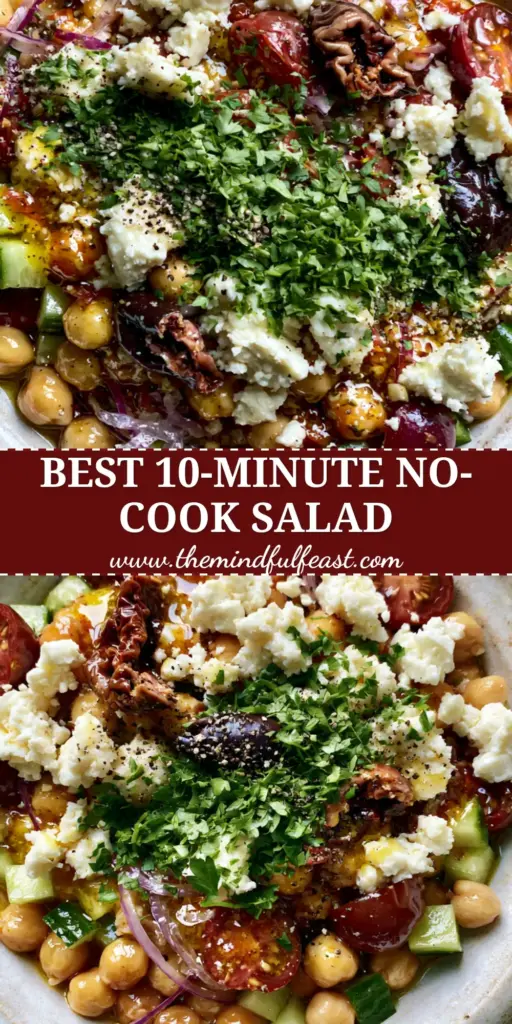
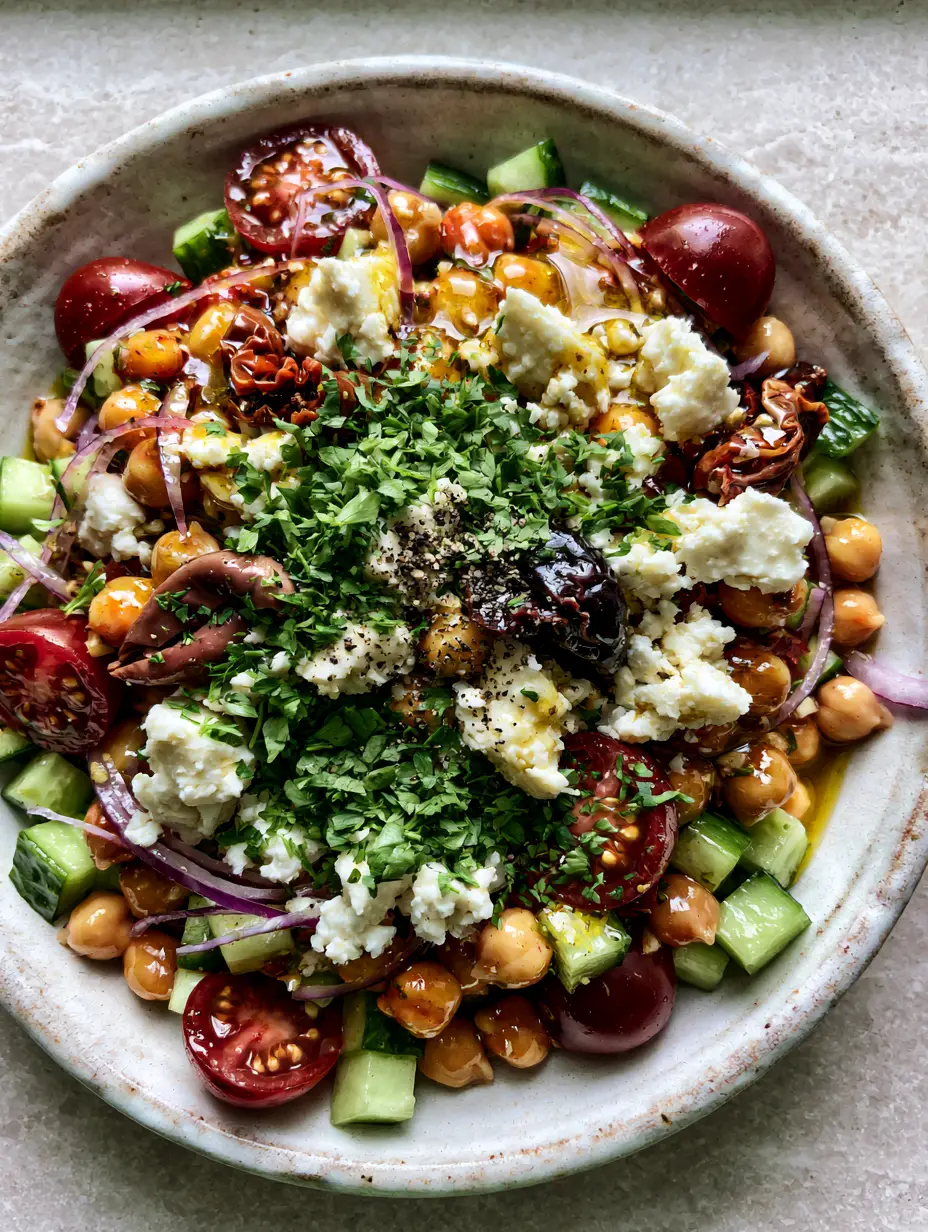
Greek Chickpea Salad: The Ultimate 10-Minute Mediterranean Refresh
Ingredients
Equipment
Method
- Place canned chickpeas in a colander and rinse under cold water until the water runs clear and the beans appear glossy. Pat dry with a kitchen towel.
- Dice the English cucumber into uniform cubes, halve the cherry tomatoes, and slice the red onion into paper-thin, translucent slivers.
- Whisk olive oil, lemon juice, and dried oregano in a small bowl until a glistening, golden-hued emulsion forms.
- Add chickpeas, cucumbers, tomatoes, and onions to a rustic ceramic bowl. Pour the dressing over and toss gently to coat every ingredient.
- Top with large chunks of feta cheese and Kalamata olives. Finish with a heavy dusting of fresh parsley and black pepper.
Notes
Use block feta rather than pre-crumbled for better texture and visual appeal.
Bring the Flavors of Greece to Your Kitchen Today
This greek chickpea salad is more than just a quick meal; it is a celebration of fresh ingredients and simple culinary techniques. By focusing on the visual cues like “glossy” chickpeas and “matte” feta, you ensure a dish that is as pleasing to the eye as it is to the palate.
We invite you to share your results with us! Did your vinaigrette catch the light just right? Leave a comment below or share your photos on social media.
For more Mediterranean inspiration, be sure to sign up for our newsletter and follow our boards on Pinterest. Happy cooking!