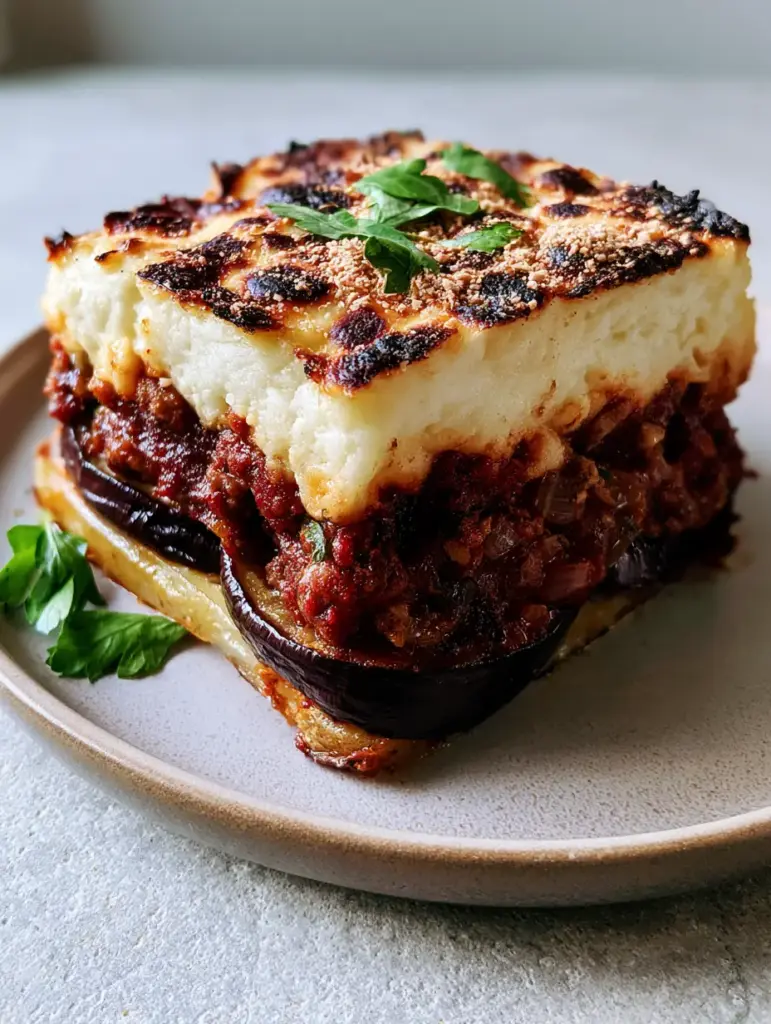
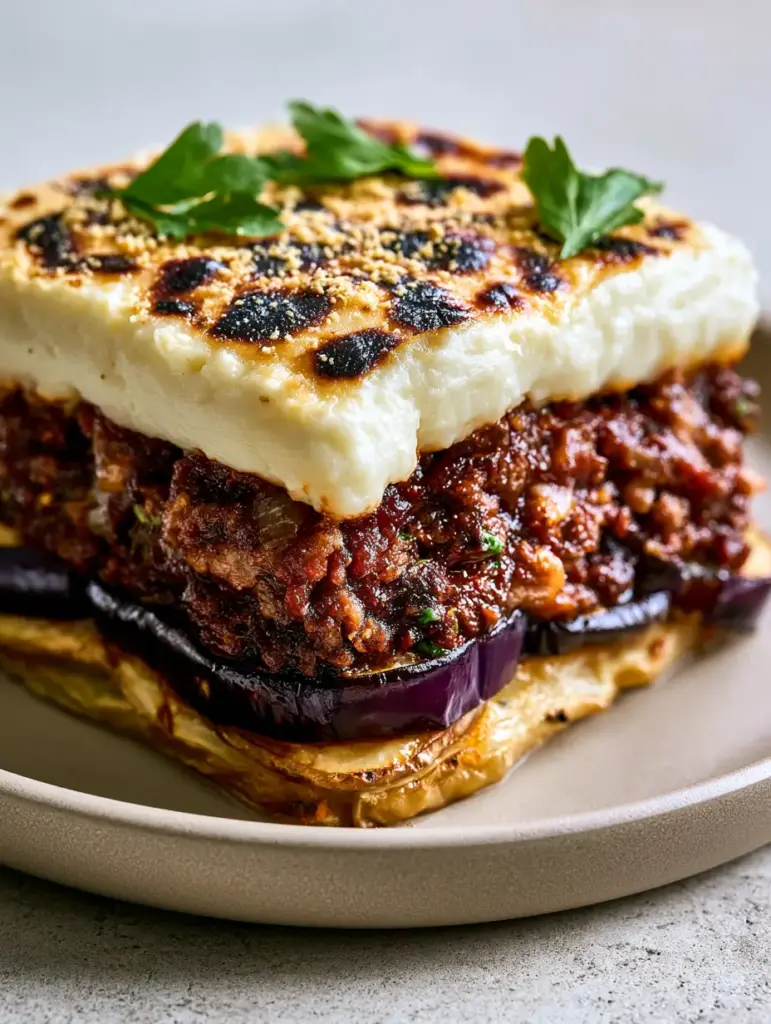
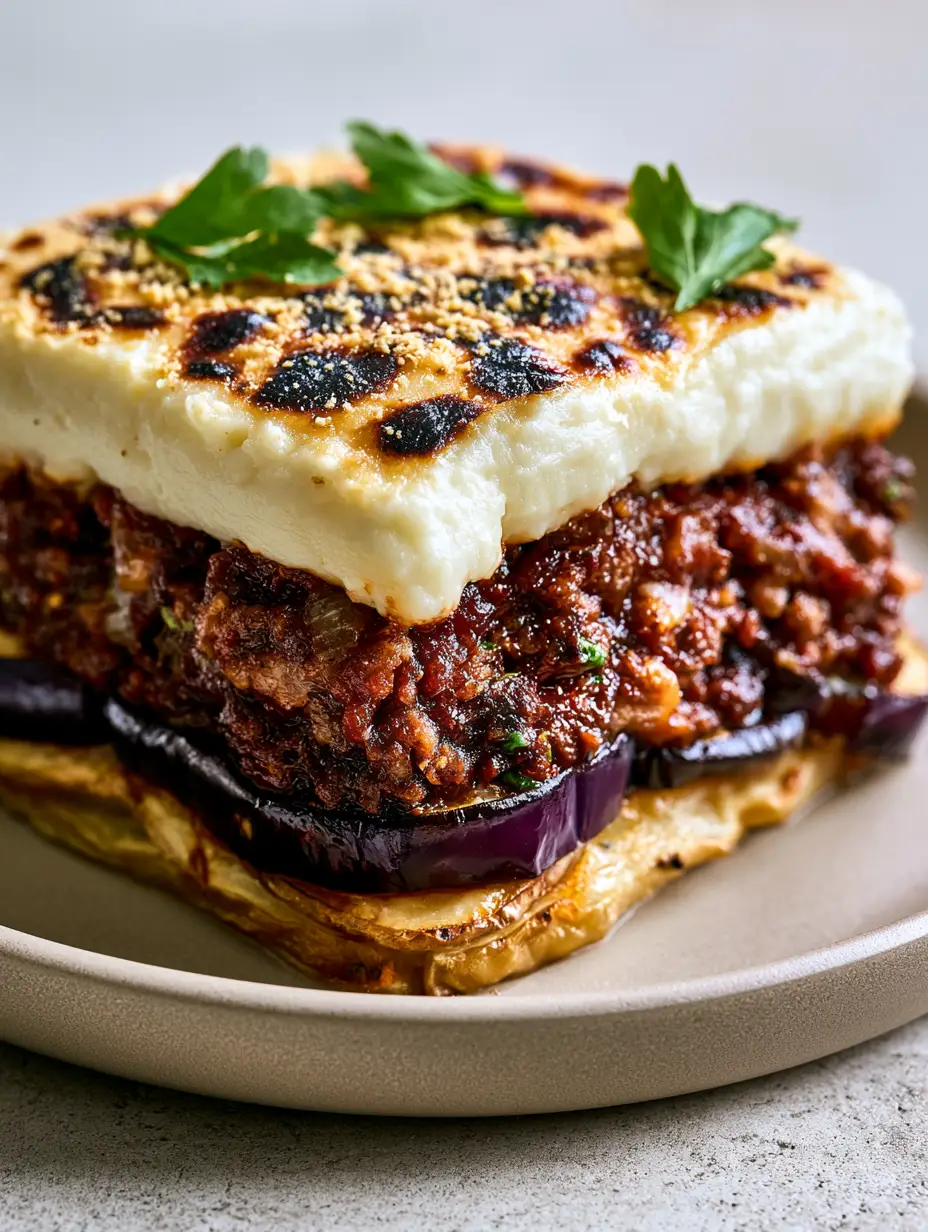
Greek Moussaka is more than just a casserole; it is a culinary architecture of flavors and textures that defines the heart of Hellenic home cooking. This recipe produces a sharp, high-resolution side-profile slice featuring distinct layers: golden roasted potatoes, charred eggplant, a rich lamb sauce, and a gravity-defying, two-inch thick layer of pillowy bechamel.
When you pull this dish from the oven, the first thing you will notice is the perfectly blistered, golden-brown toasted surface, adorned with those characteristic dark leopard spots from the melted cheese. The scent of freshly grated nutmeg and savory lamb will fill your kitchen, promising a meal that is both comforting and sophisticated.
Whether you are hosting a festive dinner or preparing a weekend feast, mastering the Greek Moussaka is a rite of passage for any serious home cook. By following our forensic approach to layering and temperature control, you will achieve that iconic square slice that holds its shape beautifully on a matte ceramic plate.
Why This Authentic Layered Masterpiece Works
- Structural Integrity: The base of oven-roasted potato slices provides a sturdy foundation that prevents the eggplant from becoming soggy.
- Visual Contrast: We use charred eggplant rounds with deep purple skins to create a striking visual boundary between the earthy potatoes and the vibrant meat sauce.
- The “Mega” Bechamel: A specific ratio of roux to milk, stabilized with egg yolks, creates a two-inch thick, airy top layer that mimics a savory marshmallow.
- Flavor Depth: The dark-red tomato and ground lamb sauce is slow-simmered with visible flecks of onion and warm spices to provide a rich, savory center.
The Anatomy of Ingredients for Greek Moussaka
Large Eggplants (Aubergines): You will need 2-3 large eggplants, sliced into rounds. The purple skins are essential for the visual blueprint, providing a dark ribbon of color between the vegetable layers.
Yukon Gold Potatoes: These are preferred for their waxy texture. Once sliced into 1/4-inch (6mm) rounds and roasted, they become golden and buttery without falling apart under the weight of the sauce.
Ground Lamb: For the most authentic flavor, use ground lamb with a 15-20% fat content. This ensures the meat sauce remains moist and carries the aromatic spices effectively through every bite.
Tomato Paste and Crushed Tomatoes: This combination creates the “dark-red” hue mentioned in our visual guide. The paste adds a concentrated umami depth, while the crushed tomatoes provide the necessary bulk.
Whole Milk and Egg Yolks: To achieve a 2-inch (5cm) thick bechamel, we use 4 cups (950ml) of milk. The addition of egg yolks is the secret to that “pillowy” texture and ensures the sauce sets firmly enough to slice.
Kefalotyri or Parmesan Cheese: A hard, salty cheese is vital for creating the “leopard spots” on top. It bubbles and browns at high heat, providing the toasted golden-brown crust we desire.
Freshly Grated Nutmeg: This is the soul of the bechamel. Use a whole nut and a microplane for a fine dusting that cuts through the richness of the cream and lamb.
Flat-Leaf Parsley: Chopped finely, this adds a burst of bright green color and a fresh herbal finish to the finished dish.
Essential Equipment for a Perfect Slice
Achieving a professional-grade Greek Moussaka requires the right tools to manage the layers. You will need two large rimmed baking sheets to roast the vegetables simultaneously, ensuring they are charred and tender before assembly.
A deep 9×13 inch (23x33cm) ceramic or glass baking dish is mandatory to accommodate the massive bechamel layer. For the meat sauce, a heavy-bottomed Dutch oven or large skillet is best for developing a deep sear on the lamb.
Finally, a balloon whisk is necessary for the bechamel to prevent lumps. A sharp offset spatula will help you smooth the top of the white sauce to a perfectly level surface before it goes into the oven to blister.
Step 1: Achieving the Perfect Char on Vegetables
Preheat your oven to 400°F (200°C). Arrange the potato slices on a parchment-lined tray, drizzling with 2 tbsp (30ml) of olive oil and a pinch of salt. Roast for 20-25 minutes until the edges are golden-brown and the centers are tender.
While the potatoes roast, prepare the eggplant rounds. Brush them generously with olive oil—eggplants are like sponges, so don’t be shy. Roast them on a separate tray for 25-30 minutes until the skins are a deep, wrinkled purple and the flesh shows visible char marks.
If you’re looking for more ways to use these summer staples, you might enjoy our summer vegetable gratin or perhaps a batch of zucchini fritters. The key to all these dishes is removing excess moisture from the vegetables before baking.
Step 2: Simmering the Rich Lamb and Tomato Sauce
In your Dutch oven, heat 1 tbsp (15ml) of olive oil over medium-high heat. Add 1.5 lbs (680g) of ground lamb, breaking it up with a wooden spoon. Cook until it is well-browned and the fat has rendered out.
Add one finely diced large onion and three cloves of minced garlic. Sauté until the onions are translucent and have picked up the brown bits from the bottom of the pan. Stir in 2 tbsp (30g) of tomato paste and cook for 2 minutes to caramelize the sugars.
Pour in 1/2 cup (120ml) of dry red wine to deglaze, followed by 1 can (14oz/400g) of crushed tomatoes. Season with 1 tsp (2g) of ground cinnamon, 1/2 tsp (1g) of allspice, salt, and plenty of cracked black pepper. Simmer for 30 minutes until the sauce is thick and dark red.
Step 3: Mastering the 2-Inch Pillowy Bechamel
This is the crowning glory of the Greek Moussaka. In a large saucepan, melt 1/2 cup (115g) of unsalted butter. Whisk in 3/4 cup (95g) of all-purpose flour and cook for 2 minutes, creating a golden roux. Do not let it brown too deeply; we want a creamy white finish.
Gradually whisk in 4 cups (950ml) of warm milk, one splash at a time. Continue whisking constantly over medium heat until the sauce thickens significantly and can coat the back of a spoon. Remove from heat.
Let the sauce cool slightly for 5 minutes, then vigorously whisk in 3 large egg yolks and 1/2 cup (50g) of grated cheese. This creates the “pillowy” volume. Add 1/2 tsp (1g) of freshly grated nutmeg and a pinch of salt. The sauce should be thick enough that a spoon leaves a temporary trail when pulled through it.
Step 4: The Forensic Assembly and The Bake
Grease your 9×13 inch dish. Lay the roasted potato slices in a single, overlapping layer at the bottom. This base prevents the sauce from leaking. Next, layer the charred eggplant rounds, ensuring the deep purple skins are visible near the edges of the dish.
Spread the thick lamb sauce evenly over the eggplant. Finally, pour the bechamel over the top. Use an offset spatula to smooth it out into a flat, 2-inch thick layer. Sprinkle with the remaining cheese and a final dusting of nutmeg.
Bake at 350°F (175°C) for 45-50 minutes. You are looking for the “leopard spots”—dark-brown toasted circles on a golden-brown surface. The bechamel will puff up like a souffle. Remove from the oven and let it rest for at least 45 minutes before slicing. This rest is critical for achieving a clean square slice.
Expert Tips for Moussaka Success
- Salt the Eggplants: If using older globe eggplants, sprinkle the rounds with salt and let them sit for 20 minutes to draw out bitterness before roasting.
- Stabilize the Bechamel: Ensure your milk is warm when adding it to the roux to prevent lumps. The egg yolks must be added when the sauce is off the heat to prevent scrambling.
- The Patience Rule: Never slice a Moussaka straight out of the oven. The layers need time to set, or the bechamel will run.
- Wine Choice: Use a dry red wine like Agiorgitiko or Cabernet Sauvignon to complement the gaminess of the lamb.
What to Serve with Greek Moussaka
Because this dish is incredibly rich, it pairs best with light, acidic sides. A crisp cucumber salad with red onions and vinegar is the perfect palate cleanser. For a full Mediterranean spread, consider serving it alongside rice pilaf or a variety of other traditional Greek recipes.
If you are planning a larger dinner party, start the meal with stuffed peppers or a tray of mezze to keep guests occupied while the Moussaka rests and sets to perfection.
Frequently Asked Questions
Yes, ground beef is a common substitute. However, lamb provides the traditional earthy flavor profile that defines an authentic Greek Moussaka.
No, leaving the skins on is visually important for the dish’s blueprint. The deep purple skins provide a beautiful contrast between the layers and help the eggplant rounds hold their shape.
The key is using egg yolks as a stabilizer and ensuring the roux-to-milk ratio is high. Cooling the sauce slightly before adding yolks prevents them from curdling and helps the sauce puff up during baking.
Kefalotyri is traditional, but a mixture of Pecorino Romano and Parmesan works excellently to achieve those dark, savory blistered spots.
Moussaka requires a resting period of at least 45-60 minutes after baking. This allows the bechamel and meat sauce to set. Additionally, ensure your vegetables are thoroughly roasted to remove excess moisture.
The Ultimate Greek Moussaka Recipe
Greek Moussaka: The Ultimate Guide to a Perfectly Layered Mediterranean Classic
Ingredients
Equipment
Method
- Toss potato slices with oil and salt. Roast at 400°F (200°C) for 20-25 minutes until golden.
- Brush eggplant rounds with oil. Roast for 30 minutes until charred and purple skins are tender.
- Brown lamb with onions and garlic. Add tomato paste, wine, and crushed tomatoes. Simmer until dark red and thick.
- Create a roux with butter and flour. Whisk in warm milk until thick. Remove from heat and stir in egg yolks, cheese, and nutmeg.
- Layer potatoes, then eggplant, then meat sauce. Pour bechamel over top. Bake at 350°F (175°C) for 45-50 minutes until leopard spots appear.
Notes
Use a microplane for the nutmeg to ensure a fine, aromatic dusting.
Sharing the Flavors of Greece
There is nothing quite like the satisfaction of serving a perfect slice of Greek Moussaka. The contrast between the creamy bechamel and the savory lamb is a testament to the beauty of slow cooking. If you enjoyed this recipe, please leave a comment below and share your photos with us on Pinterest!