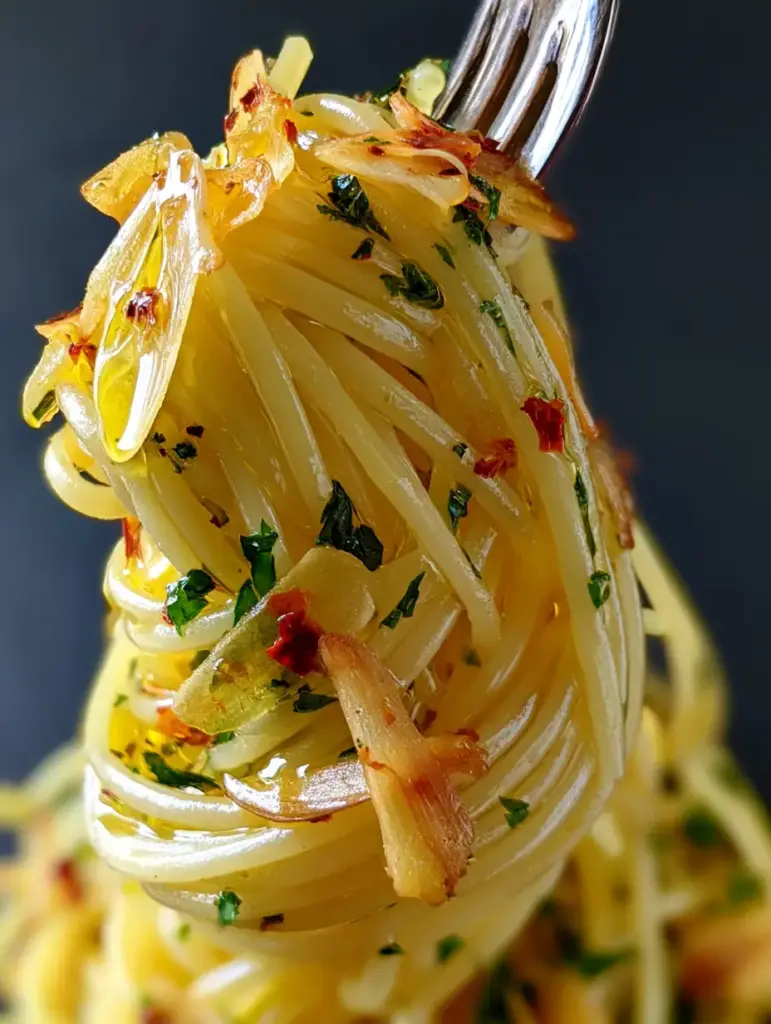
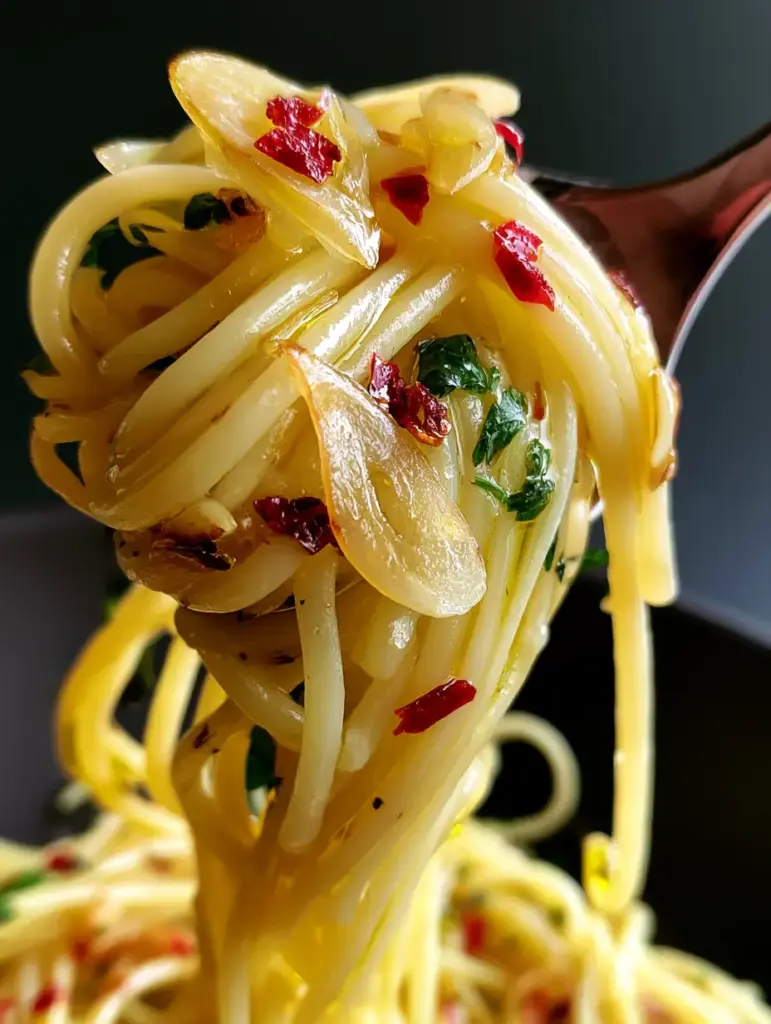
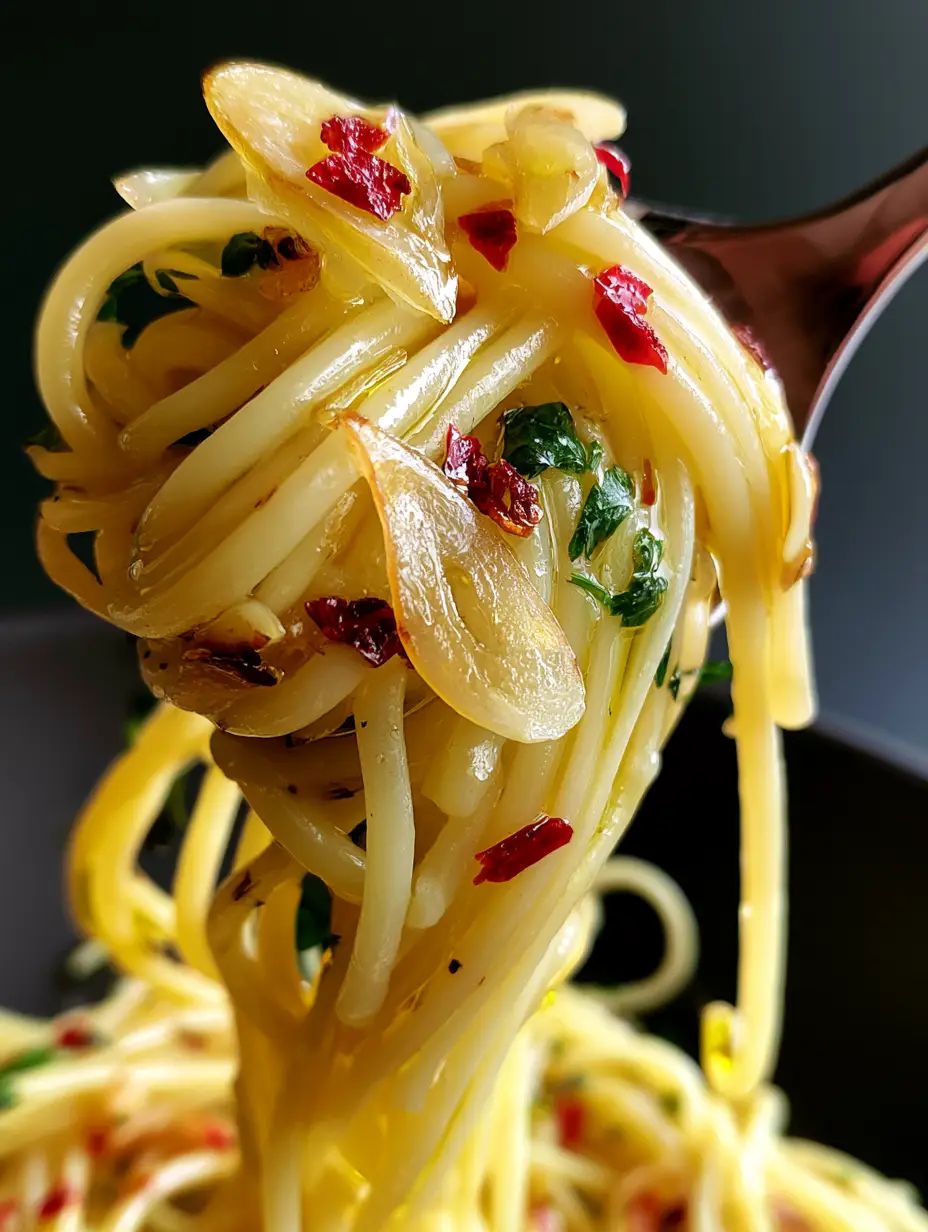
Spaghetti Aglio e Olio is the undisputed monarch of the “pantry pasta” world, a dish where the simplicity of the ingredients demands absolute precision in technique. When you look at a perfectly executed plate, you see a tall, elegant twirl of al dente spaghetti glistening intensely with high-quality extra virgin olive oil. It is a visual masterpiece of contrasts: the paper-thin, translucent garlic slivers toasted to a light golden brown against the vibrant emerald-green flecks of fresh parsley.
This recipe isn’t just about boiling noodles; it’s about the culinary alchemy that occurs when ruby-red dried chili flakes infuse into warm oil and starchy pasta water creates a creamy, silk-like emulsion. If you’ve ever struggled with greasy pasta or bitter, burnt garlic, this deep dive will transform your kitchen approach. We are capturing that high-end, smartphone-ready aesthetic—where every strand of pasta pops against a minimalist background—through professional heat management and timing.
Why This Authentic Spaghetti Aglio e Olio Recipe Works
- Textural Perfection: We utilize the starch from the pasta cooking water to create a glossy glaze that clings to the spaghetti rather than pooling at the bottom of the bowl.
- Visual Precision: By mandoline-slicing the garlic, we ensure every sliver reaches that gorgeous translucent gold state simultaneously, matching our forensic visual blueprint.
- Balanced Heat: The vibrant red pepper flakes are toasted just long enough to release their oils without scorching, providing a gentle “ruby-red” warmth.
- Aromatic Depth: Using fresh flat-leaf parsley added at the final second preserves the “vibrant emerald-green” color and bright, grassy finish.
The Essential Pantry Staples for Authentic Italian Flavor
To achieve the glistening, high-gloss finish seen in our visual blueprint, each ingredient must be of the highest caliber. This is a dish with nowhere to hide, so quality is paramount.
The Foundation Ingredients
Dried Spaghetti: 1 lb (450g). Look for bronze-die extruded pasta; the rougher surface area is essential for the olive oil to “trap” the chili and parsley flecks. Much like our million-dollar-spaghetti, the quality of the noodle dictates the final mouthfeel.
Extra Virgin Olive Oil: 1/2 cup (120ml). This is the primary sauce component. Choose a cold-pressed oil with a peppery finish to provide that intense glisten and specular highlights.
Fresh Garlic: 6 to 8 large cloves. These must be sliced into paper-thin, translucent slivers to achieve the light golden brown toast required for the “macro close-up” aesthetic.
Red Pepper Flakes: 1 tsp (2g). These “bright ruby-red” flakes provide the essential heat and visual pops of color against the golden pasta.
Fresh Flat-Leaf Parsley: 1/2 cup (15g), finely chopped. Do not use curly parsley; the flat-leaf variety offers the “vibrant emerald” hue and superior fragrance.
Coarse Sea Salt: For the pasta water and finishing. You should see “coarse sea salt grains” catching the light on the final twirl to provide a textural crunch.
The Professional Tool Kit
To replicate the tall, elegant twirl and perfectly toasted aromatics, you need the right gear. A heavy-bottomed stainless steel skillet is preferred over non-stick because it allows you to better monitor the Maillard reaction (the browning) of the garlic.
For the “tall twirl” seen in the visual prompt, use a long-pronged carving fork and a large soup ladle. Twirling the pasta inside the ladle creates that tight, structural column that looks high-end and professional. If you are preparing a full Italian spread, including vibrant protein options, having a reliable set of tongs for emulsifying the sauce is a must.
Mastering the Art of the Golden Emulsion: Step-by-Step
1. The Pasta Water Science
Bring 4 quarts (3.8L) of water to a rolling boil. Add 2 tbsp (34g) of sea salt. The water should taste like the sea. Drop your spaghetti and cook for 2 minutes *less* than the package directions for “al dente.” The pasta will finish cooking in the oil, absorbing the garlic-infused flavors.
2. Slicing the Garlic for Visual Impact
While the pasta cooks, slice your garlic cloves into paper-thin, translucent slivers. If the slices are too thick, they will be raw in the middle; too thin, and they will burn. Aim for a thickness that allows you to almost see the knife blade through the garlic. This ensures the “glistening intensely” look of the oil remains clear, not cloudy.
3. Infusing the Liquid Gold
In a large cold skillet, combine the olive oil and garlic slivers. Turn the heat to medium-low. This “cold start” allows the garlic to soften and release its essence without immediately browning. Watch for the sensory cue: when the garlic begins to sizzle gently and smells sweet (not acrid), add the red pepper flakes.
4. Achieving the Light Golden Brown Toast
Stir constantly. As soon as the garlic slivers turn from translucent white to a “perfectly toasted light golden brown,” immediately ladle in 1/2 cup (120ml) of the starchy pasta water. This stops the cooking process and prevents the garlic from turning bitter.
5. The Final Emulsion and Twirl
Transfer the undercooked spaghetti directly into the skillet with tongs. Increase heat to medium-high. Toss vigorously for 1-2 minutes. The oil and pasta water will emulsify into a creamy, glistening sauce. Add the finely chopped parsley at the very last second to keep it “vibrant emerald-green.”
Expert Tips for Success
- The “Ladle” Trick: If the sauce looks too dry or oily, add more pasta water one tablespoon at a time. The starch is the “glue” that creates the specular highlights on the strands.
- Garlic Management: If your garlic browns too fast, pull the pan off the heat immediately. A single burnt sliver will ruin the entire flavor profile of the Spaghetti Aglio e Olio.
- Timing the Parsley: Heat is the enemy of chlorophyll. By adding the parsley after the heat is turned off, you ensure the color stays bright ruby-red and emerald-green.
- Texture Check: Ensure you see the “coarse sea salt grains” at the end. This provides a hit of seasoning that doesn’t just dissolve into the sauce but pops on the tongue.
How to Store and Revive Leftovers
Spaghetti Aglio e Olio is best enjoyed immediately to maintain that “glistening intensely” quality. However, leftovers can be stored in an airtight container for up to 2 days. To reheat, do not use a microwave; it will make the oil heavy and the pasta mushy.
Instead, return the pasta to a skillet with a splash of water or a drizzle of fresh olive oil. Toss over medium heat until the emulsion reforms. While this dish doesn’t freeze well, you can use similar garlic-infused oils for dishes like our vegetable skillets.
Perfect Pairings for a Complete Italian Feast
To balance the richness of the olive oil and the heat of the chili, serve this pasta with a crisp, acidic side. A chilled cucumber salad or a bright summer vegetable gratin provides a refreshing contrast.
For those looking for a lower-carb accompaniment, our zucchini fritters offer a similar golden-fried texture that complements the garlic slivers beautifully.
Frequently Asked Questions
For this dish, no. Bottled garlic is kept in citric acid which prevents the Maillard reaction. You need fresh cloves sliced into translucent slivers for the correct flavor and texture.
The secret is the emulsion. By adding starchy pasta cooking water to the oil and tossing the noodles vigorously over heat, you create a creamy glaze that binds the oil to the pasta strands.
It has a gentle, warming heat from the red pepper flakes, but you can control the intensity by adjusting the amount of ‘ruby-red’ flakes you add to the oil.
Long, thin noodles like Spaghetti or Linguine are traditional. Their surface area allows the oil and finely chopped aromatics like parsley and chili to coat the strands evenly.
Bitterness usually comes from burnt garlic. Even slightly over-toasted garlic slivers release a bitter compounds. To prevent this, start the garlic in cold oil and add pasta water the moment they turn light golden brown.
The Perfect Spaghetti Aglio e Olio Recipe Card
Spaghetti Aglio e Olio: The Ultimate Guide to Perfect Golden Garlic Pasta
Ingredients
Equipment
Method
- Bring salted water to a boil and cook spaghetti for 2 minutes less than package directions until very al dente.
- While pasta cooks, use a mandoline or sharp knife to slice garlic into paper-thin, translucent slivers.
- Place oil and garlic in a cold skillet. Heat over medium-low until garlic is a light golden brown and fragrant.
- Add red pepper flakes and toast for 30 seconds, then add a ladle of pasta water to stop the browning.
- Transfer pasta to skillet. Toss vigorously over medium-high heat with more pasta water until the oil glistens and coats every strand.
- Turn off heat, stir in fresh parsley and coarse sea salt, and twirl into tall mounds for serving.
Notes
Do not let the garlic turn dark brown, or it will become bitter and ruin the sauce.
Bring the Taste of Italy Home
Mastering Spaghetti Aglio e Olio is a rite of passage for every home cook. It’s a testament to how few ingredients can create a world-class meal when treated with respect. Once you’ve achieved that perfect golden garlic toast, you’ll never look at a box of dried pasta the same way again.
If you loved this recipe, please leave a comment below and share your photos with us! Don’t forget to follow us on Pinterest for more culinary inspiration and visual recipe blueprints.