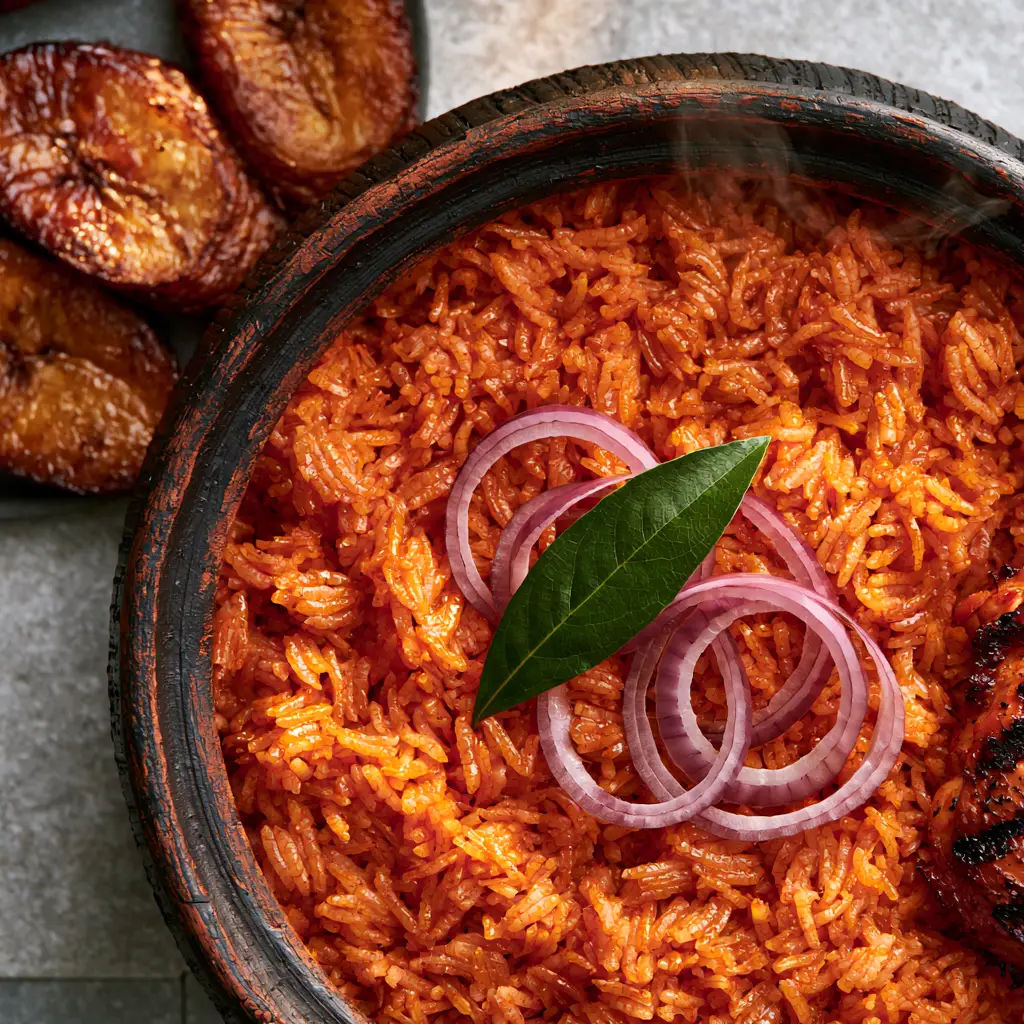
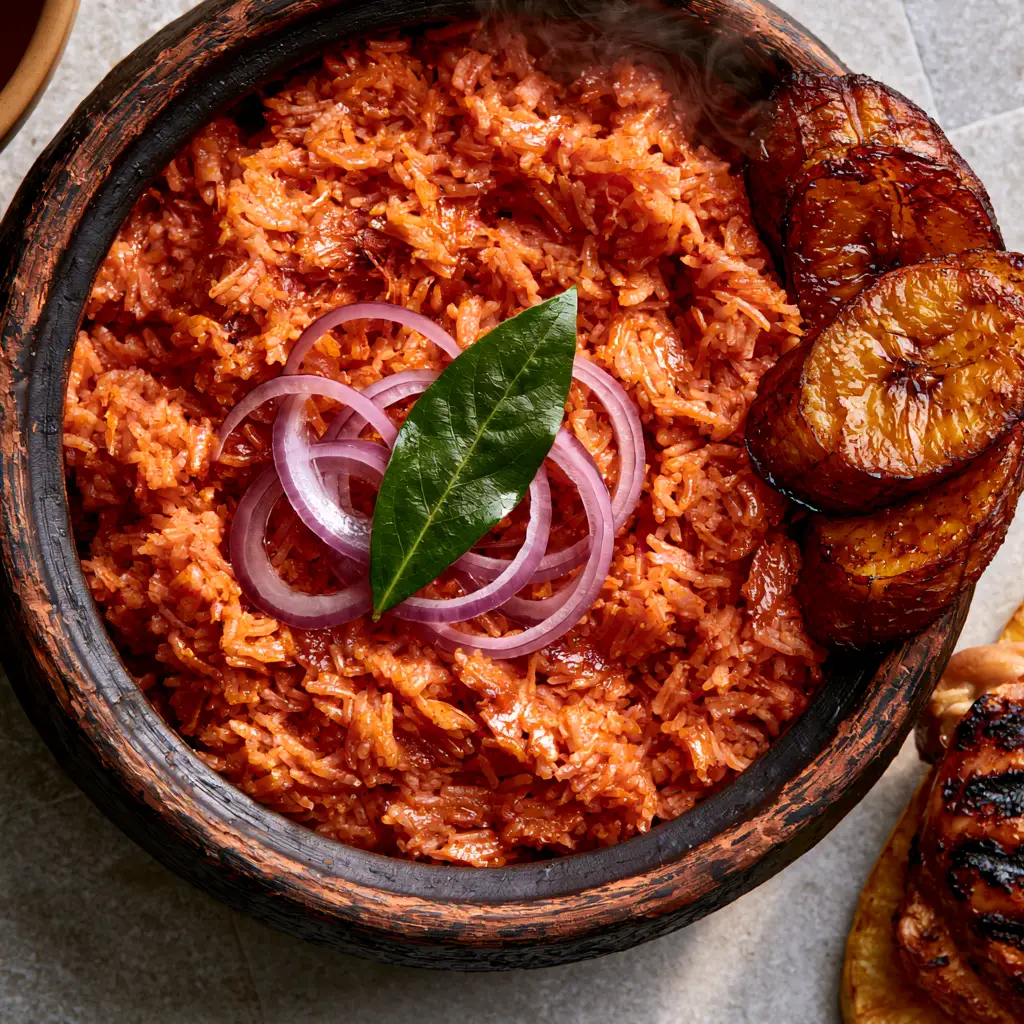
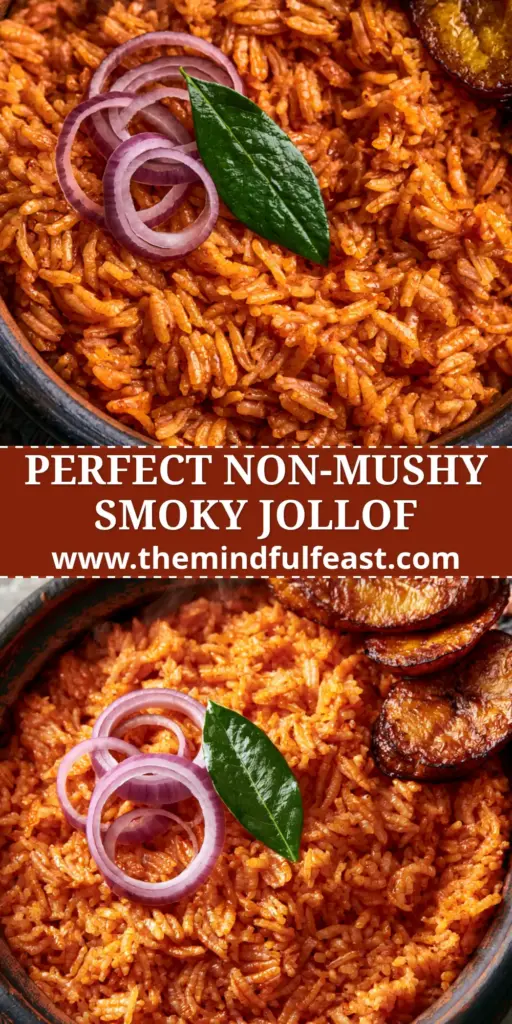
There is nothing quite like the sight of a traditional rustic black earthenware pot overflowing with vibrant, reddish-orange Nigerian Jollof Rice. The way the natural window light catches each glistening, perfectly separated grain is a testament to the patient craft of West African cuisine.
When you lift the lid, a plume of aromatic steam carries the scent of charred peppers, bay leaves, and seasoned oils across the kitchen. This isn’t just a side dish; it is a cultural icon, served here with the essential trio of char-grilled chicken, golden fried plantains, and the sharp crunch of fresh red onions.
Whether you are aiming for that legendary “party rice” smokiness or simply want a foolproof way to ensure your grains never turn to mush, this guide delivers professional results. Let’s dive into the science of the perfect pepper base and the steaming technique that makes this Nigerian Jollof Rice truly world-class.
Why This Smoky Party Rice Recipe Works
- Perfect Grain Definition: By using long-grain parboiled rice and a controlled steaming method, we ensure every grain is distinct and glistening, exactly like our visual blueprint.
- Layered Aromatics: The combination of a fried tomato-red pepper base and fresh bay leaves creates a deep, complex umami profile that builds with every bite.
- Textural Harmony: Pairing the tender rice with crispy-skinned char-grilled chicken and caramelized sweet plantains provides a multi-sensory eating experience.
- Authentic Visuals: We focus on the “Bottom Pot” technique to infuse smokiness while garnishing with raw red onion rings for a bright, professional finish.
The Secret to Non-Mushy Grains: Essential Ingredients
Long-Grain Parboiled Rice: 3 cups (600g). Parboiled rice is sturdier than jasmine or basmati, allowing it to withstand the long steaming process without breaking or becoming sticky.
Red Bell Peppers (Tatashe): 3 large (approx. 450g). These provide the vibrant red hue and a sweet, earthy foundation for the Obe Ata (pepper sauce).
Scotch Bonnet Peppers (Rodo): 1 to 2 peppers. These provide the signature heat; adjust according to your spice tolerance but do not omit them entirely for an authentic flavor.
Roma Tomatoes: 5 medium (approx. 500g). Tomatoes add necessary acidity and liquid to help the peppers blend into a smooth, pourable consistency.
Vegetable Oil: 1/2 cup (120ml). Aromatic oils are crucial for frying the tomato paste and pepper base, which removes raw bitterness and creates that “glistening” look.
Chicken Stock: 3 cups (720ml). A high-quality, flavorful stock is the invisible backbone of the dish, providing salt and depth to the interior of the rice grains.
Chicken Drumsticks: 4 to 6 pieces. We choose drumsticks for their high fat content, which ensures they remain juicy even after achieving a char-grilled, crispy skin.
Large Red Onion: 1 whole (approx. 200g). Half is blended into the base, while the other half is sliced into thin rings for a fresh, raw garnish.
Large Yellow Plantains: 2 ripe (yellow with black spots). These must be sweet and soft to achieve the caramelized, golden-brown “dodo” finish shown in the photos.
Seasoning Essentials: 2 fresh bay leaves, 1 tsp (5g) dried thyme, 1 tbsp (15g) curry powder, and 2 bouillon cubes. These provide the classic “Party Jollof” aromatics.
Must-Have Tools for an Authentic One-Pot Experience
To achieve the visual result of an authentic Nigerian Jollof Rice, a heavy-bottomed pot is non-negotiable. A cast-iron Dutch oven or a traditional earthenware pot helps distribute heat evenly and facilitates the “bottom burn” required for smokiness.
You will also need a high-speed blender to ensure your pepper base is perfectly smooth. Finally, a roll of aluminum foil is the “secret weapon” used to trap steam during the final cooking stage, ensuring the rice cooks through without extra water.
Building the Foundation: Blending the Vibrant Pepper Base
Crafting the Obe Ata
Begin by roughly chopping your red bell peppers, tomatoes, Scotch bonnets, and half of the red onion. Blend these with just enough water to get the blades moving until the mixture is a smooth, vibrant crimson purée.
Pour the mixture into a large pot and bring to a boil. Allow it to reduce by half over medium-high heat; this concentrates the sugars and ensures your Nigerian Jollof Rice isn’t diluted by excess water.
Frying the Aromatics
In your main cooking pot, heat the vegetable oil until it shimmers. Sauté the remaining chopped onions until translucent, then add tomato paste, curry powder, and thyme.
Fry the paste for 5–7 minutes, stirring constantly. You are looking for the oil to separate from the paste and for the color to deepen from bright red to a rich maroon—this is the key to deep flavor.
Mastering the Steam: How to Achieve Perfect Grain Separation
Integrating the Rice
Thoroughly wash your parboiled rice in warm water multiple times until the water runs clear. This removes surface starch, which is the primary cause of mushy, clumping rice.
Add the washed rice to the fried pepper base, stirring well to ensure every grain is coated in the aromatic oils. Pour in the chicken stock and add the fresh bay leaves.
The Foil-Steam Method
Cover the pot tightly with a layer of aluminum foil before placing the lid on top. This creates a pressurized environment where the rice is cooked by steam rather than boiling liquid.
Turn the heat down to the lowest possible setting. Resist the urge to peek! Let it steam for 30–40 minutes until the liquid is absorbed and the grains are tender but firm to the bite.
The Crispy Sides: Char-Grilled Chicken and Sweet Dodo
Searing the Chicken
Season your chicken drumsticks with salt, pepper, and a touch of paprika. Grill them over medium-high heat or sear in a cast-iron skillet until the skin is golden-brown and crispy with visible char marks.
If you enjoy smoky poultry, you might also like the flavors in our salsa-verde chicken rice skillet for a different take on one-pot poultry and grains.
Frying the Plantains
Peel the ripe plantains and slice them into diagonals. Fry in hot oil until the edges are caramelized and the centers are soft. These golden-brown slices provide the perfect sweet contrast to the spicy rice.
For more vegetable-forward side ideas, consider serving this alongside a refreshing cucumber salad to cut through the richness of the fried components.
Expert Tips for Success
- The “Bottom Burn”: For true smoky flavor, let the rice burn slightly at the very bottom of the pot during the last 5 minutes of cooking. The scent should be toasted, not acrid.
- Liquid Ratio: The liquid (stock + pepper base) should barely cover the rice. If you add too much, you will end up with a texture closer to a traditional rice pilaf rather than the distinct grains of Jollof.
- Patience is Key: Once the rice is done, fluff it gently with a wooden spoon or a large fork. Let it sit uncovered for 5 minutes to allow excess moisture to evaporate.
- Garnish Fresh: Always add your thin red onion rings and fresh bay leaf just before serving to maintain the vibrant colors shown in our visual guide.
Storage, Reheating & Freezing
Nigerian Jollof Rice actually tastes better the next day as the spices continue to meld. Store leftovers in an airtight container in the refrigerator for up to 4 days.
To reheat, sprinkle a teaspoon of water over the rice and microwave covered, or steam it briefly on the stovetop. This recipe also freezes beautifully for up to 3 months; just thaw in the fridge overnight before reheating.
What to Serve With This
While the char-grilled chicken and plantains are the classic partners, this rice is incredibly versatile. You could serve it alongside a hearty Nigerian spinach stew (Efo Riro) for a complete feast.
If you have leftover rice, it makes an excellent base for a zesty shrimp rice bowl the following day. For those looking for more creative lunch options, check out our adult lunchable ideas which often feature similar protein and grain components.
Frequently Asked Questions
Yes, but Basmati requires significantly less liquid and a shorter cooking time. For the traditional texture shown in the photos, long-grain parboiled rice is highly recommended.
The ‘smoky’ flavor comes from letting the bottom layer of rice slightly burn (the ‘bottom pot’). The steam carries this toasted aroma throughout the entire pot of rice.
It has a kick due to the Scotch bonnet peppers, but the heat is balanced by the sweetness of the red bell peppers and tomatoes. You can deseed the Scotch bonnets to reduce the heat.
Mushy rice is usually caused by using too much water or not washing the starch off the parboiled rice. The foil-steam method ensures the rice cooks in its own vapor, maintaining grain separation.
Authentic Smoky Nigerian Jollof Rice Recipe Card
Nigerian Jollof Rice: The Ultimate Smoky One-Pot Masterpiece
Ingredients
Equipment
Method
- Blend bell peppers, tomatoes, Scotch bonnets, and half the onion until smooth.
- Boil the blended mixture in a pot for 15-20 minutes until reduced by half.
- Heat oil in a heavy pot, sauté chopped onions, then add tomato paste and spices. Fry for 7 minutes until oil separates.
- Add washed rice and reduced pepper base to the pot. Stir to coat grains in oil.
- Add stock and bay leaves. Cover with foil and a lid. Simmer on low for 35 minutes until grains are glistening and separated.
- Top with raw red onion rings and a fresh bay leaf. Serve with grilled chicken and fried plantains.
Notes
Use aluminum foil under the lid to ensure the rice steams perfectly without needing extra water.
Bring the Spirit of the Party to Your Kitchen
Mastering Nigerian Jollof Rice is a rite of passage for any home cook looking to explore the depths of West African flavors. The combination of the smoky, spice-infused grains and the sweet, caramelized plantains creates a dish that is as visually stunning as it is delicious.
Did your rice get that perfect “bottom pot” char? We want to hear about your Jollof journey! Leave a comment below and share your results. Don’t forget to pin this recipe to your favorite boards on Pinterest so you always have this masterclass at your fingertips!