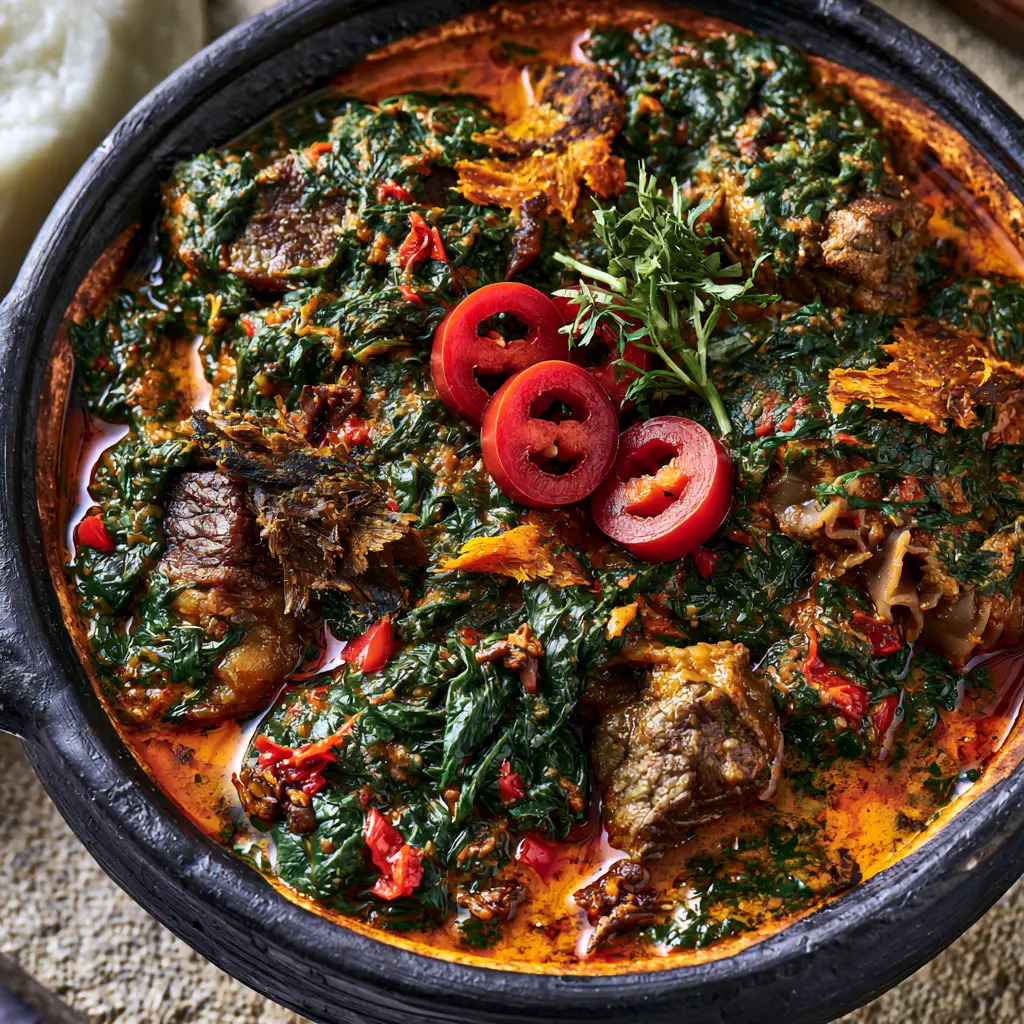
Experience the soul of Yoruba cuisine with this authentic Nigerian Spinach Stew, also known as Efo Riro. This isn’t just a vegetable dish; it is a rich, concentrated masterpiece featuring a glossy red palm oil sheen and a symphony of textures. When you look at the deep, vibrant dark green wilted spinach leaves entwined with succulent chunks of seared beef, you are seeing the result of centuries of culinary tradition.
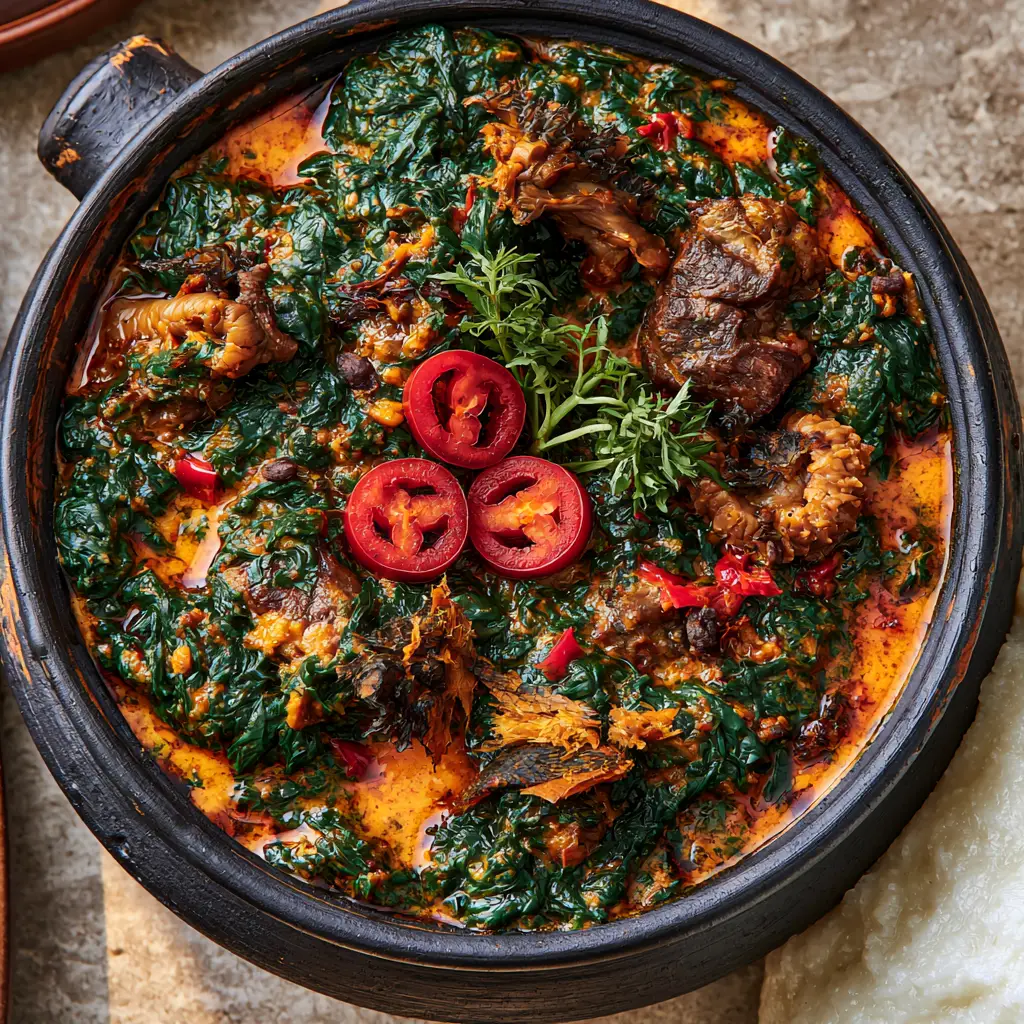
The visual appeal of this Nigerian Spinach Stew lies in its lack of excess liquid. Unlike watery stews, a true Efo Riro is thick and concentrated, where the sauce clings to every leaf and protein. You will notice the tiny flecks of fermented locust beans and the bright pop of red scotch bonnet peppers that signal a flavor profile that is savory, smoky, and spicy all at once.
Whether you are serving this at a festive gathering or a cozy weeknight dinner, the aroma of sautéed peppers and smoked fish will fill your kitchen. This guide ensures your stew achieves that perfect handheld smartphone photo quality, with natural specular highlights reflecting off the rich oil. Let’s dive into the forensic details of creating this masterpiece.
Why This Authentic Efo Riro Stands Out
- Textural Harmony: The combination of tender tripe, seared beef, and flaky smoked fish creates a multi-dimensional mouthfeel that contrasts perfectly with the soft, wilted spinach.
- Concentrated Flavor Base: By reducing the red bell pepper sauce until no water remains, we ensure the flavors are bold and the “red palm oil sheen” is professionally achieved.
- The “Iru” Factor: Fermented locust beans provide an earthy, umami depth that is the hallmark of authentic Nigerian cooking.
- Visually Stunning: The contrast between the dark green leaves, the orange-red sauce, and the smooth white pounded yam makes this a centerpiece dish.
The Building Blocks of Flavor: Essential Ingredients
The Protein Powerhouse
1 lb (450g) Beef Chuck: We use beef chuck cut into bite-sized cubes for its excellent fat-to-meat ratio. Searing these chunks until a deep golden-brown crust forms is essential for adding a meaty depth to the stew base.
0.5 lb (225g) Honeycomb Tripe: Cooked tripe pieces provide a unique, chewy texture that absorbs the spicy sauce. Ensure the tripe is pre-boiled until tender before it enters the final stew to maintain a consistent bite.
1 cup (50g) Smoked Fish Flakes: Smoked catfish or stockfish adds the characteristic smokiness found in West African stews. These flakes should be cleaned and deboned, allowing them to melt slightly into the sauce for a rounded flavor.
The Vibrant Vegetable Base
1.5 lbs (680g) Fresh Spinach: While traditionally made with Efo Tete or Shoko, baby spinach or regular bunch spinach works beautifully. The key is to blanch and squeeze the life out of it to prevent a watery result.
3 large (450g) Red Bell Peppers: These form the “concentrated red bell pepper sauce.” Blending these with onions creates the thick, sweet, and savory foundation that defines the dish’s color.
2-3 (30g) Fresh Red Scotch Bonnet Peppers: These provide the heat. We use some in the blend and slice others for a garnish that adds a fresh, sharp bite to the finished bowl.
The Traditional Aromatics
1/2 cup (120ml) Red Palm Oil: This is non-negotiable for the authentic “glossy orange-red” look. Palm oil provides a distinct earthy flavor and the necessary fats to carry the spice.
2 tbsp (30g) Fermented Locust Beans (Iru): These tiny “umami bombs” are visible throughout the stew. Their pungent, savory aroma is the secret ingredient that separates a generic stew from a true Efo Riro.
Must-Have Kitchen Tools for Success
A Heavy-Bottomed Pot or Dutch Oven: You need a vessel that retains heat well for searing the beef and slowly reducing the pepper sauce. A rustic black earthenware bowl is perfect for the final presentation to match our visual blueprint.
High-Speed Blender: To achieve the “smooth” foundation of the pepper sauce, a quality blender is necessary. However, ensure you pulse rather than liquefy to keep some of those “tiny flecks of sautéed red bell pepper” visible.
Fine Mesh Colander: This is critical for draining the blanched spinach. As our Midjourney prompt specifies “no visible water at the bottom,” getting the spinach as dry as possible is a technical requirement.
Step-by-Step Instructions for Culinary Perfection
Preparing the Protein Medley
Start by seasoning your beef chunks with salt and a little bouillon. In your heavy pot, heat a tablespoon of neutral oil and sear the beef until a deep, dark crust forms on all sides; this Maillard reaction is vital for the stew’s color. Add the tripe and enough water to cover, simmering until the proteins are fork-tender. Drain the liquid, reserving only a tiny amount of stock, and set the meats aside.
Crafting the Concentrated Pepper Sauce
Roughly chop your red bell peppers, one onion, and two scotch bonnets. Blend them together until mostly smooth but still possessing a slight texture. Pour this mixture into a pot and boil it over medium-high heat. You are looking for a specific visual cue: the water must evaporate until you are left with a thick, pasty concentrate that has reduced by at least half.
Blooming the Iru and Palm Oil
Wipe your main pot clean and add the 1/2 cup (120ml) of red palm oil. Heat it on medium until it is hot but not smoking—look for the oil to become slightly more fluid and clear. Add a finely diced onion and your fermented locust beans (Iru). The sound of the sizzle and the immediate release of a pungent, nutty aroma will tell you the flavors are blooming perfectly.
Integrating the Sauce and Proteins
Stir the concentrated pepper paste into the hot palm oil. You will see the oil begin to rise to the top, creating that “glossy orange-red sheen” described in our blueprint. Add the seared beef, tripe, and smoked fish flakes. Let these simmer in the sauce for 10 minutes, allowing the proteins to absorb the spicy, smoky notes of the base.
The Final Spinach Wilt
Add your blanched and squeezed spinach to the pot. Using a sturdy spoon, fold the leaves into the thick sauce until they are completely entwined with the meat and fish. The spinach should wilt further but remain a vibrant dark green. Season with salt and extra crayfish powder if desired. Turn off the heat immediately to prevent the spinach from turning brown.
Expert Tips for the Ultimate Nigerian Spinach Stew
- The “Dry” Secret: To ensure there is “no visible water at the bottom,” squeeze your blanched spinach between paper towels or a clean kitchen cloth. Any residual water will dilute the palm oil’s richness.
- Palm Oil Management: If you find the palm oil taste too strong, you can “bleach” it slightly by heating it for a few minutes before adding the onions, but for Efo Riro, the vibrant red color is usually preferred.
- Protein Variety: Don’t be afraid to add ponmo (cow skin) or dried shrimp to further enhance the textural variety seen in authentic versions of traditional Nigerian soups.
- Garnish for Impact: Place three perfectly rounded slices of fresh red scotch bonnet peppers on top just before serving. This adds a “handheld smartphone photo” realism that is visually enticing.
Optimal Storage and Reheating Practices
Nigerian Spinach Stew tastes even better the next day as the flavors continue to meld. Store it in an airtight container in the refrigerator for up to 4 days. When reheating, do so over low heat on the stovetop to preserve the texture of the spinach. Avoid the microwave if possible, as it can cause the palm oil to splatter and the spinach to overcook.
For long-term storage, Efo Riro freezes remarkably well. Place it in freezer-safe bags, removing as much air as possible. It will stay fresh for up to 3 months. Thaw overnight in the fridge before reheating slowly.
The Perfect Pairings for Efo Riro
To truly honor the visual recipe blueprint, serve this stew with a side of smooth, white pounded yam. The neutral, dough-like consistency of the yam is the perfect vessel for scooping up the thick, concentrated stew. If you’re looking for other traditional pairings, this stew also goes excellently with smoky Jollof rice or even a simple Nigerian fried rice.
If you want to experiment with different textures, try serving it alongside a light rice pilaf or for a fusion twist, use the leftovers as a topping for a spinach-based pasta dish.
Frequently Asked Questions
While you can use vegetable oil, you will lose the authentic earthy flavor and the characteristic orange-red sheen that defines Efo Riro.
No. While both use spinach and similar proteins, Egusi soup is thickened with ground melon seeds, whereas Efo Riro relies on a concentrated pepper base and large quantities of spinach.
Iru is fermented locust beans. It provides a deep, savory umami flavor. If you can’t find it, a small amount of miso paste or extra crayfish can provide a similar depth, though the flavor profile will shift.
Traditionally, Efo Tete (African Spinach) or Shoko are used. In the US or Europe, baby spinach or mature bunch spinach are excellent substitutes as long as they are well-drained.
Wateriness usually comes from not squeezing the blanched spinach enough or not reducing the pepper blend sufficiently. Ensure the pepper base is a thick paste before adding oil.
Authentic Efo Riro: The Recipe Card
Nigerian Spinach Stew: The Ultimate Authentic Efo Riro Recipe
Ingredients
Equipment
Method
- Season beef chunks with salt. In a heavy pot, sear the beef in oil over medium-high heat until a dark golden crust forms. Add tripe and water; simmer until tender.
- Blend red bell peppers, one onion, and 2 scotch bonnets. Boil the mixture in a separate pot until the water evaporates and a thick concentrate remains.
- Heat red palm oil in the main pot. Sauté diced onions and fermented locust beans until fragrant (about 2-3 minutes).
- Add the concentrated pepper paste to the oil. Stir in the beef, tripe, and smoked fish. Simmer for 10 minutes until oil rises to the top.
- Fold in the blanched, squeezed spinach. Mix until coated in the rich sauce. Garnish with sliced scotch bonnets and serve with pounded yam.
Notes
Ensure the pepper base is fully reduced before adding oil for the best flavor concentration.
Bring the Taste of Lagos to Your Kitchen
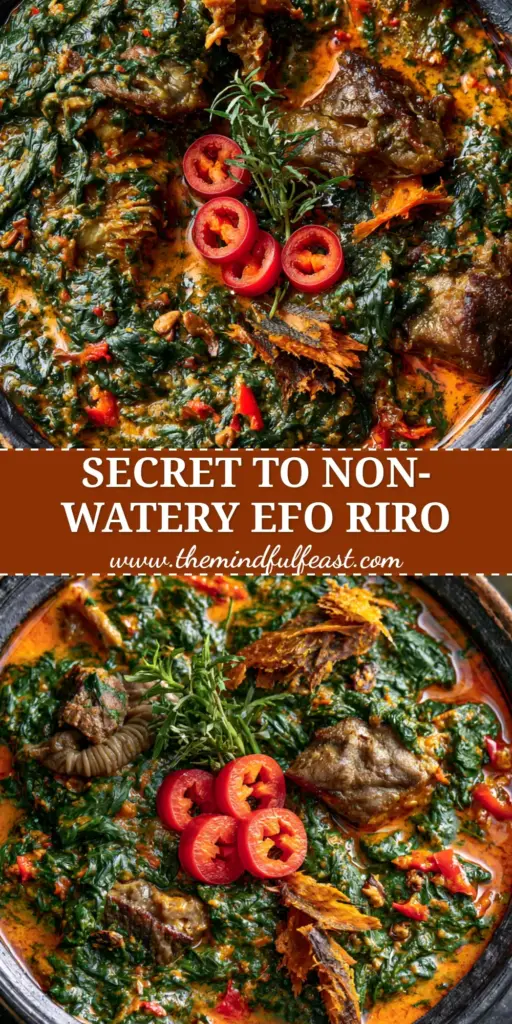
Creating an authentic Nigerian Spinach Stew is a rewarding culinary journey that results in a dish as beautiful as it is delicious. The combination of the deep green spinach and the vibrant red palm oil creates a visual masterpiece that is sure to impress. By following these forensic steps, you’ve ensured a result that is thick, rich, and bursting with umami.
We would love to see your creations! Tag us in your photos and share this recipe with fellow food enthusiasts. For more inspiration, follow our boards on Pinterest. Don’t forget to leave a comment below with your favorite protein additions!