There is a specific, undeniable magic that happens when a scorching hot carbon steel wok meets cold, day-old jasmine rice and thinly sliced marinated beef. The beef fried rice you see in high-end teppanyaki grills—with its individual golden grains and glistening, velvety steak—isn’t just a result of luck; it is a masterclass in heat management and ingredient preparation. This recipe bridges the gap between home cooking and professional wok hei, delivering a dish that is visually stunning and packed with deep, umami-rich flavors.
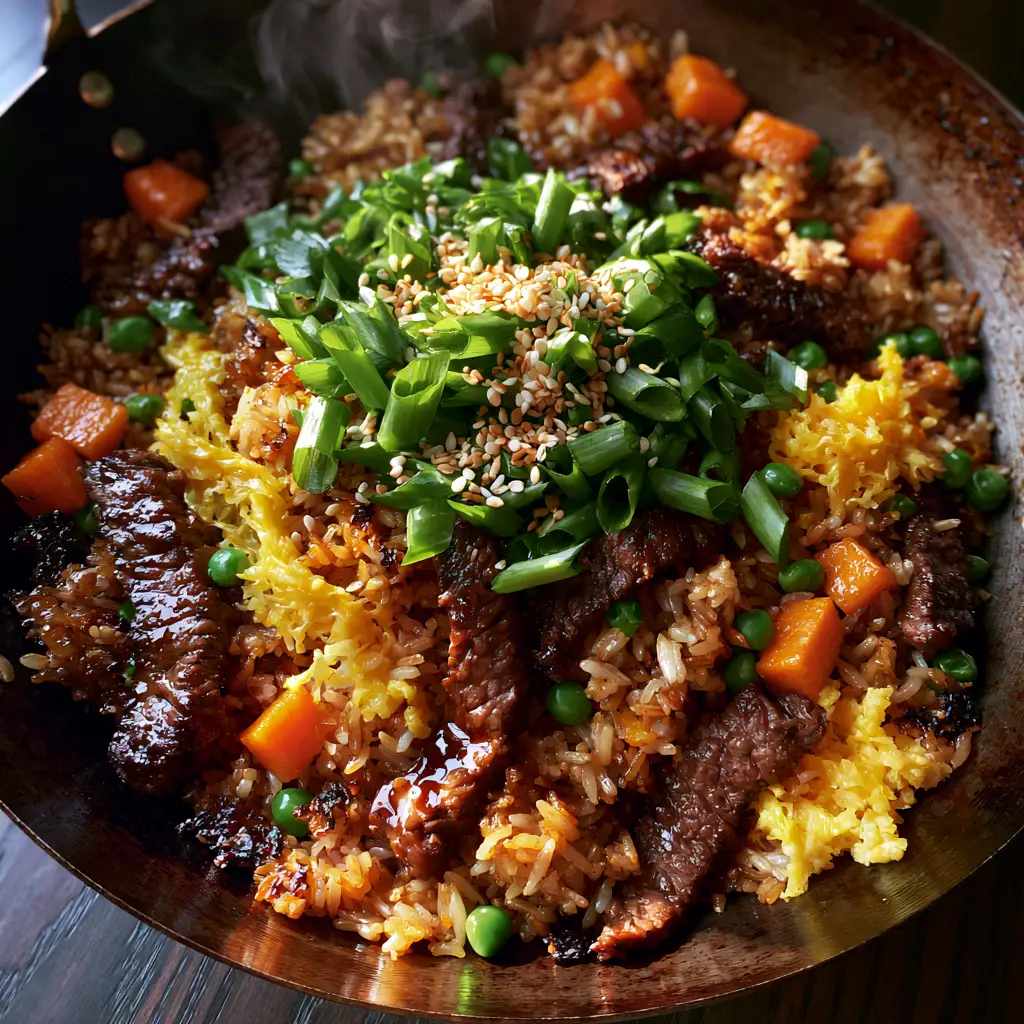
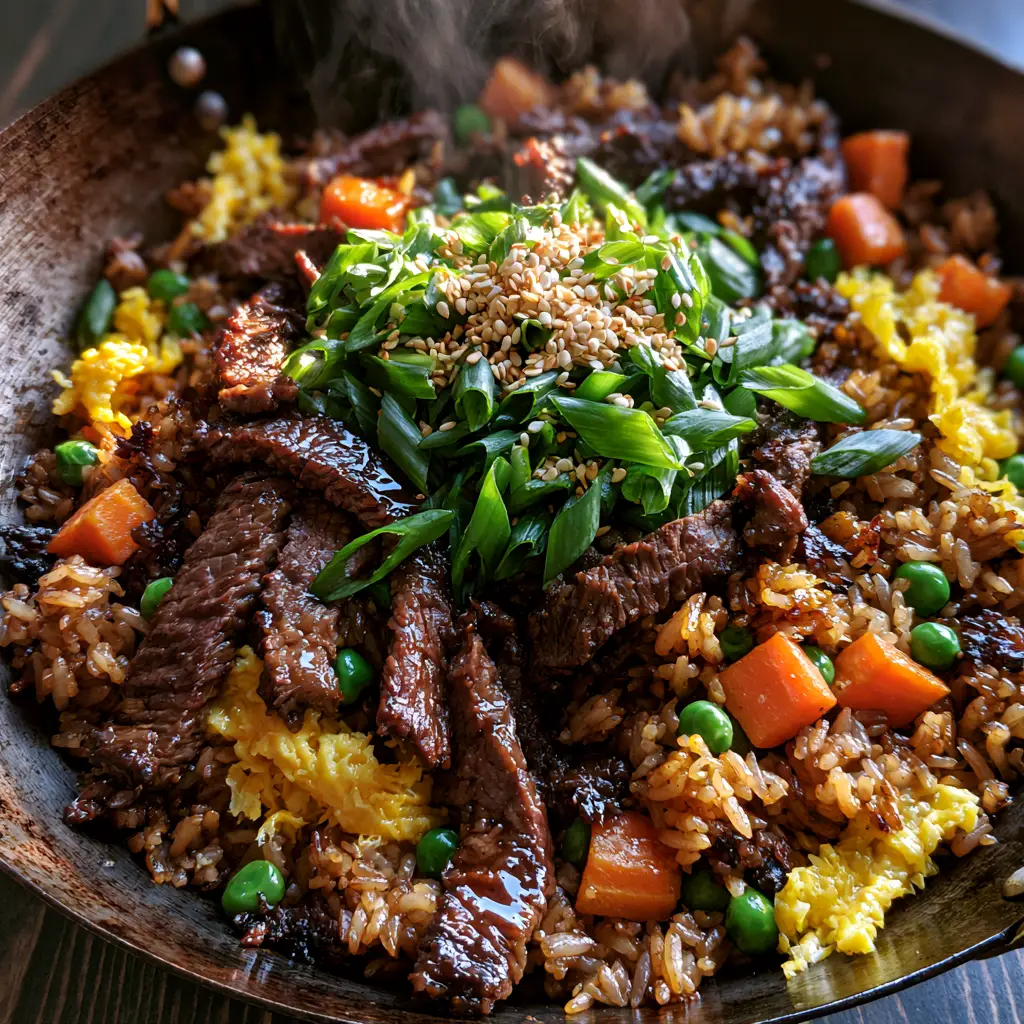
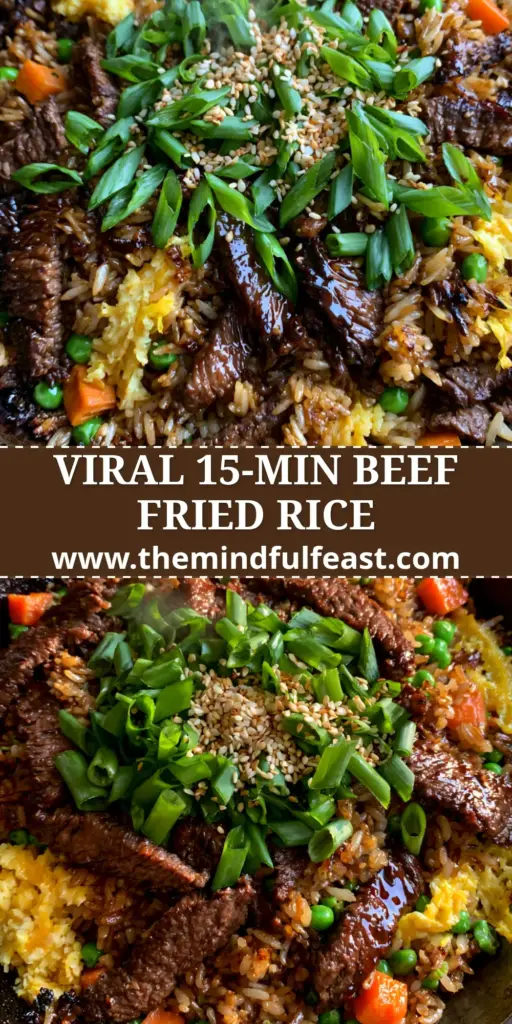
When you look at this beef fried rice, the first thing you notice is the texture. The flank steak features a deep brown sear, contrasting beautifully against the bright orange carrot cubes and vibrant green peas. Every single grain of rice is separate, toasted to a golden-brown hue, and lightly glazed in a glossy soy-ginger sauce that provides a savory backbone to the entire experience. This is the ultimate comfort meal that looks as good on the plate as it tastes in the wok.
The Secret to Achieving Restaurant-Quality Beef Fried Rice at Home
- Velvety Tenderness: We utilize a professional velveting technique to ensure the flank steak remains tender despite the intense heat of the sear.
- Individual Grain Integrity: By using chilled, day-old jasmine rice, we prevent the dish from becoming mushy, ensuring each grain stays distinct and golden.
- Layered Aromatics: The combination of charred garlic and fresh ginger creates a complex flavor profile that permeates every bite.
- Visual Contrast: From the bright yellow egg ribbons to the heavy garnish of fresh scallions, this dish is a feast for the eyes.
Essential Ingredients for the Perfect Wok Stir-Fry
Flank Steak: 1 lb (450g) of flank steak, sliced against the grain into thin strips. This cut is preferred for its intense beefy flavor and ability to take on a hard sear quickly.
Jasmine Rice: 4 cups (600g) of cooked jasmine rice, preferably 24 hours old. Day-old rice has less moisture, which is the key to getting that slightly charred, golden edge on every grain.
Scrambled Egg Ribbons: 3 large eggs, whisked and cooked into thin ribbons. These add a soft, fluffy texture and a pop of yellow that breaks up the deep browns of the beef.
The Vegetable Medley: 1 cup (150g) of frozen green peas and 1/2 cup (75g) of finely diced carrots. These provide sweetness and a necessary crunch to balance the savory elements.
Soy-Ginger Glaze: A mixture of 3 tbsp (45ml) low-sodium soy sauce, 1 tbsp (15ml) oyster sauce, and 1 tsp (5g) freshly grated ginger. This sauce creates the high-gloss highlights seen on the beef and rice.
Aromatic Base: 3 cloves of garlic, minced, and 2 stalks of scallions (white parts). These are charred in the oil first to infuse the entire dish with a smoky, savory aroma.
Foundational Fats: 3 tbsp (45ml) of peanut or vegetable oil. High smoke-point oils are required to survive the intense heat of a seasoned carbon steel wok.
Toasted Finishing Touches: 1 tbsp (15g) toasted white sesame seeds and a handful of sliced green scallion tops. These provide the final visual garnish and a nutty aromatic finish.
Must-Have Wok Tools for Deep-Sear Results
To achieve the “handheld smartphone photo” quality seen in our visual blueprint, you need a carbon steel wok. This tool allows for rapid heat recovery, which is essential for searing the beef without boiling it in its own juices. A flat-bottomed wok works best for most home ranges, providing a stable surface for the rice to fry.
A long-handled wok spatula (chuan) is also vital. Its curved edge allows you to scrape the bottom of the wok efficiently, ensuring the soy-ginger sauce doesn’t burn while you toss the jasmine rice. If you don’t have a wok, a large cast-iron skillet is a suitable substitute for achieving that deep brown sear on the flank steak strips.
How to Master the Perfect Beef Fried Rice Step-by-Step
Step 1: The Art of Velveting the Beef
In a medium bowl, toss your thinly sliced flank steak with 1 tsp (5g) of cornstarch and a splash of soy sauce. This “velveting” technique creates a protective barrier, keeping the meat succulent while it develops a deep brown sear in the wok. Let it marinate for at least 15 minutes while you prep your vegetables.
Step 2: Creating the Fluffy Egg Ribbons
Heat 1 tsp (5ml) of oil in the wok over medium heat. Pour in the whisked eggs and tilt the wok to create a thin sheet. Once set, roll the egg and remove it from the wok, slicing it into thin ribbons. Set these aside to be tossed back in at the very end to maintain their vibrant yellow color.
Step 3: The High-Heat Beef Sear
Wipe the wok and increase the heat to high until the oil starts to shimmer and wisps of smoke appear. Add the beef strips in a single layer. Do not crowd the pan; sear for 90 seconds without moving them to develop that glistening soy glaze and deep crust. Flip and cook for another minute, then remove and set aside.
Step 4: Charring the Aromatics and Vegetables
Add another tablespoon of oil to the wok. Throw in the diced carrots, peas, and the white parts of the scallions. Stir-fry for 2 minutes until the carrots are tender-crisp. Add the minced garlic and ginger last, stir-frying for only 30 seconds until fragrant and slightly charred, but not burnt.
Step 5: The Golden Rice Transformation
Add the chilled jasmine rice to the wok, using your spatula to break up any large clumps. Pour the soy-ginger glaze over the rice. Toss continuously over high heat for 3-4 minutes. You are looking for the rice to start “dancing” or jumping in the pan, indicating the moisture has evaporated and the grains are toasting to a golden-brown.
Step 6: The Final Assembly and Garnish
Return the seared beef and egg ribbons to the wok. Give everything a final high-heat toss for 60 seconds to meld the flavors. Turn off the heat and immediately garnish with a heavy sprinkle of toasted white sesame seeds and the remaining bright green scallions. The residual steam will release the aroma of the fresh greens just before serving.
Professional Tips for Achieving “Wok Hei” Char
- Rinse Your Rice: If you are cooking rice specifically for this, rinse it until the water runs clear to remove excess starch. This is the first step to individual grains.
- Cold is Gold: Never use warm rice. If you are in a rush, spread freshly cooked rice on a baking sheet and put it in the freezer for 15 minutes to dry it out.
- The Power of the Sear: If you love deep flavors, you might also enjoy easy ground beef dinners that focus on high-heat browning.
- Don’t Over-Sauce: Too much liquid will turn your fried rice into a soggy mess. The soy-ginger sauce should be just enough to glaze, not soak.
Elevating Your Plate: What to Serve with Beef Fried Rice
While this beef fried rice is a complete meal on its own, it pairs beautifully with other textures. For a refreshing crunch, try serving it alongside a crispy cucumber salad dressed in rice vinegar and chili oil. The acidity cuts through the richness of the seared flank steak perfectly.
If you are looking for a larger spread, consider adding some rice paper rolls as an appetizer. For those who enjoy varied rice preparations, comparing this dish to a traditional Nigerian fried rice can be a fun culinary experiment in how different cultures handle the same base grain.
How to Store and Reheat Leftover Fried Rice
Leftover beef fried rice stays delicious for up to 3 days when stored in an airtight container in the refrigerator. The rice will continue to firm up, making the textures even more distinct when reheated. Avoid freezing if possible, as the peas and carrots can become mushy upon thawing.
To reheat, avoid the microwave if you want to maintain the sear. Instead, add a teaspoon of oil to a skillet over medium-high heat. Toss the rice for 2-3 minutes until heated through. This restores the “individual grain” texture and keeps the beef from becoming rubbery.
Frequently Asked Questions
Yes, you can use brown rice, but the texture will be nuttier and chewier. Ensure the brown rice is also fully chilled and dry before stir-frying to prevent clumping.
While a carbon steel wok is ideal for distributing intense heat and achieving a charred ‘wok hei’ flavor, a large cast-iron or heavy-bottomed stainless steel skillet can be used as a successful substitute.
The secret is a technique called ‘velveting.’ By coating the thinly sliced beef in a small amount of cornstarch and soy sauce before searing, you create a barrier that locks in juices and prevents the meat from becoming tough.
Flank steak is the gold standard because it is lean, flavorful, and easy to slice into thin strips. If you prefer a more marbled cut, ribeye or sirloin also work well, provided they are sliced against the grain.
Mushy fried rice is usually caused by using fresh, warm rice which contains too much moisture. For best results, use jasmine rice that has been chilled in the refrigerator for at least 24 hours to ensure individual grains.
Seared Beef Fried Rice with Flank Steak and Jasmine Rice
Beef Fried Rice: The Ultimate Guide to Wok-Seared Perfection
Ingredients
Equipment
Method
- Toss flank steak with cornstarch and a splash of soy sauce; marinate for 15 minutes.
- Cook whisked eggs into a thin sheet in the wok, roll, and slice into thin ribbons.
- Sear beef strips in a screaming hot wok until a deep brown crust forms. Remove and set aside.
- Stir-fry carrots, peas, garlic, and ginger until fragrant and slightly charred.
- Add rice and sauce to the wok. Toss over high heat until grains are golden and individual.
- Return beef and eggs to wok, toss for 60 seconds, and garnish with sesame seeds and scallions.
Notes
Ensure the wok is smoking hot before adding the beef for the best sear.
Closing & Call to Action
Mastering the art of beef fried rice at home is a rewarding journey that turns simple pantry staples into a gourmet experience. With the right sear on your flank steak and the perfect golden toast on your jasmine rice, you’ll never feel the need to order takeout again. The combination of textures and the aromatic soy-ginger glaze makes this a recipe you’ll return to week after week.
If you enjoyed this wok-seared masterpiece, please leave a comment below and tell us how your sear turned out! Don’t forget to share your creations with us on Pinterest and follow us for more restaurant-quality recipes you can make in your own kitchen.