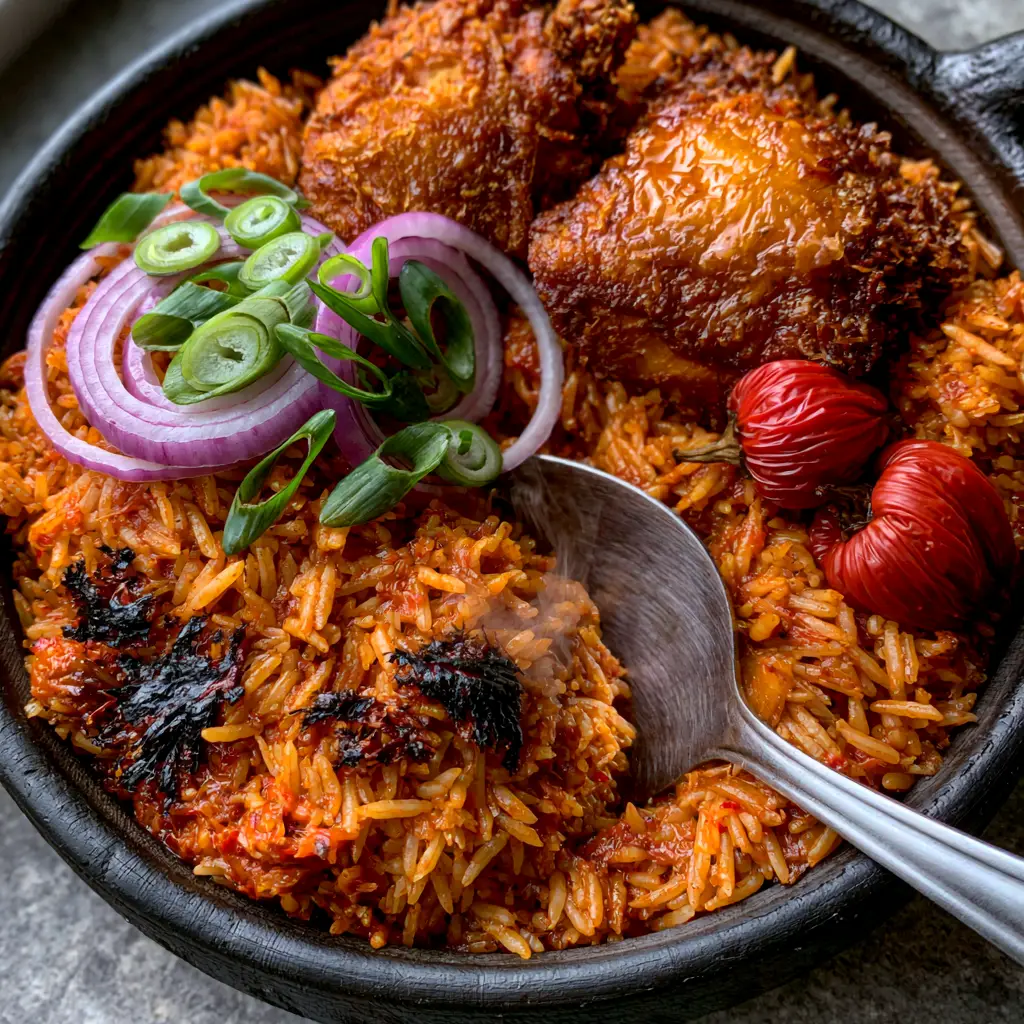
Ghanaian dishes are celebrated globally for their bold spices, vibrant colors, and deep, complex flavors, but none stands as iconic as the legendary Jollof rice. This isn’t just a meal; it is a cultural staple, a source of friendly regional rivalry, and the centerpiece of every significant celebration. When you see a heap of long-grain rice glowing with a deep red hue and hear the steam hissing as a silver spoon lifts a perfect portion, you know you are in for a soul-satisfying experience.
In this guide, we are recreating the exact visual and sensory experience of a “Party Jollof.” We are talking about distinct grains that never stick together, a rich tomato reduction, and that elusive smoky aroma that usually only comes from cooking over an open firewood flame. Whether you are serving this in a rustic black clay pot or a modern dinner plate, the glistening vegetable oil sheen and the charred bell pepper fragments will tell your guests that this recipe is the real deal.
If you have ever explored other regional specialties like South African dishes, you know that African cuisine relies heavily on the quality of the base sauce. For this Ghanaian masterpiece, we focus on the “obonu” (the stew base) to ensure every grain of rice is infused with the essence of ginger, garlic, and scotch bonnet heat. Let’s dive into the science of achieving that perfect deep-golden chicken and fluffy, separated rice.
Why This Authentic Ghanaian Jollof Is a Culinary Masterpiece
- Perfect Grain Separation: By using long-grain parboiled rice and a specific steaming technique, we ensure each grain remains distinct and non-sticky, as seen in the finest West African kitchens.
- The “Smoky” Factor: We achieve a professional-grade smokiness by integrating charred bell pepper fragments and allowing the bottom of the pot to “burn” slightly, a technique known as the “party rice” secret.
- High-Gloss Finish: A precise ratio of vegetable oil creates a glistening sheen on the rice that enhances mouthfeel and visual appeal.
- Glistening Crispy Chicken: Our double-fry method ensures a deep-golden, crispy skin that provides a crunch contrast to the tender, spiced rice.
- Sensory Garnishes: Raw red onion rings and fresh scallions provide a sharp, cool bite to balance the heat of the whole steamed scotch bonnet peppers.
The Foundation: Essential Ingredients for Deep Red Jollof
Long-Grain Parboiled Rice: 3 cups (600g). Parboiled rice is scientifically superior for this dish because the starch is already gelatinized, preventing the rice from turning into a mushy clump.
Vegetable Oil: 3/4 cup (180ml). This provides the necessary fat to fry the tomato paste and creates the glistening sheen required for an authentic visual result.
Tomato Paste: 6 oz (170g). Concentrated tomato paste is the secret to the deep red color; frying it in oil removes the metallic tin taste and develops a savory umami base.
Fresh Plum Tomatoes: 4 large (approx. 500g). These provide the moisture and natural sweetness to balance the concentrated paste.
Red Bell Peppers: 2 large (300g). We char one of these specifically to create those blackened fragments visible in the final heap of rice.
Scotch Bonnet Peppers: 4-5 peppers. Some are blended for heat, while two are kept whole to be steamed atop the rice for aroma and visual presentation.
Red Onions: 3 medium. Two are blended into the base, while one is kept raw and sliced into thin rings for the final garnish.
Chicken Thighs and Drumsticks: 1.5 lbs (700g). Bone-in, skin-on chicken is essential for achieving that glistening, deep-golden fried texture.
Aromatic Spices: 3 Bay leaves, 1 tbsp (6g) curry powder, 1 tsp (2g) dried thyme, and 2 inches of fresh ginger. These provide the “invisible” flavor profile that defines Ghanaian dishes.
Chicken Stock: 2 cups (480ml). Using stock instead of water ensures every grain of rice is seasoned from the inside out.
The Tool Kit for West African Cooking Success
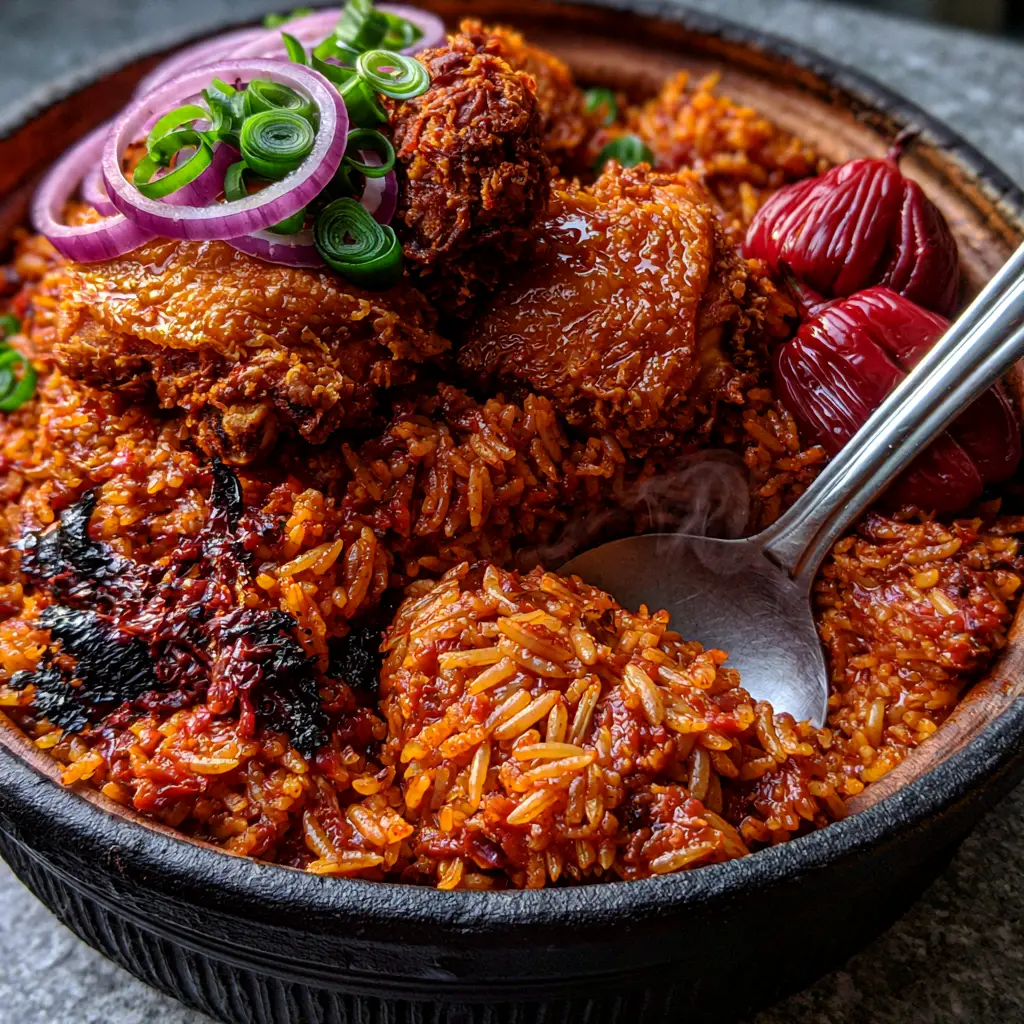
To achieve the results seen in our visual blueprint, you will need a heavy-bottomed pot, ideally a Dutch oven or a traditional Ghanaian cast iron pot. The heavy lid is crucial for the steaming phase, which cooks the rice through residual heat rather than boiling. You will also need a high-speed blender for the “obonu” sauce and a deep skillet for frying the chicken to a perfect golden brown. A silver spoon is recommended for serving to mimic the traditional presentation where the rice is fluffed and lifted to show grain separation.
Developing the Deep Red Stew Base (The Obonu)
Charring the Peppers for Smoky Depth
Place one red bell pepper directly over a gas flame or under a high broiler until the skin is blackened and blistered. Roughly chop this charred pepper, keeping the blackened bits—these are the fragments that will be integrated into the rice for that authentic smoky appearance. This step is as vital as getting the right crust on a Korean steak sandwich for maximum flavor impact.
Blending and Reducing the Aromatics
In a blender, combine the remaining bell pepper, plum tomatoes, two onions, ginger, and 2 scotch bonnets. Blend until perfectly smooth. In your heavy pot, heat the vegetable oil and fry the tomato paste for 5-7 minutes over medium heat. You will know it’s ready when the oil turns a deep orange-red and the paste begins to grain slightly. Pour in the blended mixture and add the bay leaves, curry powder, and thyme.
The Long Simmer
Reduce the heat and let the sauce simmer for 20-25 minutes. You are looking for the oil to separate from the sauce and rise to the top. This is the “visual cue” that the water has evaporated and the flavors are concentrated. If you’ve made a honey garlic beef rice bowl, you know how important sauce reduction is for coating grains.
Perfecting the Jollof Rice Steaming Technique
Rinsing and Integrating the Rice
Wash the parboiled rice repeatedly until the water runs clear to remove surface starch. Add the washed rice to the bubbling tomato base. Stir well to ensure every grain is coated in the oil and red reduction. Add the chicken stock and the charred bell pepper fragments. The liquid should just barely cover the rice; too much liquid will result in soggy grains.
The Foil Seal Secret
Cover the pot with a sheet of aluminum foil before placing the lid on tightly. This traps the steam inside, forcing the rice to cook in the concentrated flavors. Turn the heat to the lowest possible setting. Set a timer for 30 minutes. Resist the urge to peek! The steam is what creates the fluffiness we see in the rustic black clay pot presentation.
Achieving the Ultimate Deep-Golden Fried Chicken
While the rice steams, season your chicken with salt, garlic powder, and a touch of ginger. Heat oil in a skillet to 350°F (175°C). Fry the chicken in batches until the skin is glistening and deep-golden brown. The internal temperature should reach 165°F (74°C). The contrast of the crispy, salty skin against the spicy Jollof rice is a hallmark of authentic Ghanaian dishes.
Expert Tips for the Most Fluffy Rice Grains
- Don’t Over-Stir: Once you’ve mixed the rice into the base, avoid stirring frequently. Stirring breaks the grains and releases starch, leading to stickiness.
- The Bottom Burn: If you smell a slight charring at the end of cooking, don’t panic! The slightly burnt rice at the bottom (known as “kanzo”) is a delicacy and provides the smoky aroma for the rest of the pot.
- Quality of Oil: Use a neutral oil with a high smoke point. The glistening sheen seen in the visual prompt is a result of the oil not breaking down during the long simmer.
- Rest the Rice: After turning off the heat, let the pot sit covered for 10 minutes. This allows the moisture to redistribute, ensuring the rice is non-sticky when fluffed with a silver spoon.
What to Serve with Authentic Jollof Rice
While this dish is a powerhouse on its own, it is often paired with other West African staples. A side of Egusi soup can add a nutty, rich texture to the meal. For a lighter side, a crisp cucumber onion salad provides a refreshing acidity that cuts through the richness of the fried chicken. If you are looking for a more vegetable-heavy accompaniment, sheet pan asparagus or oven roasted zucchini and squash offers a modern twist to this traditional plate.
Frequently Asked Questions
While some prefer basmati, authentic Ghanaian Jollof traditionally uses parboiled long-grain rice to achieve the specific non-sticky texture and structural integrity shown in the blueprint.
You can achieve smokiness by charring your bell peppers before blending them and by allowing the rice to slightly scorch at the bottom of the pot during the final steaming phase.
It has a kick due to the Scotch bonnet peppers, but you can control the heat by removing the seeds from the peppers before blending or using fewer peppers in the base.
Mushy rice usually results from using too much liquid or not using parboiled rice. Parboiled long-grain rice has a tougher exterior that holds up to the long steaming process.
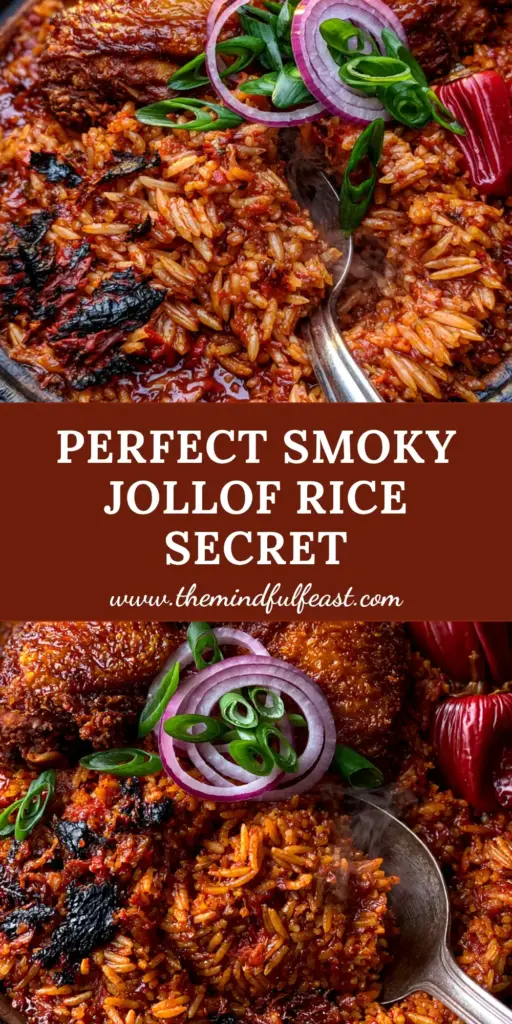
The Recipe: Authentic Ghanaian Jollof Rice with Fried Chicken
Ghanaian Dishes: The Ultimate Authentic Smoky Jollof Rice and Crispy Chicken
Ingredients
Equipment
Method
- Char one red bell pepper over an open flame until blackened. Chop into fragments, preserving the charred bits.
- Blend tomatoes, 2 onions, 1 bell pepper, ginger, and 3 scotch bonnets until smooth.
- Heat oil in a Dutch oven, fry tomato paste for 7 minutes, then add the blended mixture and aromatics. Simmer until oil separates.
- Stir rinsed rice into the tomato stew with charred pepper fragments and chicken stock.
- Nestle 2 whole scotch bonnets on top. Cover with foil and a lid. Simmer on low for 30 minutes.
- Deep fry seasoned chicken until deep-golden and glistening. Drain on a wire rack.
- Fluff rice with a silver spoon. Top with fried chicken, raw onion rings, and sliced scallions.
Notes
Always use parboiled rice to ensure grains stay separate and distinct.
Closing & Call to Action
Mastering Ghanaian dishes like Jollof rice is a rite of passage for any home cook who loves bold, spicy, and aromatic food. The combination of the deep red tomato base, the smoky charred peppers, and that perfectly fried golden chicken creates a visual and culinary experience that is hard to beat. If you enjoyed this journey into West African flavors, please leave a comment below and share your results! Don’t forget to follow us on Pinterest for more authentic global recipes.