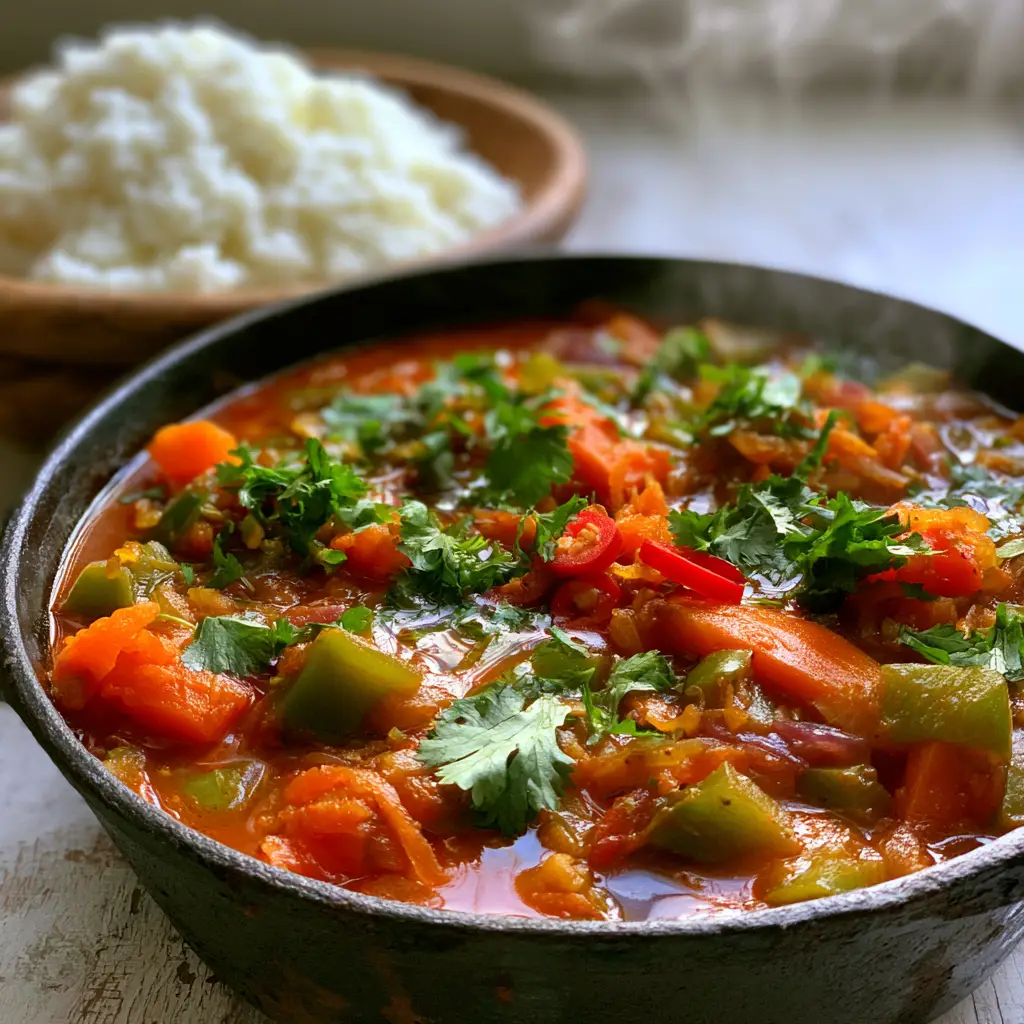
When it comes to iconic South African dishes, few combinations capture the soul of the Rainbow Nation quite like the vibrant duo of Chakalaka and Stywe Pap. This isn’t just a meal; it’s a sensory explosion that defines the South African braai (barbecue) experience. Imagine a rustic black cast iron pot overflowing with a rich, glossy deep-orange tomato and curry sauce, its surface shimmering with a light, aromatic oil sheen.
The textures are the star here: thick-grated sautéed carrots provide a gentle sweetness that balances the heat of red bird’s eye chilies. Next to this spicy relish sits a wooden bowl holding a steaming mountain of white maize meal pap, its coarse grain catching the light as gentle steam wisps rise from the table. Whether you are a seasoned traveler or a curious home cook, mastering this staple is your ticket to authentic African flavors.
Why This Spicy Vegetable Relish Defines South African Cuisine
- Textural Harmony: The contrast between the crunchy, thick-grated carrots and the softened red onion slivers creates a complex mouthfeel in every spoonful.
- Visual Vibrancy: The deep orange gravy is punctuated by the bright green of chunky diced bell peppers and the jagged edges of fresh coriander leaves.
- Versatile Heat: Featuring sliced red bird’s eye chilies, this dish offers a customizable kick that cuts through the starch of the maize meal.
- Authentic Presentation: Served in a traditional cast iron pot, it embodies the communal, rustic spirit of South African dishes.
The Core Elements for an Authentic Chakalaka Relish
To achieve the visual and flavorful depth seen in our professional blueprint, you need specific ingredients that stand up to the long, slow sautéing process. Every component serves a purpose, from the base fats to the final garnish.
Aromatic Oil (Vegetable or Sunflower): You will need 1/4 cup (60ml) of a neutral oil to create that signature aromatic oil sheen that glistens on the surface. This fat is essential for “blooming” the curry spices and carrying the heat of the chilies.
Red Onions: 2 medium red onions, diced or sliced into slivers, provide a foundational sweetness. When sautéed, they soften into the sauce, adding to the thick, chunky consistency.
Green Bell Peppers: 2 large green bell peppers, chunky diced, add a hit of bitterness and a vibrant pop of color. Unlike other stews, we keep these slightly firm to maintain the “chunky” visual descriptor.
Grated Carrots: 4 large carrots, thick-grated, are the heart of the dish. They absorb the curry gravy while maintaining enough structure to be visible as distinct orange strands.
Tomato Curry Base: A combination of 1 can (400g) of crushed tomatoes and 2 tbsp (30g) of tomato paste creates the thick tomato curry gravy. This provides the deep-orange hue required for the glossy finish.
Bird’s Eye Chilies: 2-3 red bird’s eye chilies, thinly sliced into rounds, provide the heat. Their bright red color is a key visual marker against the orange sauce.
Curry Powder: 2 tbsp (15g) of a medium-heat South African curry powder (like Raja) is non-negotiable. This provides the aromatic depth and the yellowish-orange tint to the oil.
Fresh Coriander: A handful of jagged green coriander leaves serves as the cooling garnish. This adds the final layer of freshness to the cast iron pot presentation.
The Foundations of Perfect Crumbly Stywe Pap
The companion to our Chakalaka is “Stywe Pap” (stiff porridge), which must be white, fluffy, and have a visible coarse grain texture. Achieving this requires precise moisture control to ensure it isn’t a paste, but rather a “mountain” of crumbly grains.
White Maize Meal: 2 cups (340g) of coarse-ground white maize meal is the primary starch. This is the backbone of many South African dishes and differs significantly from yellow cornmeal.
Water: 4 cups (960ml) of water is required to steam the grains. The ratio is critical to ensuring the pap is “stywe” (stiff) enough to be eaten with your hands.
Sea Salt: 1 tsp (5g) of salt is the only seasoning needed. It enhances the natural, nutty sweetness of the steamed maize.
Essential Tools for Your African Feast
To replicate the visual in our prompt, you’ll need a heavy-bottomed rustic black cast iron pot. The iron retains heat beautifully, allowing the vegetable relish to simmer without scorching, and provides that iconic dark background that makes the orange sauce pop.
You will also need a wooden spoon for stirring the pap. Traditionally, a wooden spoon is used to “fluff” the grains as they steam, preventing them from clumping into a smooth mash. A box grater with large holes is necessary to get those thick-grated carrot strands that define the dish’s texture.
Developing the Deep Orange Tomato Curry Gravy
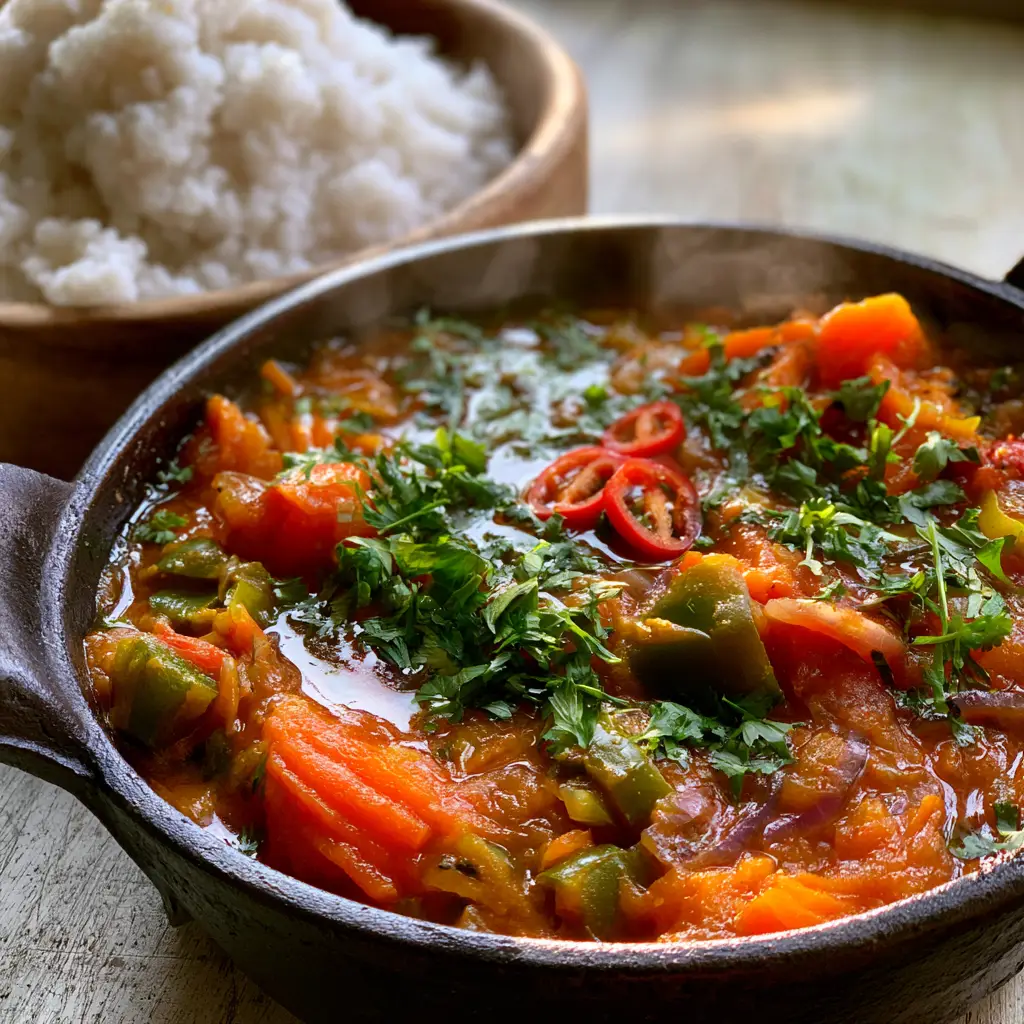
The secret to South African dishes like Chakalaka is the “soffritto” phase. Start by heating your oil in the cast iron pot over medium heat. Add the diced red onions and sauté until they are translucent and just beginning to brown at the edges—this should take about 6-8 minutes.
Next, add your curry powder, minced garlic, and ginger. Visual Cue: Watch for the oil to turn a bright, translucent orange. This means the spices have “bloomed” and their essential oils are released. This is how you achieve that aromatic oil sheen mentioned in the visual blueprint.
Stir in the tomato paste and grated carrots. Sauté the carrots for 5 minutes until they start to yield their color to the oil. Add the chunky diced green bell peppers and the crushed tomatoes. Lower the heat and let the mixture simmer uncovered for 20 minutes. You are looking for the sauce to reduce into a thick tomato curry gravy where the vegetables are “suspended” in the glossy sauce rather than swimming in liquid.
Steaming the Mountain of White Maize Meal
While your Chakalaka simmers, bring the salted water to a rolling boil in a separate pot. Pour the maize meal into the center of the boiling water to form a mound—do not stir it immediately! Cover the pot with a tight-fitting lid and reduce the heat to the lowest setting.
Let it steam for 10 minutes. Then, using a wooden spoon or a large fork, begin to “whisk” or stir the meal vigorously. You want to break up any large lumps until the texture becomes crumbly and fluffy. Sensory Cue: The pap should smell like toasted corn and appear as a mountain of white grains with a visible coarse texture. Continue to steam for another 15-20 minutes, stirring occasionally, until the grains are tender but distinct.
Finishing Touches: Garnish and Gloss
Once the Chakalaka has reached its thick, rich consistency, turn off the heat. Taste for seasoning, adding more salt if the acidity of the tomatoes is too sharp. Just before serving, scatter the thin rounds of bright red bird’s eye chili over the surface. The heat from the sauce will slightly soften them without losing their vibrant color.
Top with the jagged green coriander leaves. The contrast between the jagged green, the bright red chili, and the glistening orange oil sheen against the black cast iron is what creates that mouth-watering visual appeal. Serve the pap in a wooden bowl to maintain the rustic aesthetic.
Professional Secrets for the Perfect Oil Sheen
- Don’t Skimp on Oil: If the sauce looks flat or matte, it’s likely you didn’t use enough oil. The sheen is a sign of a well-emulsified curry.
- The Grate Size Matters: Use the largest holes on your grater. If the carrots are too fine, they will dissolve into a mush, and you won’t see the distinct orange slivers described in our blueprint.
- Steam Control: When making the pap, if it looks too dry or “floury,” add a splash of boiling water and cover it again. It needs to be fully hydrated to be fluffy.
- Color Balance: If your gravy isn’t deep orange, add an extra teaspoon of turmeric or a dash of smoked paprika to deepen the hue without changing the flavor profile significantly.
Managing Your Leftover Curry Relish
Chakalaka is one of those South African dishes that actually tastes better the next day. The flavors continue to meld, and the heat from the bird’s eye chilies mellows into the carrots. Store it in an airtight container in the refrigerator for up to 5 days.
To reheat, place it back in a skillet with a tablespoon of water or oil to loosen the gravy. For the pap, it tends to harden when cold. You can crumble it into a bowl, add a teaspoon of water, and microwave it covered to restore its fluffy, steaming texture.
Perfect Pairings for Your South African Spread
While Chakalaka and Pap are a meal on their own, they are traditionally served alongside other grilled delights. If you enjoy diverse vegetable textures, consider serving this alongside skillet zucchini and mushrooms or even a light cucumber onion salad to provide a crisp contrast to the spicy relish.
For a full feast, this duo pairs beautifully with a beef gravy dinner or even roasted meats. In fact, the spicy tomato base of Chakalaka shares many flavor profiles with other continental favorites like egusi soup or various ghanaian dishes, showcasing the interconnectedness of African spice routes.
Frequently Asked Questions
Curry powder is a defining element of South African dishes like Chakalaka. If you don’t have it, a mix of turmeric, cumin, and coriander will work, but it won’t be as authentic.
The key is the steaming process. Adding the maize meal to boiling water and letting it steam covered for 10 minutes before stirring allows the grains to hydrate evenly, preventing lumps.
In South Africa, Chakalaka is incredibly versatile. It can be served hot as a vegetable side, warm as a relish, or even cold as a spicy salad during a braai.
Both are made from white maize meal, but Stywe Pap is ‘stiff’ and holds its shape more firmly, while Phutu is very dry and crumbly like couscous. This recipe produces a ‘mountain’ of fluffy, crumbly Stywe Pap.
The glossy sheen comes from the emulsion of oil and tomato juices. If it looks matte, you likely need to add a bit more oil during the initial sautéing of the onions and spices.
The Authentic South African Chakalaka and Stywe Pap Recipe
South African Dishes: The Ultimate Spicy Chakalaka and Fluffy Stywe Pap Recipe
Ingredients
Equipment
Method
- Heat oil in the cast iron pot. Sauté red onions until soft and translucent, then add curry powder, stirring for 1 minute until an orange oil sheen develops.
- Add grated carrots and diced green peppers. Stir in tomato paste and crushed tomatoes. Simmer on low for 20 minutes until the gravy is thick and glossy.
- Bring salted water to a boil. Pour maize meal into the center to form a mound. Cover and simmer on low for 10 minutes without stirring.
- Using a wooden spoon, vigorously stir the meal to break up lumps. Cover and steam for another 20 minutes until fluffy and crumbly.
Notes
Tip 2. For an extra glossy finish, stir in a final teaspoon of oil just before serving.

Closing & Call to Action
Mastering South African dishes like Chakalaka and Pap is a rewarding journey into the heart of global comfort food. The combination of heat, sweetness, and the satisfying crumbly texture of maize meal is guaranteed to become a favorite in your kitchen. If you loved the visual depth and spicy kick of this recipe, please leave a comment below and tell us how yours turned out!
Don’t forget to share your creations with us! Follow our journey for more authentic home-cooked meals on our Pinterest page and pin this recipe to your favorite boards for your next weekend braai. Happy cooking!