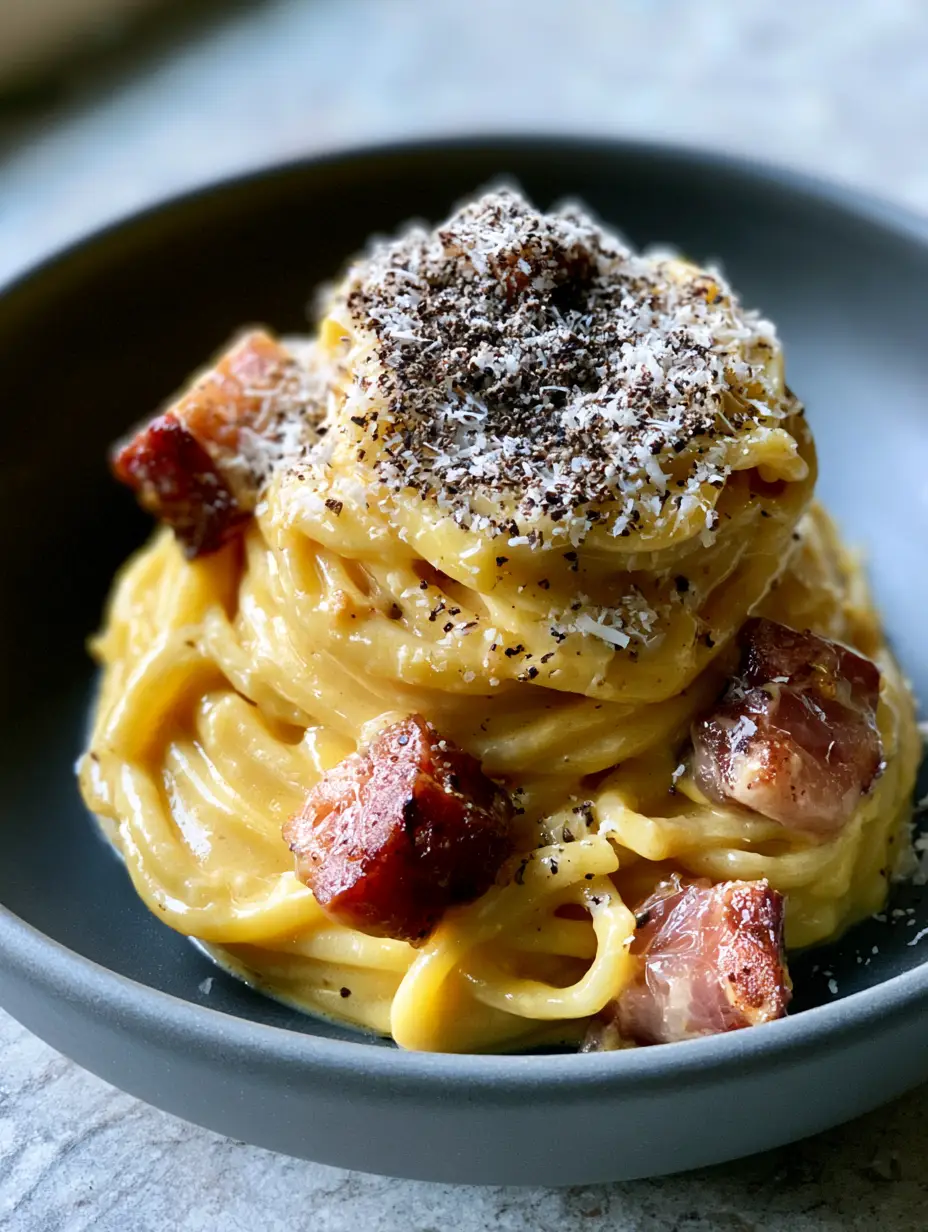
Mastering the Carbonara recipe is a rite of passage for any serious home cook, transforming simple pantry staples into a luxuriously silky masterpiece. This isn’t just a quick pasta dish; it is a delicate dance of temperature and emulsion that results in a tall, elegant nest of golden strands.
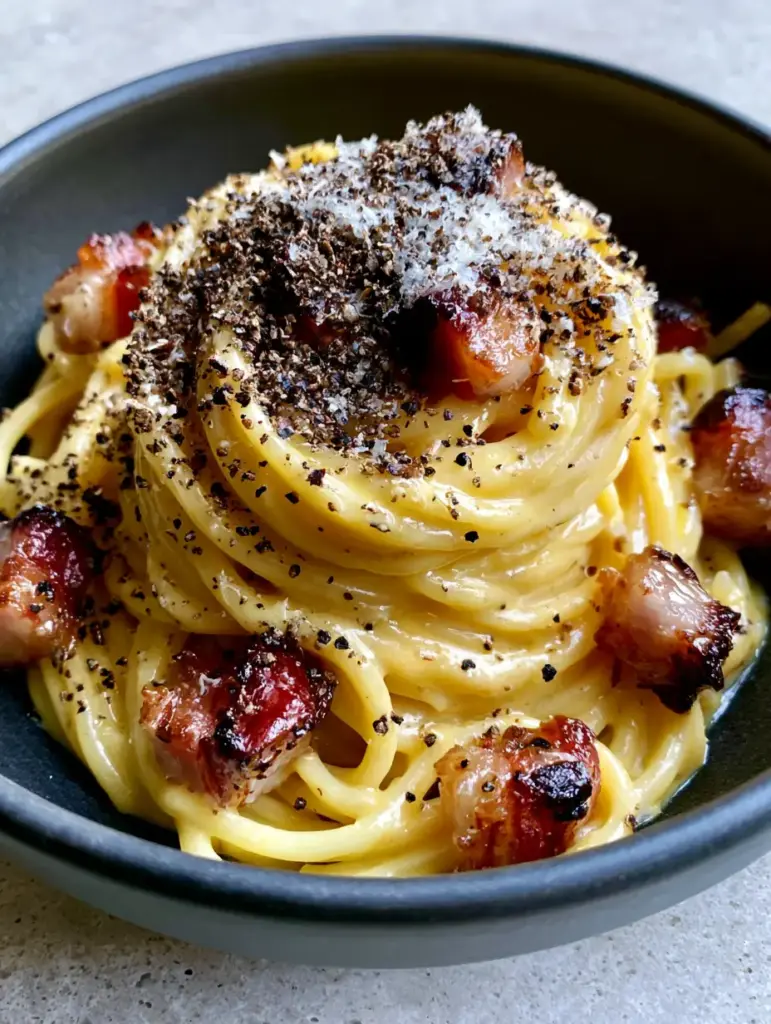
In this guide, we replicate the visual perfection of a high-end Roman trattoria, featuring a thick, ultra-glossy sauce that clings to every strand of al dente spaghetti. You will learn the exact techniques required to achieve that pale golden egg-and-cheese emulsion that reflects natural light with a stunning sheen.
Why This Silky Pasta Carbonara Works Every Time
- Perfectly Emulsified Texture: We use a specific ratio of egg yolks to whole eggs to ensure the sauce is thick and stable, never watery or scrambled.
- Textural Contrast: The inclusion of thick-cut, crispy guanciale cubes provides a salty, translucent fat-rich crunch that offsets the creamy pasta.
- Visually Stunning Presentation: By following our “tall nest” plating technique, your dish will look like it was captured by a professional food photographer.
- Balanced Flavor Profile: A heavy, rustic dusting of coarse cracked black pepper cuts through the richness of the Pecorino Romano for a bold, authentic finish.
The Essential Components for a Glossy Golden Emulsion
Long Strand Pasta (Spaghetti): 1 lb (454g) of high-quality bronze-die spaghetti is essential for providing the surface area needed for the sauce to cling effectively. This starch-heavy pasta helps thicken the final emulsion.
Cured Guanciale: 5 oz (142g) of guanciale, cut into thick 1/2-inch (1.25cm) cubes, is the traditional choice for its deep, funky pork flavor and superior fat rendering. If you cannot find guanciale, a thick-cut pancetta is the only acceptable substitute.
Pecorino Romano Cheese: 1.5 cups (150g) of finely grated, “snow-like” Pecorino Romano provides the sharp, salty backbone of the Carbonara recipe. Ensure it is grated as finely as possible so it melts instantly into the egg yolks.
Fresh Egg Yolks: 4 large egg yolks plus 1 whole large egg create the signature pale golden color and velvety mouthfeel. The extra yolks provide the fat necessary for a glossy sheen without the need for heavy cream.
Coarse Black Peppercorns: 2 tsp (5g) of whole peppercorns, toasted and then coarsely cracked, offer a rustic heat and visual contrast against the pale sauce. Avoid pre-ground pepper as it lacks the volatile oils needed for this dish.
Invisible Foundation (Pasta Water): 1 cup (240ml) of starchy pasta boiling water is the secret ingredient that binds the cheese and eggs into a cohesive sauce. This liquid gold is the bridge between the dry ingredients and the final creamy texture.
Tools for Achieving the Perfect Pasta Nest
To achieve the handheld smartphone photo quality seen in professional food blogs, you will need a large heavy-bottomed skillet or stainless steel pan. This allows for even rendering of the guanciale fat without scorching the delicate pork edges.
A large heat-proof mixing bowl is also required for the tempering process, which prevents the eggs from scrambling when they meet the hot pasta. Finally, use long kitchen tongs or a carving fork to twirl the spaghetti into a tall, elegant nest in a shallow matte ceramic bowl.
Mastering the Mantecatura: A Step-by-Step Guide
Rendering the Guanciale to Crispy Perfection
Place your guanciale cubes into a cold skillet and turn the heat to medium-low. This slow-start method allows the fat to render out until it becomes translucent, ensuring the edges become deeply browned and crispy.
Once the guanciale is crisp and the pan is filled with liquid gold fat, remove the pan from the heat. The residual heat will keep the guanciale warm while you prepare the remaining elements of the Carbonara recipe.
Preparing the Thick Egg and Cheese Paste
In a medium bowl, whisk together the 4 yolks, 1 whole egg, and the majority of the finely grated Pecorino Romano. The mixture should form a thick, pale yellow paste rather than a liquid liquid.
Whisk in half of your coarsely cracked black pepper directly into the egg mixture. This allows the pepper to hydrate slightly and distribute its spice evenly throughout the sauce.
The Art of the Tempering Process
Boil your spaghetti in highly salted water until it is just shy of al dente. Reserve at least one cup of the starchy water before draining the pasta.
Add the hot pasta directly to the skillet with the rendered guanciale fat and toss vigorously to coat every strand. The sound of the sizzling pasta against the fat is your first cue that the flavors are melding.
Achieving the Ultra-Glossy Emulsion
Transfer the fat-coated pasta into a large mixing bowl (off the heat). Slowly whisk in a few tablespoons of the hot pasta water into your egg paste to “temper” it, then pour the mixture over the pasta.
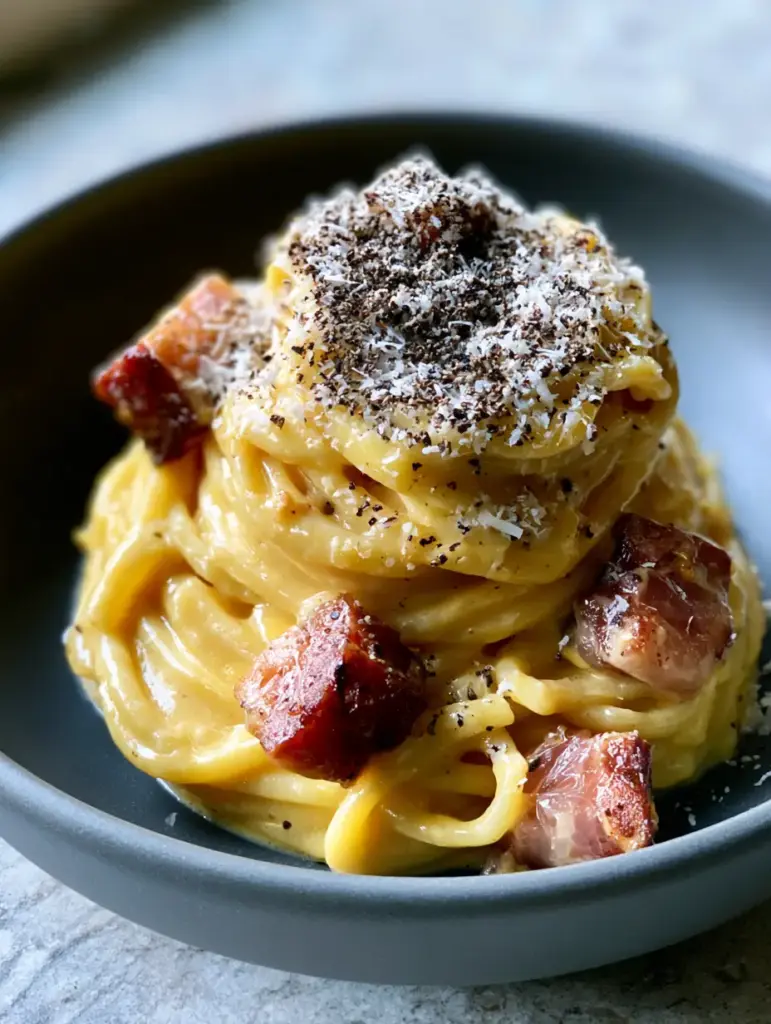
Using tongs, toss the pasta rapidly and continuously. The residual heat from the spaghetti will melt the cheese and thicken the eggs into a thick, ultra-glossy, pale golden emulsion that reflects the light.
Expert Techniques for Restaurant-Quality Results
- Control the Heat: Never add the egg mixture to a pan that is still on the burner. The direct heat will scramble the eggs instantly, ruining the smooth texture.
- Starch is Key: If the sauce looks too thick or “tight,” add pasta water one tablespoon at a time. The starch acts as a stabilizer for the fat and protein.
- Whisk Vigorously: The “mantecatura” (the act of mixing) must be aggressive. This aeration creates the elegant, creamy volume characteristic of a world-class Carbonara recipe.
- Salt Awareness: Between the pasta water, the guanciale, and the Pecorino, this dish is naturally salty. Taste your pasta water before adding extra salt to the sauce.
Preserving Your Masterpiece: Storage and Reheating
Carbonara is best enjoyed immediately while the emulsion is at its peak glossiness. As it cools, the proteins in the cheese and egg will begin to set, losing that signature “window light” reflection.
If you have leftovers, store them in an airtight container for up to 2 days. To reheat, add a splash of water and heat very gently in a pan over low heat, whisking constantly to try and re-emulsify the sauce without scrambling it.
Elevating the Meal: What to Serve with Carbonara
Because the Carbonara recipe is so rich and decadent, it pairs beautifully with bright, acidic side dishes. A crisp vinegar cucumber salad provides a refreshing palate cleanser between bites of creamy pasta.
For a more substantial meal, consider serving a side of sauteed asparagus and mushrooms to add an earthy, vegetal note. If you’re hosting a dinner party, start with a light appetizer like vietnamese rice paper rolls or a shared blooming quesadilla ring for the kids.
If you enjoy creamy textures but want a different flavor profile next time, try our creamy cajun pasta for a spicy twist on the comfort food classic.
Common Questions About Traditional Carbonara
Traditional Roman Carbonara never uses cream. The creaminess comes entirely from the emulsion of egg yolks, finely grated Pecorino Romano, and starchy pasta water.
The key is to temper the eggs with a little warm pasta water and combine the sauce with the pasta in a bowl away from direct heat. Never mix the eggs in a pan that is still on the burner.
If you cannot find cured pork jowl (guanciale), the best substitute is thick-cut pancetta. Avoid smoked bacon, as the smoky flavor overwhelms the delicate egg and cheese emulsion.
Long, thin strands like spaghetti or spaghettoni are ideal because they provide the perfect surface area for the glossy sauce to cling to without drowning the pasta.
A dry sauce usually means there wasn’t enough pasta water added during the mantecatura. Add reserved starchy water one tablespoon at a time until the sauce becomes glossy and fluid.
The Ultimate Carbonara Recipe Card
Carbonara Recipe: The Definitive Guide to a Glossy Roman Classic
Ingredients
Equipment
Method
- Add guanciale cubes to a cold skillet over medium-low heat. Cook until fat is translucent and edges are deeply browned and crispy.
- In a bowl, combine egg yolks, whole egg, finely grated Pecorino, and half of the cracked pepper into a thick paste.
- Cook pasta in salted water until al dente. Reserve 1 cup of starchy water and drain.
- Toss hot pasta in the guanciale fat. Off the heat, slowly add the tempered egg mixture and toss vigorously, adding pasta water as needed for a glossy sheen.
- Using tongs, twirl the pasta into a tall nest in a shallow bowl. Top with remaining pepper and a snow-layer of cheese.
Notes
Ensure the cheese is grated to a 'snow' consistency for instant melting.
Final Thoughts: Bringing Rome to Your Kitchen
Authentic Italian cooking is about the quality of ingredients and the mastery of simple techniques. By focusing on the temperature of your emulsion and the quality of your guanciale, you can recreate this iconic dish in your own home.
We would love to see your tall nests of pasta! Tag us in your photos and follow our journey for more culinary inspiration on Pinterest. Don’t forget to leave a comment below if you found these visual cues helpful for your Carbonara recipe journey!