There is a specific kind of magic that happens when slow-cooked beef meets the warmth of a terracotta pot. Giouvetsi is not just a meal; it is a sensory journey through the heart of a Greek kitchen, where the scent of cinnamon-spiced tomato sauce fills the air long before the first bite. This dish represents the pinnacle of rustic Mediterranean cooking, blending tender, fiber-rich beef with glistening gems of orzo pasta.
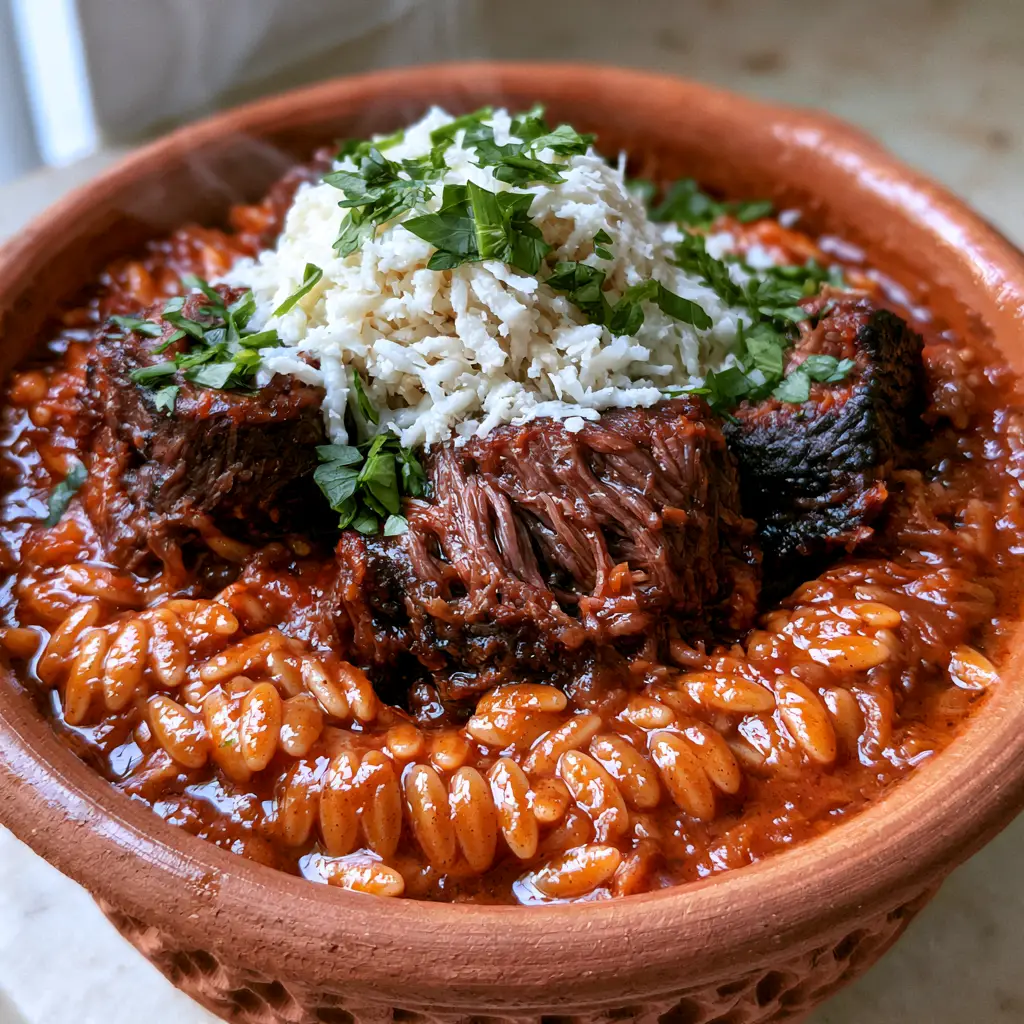
If you have ever stared at a handheld smartphone photo of authentic Greek Giouvetsi, you know the visual cues that make it irresistible. You see the steam faintly rising from a rustic clay dish, the deep-red sauce clinging to every oval pasta grain, and a mountain of finely grated kefalotyri cheese melting into the heat. This recipe is designed to recreate that exact visual and culinary masterpiece in your own home.
To achieve the perfect texture, we focus on two critical phases: the aggressive sear of the beef to create dark-brown caramelized edges and the gentle braise that allows the orzo to remain plump and separate. Whether you are looking for new beef dinner recipes or a show-stopping Sunday feast, this guide will walk you through every scientific and artistic step.
The Visual Allure and Texture Profile of Authentic Giouvetsi
What sets a truly professional Giouvetsi apart from a standard stew is the structural integrity of the ingredients. Our visual blueprint demands specific textures that ensure the dish looks as good as it tastes. We are aiming for a plate that offers both deep, savory richness and bright, herbal highlights.
- Caramelized Beef Edges: Large, chunky cubes of beef must show visible tender fibers and a dark-brown crust achieved through high-heat searing.
- Glistening Orzo Gems: Each grain of orzo pasta should be plump, oval, and perfectly separate, never mushy or clumped together.
- Thick Cinnamon-Infused Sauce: The tomato base must be reduced until it is thick and rich, carrying the aromatic warmth of whole cinnamon sticks.
- The “Messy Mountain” of Cheese: A generous, snowy topping of finely grated white kefalotyri cheese provides a salty, sharp contrast to the sweet sauce.
- Vibrant Herbal Finish: Freshly chopped flat-leaf parsley is scattered just before serving to add a pop of bright green color and earthy freshness.
Essential Pantry Staples for the Perfect Greek Beef Stew
Achieving the depth of flavor found in a traditional Greek taverna requires high-quality foundational ingredients. While the beef and orzo are the stars, the “invisible” ingredients like high-smoke-point oils and specific spices create the necessary chemical reactions for flavor development.
Beef Chuck or Shank (2 lbs / 900g): Choose a cut with significant marbling and connective tissue. As the collagen breaks down during the slow braise, it thickens the sauce and yields that “melt-in-your-mouth” fiber texture seen in our visual prompt.
Extra Virgin Olive Oil (4 tbsp / 60ml): Use a robust Greek olive oil for both searing the meat and sautéing the aromatics. It provides the necessary fat to carry the fat-soluble flavors of the cinnamon and allspice.
Orzo Pasta (1.5 cups / 375g): Also known as kritharaki in Greek, this rice-shaped pasta is the heart of the dish. It must be toasted slightly in the pot to ensure the grains stay glistening and separate in the final presentation.
Tomato Paste and Crushed Tomatoes: A combination of 2 tbsp (30g) of paste for depth and 2 cups (480ml) of crushed tomatoes for texture creates the thick, deep-red sauce required by the blueprint.
Cinnamon Stick and Whole Allspice: Do not use ground cinnamon here; a whole stick (approx. 3 inches / 7.5cm) allows for a subtle, woody infusion that doesn’t overpower the beef.
Kefalotyri Cheese (1 cup / 100g): This hard, salty sheep’s milk cheese is essential for the “messy mountain” topping. If you cannot find it, Pecorino Romano is a scientifically similar substitute in terms of salt content and melting point.
Necessary Culinary Tools for Slow-Braising Success
To replicate the authentic handheld photo look, the vessel you cook in matters as much as the ingredients. The traditional choice is a rustic terracotta baking dish, often called a “youvetsi” or “pilino,” which provides gentle, even heat distribution.
If you don’t own a terracotta dish, a heavy-bottomed Dutch oven is the best alternative for the initial stovetop searing and braising. You will also need a sharp chef’s knife for creating those uniform beef chunks and a microplane or fine grater to achieve the specific “messy mountain” texture of the cheese.
For those looking to expand their kitchen repertoire, this dish pairs beautifully with other Mediterranean staples. You might consider serving it alongside a vinegar cucumber salad to cut through the richness of the beef and cinnamon sauce.
The Art of the Sear: Preparing the Beef for Braising
Step 1: Achieving the Perfect Maillard Reaction
Begin by patting your 2 lbs (900g) of beef chunks completely dry with paper towels. Moisture is the enemy of the sear; if the meat is damp, it will steam rather than brown, preventing those dark-brown caramelized edges we need.
Heat 2 tbsp (30ml) of olive oil in your pot over medium-high heat until it shimmers. Add the beef in a single layer, ensuring you don’t crowd the pan. Listen for a vigorous sizzle—this is the sound of flavor being created.
Sear the beef for 3-4 minutes per side. You are looking for a deep, mahogany crust and visible meat fibers. Remove the beef and set it aside, leaving the rendered fat and browned bits (the fond) in the pot.
Step 2: Building the Aromatic Base
Add the remaining 2 tbsp (30ml) of olive oil to the pot. Sauté one finely chopped large yellow onion and three minced garlic cloves until they are translucent and fragrant, which should take about 5 minutes.
Deglaze the pot with 1/2 cup (120ml) of dry red wine, using a wooden spoon to scrape up all the caramelized bits from the bottom. This step is crucial for incorporating the “seared edges” flavor back into the liquid sauce.
Transitioning to the Terracotta: The Slow Braise
Step 3: Simmering the Cinnamon Tomato Sauce
Return the beef to the pot and add the crushed tomatoes, tomato paste, cinnamon stick, and 3-4 whole allspice berries. Pour in 3 cups (720ml) of high-quality beef stock or water.
Bring the mixture to a gentle boil, then reduce the heat to low. Cover and simmer for 90 minutes. During this time, the beef fibers will soften, and the sauce will transform into a thick, deep-red elixir.
If you prefer a lighter accompaniment to your meal, you could also prepare a side of smashed baby potatoes or even sautéed asparagus and mushrooms if you want to add more greenery to your dinner table.
Step 4: Incorporating the Plump Orzo Gems
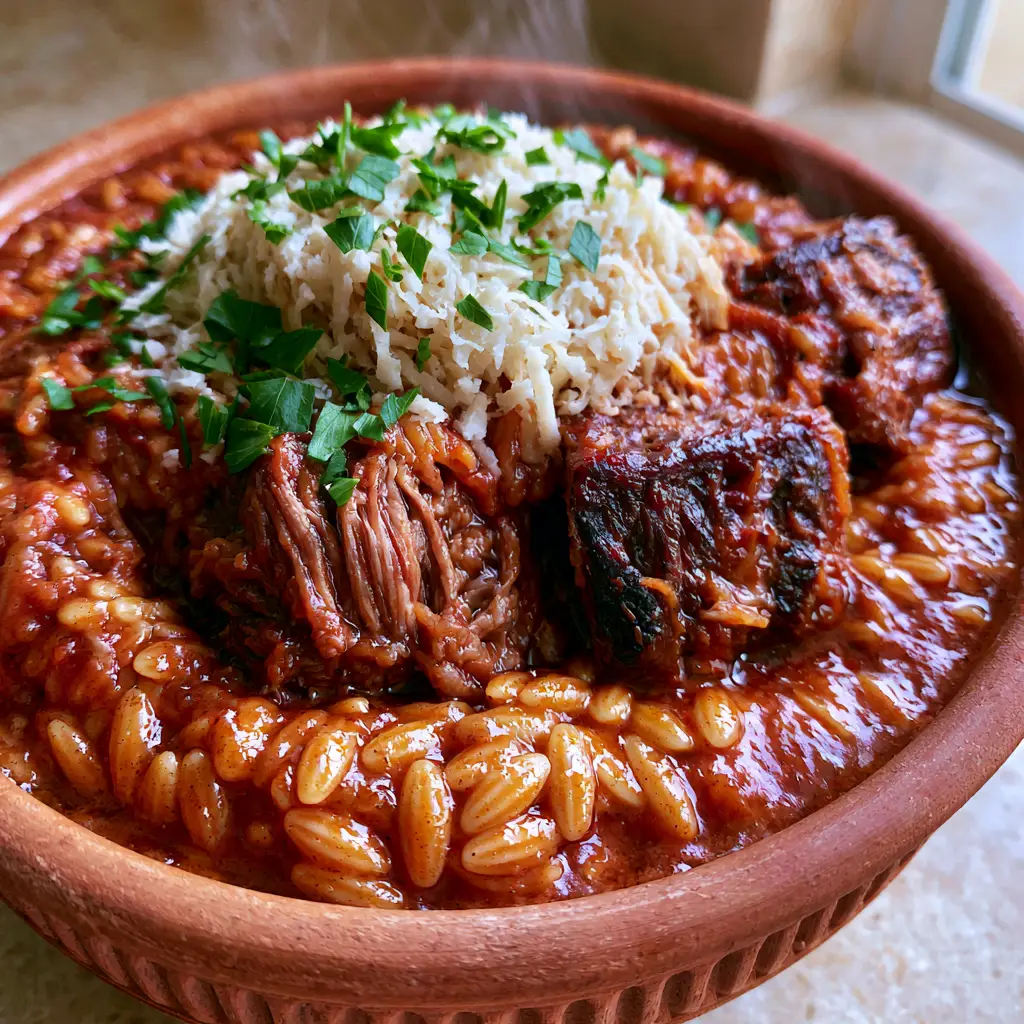
Preheat your oven to 350°F (175°C). Transfer the beef and all its sauce into a rustic terracotta baking dish. If the liquid has reduced too much, add another 1/2 cup (120ml) of hot water.
Stir in the 1.5 cups (375g) of uncooked orzo gems. Ensure the pasta is submerged in the sauce. The terracotta dish will radiate heat evenly, allowing each grain to absorb the cinnamon-infused liquid without becoming a mushy mass.
Bake uncovered for 25-30 minutes. The orzo is done when it is plump and “al dente,” and the sauce has thickened to a glossy consistency that coats the back of a spoon.
Expert Tips for a Flawless Giouvetsi
- Temperature Control: Never let the sauce reach a rolling boil once the orzo is added. A gentle simmer in the oven prevents the starch from breaking down too quickly, keeping the grains “separate.”
- The Cheese Mountain: Grate the kefalotyri cheese using the smallest holes on your grater. This creates a light, airy texture that piles up beautifully and melts slowly into the crevices of the beef.
- Resting Period: Allow the Giouvetsi to rest for 10 minutes after removing it from the oven. This allows the orzo to finish absorbing any excess liquid, resulting in the “glistening” look seen in the visual prompt.
- Parsley Freshness: Only chop the flat-leaf parsley seconds before serving. This preserves the volatile oils and ensures the green garnish stays “bright” against the deep-red sauce.
How to Store and Reheat Your Greek Beef Stew
Giouvetsi is one of those rare dishes that tastes even better the next day as the cinnamon and allspice flavors deepen. Store leftovers in an airtight container in the refrigerator for up to 3 days.
When reheating, you may notice the orzo has absorbed most of the sauce. Simply add a splash of water or beef broth before heating it on the stovetop or in the microwave to loosen the sauce back to its original thickness.
While this is a hearty meal, if you are looking for healthy dinner ideas for the rest of the week, you can repurpose the braised beef into a steak sandwich or a simplified beef bowl.
Perfect Pairings for Your Giouvetsi Feast
To complete the authentic experience, serve this dish in the center of the table in its terracotta pot. The rustic presentation is part of the appeal. A crusty loaf of sourdough bread is essential for mopping up every last drop of the tomato-cinnamon sauce.
For a lighter side, a simple Greek salad or stuffed zucchini provides a refreshing contrast to the rich, slow-braised meat. If you are serving a crowd, adding a platter of roasted vegetables like sautéed vegetables ensures everyone gets their fill of nutrients.
Frequently Asked Questions About Giouvetsi
Yes, a heavy-bottomed Dutch oven or a deep ceramic baking dish will work well, though terracotta is preferred for its specific even heat distribution.
No, the orzo should be added raw to the braising liquid. It absorbs the cinnamon and beef flavors as it cooks, resulting in much tastier pasta grains.
Pecorino Romano or a very dry, aged Parmesan are excellent substitutes for kefalotyri due to their salty, sharp flavor profiles.
Beef chuck or shank is best because the high collagen content breaks down during the slow braise, creating tender meat fibers and a rich, thick sauce.
Mushy orzo is usually caused by overcooking or using too much liquid. Ensure you bake it just until ‘al dente’ and let it rest for 10 minutes to absorb excess sauce properly.
Authentic Giouvetsi: The Full Recipe
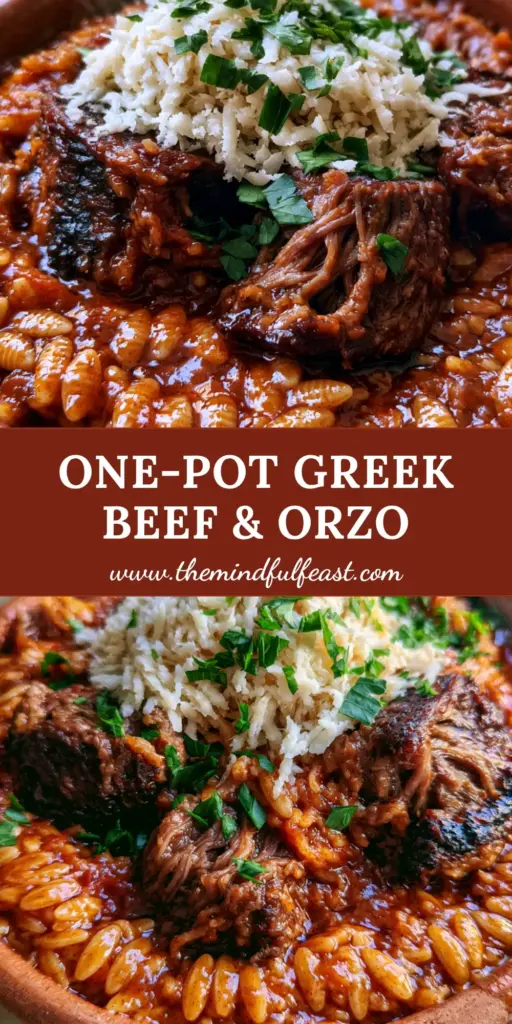
Giouvetsi: The Ultimate Greek Slow-Braised Beef and Orzo Comfort Dish
Ingredients
Equipment
Method
- Pat beef dry. Heat oil in a pot over medium-high heat. Sear beef chunks in batches until a dark-brown caramelized crust forms on all sides.
- Remove meat. Sauté onion and garlic in the same pot until translucent. Deglaze with red wine, scraping up the flavorful browned bits.
- Add beef back to the pot with tomatoes, paste, cinnamon, allspice, and stock. Cover and simmer on low for 90 minutes until meat fibers are tender.
- Transfer beef and sauce to a terracotta dish. Stir in orzo pasta. Bake at 350°F (175°C) for 30 minutes until orzo is plump and glistening.
- Top with a messy mountain of finely grated kefalotyri cheese and fresh parsley. Serve hot while steam is faintly rising.
Notes
If kefalotyri is unavailable, use Pecorino Romano for a similar salty punch.
Bring the Flavors of Greece to Your Kitchen
Giouvetsi is a testament to the beauty of slow cooking and quality ingredients. By following these steps—from the dark-brown seared edges of the beef to the messy mountain of kefalotyri cheese—you are creating a meal that is as visually stunning as it is delicious. The thick cinnamon sauce and plump orzo gems provide a comfort that is truly world-class.
We would love to see your kitchen creations! If you enjoyed this recipe, please leave a comment below or share your photos on Pinterest. For more inspiration, check out our baked zucchini and cheese casserole for your next family gathering.