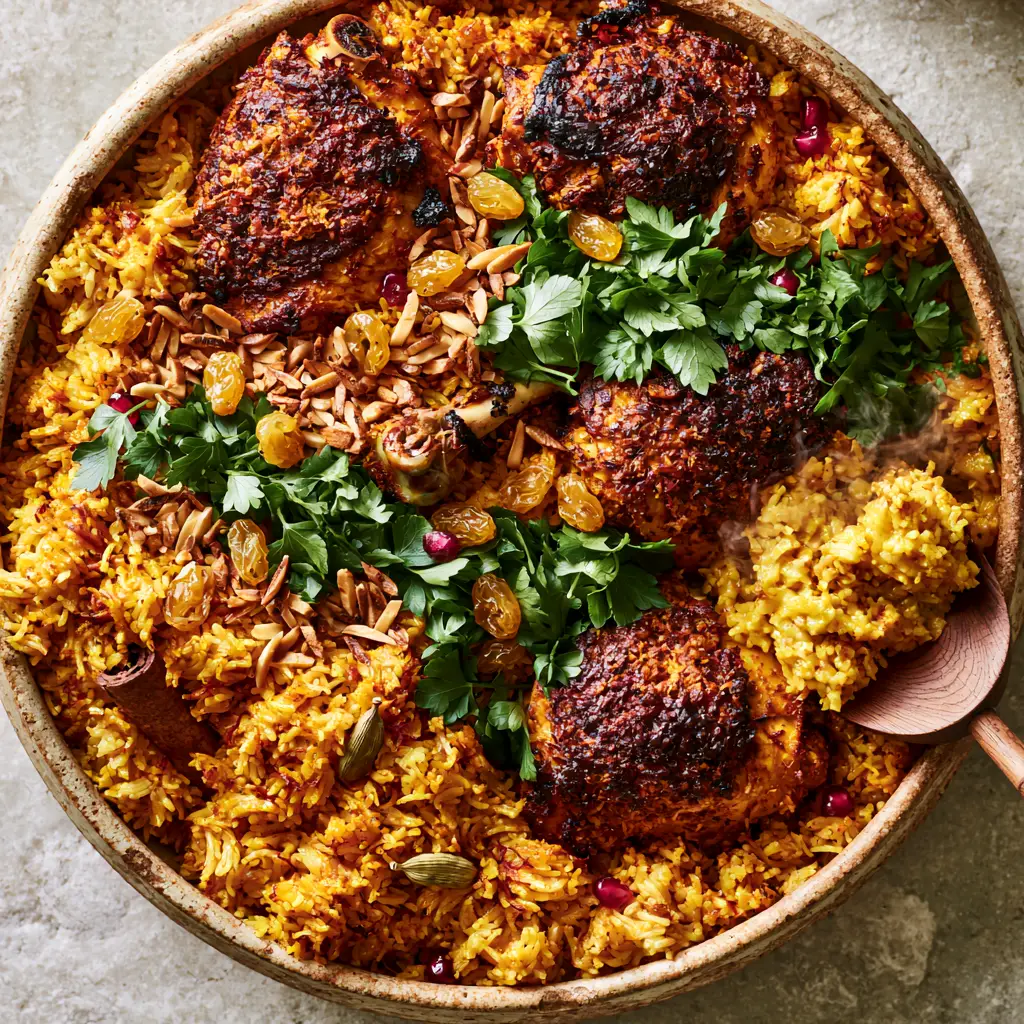
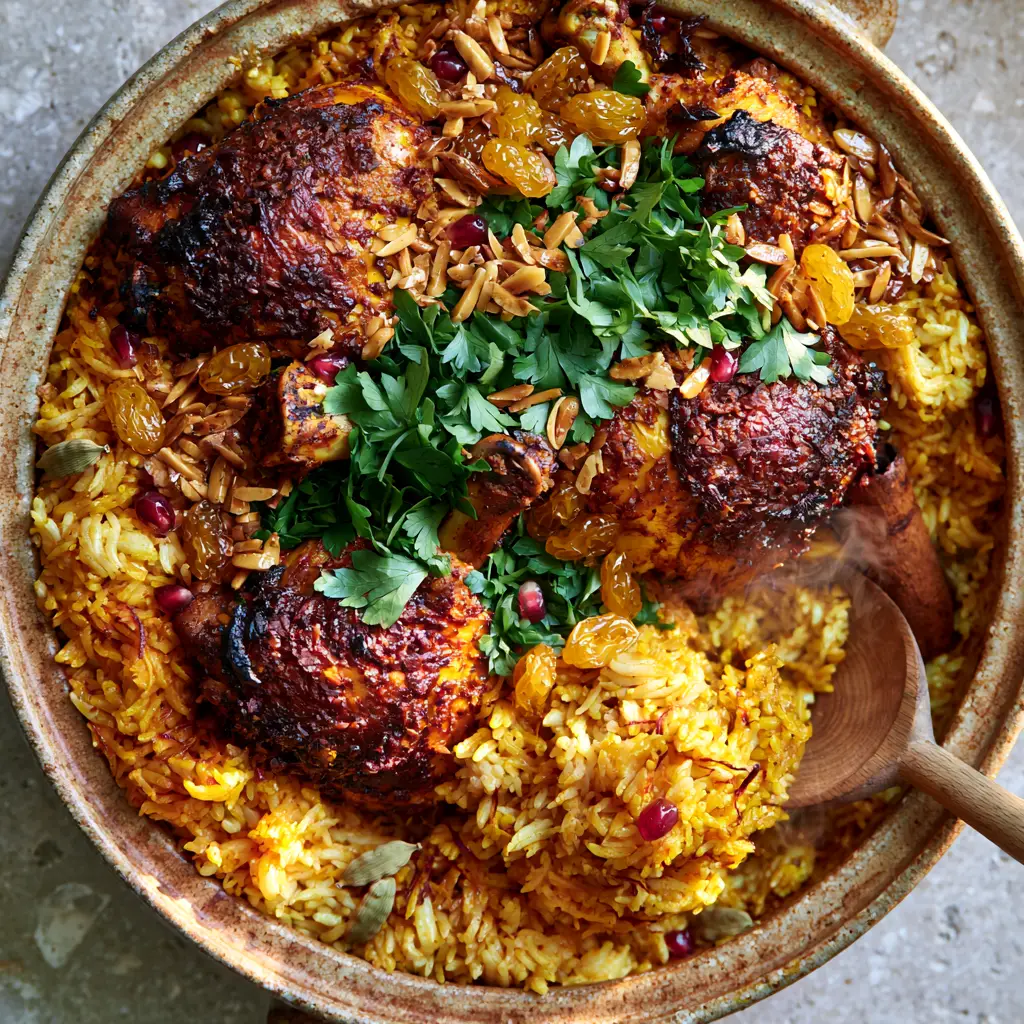
There is perhaps no dish that captures the aromatic soul of the Arabian Peninsula quite like chicken kabsa. Often considered the national dish of Saudi Arabia, this one-pot masterpiece is a sensory explosion of vibrant colors, complex spices, and contrasting textures. Imagine a mountain of fluffy, long-grain Basmati rice, each grain stained a brilliant golden-orange from the infusion of saffron and turmeric, topped with succulent bone-in chicken thighs featuring deeply browned, crispy, spice-rubbed skin.
When you lift a wooden spoon through the rice, a cloud of fragrant steam vapors rises, carrying the scents of whole cardamom pods, charred cinnamon, and earthy cloves. The dish is not just about the protein and grain; it is a visual feast garnished with ruby red pomegranate seeds, toasted slivered almonds, and plump golden raisins. Whether you are a seasoned explorer of Middle Eastern cuisine or a home cook looking to elevate your weeknight dinner rotation, this authentic chicken kabsa recipe delivers a restaurant-quality experience in the comfort of your own kitchen.
The Unrivaled Appeal of Authentic Chicken Kabsa
What makes this specific version of chicken kabsa stand out among other rice dishes? It is the forensic attention to detail in the layering of flavors and textures that mirrors the highest culinary standards. By following this guide, you will achieve the exact visual and gustatory results described in our blueprint:
- Saffron-Infused Fluffiness: We use a specific soaking and steaming technique to ensure every grain of Basmati is separate, elongated, and saturated with golden-orange hue.
- Perfectly Seared Skin: Unlike boiled versions, our chicken thighs are spice-rubbed and seared to achieve a crispy, charred exterior that provides a satisfying crunch against the soft rice.
- Textural Contrast: The combination of crunchy toasted almonds, chewy golden sultanas, and bursting pomegranate seeds creates a “pop” in every bite.
- Aromatic Depth: By using whole spices like green cardamom and cinnamon sticks, we build a foundation of flavor that is far superior to using pre-ground powders alone.
Essential Ingredients for the Most Flavorful Kabsa
To achieve the visual and flavor profile of a professional kitchen, you must select high-quality ingredients. Each component in this list serves a specific structural or chemical purpose in the final dish.
The Protein and the Rub
Bone-in, Skin-on Chicken Thighs: We use 4-6 large thighs. The bone provides deep flavor during the braising process, while the skin is essential for achieving those characteristic char marks and crispy texture seen in the visual blueprint.
Kabsa Spice Blend (Baharat): A mixture of 1 tbsp (15g) ground cumin, 1 tsp (5g) coriander, 1 tsp (5g) black pepper, and ½ tsp (2.5g) ground cloves. This creates the “spice-rubbed” look and the deep umami flavor of the chicken.
The Golden Rice Base
Long-Grain Basmati Rice: Use 2 cups (400g) of aged Basmati. Long grains are crucial for the “mountain” effect, as they don’t clump together like short-grain varieties might.
Saffron Threads & Turmeric: A pinch of saffron soaked in 2 tbsp (30ml) warm water, combined with 1 tsp (5g) turmeric, provides the vibrant golden-orange stain to the rice grains.
Whole Aromatics: 6 whole green cardamom pods and 2 whole cinnamon sticks. These are toasted early in the process to release their essential oils into the cooking fat.
Foundational Components
Ghee or Neutral Oil: 3 tbsp (45ml) for searing the chicken and toasting the spices. Ghee adds a traditional nutty depth that oil cannot replicate.
Chicken Stock: 3.5 cups (840ml) of high-quality stock. This provides the liquid for the rice to absorb, ensuring every grain is seasoned to the core.
The Visual Garnishes
Slivered Almonds & Golden Raisins: ½ cup (75g) each. These are lightly toasted in ghee to achieve a golden-brown finish and a plump, juicy texture for the raisins.
Fresh Parsley & Pomegranate: A generous handful of flat-leaf parsley chiffonade and ¼ cup (60g) of ruby red pomegranate seeds for a fresh, acidic finish.
Mastering the Culinary Techniques: Step-by-Step
Phase 1: Preparing the Aromatics and Rice
Start by rinsing your Basmati rice under cold water until the water runs clear. This removes excess surface starch, which is the secret to ensuring the rice remains “fluffy” and separate rather than gummy. Soak the rice in room temperature water for 30 minutes. Simultaneously, bloom your saffron threads in a small bowl of warm water; you will see the liquid turn a deep, royal orange.
Phase 2: The Art of the Sear
Pat the chicken thighs completely dry with paper towels. Rub them generously with the Kabsa spice blend and a pinch of salt. Heat 2 tbsp (30ml) of ghee in a rustic ceramic shallow pot or a heavy-bottomed Dutch oven over medium-high heat. Place the chicken skin-side down. Listen for a vigorous sizzle—this is the sound of the Maillard reaction at work.
Sear the chicken until the skin is deeply browned and crispy, about 6-8 minutes. Flip and sear the other side for 3 minutes. Remove the chicken and set aside; it will finish cooking with the rice. You should see beautiful char marks and a spice-crusted exterior. If you love the smoky flavor of charred poultry, you might also enjoy our perfectly grilled chicken or the sweet and smoky profile of Filipino chicken barbecue.
Phase 3: Building the Flavor Base
In the same pot, add the remaining ghee. Toss in the whole cardamom pods and the cinnamon sticks. You want to toast these until the cinnamon sticks appear slightly charred and the cardamom pods become fragrant. Add finely diced onions and sauté until translucent, followed by minced garlic and ginger. Stir in 2 tbsp (30g) of tomato paste, cooking it for 2 minutes until it turns a dark rust color—this adds body and color to the rice.
Phase 4: The Saffron Infusion
Drain the rice and add it to the pot, stirring gently to coat every grain in the spiced ghee. Pour in the chicken stock, the saffron liquid, and the turmeric. Bring the mixture to a gentle boil. Nestled the seared chicken thighs back on top of the rice. Reduce the heat to the lowest setting, cover with a tight-fitting lid, and simmer for 18-20 minutes.
Phase 5: The Finishing Touches
While the rice steams, heat a small skillet with a teaspoon of ghee. Toast the slivered almonds until golden brown, then add the raisins for 30 seconds until they plump up. Once the rice is done, remove the pot from the heat and let it sit, covered, for 5 minutes. This allows the moisture to redistribute, ensuring that “moist texture beneath” described in our visual prompt.
Expert Tips for the Ultimate Chicken Kabsa
- Temperature Control: If your rice is sticking to the bottom, your heat is too high. Use a flame tamer if your stove runs hot to ensure even steaming.
- Don’t Peek: Resisted the urge to lift the lid during the steaming process. The trapped steam is what cooks the rice grains and the chicken thighs perfectly.
- The Saffron Secret: Always use real saffron threads. Imitation saffron or excessive turmeric will provide color but lack the floral, earthy aroma essential to chicken kabsa.
- Visual Garnishing: Scatter the pomegranate seeds at the very last second. Their acidity cuts through the richness of the spiced rice and ghee.
Storage and Reheating Advice
Chicken kabsa makes for incredible leftovers as the spices continue to meld. Store in an airtight container in the refrigerator for up to 3 days. To reheat, add a splash of water or stock to the rice and microwave covered, or reheat in a pan over low heat to maintain the rice’s fluffiness. We do not recommend freezing the rice, as the texture of Basmati can become grainy upon thawing.
What to Serve with Your Saudi Feast
This dish is a complete meal on its own, but it pairs beautifully with a side of Salata Hara (a spicy Middle Eastern tomato salsa) or a cooling yogurt cucumber dip. If you are looking for other globally-inspired chicken dishes, consider trying our aromatic Persian saffron chicken for a different take on saffron-infused poultry, or for a faster weeknight option, check out this juicy chicken breast recipe.
Frequently Asked Questions
Yes, but be careful not to overcook them. Bone-in thighs are preferred because they stay juicy during the steaming process and provide more flavor to the rice.
Yes! Soaking the Basmati rice for 30 minutes allows the grains to expand and ensures they cook evenly without breaking, resulting in that signature long, fluffy grain.
The secret is to sear the chicken thighs deeply before adding them back on top of the rice. By resting them on the surface of the rice rather than submerging them, the skin stays above the liquid and retains its texture.
Long-grain aged Basmati rice is the best choice for Kabsa. Its grains remain separate and fluffy, which is essential for the dish’s texture.
A traditional Kabsa blend (Baharat) typically includes cumin, coriander, black pepper, cloves, cardamom, and sometimes cinnamon or nutmeg.
Authentic Saudi Chicken Kabsa Recipe
Chicken Kabsa: The Ultimate Saudi Spiced Chicken and Saffron Rice
Ingredients
Equipment
Method
- Rinse Basmati rice until water is clear. Soak in room temperature water for 30 minutes. Bloom saffron in 2 tbsp warm water.
- Rub chicken thighs with Kabsa spice blend. Heat ghee in the ceramic pot and sear chicken skin-side down for 6-8 minutes until deeply browned and crispy. Flip and cook for 3 minutes, then remove from pot.
- In the same pot, toast cinnamon sticks and cardamom pods until fragrant and cinnamon is slightly charred.
- Add onions, garlic, and tomato paste. Cook until softened and aromatic.
- Add drained rice, turmeric, saffron water, and chicken stock. Stir to combine and nestle chicken back on top.
- Cover tightly and simmer on low for 18-20 minutes. Let rest for 5 minutes after turning off heat.
- Top with toasted almonds, plump raisins, parsley chiffonade, and pomegranate seeds. Serve with a wooden spoon to reveal steam.
Notes
Use aged Basmati rice for the best grain separation.
Closing and Call to Action
Mastering chicken kabsa is a rite of passage for any home cook interested in the bold flavors of the Middle East. With its vibrant golden rice, crispy seared chicken, and jewel-like garnishes, it is a dish that promises to impress both the eyes and the palate. The balance of warm spices and fresh garnishes makes every bite a discovery. If you enjoyed this recipe, please leave a comment below and share your results! Don’t forget to follow us on Pinterest for more visually stunning and architecturally sound recipes.