Persian Saffron Chicken, known traditionally as Joojeh Kabab, is a sensory masterpiece that defines the heart of Iranian hospitality. Imagine succulent chunks of poultry, bathed in a glowing saffron-orange marinade, grilled until they achieve a perfect balance of caramelized charred edges and a glistening, juicy interior. This isn’t just a meal; it’s a vibrant display of culinary heritage that pairs the floral aroma of saffron with the sharp, citrusy tang of sumac and lemon.
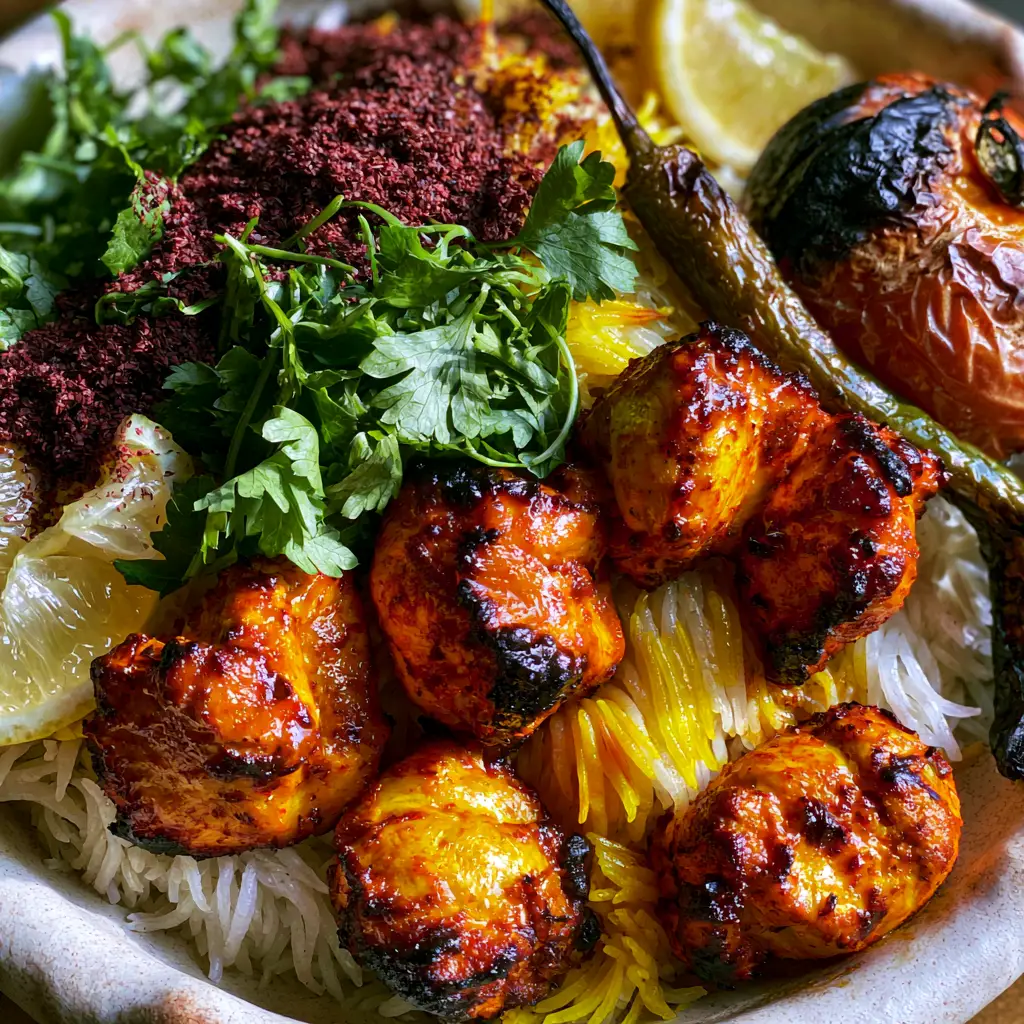
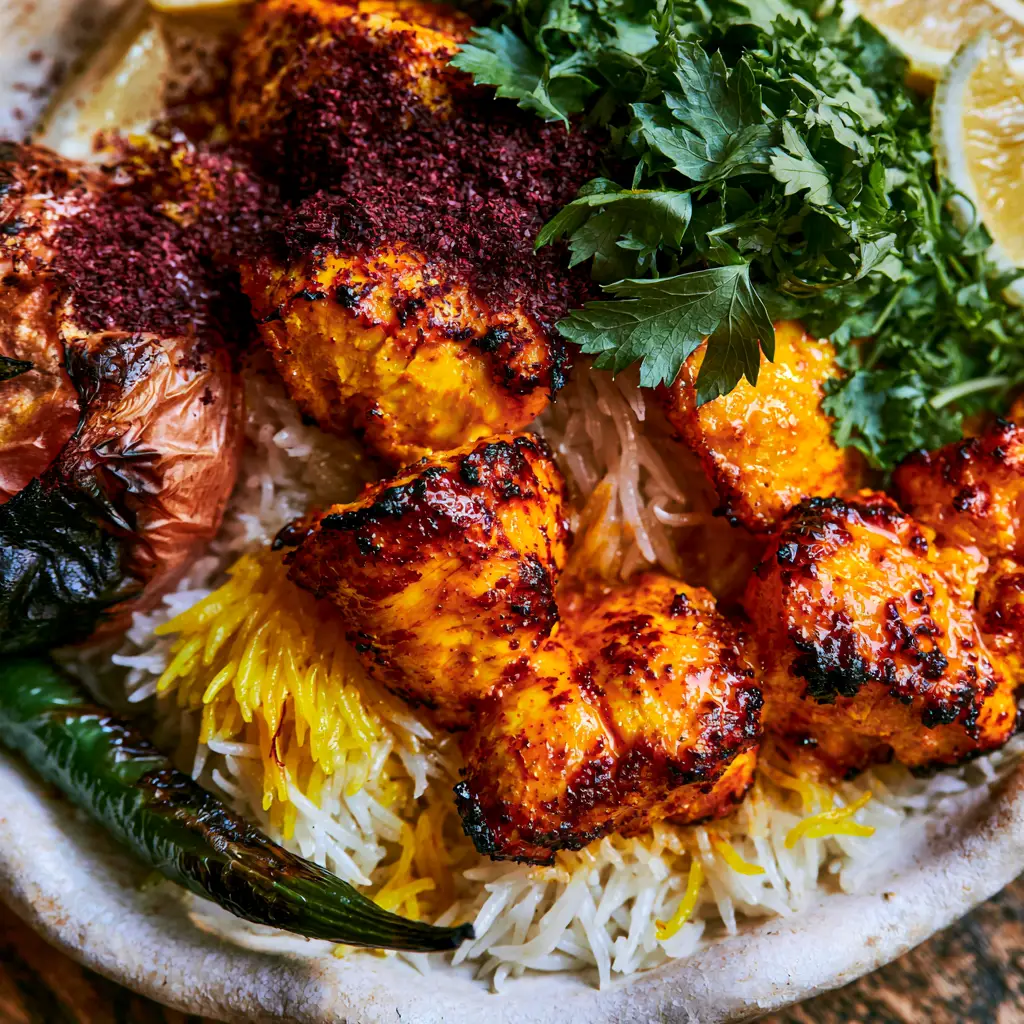
When you prepare this Persian Saffron Chicken, the visual result is striking. The bright yellow streaks in the steaming, extra-long grain basmati rice provide a stunning contrast to the deep burgundy of the sumac powder and the fresh, vibrant green of the torn flat-leaf parsley. Whether you are hosting a festive gathering or looking for a sophisticated weeknight meal, this recipe delivers a restaurant-quality experience right to your rustic artisanal ceramic plate.
In this comprehensive guide, we will walk through the forensic culinary steps required to achieve that iconic charred exterior and tender crumb. From the science of blooming saffron to the technique of blistering tomatoes over an open flame, you will master the art of the perfect Persian kebab.
Why You Will Love This Vibrant Saffron Kabab
- Unmatched Flavor Profile: The combination of high-grade saffron and lemon juice creates a floral, citrusy profile that is uniquely Persian.
- Perfect Textural Contrast: You’ll achieve a glistening, juicy surface with deeply caramelized, charred edges that provide a smoky depth.
- Visually Stunning Presentation: The bright orange chicken against snowy white and yellow rice, accented by burgundy sumac, makes for a professional-grade food photo.
- Technique-Driven Results: Learn the secret of using yogurt and onion juice to tenderize the chicken to a degree that rivals the best perfectly grilled chicken you’ve ever tasted.
Essential Ingredients for Authentic Persian Saffron Chicken
To achieve the specific visual and flavor profile described in our blueprint, every ingredient serves a dual purpose: structural integrity and aesthetic vibrance. Below are the foundational components for your Persian Saffron Chicken.
The Marinade and Poultry
1.5 lbs (680g) Chicken Breast or Thighs: Cut into 1.5-inch (4cm) chunks, these provide the surface area needed for that beautiful char. If you prefer a different cut, this method works as well as any tender chicken breast recipe in your repertoire.
1/2 tsp (1g) Saffron Threads: The soul of the dish, these must be ground and bloomed to provide the glowing saffron-orange hue. Do not substitute this, as it is the primary pigment for the glistening surface.
1/2 cup (120g) Greek Yogurt: The lactic acid in the yogurt gently breaks down protein fibers, ensuring the chicken remains juicy even under high heat. It also helps the marinade cling to the meat for better browning.
1 Large Yellow Onion (Juiced): Grate the onion and squeeze out the juice; this provides the flavor without the bits of onion that would burn and become bitter on the grill. This is the “invisible” secret to professional Joojeh Kabab.
3 tbsp (45ml) Fresh Lemon Juice: This provides the necessary acidity to balance the earthy saffron and cut through the richness of the chicken. It also helps set the vibrant color.
The Rice and Garnish
2 cups (400g) Extra-Long Grain Basmati Rice: High-quality basmati is essential for the distinct, individual grains shown in our blueprint. It acts as the neutral, steaming bed for the bold chicken.
2 tbsp (30g) Unsalted Butter: Melted and mixed with saffron to create those bright yellow streaks throughout the rice. This adds a luxurious mouthfeel and a glossy finish.
2 Large Vine-Ripened Tomatoes: Kept whole for grilling until the skin is blistered and blackened. The internal steam makes them incredibly sweet and juicy.
2 Long Green Chili Peppers: These add a mild heat and a charred, smoky visual element that rounds out the plate.
1 tbsp (6g) Ground Sumac: This burgundy-colored spice provides a tart, acidic finish that is visually iconic to Persian cuisine.
1/4 cup (10g) Fresh Flat-leaf Parsley: Roughly torn to add a burst of vibrant green and a fresh, herbaceous top note.
Professional Culinary Equipment Needed
To replicate the extreme close-up overhead shot from our blueprint, you will need tools that can handle high heat and provide precision. A high-quality grill (gas or charcoal) is preferred to get those caramelized charred edges. If grilling indoors, a heavy-duty cast-iron grill pan is the best substitute.
You will also need metal skewers, preferably the flat Persian style, which prevent the chicken chunks from spinning, ensuring even charring. A spice grinder or mortar and pestle is required to turn the saffron threads into a fine powder for maximum color extraction. Finally, a rustic, artisanal matte white ceramic dish will provide the perfect backdrop for the glistening saffron-orange tones.
Step-by-Step Instructions for the Perfect Persian Saffron Chicken
Phase 1: Blooming the Saffron and Marinating
Begin by grinding your saffron threads with a pinch of sugar or salt until they form a fine powder. Pour 2 tbsp (30ml) of boiling water over the powder and let it steep for 10 minutes; this “blooms” the color, turning it into a deep, vibrant crimson liquid.
In a large glass bowl, combine the yogurt, onion juice, lemon juice, 2 tbsp (30ml) of olive oil, 1 tsp (6g) of salt, and half of the bloomed saffron. Whisk until the marinade is a uniform, glowing orange. Add your chicken chunks, ensuring every piece is submerged. Cover and refrigerate for at least 6 hours, though overnight is preferred for the best aromatic chicken kabsa style tenderness.
Phase 2: Preparing the Saffron-Infused Basmati Rice
Wash the basmati rice in cold water until the water runs clear, removing excess starch to ensure distinct, non-sticky grains. Bring a large pot of salted water to a boil and parboil the rice for 5-7 minutes until the grains are soft on the outside but still have a firm “bite” in the center.
Drain the rice and return it to the pot with a splash of water and oil at the bottom. Mound the rice into a cone shape, poke a few holes for steam, and cook on low heat for 30-40 minutes. Once done, take a cup of the cooked rice and mix it with the remaining bloomed saffron and melted butter to create the bright yellow streaks used for garnish.
Phase 3: The Art of the Char
Thread the marinated chicken onto skewers. Wipe off excess yogurt marinade to prevent the chicken from steaming rather than searing. Preheat your grill to medium-high heat. Place the skewers on the grates along with the whole tomatoes and green chili peppers.
Grill the chicken for 8-12 minutes, turning frequently. Look for the “Visual Cue”: the surface should be glistening and juicy, while the edges should develop a deep, caramelized black char. The tomatoes are ready when the skin is blistered and blackened, and the chili pepper should be charred on all sides. Unlike a creamy garlic parmesan chicken penne, this dish relies on dry, intense heat for its character.
Phase 4: Plating for Visual Excellence
Lay a generous bed of the steaming white basmati rice on your matte white ceramic dish. Scatter the saffron-stained yellow rice over the top in distinct streaks. Nestle the charred Persian Saffron Chicken chunks in the center.
Place the blistered tomato and charred green chili pepper to the side. Finish the dish with a heavy dusting of the dark burgundy sumac powder across the meat. Garnish with a handful of vibrant green torn flat-leaf parsley and place thin, juicy lemon wedges around the perimeter for a final acidic pop.
Expert Tips for Culinary Success
- Don’t Skip the Onion Juice: Using the juice rather than chopped onions prevents the chicken from having burnt bits of onion, which can taste bitter and ruin the “glistening” look.
- Saffron Quality Matters: Use “Sargol” or “Negin” grade saffron for the most intense orange hue. If the color looks dull, your saffron might be old.
- Temperature Control: If the chicken is charring too fast but remains raw inside, move the skewers to a cooler part of the grill to finish cooking through.
- Rest the Meat: Let the chicken rest for 3-5 minutes after grilling. This allows the juices to redistribute, ensuring every bite is moist.
Storage, Reheating, and Freezing
Leftover Persian Saffron Chicken can be stored in an airtight container in the refrigerator for up to 3 days. To reheat, use a damp paper towel over the chicken and rice in the microwave to maintain moisture, or gently warm in a covered pan with a tablespoon of water.
While the rice does not freeze well, the marinated (uncooked) chicken can be frozen for up to 2 months. Thaw completely in the refrigerator before grilling to ensure the texture remains tender and the char develops correctly.
What to Serve With Persian Saffron Chicken
This dish is a complete meal on its own, but it pairs beautifully with a side of Mast-o-Khiar (Persian cucumber and yogurt dip) or a fresh Shirazi salad. If you are looking to create a diverse spread, consider serving it alongside a sweet and savory pineapple chicken for a fusion of flavors that will delight your guests.
For those who love a variety of textures, a crisp flatbread like Lavash or Barbari is perfect for wrapping around the charred chicken chunks and blistered tomatoes. The acidity of the sumac also makes it a great companion to grilled vegetables or even a light grain-based salad.
Frequently Asked Questions
Yes, you can use a broiler. Place the skewers on a rack over a baking sheet and broil on high, turning frequently until you achieve the charred edges and the internal temperature reaches 165°F (74°C).
Sumac has a tart, citrusy, and slightly earthy flavor profile. It acts as a dry acid, providing a similar pop to lemon juice while adding a beautiful burgundy color to the final plate.
The vibrant hue comes from high-quality bloomed saffron. By grinding the threads and steeping them in hot water, you release the crocin pigment which stains the chicken a glowing orange.
Extra-long grain Basmati rice is traditional. It should be parboiled and then steamed to create fluffy, distinct grains that don’t stick together, often finished with a buttery saffron drizzle.
Onion juice provides the deep savory flavor and enzyme-driven tenderization without the physical bits of onion that would burn and turn bitter on the grill, ensuring a clean, charred finish.
Authentic Persian Saffron Chicken (Joojeh Kabab) Recipe
Persian Saffron Chicken: The Ultimate Guide to Authentic Joojeh Kabab
Ingredients
Equipment
Method
- Grind saffron threads into a powder and steep in 2 tbsp (30ml) boiling water for 10 minutes until deep crimson.
- Combine yogurt, onion juice, lemon juice, oil, salt, and half the saffron water. Whisk until glowing orange.
- Toss chicken chunks in marinade and refrigerate for 6-24 hours for maximum tenderness.
- Parboil basmati rice for 6 minutes, then steam on low for 30 minutes. Mix a portion with remaining saffron butter for yellow streaks.
- Thread chicken onto skewers. Grill over medium-high heat until glistening with charred edges. Blister tomatoes and peppers until blackened.
Notes
Always juice the onion rather than grating to avoid bitter burnt bits on the grill.
Conclusion and Join The Feast!
Mastering the Persian Saffron Chicken is a rewarding journey into the heart of Middle Eastern flavors. The combination of the aromatic saffron, the smoky char of the grill, and the tartness of the sumac creates a dish that is as beautiful to look at as it is delicious to eat. We hope this recipe brings a glow to your dinner table!
Did you make this recipe? We would love to see your creations! Leave a comment below or tag us in your photos. Don’t forget to sign up for our newsletter for more elite culinary guides and share this recipe to your favorite boards on Pinterest.