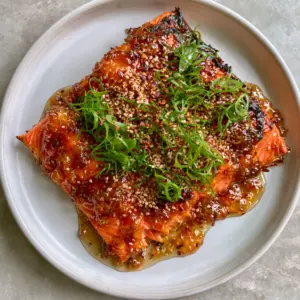
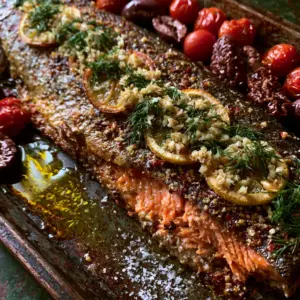
There is a specific, visceral joy in the sound of a fork cracking through perfectly rendered salmon skin. This seared salmon with lemon dill sauce isn’t just a meal; it is a masterclass in texture, contrasting a hyper-detailed, golden-brown crust with a center so buttery it practically melts upon contact.
Achieving restaurant-quality results at home requires more than just a hot pan. It demands an understanding of moisture control and temperature gradients to create that “shattered-glass” finish you see in high-end culinary photography.
In this guide, we will walk through the professional techniques needed to emulsify a thick, velvety lemon dill sauce that clings to every flake of fish. Whether you are hosting a formal dinner or elevating your weeknight routine, this recipe delivers a sensory experience that rivals any five-star bistro.
The Anatomy of a Perfect Golden-Brown Sear
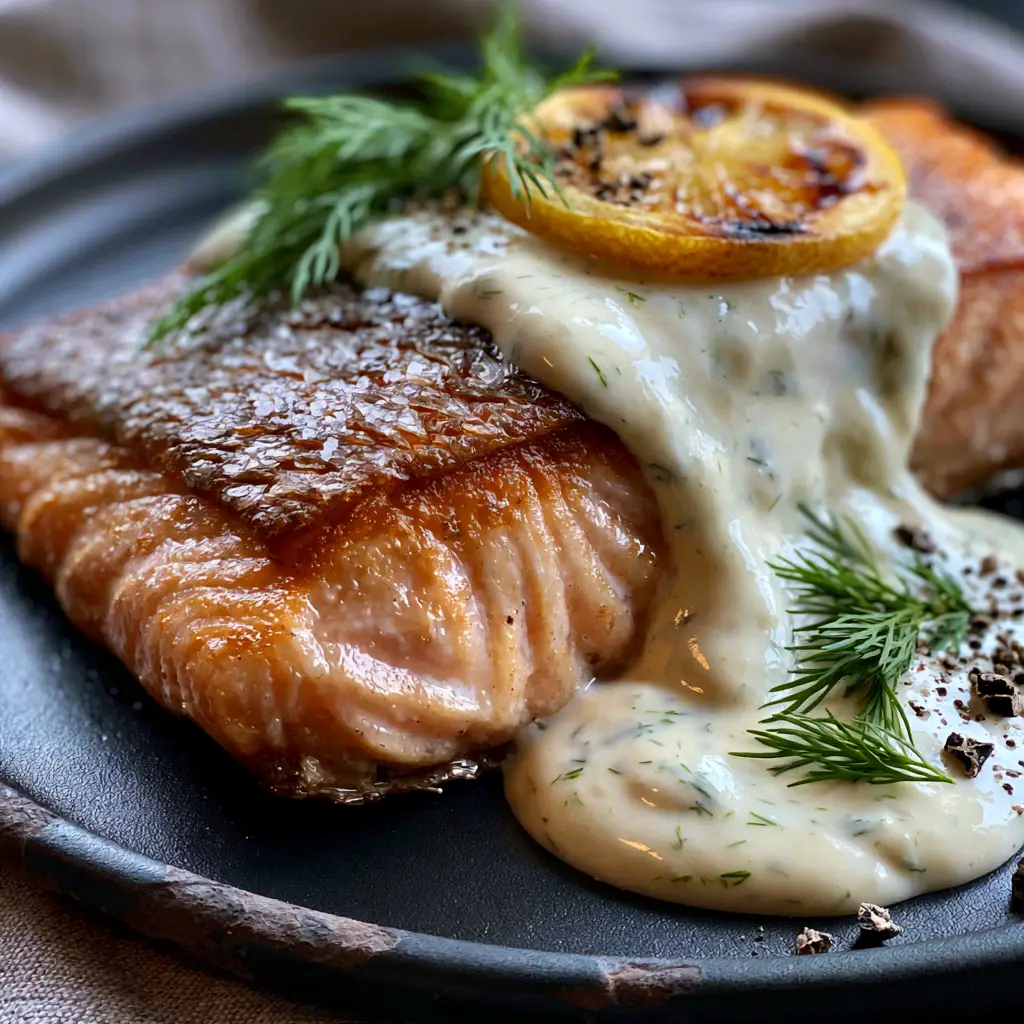
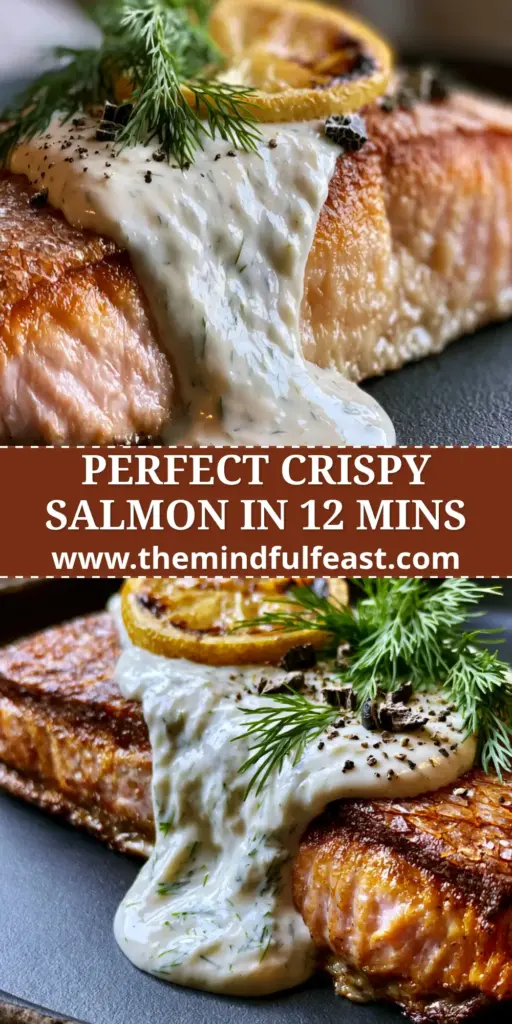
What makes this seared salmon with lemon dill sauce stand out is the meticulous attention to the “Visual Recipe Blueprint.” We aren’t just cooking fish; we are engineering a specific set of culinary outcomes.
- Shattered-Glass Crispy Skin: Achieved through extreme moisture removal and a sustained, heavy-bottomed sear.
- Translucent Pink Center: A gentle temperature gradient ensures the interior remains moist and buttery rather than dry and chalky.
- Velvety Emulsion: A cream-based sauce that shows visible flecks of fresh green dill and bright citrus notes.
- Aromatic Garnishes: The addition of a charred lemon wheel adds a deep, smoky acidity that cuts through the rich omega-3 fats.
Essential Components for This Culinary Masterpiece
To achieve the exact results described in our visual guide, you must use high-quality, fresh ingredients. Every element serves a structural or flavor-based purpose in the final composition.
Skin-On Salmon Fillets: You need 2 (6oz / 170g) fillets. The skin is non-negotiable, as it acts as an insulator for the delicate flesh and provides the essential “crunch” factor.
High Smoke-Point Oil: Use 2 tbsp (30ml) of avocado or grapeseed oil. Avoid extra virgin olive oil for the sear, as it will smoke and turn bitter before the skin reaches its peak crispness.
Coarse Sea Salt & Cracked Black Peppercorns: These provide the “hyper-detailed” glistening texture on the skin. The coarse grains don’t just season; they add a final textural pop.
Heavy Cream: 1/2 cup (120ml) creates the “thick, generous drizzle” required for the visual blueprint. This provides the opacity needed for that stunning white-on-pink contrast.
Fresh Dill Sprigs: 1/4 cup (10g) finely chopped for the sauce, plus extra feathery sprigs for garnishing. Dill loses its aromatic potency quickly, so fresh is mandatory.
Fresh Lemon: You will need 1 large lemon. Half will be juiced for the sauce, while the other half is sliced into wheels to be charred in the pan.
Unsalted Butter: 1 tbsp (14g) added at the end of the sauce-making process to provide a professional glossy finish and “buttery” mouthfeel.
The Professional Toolset for Precision Searing
To replicate the “macro close-up” quality of this dish, your equipment matters as much as your ingredients. A heavy-bottomed stainless steel or cast-iron skillet is essential for heat retention.
You will also need a flexible metal fish spatula. This allows you to press the salmon firmly against the pan during the initial stages of cooking, preventing the skin from curling and ensuring an even, golden-brown crust across the entire surface.
Step-by-Step Evolution: From Raw to Radiant
1. The Moisture-Wicking Phase
Pat the salmon fillets extremely dry using paper towels. Moisture is the enemy of the “shattered-glass” texture; any surface water will create steam, resulting in rubbery skin rather than a crisp sear.
2. Temperature Calibration and Initial Contact
Heat your skillet over medium-high heat until the oil shimmers and just begins to wisps of smoke. Season the skin side generously with coarse sea salt and cracked black pepper.
3. The Press and Render
Place the fillets skin-side down in the pan. Use your fish spatula to press down firmly for 30 seconds. You will hear a loud, aggressive sizzle—this is the sound of the fat rendering and the skin crisping.
4. Monitoring the Gradient
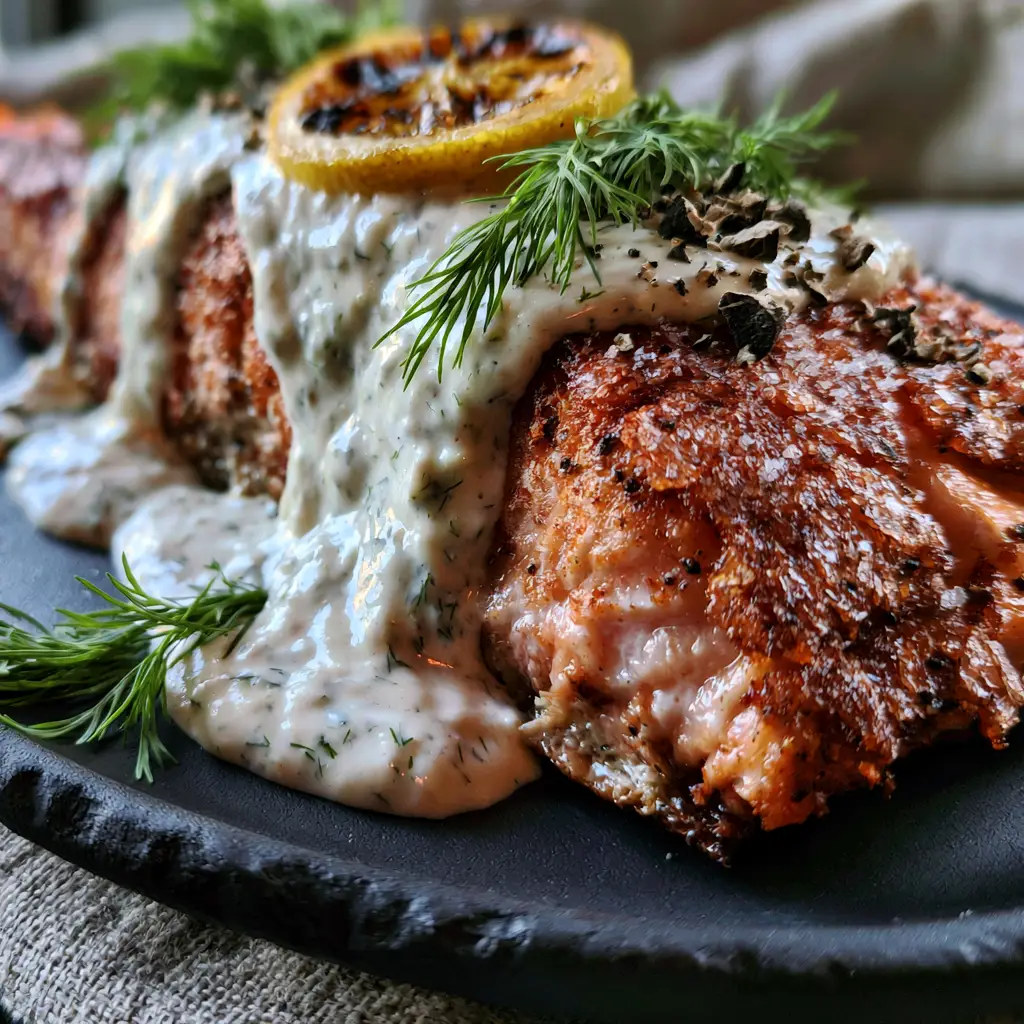
Observe the side of the fillet. You will see the color change from translucent pink to opaque beige moving upward. Once the opacity reaches about 75% of the way up the side, it is time to flip.
5. The Kiss of Heat and Charring the Lemon
Flip the fillets and cook for only 60-90 seconds on the flesh side. At the same time, drop your lemon wheels into the empty spaces of the pan. Sear the lemons until they are dark, caramelized, and slightly charred.
6. Crafting the Creamy Lemon Dill Sauce
Remove the salmon and lemons to a plate. Reduce heat to medium and deglaze the pan with a splash of water or white wine. Whisk in the heavy cream and lemon juice, simmering until the sauce thickens enough to coat the back of a spoon. Stir in the chopped dill and butter at the very last second.
Expert Tips for Visual and Flavor Excellence
- The Cold Pan Alternative: For even crispier skin, start the salmon in a cold pan and then turn the heat to medium-high. This slowly renders the fat, leading to an even more “shattered” texture.
- Resting is Vital: Let the salmon rest for 3 minutes before saucing. This allows the internal juices to redistribute, ensuring that “moist, buttery” center.
- Sauce Consistency: If your sauce is too thin, simmer it for another minute. If it’s too thick, add a teaspoon of warm water to loosen the emulsion.
- Freshness Check: Ensure your dill is vibrant green. If it’s beginning to yellow, it will look dull against the creamy white sauce.
Preservation and Reheating Guidelines
Seared salmon with lemon dill sauce is best enjoyed immediately to preserve the skin’s texture. However, leftovers can be stored in an airtight container in the refrigerator for up to 2 days.
To reheat, avoid the microwave, as it will turn the salmon rubbery. Instead, place the fillets in a pan over low heat with a cover until just warmed through. Note that the skin will lose some of its “shattered-glass” crispness upon reheating.
Artful Pairings for a Complete Plate
This rich and vibrant salmon pairs beautifully with sides that share its Mediterranean-inspired flavor profile. Consider serving it alongside lemon roasted Greek potatoes for a hearty, textured accompaniment.
If you prefer a lighter, pasta-focused meal, this salmon is a fantastic protein topper for farfalle pasta. For those who enjoy a variety of seafood, you might also find inspiration in our recipe for pan-seared mahi-mahi.
Common Questions About Searing Salmon
While possible, dried dill lacks the vibrant color and grassy, citrus-like aroma of fresh dill. If you must use dried, reduce the amount to 1 tablespoon, but the visual ‘flecks’ will be less appealing.
Watch the side of the fillet. When the opaque, cooked flesh reaches about 75% of the way up from the skin, flip it and cook for just one more minute. The center should remain slightly translucent pink.
The two keys are a very hot pan with high smoke-point oil and ensuring the skin is completely dry. Once the fish hits the pan, do not try to move it until it naturally releases, which indicates the crust has formed.
Use an oil with a high smoke point like avocado, grapeseed, or canola oil. These can handle the high heat necessary for a golden-brown sear without burning or smoking.
Rubbery skin is usually caused by trapped steam. This happens if the fish wasn’t patted dry or if the pan wasn’t hot enough. Avoid overcrowding the pan, which can lower the temperature and lead to steaming.
The Ultimate Seared Salmon with Lemon Dill Sauce
Seared Salmon with Lemon Dill Sauce: The Secret to Shattered-Glass Crispy Skin
Ingredients
Equipment
Method
- Pat the salmon fillets extremely dry with paper towels on both sides. Season the skin side with coarse sea salt and cracked black peppercorns.
- Add avocado oil to a heavy skillet over medium-high heat until it shimmers. Place salmon skin-side down and press with a spatula for 30 seconds.
- Cook undisturbed for 5-6 minutes until the skin is golden-brown and 'shattered-glass' crispy. Flip the fillets when the opaque line reaches 75% up the side.
- Cook for 1-2 minutes on the flesh side. Add lemon wheels to the pan at the same time, searing until charred. Remove both to a plate to rest.
- In the same pan over medium heat, whisk in heavy cream and lemon juice. Simmer for 2-3 minutes until thickened and velvety.
- Stir in the chopped dill and cold butter until the sauce is glossy. Season with salt to taste.
- Drizzle the thick sauce over the salmon, garnish with the charred lemon and fresh dill sprigs.
Notes
Always pat the skin bone-dry to avoid steaming the fish.
Closing & Call to Action
Mastering the seared salmon with lemon dill sauce is a rite of passage for any serious home cook. The combination of the shatter-crisp skin and the bright, herbaceous cream sauce creates a balance of flavors that is truly timeless. If you enjoyed this recipe, please leave a comment below and share your results! Don’t forget to follow us on Pinterest and save this to your favorite dinner boards for later.