There is nothing quite as satisfying as the sound of a thick, cold fillet hitting a scorching cast iron skillet. The immediate hiss and the rising steam vapors signal the beginning of a culinary transformation that ends in a restaurant-quality meal.
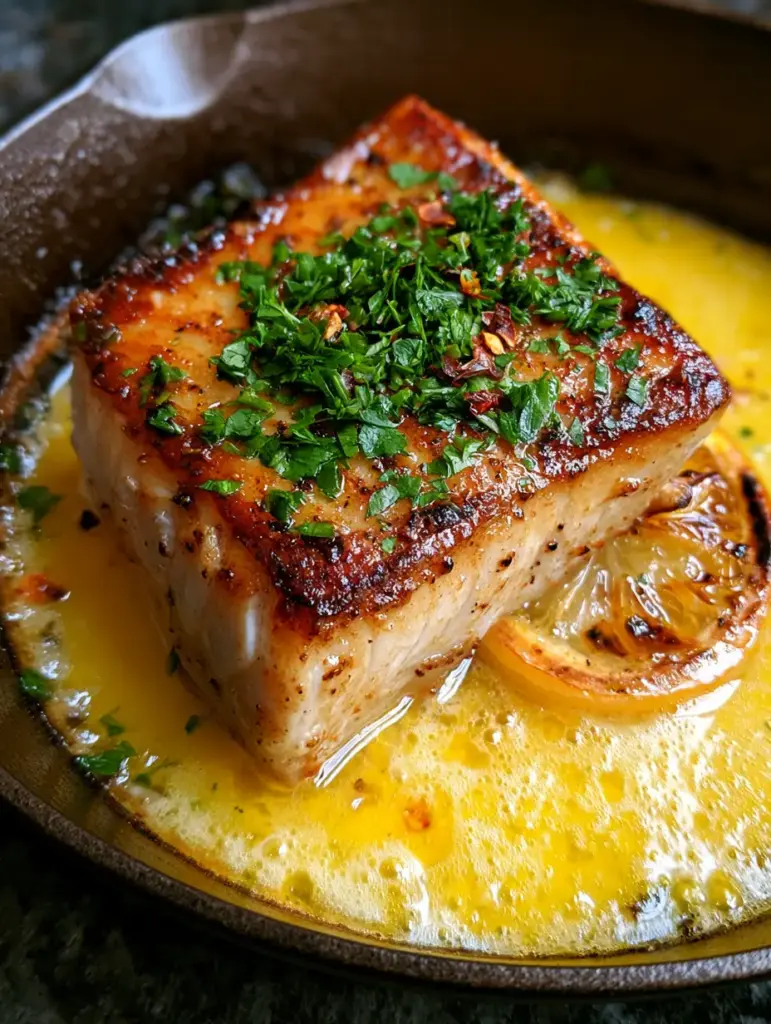
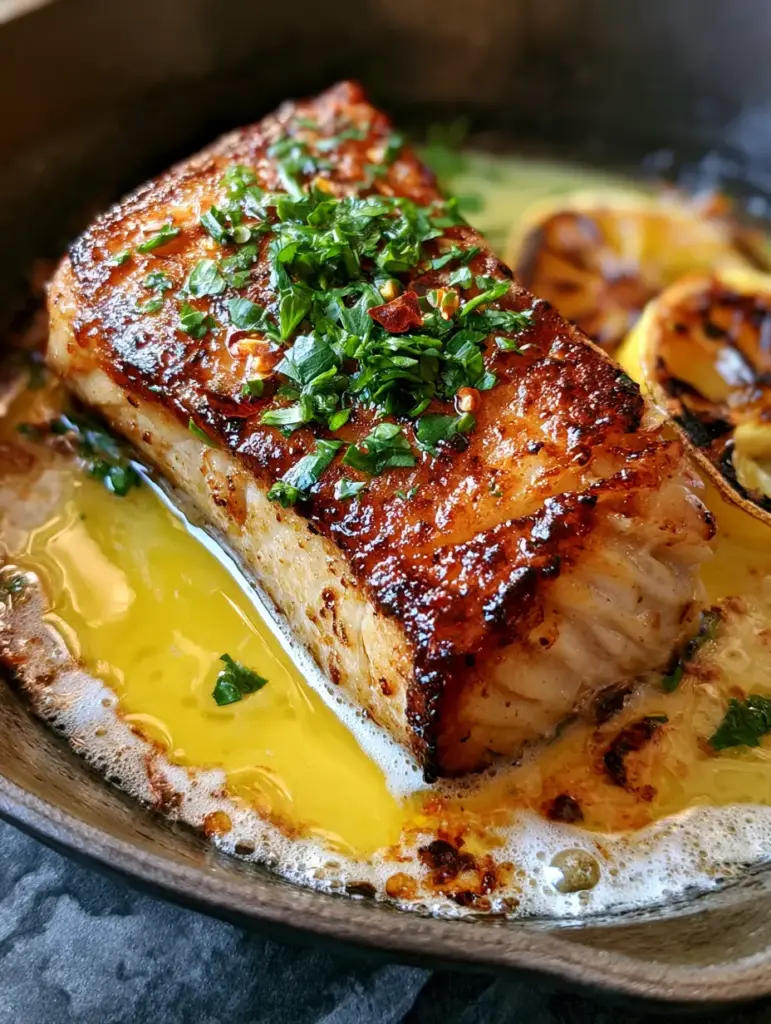
Our Mahi Mahi with Lemon Butter Sauce is designed to bridge the gap between amateur home cooking and professional seafood preparation. This dish centers on a thick mahi mahi fillet, boasting a deep golden-brown caramelized crust that yields to a moist, flaky interior.
Bathed in a pool of bubbling, vibrant yellow garlic butter and topped with fresh parsley and red pepper flakes, this recipe is a visual and sensory masterpiece. Whether you are a seasoned chef or a beginner, this guide will walk you through the science of the perfect sear.
Why You Will Love This Pan-Seared Mahi Mahi Masterpiece
- The Perfect Crust: We use specific heat management techniques to ensure a thick, golden-brown caramelized exterior that provides a satisfying crunch against the tender fish.
- Vibrant Flavor Profile: The sauce is a balance of rich, melted grass-fed butter, sharp citrus, and the aromatic bite of fresh minced garlic.
- Visual Elegance: With charred lemon wheels and a scatter of bright green parsley, this dish looks like it was plated in a high-end coastal bistro.
- Quick Execution: Despite its gourmet appearance, this Mahi Mahi with Lemon Butter Sauce comes together in under 20 minutes, making it ideal for busy weeknights.
The Essential Components for Restaurant-Quality Mahi Mahi
To achieve the visual and textural results seen in professional culinary photography, every ingredient serves a functional purpose. We don’t just add fat for flavor; we add it for heat conduction and emulsification.
Mahi Mahi Fillets: You need two 6-oz (170g) fillets, ideally at least 1-inch (2.5cm) thick. Thick fillets allow the exterior to caramelize without overcooking the center, maintaining that sought-after flaky texture.
Avocado Oil: Use 1 tbsp (15ml) of a high-smoke-point oil. Unlike butter, which burns at high temperatures, avocado oil allows us to achieve that deep golden-brown crust without bitter charred notes.
Unsalted Butter: We use 4 tbsp (56g) of high-quality unsalted butter. Using unsalted allows you to control the seasoning precisely while creating the base for the bubbling lemon-garlic emulsion.
Fresh Garlic: Three cloves, finely minced, provide the aromatic backbone of the sauce. Avoid the jarred stuff; fresh garlic releases essential oils that react beautifully with the citrus juice.
Lemon Duo: You will need 1 tbsp (15ml) of fresh juice and two thin lemon wheels. The wheels will be charred in the skillet to release deep, smoky citrus sugars that brighten the entire dish.
The Garnish Trio: A combination of 1 tbsp (4g) fresh parsley, 1/2 tsp (1g) red pepper flakes, and freshly cracked black pepper. The parsley adds a grassy freshness, while the flakes provide a subtle heat that cuts through the rich butter.
Kosher Salt: Essential for drawing out surface moisture. A dry fillet is the secret to a successful Maillard reaction and a crispy skin or surface.
Tools Required for the Perfect Sear
To replicate the deep sear and bubbling sauce described in our visual blueprint, you need the right conductivity. A heavy-bottomed skillet is non-negotiable for even heat distribution.
A 10-inch (25cm) cast iron skillet is the preferred tool for this recipe. Cast iron retains heat better than stainless steel, ensuring the temperature doesn’t drop when the cold fish hits the pan.
You will also need a thin metal fish spatula. This allows you to get under the crust without breaking the delicate flakes of the mahi mahi, ensuring the fillet remains whole and beautiful.
Mastering the Golden-Brown Pan-Sear Technique
Preparing the Fish for Maximum Crispness
Start by patting your mahi mahi fillets extremely dry with paper towels. Any surface moisture will turn to steam, preventing the fish from developing that deep golden-brown caramelized crust.
Season both sides generously with kosher salt and freshly cracked black pepper. If you enjoy this flavor profile, you might also like our lemon pepper grilled cod recipe for a different take on citrus-forward seafood.
Achieving the Maillard Reaction
Place your cast iron skillet over medium-high heat and add the avocado oil. Wait until the oil is shimmering and just starting to wisps of smoke—this is your cue that the pan is ready.
Carefully lay the fillets into the pan, laying them away from you to avoid oil splatters. Press down lightly with your spatula for 5 seconds to ensure even contact. Leave them undisturbed for 4-5 minutes.
You are looking for the “visual cue” of a golden-brown edge creeping up the sides of the fish. When the fish releases easily from the pan, flip it to reveal the stunning caramelized surface described in our blueprint.
Charring the Citrus and Building the Sauce
Once flipped, move the fillets to one side of the pan and add the two thin lemon wheels. Allow them to sit in the hot oil for 1-2 minutes until they develop dark, charred edges.
Reduce the heat to medium and add the 4 tbsp (56g) of butter. As it begins to melt and foam, add the minced garlic and red pepper flakes. The butter will begin to bubble and turn a vibrant yellow.
Tilt the pan slightly and use a spoon to continuously baste the fish with the bubbling garlic butter. This process, known as *arrosé*, finishes cooking the fish while infusing it with flavor and creating a glistening sheen.
Pro Tips for Seafood Success
- Don’t Overcrowd the Pan: If you are doubling this recipe, use two pans or cook in batches. Overcrowding drops the temperature and results in steamed, grey fish rather than a seared crust.
- Cold Butter for Emulsion: If you want an even creamier sauce, whisk in cold butter cubes at the very end after removing the pan from the heat.
- Internal Temperature: Use an instant-read thermometer. Pull the mahi mahi at 130°F (54°C); residual heat will bring it to the perfect 135°F-140°F (57°C-60°C) for a moist, flaky texture.
- Rest the Fish: Let the fillets rest for 2 minutes before serving. This allows the juices to redistribute so the fish doesn’t dry out the moment you cut into it.
The Best Side Dishes for Mahi Mahi with Lemon Butter Sauce
A rich, buttery dish like this requires sides that can either soak up the sauce or provide a crisp contrast. We recommend serving this over a bed of fluffy jasmine rice or with roasted vegetables.
If you love the combination of citrus and starch, try these lemon roasted Greek potatoes. The acidity in the potatoes perfectly complements the garlic butter sauce.
For a lighter option, a simple green salad or farfalle pasta with broccoli works beautifully. If you’re in the mood for more intense butter flavors, our cowboy butter technique can be adapted for a variety of proteins.
If you enjoy this preparation method, you should definitely check out our seared salmon with lemon dill sauce, which utilizes a similar high-heat searing technique.
Storage and Reheating Guidelines
Mahi Mahi is best enjoyed immediately to preserve the texture of the crust. However, leftovers can be stored in an airtight container in the refrigerator for up to 2 days.
To reheat, avoid the microwave as it will make the fish rubbery. Instead, place the fillet in a pan with a splash of water or extra butter over low heat, covering it with a lid until just warmed through.
We do not recommend freezing the cooked fish, as the delicate cellular structure of mahi mahi changes significantly upon thawing, leading to a mushy texture.
Frequently Asked Questions
You can, but be careful with the heat. Extra virgin olive oil has a lower smoke point and may burn or smoke excessively at the temperatures required for a deep golden sear. A light olive oil is a better substitute.
Yes, but you must thaw it completely in the refrigerator overnight. Once thawed, pat it very dry. Frozen fish often contains more moisture, so extra care is needed to achieve a crispy crust.
The two keys to preventing sticking are ensuring the fish is extremely dry (pat it with paper towels) and making sure the oil is shimmering hot before the fish touches the pan. Do not try to flip the fish until it naturally releases from the surface.
Mahi mahi is known for being very mild and slightly sweet. It is much less ‘fishy’ than salmon or mackerel, making it a perfect vehicle for the rich flavors of lemon butter and garlic.
For a moist and flaky result, aim for an internal temperature of 135°F to 140°F (57°C-60°C). Pull it off the heat at 130°F, as carryover cooking will do the rest.
The Perfect Mahi Mahi with Lemon Butter Sauce Recipe
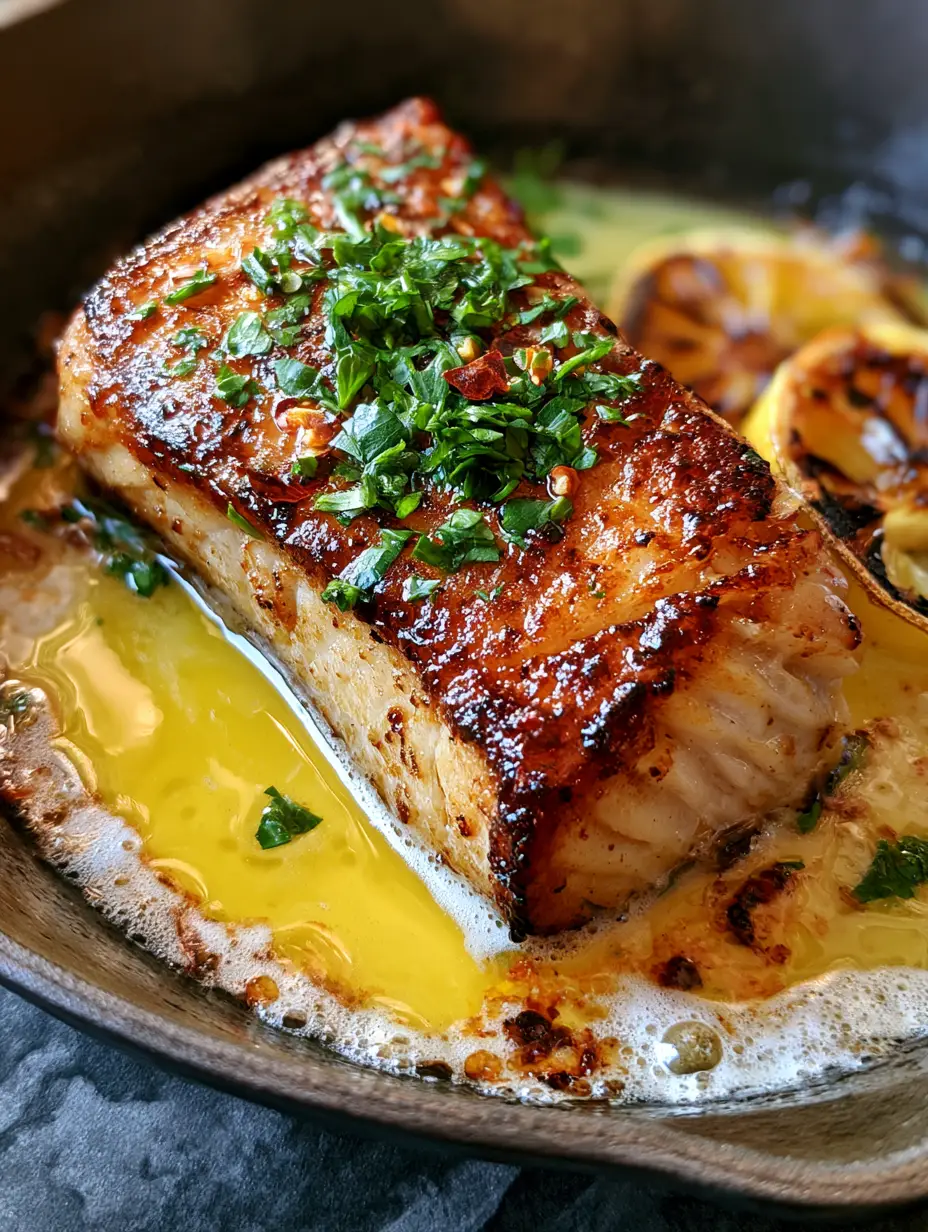
Mahi Mahi with Lemon Butter Sauce: The Ultimate Guide to a Perfect Pan-Sear
Ingredients
Equipment
Method
- Pat the mahi mahi fillets completely dry with paper towels. Season both sides generously with kosher salt and cracked black pepper.
- Heat avocado oil in a cast iron skillet over medium-high heat until shimmering and wisps of steam vapors appear.
- Place fillets in the pan. Sear for 4-5 minutes without moving them until a deep golden-brown caramelized crust forms. Flip carefully.
- Add lemon wheels to the pan and sear for 1-2 minutes until charred.
- Reduce heat to medium. Add butter, minced garlic, and red pepper flakes. Once bubbling and vibrant yellow, add lemon juice.
- Spoon the bubbling butter over the fish for 1-2 minutes. Top with fresh parsley and serve immediately.
Notes
Ensure the pan is screaming hot before adding the fish to prevent sticking.
Final Thoughts on This Coastal Classic
Mastering the Mahi Mahi with Lemon Butter Sauce is a rite of passage for any home cook looking to elevate their seafood game. The combination of the deep sear, the bubbling citrus butter, and the aromatic herbs creates a dish that is as beautiful to look at as it is to eat.
If you enjoyed this recipe, please leave a comment below and let us know how your sear turned out! Don’t forget to share your creations and follow us on Pinterest for more culinary inspiration.