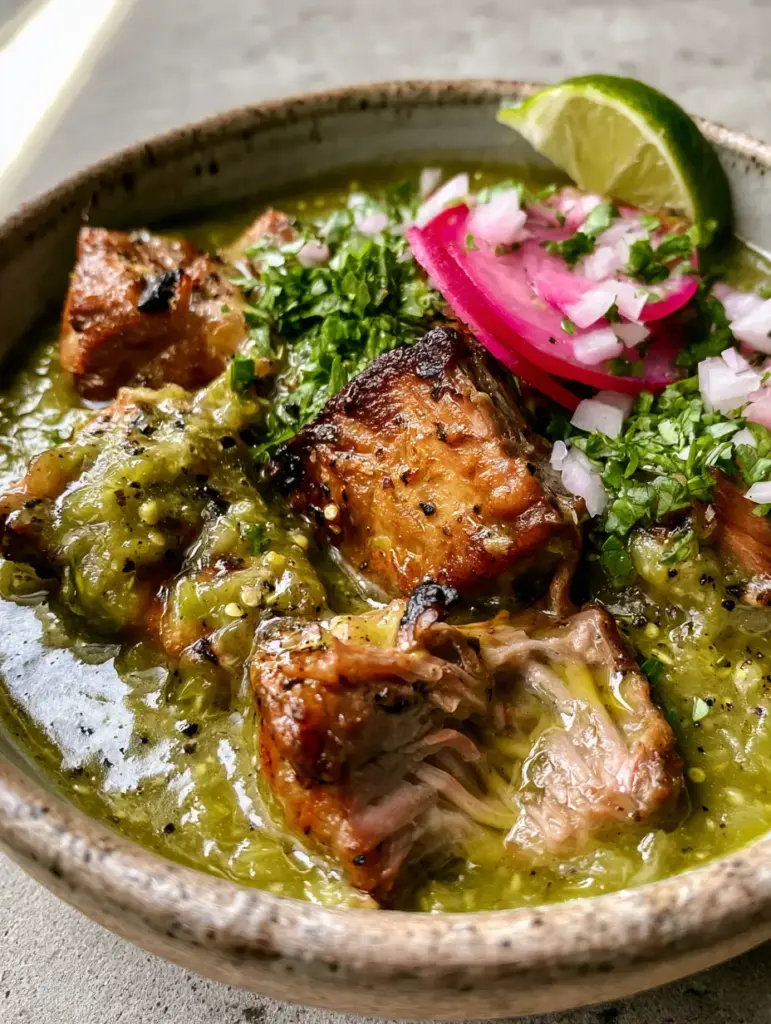
There is something deeply primal about a bowl of authentic Pork Chile Verde. The way the heavy, vibrant electric green sauce clings to fork-tender chunks of pork shoulder is nothing short of culinary art. When you look closely at a perfectly executed batch, you see the story of the flame: the tiny charred tomatillo skin flecks and the deep golden crust on the seared pork chunks.
This isn’t just a stew; it’s a masterclass in balancing acidity, heat, and rich fats. In this guide, we are diving deep into the science of the braise to ensure your pork transitions from tough muscle to juicy, pulling fibers that melt in your mouth. You will learn how to achieve that signature “electric green” color that distinguishes a professional Pork Chile Verde from a dull, brownish imitation.
Whether you are serving this in a rustic ceramic bowl for a family dinner or using the leftovers for crispy smash tacos, the depth of flavor here is unmatched. By roasting your own peppers and tomatillos until blistered and blackened, you unlock a smoky dimension that store-bought salsa simply cannot replicate.
The Visual and Flavor Profile of Authentic Chile Verde
- Fork-Tender Texture: Large chunks of pork shoulder that maintain their shape but surrender into juicy fibers at the mere suggestion of a fork.
- Electric Green Sauce: A thick, vibrant emulsion of roasted tomatillos and green chilies, punctuated by visible flecks of charred skin.
- Structural Garnishes: The crunch of finely diced white onion, the cooling snap of paper-thin red radish, and the herbal brightness of fresh cilantro.
- Acidic Balance: A final hit of fresh lime juice droplets that cut through the richness of the seared pork fat.
The Essential Components for Vibrant Chile Verde
To achieve the specific visual results of our blueprint, every ingredient serves a dual purpose: flavor and structural integrity. We don’t just use pork; we use pork shoulder (Boston Butt) for its high connective tissue content which yields those “pulling fibers.”
Pork Shoulder (Boston Butt): 3 lbs (1.36kg) cut into 2-inch (5cm) cubes. This cut provides the necessary intramuscular fat and collagen that transforms into gelatin during the long simmer.
Fresh Tomatillos: 1.5 lbs (680g) with husks removed and rinsed. These provide the thick, pectin-rich base and the vibrant green color that defines Pork Chile Verde.
Poblano and Anaheim Peppers: 3 of each, roasted until blistered. The Poblanos offer an earthy depth, while the Anaheims provide a mild, fruity heat that builds the sauce’s body.
Serrano Peppers: 2 peppers, stems removed. These are the “heat engine” of the dish; leave the seeds in if you prefer a more aggressive spice profile.
Neutral Searing Oil: 3 tbsp (45ml) of lard or avocado oil. A high smoke point is critical to achieving the deep mahogany sear on the pork chunks without burning the fat.
Fresh Garnishes: 4 radishes, 1 white onion, and 1 bunch of cilantro. These aren’t just for show; they provide the “crisp” texture that contrasts with the soft braised meat.
If you enjoy the rich, savory notes of braised meat, you should also explore our recipe for slow cooker root beer pork, which uses similar physics to achieve tenderness. For a more aromatic profile, our ginger lime pork offers a brighter, citrus-forward alternative.
Must-Have Tools for the Professional Home Cook
To get that perfect 45-degree angle, Instagram-ready bowl of Pork Chile Verde, your equipment matters. A heavy-bottomed Dutch oven is non-negotiable for even heat distribution during the long braise.
You will also need a high-powered blender or food processor to achieve the “thick vibrant green” sauce consistency. A cast-iron skillet is the best tool for charring the tomatillos and peppers if you aren’t using an open flame broiler.
A Step-By-Step Guide to Fork-Tender Braised Perfection
Phase 1: Blistering and Charring the Aromatics
Place your husked tomatillos, halved white onion, and all peppers on a baking sheet. Broil on high for 5-8 minutes until the skins are blackened and bubbling—these charred skin flecks are the “soul” of your Pork Chile Verde sauce.
Once charred, place the peppers in a bowl covered with plastic wrap for 10 minutes. This creates steam, making the skins easy to peel away, though leaving a few charred bits behind adds excellent visual texture.
Phase 2: Achieving the Perfect Maillard Sear
Pat your pork cubes bone-dry with paper towels. Season generously with kosher salt and black pepper; the pepper flecks should be visible on the raw meat.
Heat your oil in a Dutch oven until it shimmers. Sear the pork in batches, ensuring each chunk has enough space to breathe. You are looking for a deep, crusty golden-brown exterior—this is where the “seared pork chunks” visual from our blueprint begins.
Phase 3: The Vibrant Green Emulsion
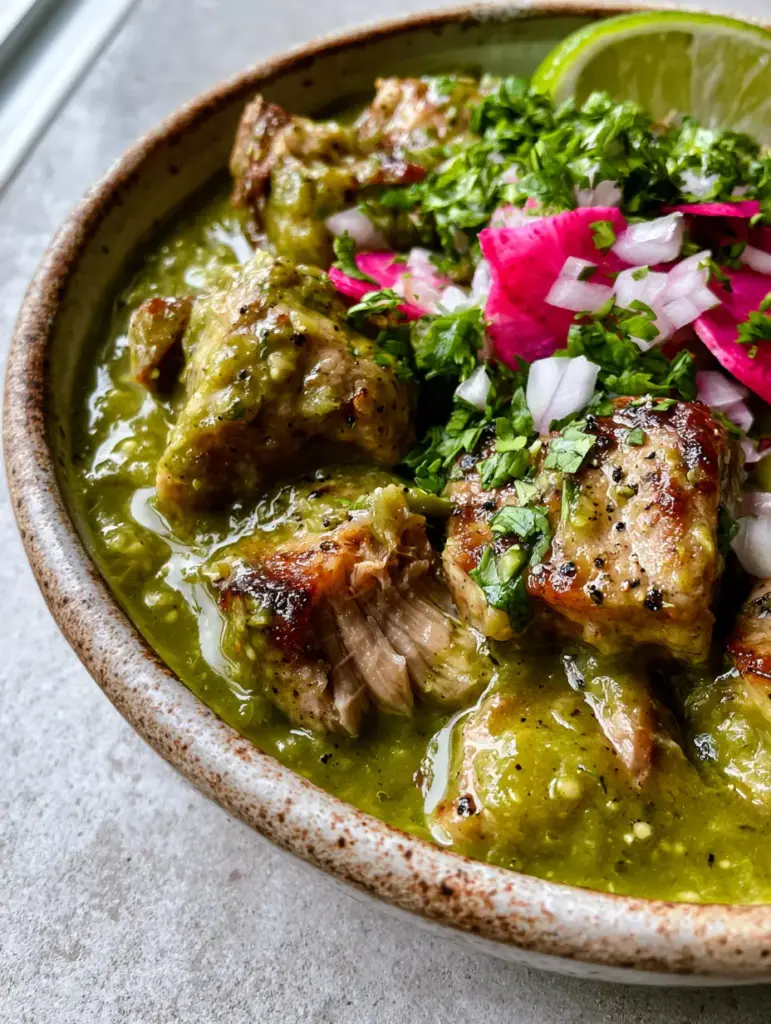
In your blender, combine the roasted tomatillos, peeled peppers, 4 cloves of garlic, and a handful of cilantro. Pulse until thick but slightly textured; you don’t want a watery puree.
Pour this electric green mixture over your seared pork. Add 1 cup (240ml) of high-quality chicken stock and 1 tsp (2g) of dried Mexican oregano. The liquid should just barely cover the meat.
Phase 4: The Low and Slow Braise
Reduce heat to a bare simmer. Cover and cook for 2.5 to 3 hours. At the 2-hour mark, check the pork; it should be starting to pull apart into juicy fibers while maintaining its chunky shape.
If the sauce is too thin, remove the lid for the final 30 minutes. The natural pectins in the tomatillos will concentrate, creating that “thick vibrant green sauce” described in our visual prompt.
Expert Tips for Visual and Flavor Success
- Don’t Over-Blend: Stop pulsing the sauce while there are still visible bits of charred skin and chili. This adds “forensic accuracy” to the rustic look of the dish.
- The Dry Pat: If the pork is wet when it hits the oil, it will steam instead of sear. A dry surface is the only way to get those crispy, dark edges.
- Rest the Meat: Let the stew sit for 15 minutes before serving. This allows the pork fibers to reabsorb the sauce, making them “visibly juicy.”
- Mandoline for Radishes: Use a mandoline to get those paper-thin, translucent red radish slices that catch the light in your ceramic bowl.
If you’re looking for other pork-based dinner inspirations, don’t miss our apple butter glazed pork tenderloin for a sweeter profile, or our Thai style ground pork skewers for a faster weeknight meal.
Storage, Reheating, and Freezing Advice
Pork Chile Verde is famously better the next day. As it sits, the capsaicin in the peppers mellows and the pork continues to soften in the acidic sauce. Store in an airtight container for up to 4 days.
To freeze, ensure the stew is completely cool. It will stay fresh for up to 3 months. When reheating, do so gently on the stovetop over low heat, adding a splash of chicken stock (30ml) to loosen the sauce if it has thickened too much in the fridge.
What to Serve With Authentic Chile Verde
The richness of the pork demands a neutral or slightly sweet side. Traditional Mexican rice or warm flour tortillas are standard. However, if you want to diversify your spread, consider serving this alongside a crisp Thai peanut noodle salad for a fusion feast.
The bright radish and onion garnishes on the Pork Chile Verde also pair beautifully with the flavors found in classic chicken salad sandwiches if you are hosting a large brunch or potluck.
Frequently Asked Questions
Yes, but you must still sear the pork in a pan first and roast the vegetables for the best flavor. Cook on low for 6-8 hours after combining all ingredients in the slow cooker.
Use fresh tomatillos and bright green peppers like Anaheim and Poblano. Avoid over-braising with the lid off for too long, as oxidation can turn the sauce brownish. Adding fresh cilantro at the end of blending also boosts the color.
Tomatillos are naturally high in pectin, which acts as a thickener. Simmering the sauce uncovered for the last 30 minutes of cooking will concentrate the pectin and reduce the liquid into a thick glaze.
Pork shoulder (also known as Boston Butt) is the ideal cut. Its high fat and collagen content break down during the long braising process, resulting in fork-tender meat that doesn’t dry out.
Tomatillos can be naturally acidic or bitter. To balance this, ensure you roast them until blistered to develop their natural sugars, and add a pinch of sugar or honey if the sauce still tastes too sharp.
The Ultimate Pork Chile Verde Recipe Card
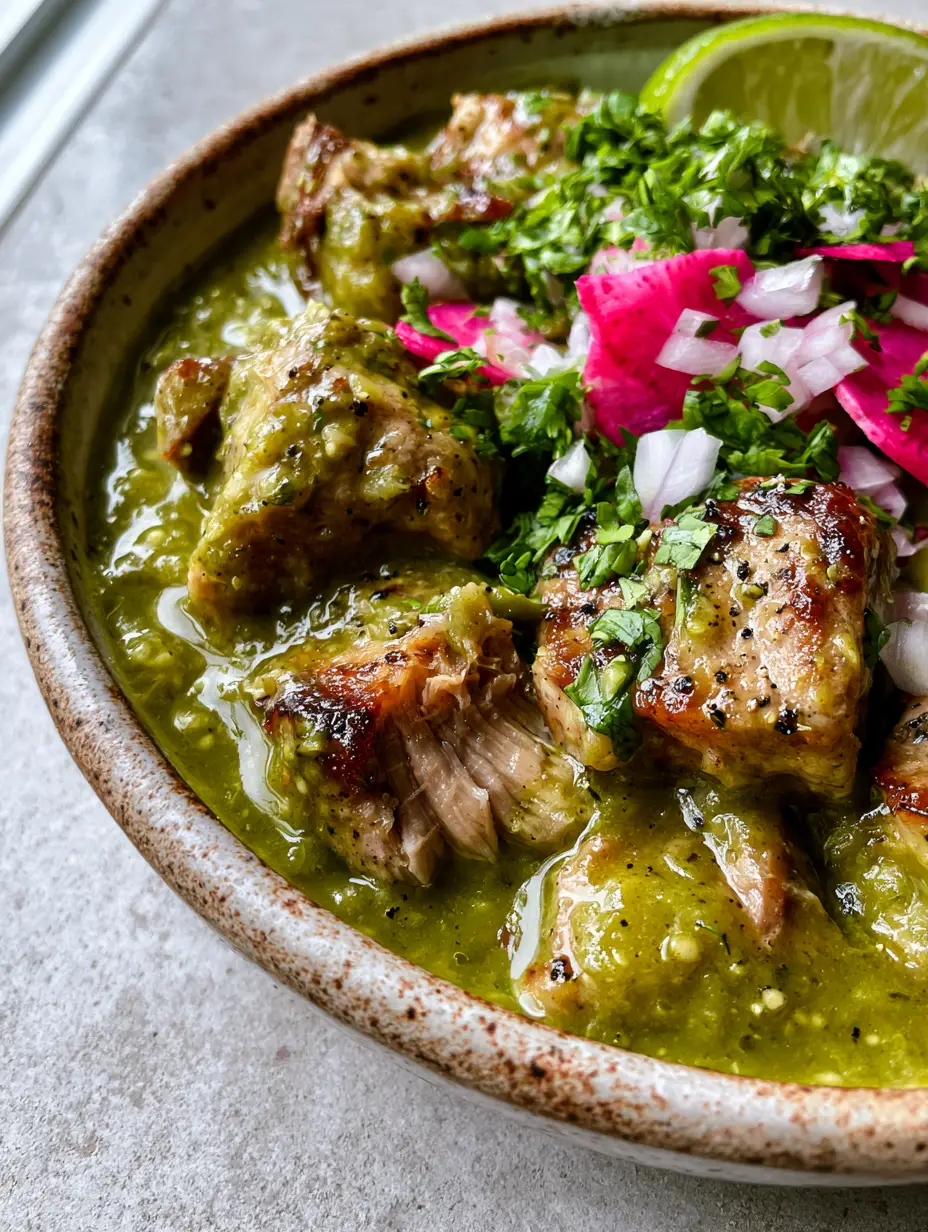
Pork Chile Verde: The Ultimate Guide to Authentic Roasted Tomatillo Stew
Ingredients
Equipment
Method
- Place tomatillos, halved onion, and peppers on a tray under a broiler until skins are blackened and blistered.
- Place hot peppers in a covered bowl for 10 minutes, then peel, leaving some charred bits for texture.
- In a Dutch oven, brown the salted pork chunks in oil until a deep golden crust forms on all sides.
- Pulse roasted tomatillos, garlic, and peppers in a blender until thick but not completely smooth.
- Add sauce and chicken stock to the pork. Simmer covered for 2.5 to 3 hours until pork fibers are tender.
Notes
Always sear pork in batches to ensure a proper crust.
Bring the Flavors of the Southwest to Your Kitchen
Mastering Pork Chile Verde is a rite of passage for any home cook looking to elevate their braising game. The combination of the smoky, charred tomatillos and the meltingly tender pork shoulder creates a sensory experience that is hard to beat. The visual cues—the electric green sauce, the glistening lime droplets, and the bright radish—make this a centerpiece dish.
We would love to see your results! If you make this recipe, please leave a comment below or tag us in your photos. Don’t forget to follow themindfulfeast on Pinterest and share this recipe with your fellow food enthusiasts!