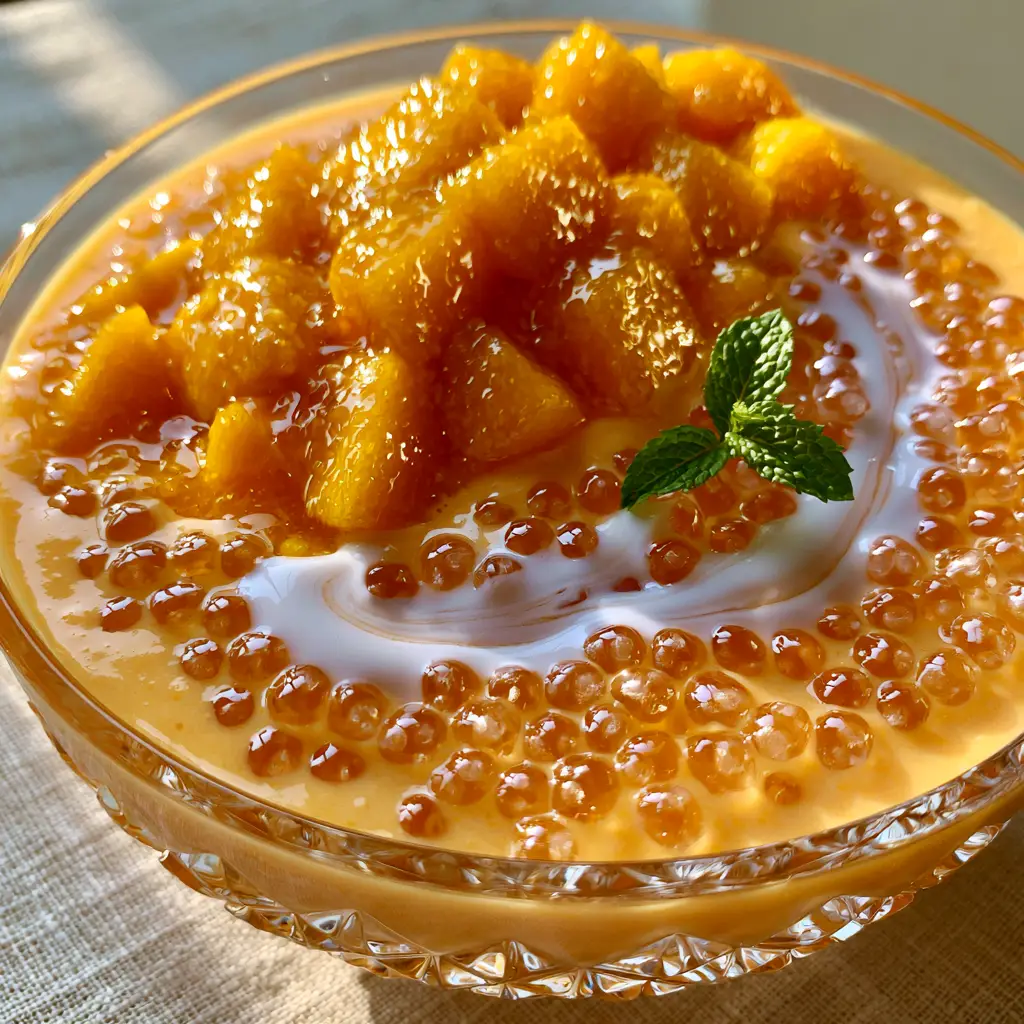
Mango Bango is the quintessential tropical indulgence that perfectly captures the essence of summer in a single crystal glass bowl. This vibrant Filipino dessert, also known as Mango Sago, relies on a delicate balance of textures: the chew of translucent sago pearls, the velvet-smoothness of mango-infused coconut cream, and the bright, acidic sweetness of sun-ripened Ataulfo mangoes.
When you look at a perfectly prepared bowl of this treat, you should see hundreds of glossy, spherical pearls suspended in a pale-orange cream, topped with a glistening heap of golden mango cubes. The visual appeal is completed by a thin, artistic swirl of pure white evaporated milk and a singular, bright green mint sprig for that professional, high-end finish.
Whether you are looking for a refreshing conclusion to a heavy meal or a standout centerpiece for a summer party, this mango bango recipe delivers high-impact flavor with a surprisingly simple preparation process. Let’s dive into the forensic details of making this dessert look and taste like a professional culinary creation.
The Irresistible Sensory Appeal of Authentic Mango Bango
- Textural Contrast: The interplay between the soft, yielding mango flesh and the bouncy, “al dente” sago pearls creates a complex mouthfeel.
- Visual Brilliance: The high-shine highlights on the translucent pearls catching the light against the thick, velvety mango cream.
- Aromatic Profile: The intoxicating scent of ripe Ataulfo mangoes combined with the nutty, floral notes of thick coconut cream.
- Temperature Play: Best served chilled, the condensation on the clear glassware signals a refreshing reprieve from the heat.
Essential Ingredients for a Tropical Masterpiece
To achieve the specific visual and flavor profile described in our blueprint, every ingredient must be selected with precision. Here is what you will need for the perfect mango bango.
The Fruit Foundation
4 large (approx. 800g) Ripe Ataulfo Mangoes: Often called “honey mangoes,” these are preferred for their lack of fibrous strings and their intense, buttery sweetness. Half will be cubed for the topping, while the other half will be pureed into the base.
The Texture Elements
1 cup (200g) Small Sago Pearls: These are the star of the show, providing that signature glossy, spherical look. Unlike larger boba, these small pearls distribute evenly through every spoonful of the cream.
The Creamy Base
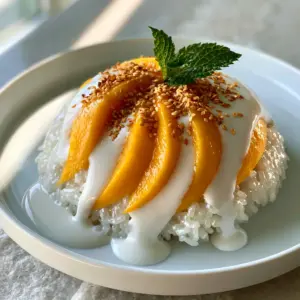
1 can (400ml) Full-Fat Coconut Cream: We use coconut cream rather than milk to ensure the base is thick and luscious, standing up to the weight of the mango cubes. If you enjoy this flavor profile, you might also love our authentic mango sticky rice.
1/2 cup (120ml) Condensed Milk: This provides the necessary sweetness and contributes to the velvety, pale-orange hue of the final mixture.
1/4 cup (60ml) Evaporated Milk: Reserved for that final artistic swirl, this adds a punch of dairy richness and a bright white contrast to the orange base.
Foundational & Garnish Elements
Pinch of Sea Salt: A tiny amount of salt is scientifically required to brighten the mango flavor and balance the fat in the coconut cream.
Fresh Mint Sprigs: Used sparingly as a garnish to provide a pop of green against the golden hour glow of the mango. For more refreshing ideas, check out our simple 3-ingredient mango treats.
Professional Equipment for the Perfect Set
To replicate the high-quality handheld smartphone photo aesthetic, you need tools that ensure clean cuts and smooth textures. A high-speed blender is essential for creating the mango-infused coconut cream base without any lumps. You will also need a fine-mesh strainer to rinse the sago pearls immediately after boiling; this removes excess starch and prevents them from clumping into a dull mass.
For the visual presentation, clear crystal glass bowls or high-quality glassware are necessary to showcase the condensation and the internal marbling of the sago pearls. A sharp chef’s knife is non-negotiable for achieving those perfectly uniform, glistening mango cubes that sit atop the dessert.
Step-by-Step Instructions to Culinary Excellence
Preparing the Translucent Sago Pearls
Bring 6 cups (1.5L) of water to a rolling boil in a large pot. Gradually add the sago pearls, stirring constantly to prevent sticking. Lower the heat to a simmer and cook for 10-12 minutes, or until the pearls are mostly translucent with a tiny white dot in the center.
Turn off the heat, cover the pot, and let them sit for another 5-10 minutes. This “carry-over” cooking ensures they become perfectly clear and glossy without falling apart. Immediately drain and rinse under cold running water until the pearls are cool to the touch and individually distinct.
Crafting the Mango-Infused Coconut Cream
Peel two of the Ataulfo mangoes and remove the flesh from the pit. Place the mango flesh into a blender along with the full-fat coconut cream, condensed milk, and a pinch of salt. Blend on high until the mixture is a thick, velvety pale-orange cream.
This step is crucial for the “mango bango” identity; by infusing the cream with fruit, you ensure every bite carries the essence of the mango, not just the pieces on top. Taste the mixture—if your mangoes were slightly tart, you may add an extra tablespoon of condensed milk.
Assembling the Visual Masterpiece
In a large mixing bowl, gently fold the rinsed sago pearls into the mango cream base. Use a spatula to ensure the pearls are evenly distributed throughout the mixture. Place the bowl in the refrigerator for at least 2 hours to allow the flavors to meld and the consistency to thicken further.
While the base chills, dice the remaining two mangoes into uniform 1/2-inch (1.25cm) cubes. Keep these chilled as well to maintain their structural integrity and natural juices.
The Final Presentation Cues
When ready to serve, ladle the chilled cream and sago mixture into clear crystal bowls. You should see the pearls catching the light through the glass. Top each bowl with a generous, glistening heap of the diced mango cubes.
Using a small spoon, drizzle a thin, artistic swirl of evaporated milk over the surface, allowing it to marble slightly into the orange cream. Place one small, bright green mint sprig on the side of the mango pile. The contrast between the warm golden hour tones of the mango and the sharp green of the mint is what makes this dish truly “Instagrammable.”
Expert Tips for Success
- Rinse Cold: Always rinse sago pearls in cold water immediately after cooking. This stops the cooking process and removes the surface starch that causes clumping.
- Mango Selection: If Ataulfo mangoes aren’t available, look for Kent or Keitt mangoes, but ensure they are fully ripe. Avoid Tommy Atkins mangoes if possible, as they can be too fibrous for this delicate dessert.
- Chilling is Key: Never serve Mango Bango warm. The flavors only truly sing when the coconut cream is cold and the glassware shows that beautiful condensation.
- Don’t Overcook Sago: Overcooked sago turns into mush. Look for the visual cue of “translucency” rather than just relying on a timer.
Storage and Freshness Guidelines
Mango Bango is best enjoyed within 24 hours of assembly. Over time, the sago pearls will continue to absorb liquid from the cream, which can lead to a thicker, less “glossy” consistency. Store any leftovers in an airtight container in the refrigerator.
We do not recommend freezing this recipe. The texture of the fresh mango and the sago pearls will change significantly upon thawing, losing the delicate “handheld photo” quality we are aiming for. If you have leftover mangoes, they are much better used in a savory pairing or as a side for grilled fish.
What to Serve With Mango Bango
This creamy, sweet dessert is the perfect foil for salty or spicy savory dishes. In Filipino culture, it is often served after a meal of grilled meats or rich stews. Consider pairing it with a savory Mexican-inspired dinner or a classic comforting pasta bake (coming soon).
For a lighter lunch pairing, a fresh couscous salad provides a wonderful textural contrast before diving into the velvety mango cream. The bright citrus notes in many savory dishes help cleanse the palate, making each spoonful of the mango bango taste as vibrant as the first.
Frequently Asked Questions
Frozen mango works well for the blended cream base, but we highly recommend fresh Ataulfo mangoes for the topping to maintain the glistening, firm texture shown in the visuals.
Yes, small tapioca pearls are a perfect substitute. They have a very similar texture and appearance once cooked until translucent.
It is best served within 24 hours. After that, the sago pearls absorb too much liquid and lose their distinct, bouncy texture.
They are essentially the same Filipino dessert. ‘Mango Bango’ is a popular, catchier name often used in modern cafes, while ‘Mango Sago’ is the traditional name referring to the two main ingredients.
Clumping happens if the pearls aren’t rinsed immediately after boiling. Rinsing under cold water removes the excess surface starch that acts like glue.
The Ultimate Mango Bango Recipe
Mango Bango: The Ultimate Creamy Filipino Sago Dessert Guide
Ingredients
Equipment
Method
- Bring 6 cups of water to a boil. Add sago and simmer for 10-12 minutes until pearls are mostly translucent.
- Remove from heat, cover for 5 minutes. Drain and rinse under cold water until pearls are clear and glossy.
- Blend half of the mangoes with coconut cream, condensed milk, and salt until smooth and pale-orange.
- Fold rinsed sago into the mango cream. Chill in the refrigerator for at least 2 hours.
- Ladle into glasses, top with remaining diced mangoes, a swirl of evaporated milk, and a mint sprig.
Notes
Ensure sago is rinsed thoroughly in cold water to prevent clumping.
Experience the Taste of the Tropics
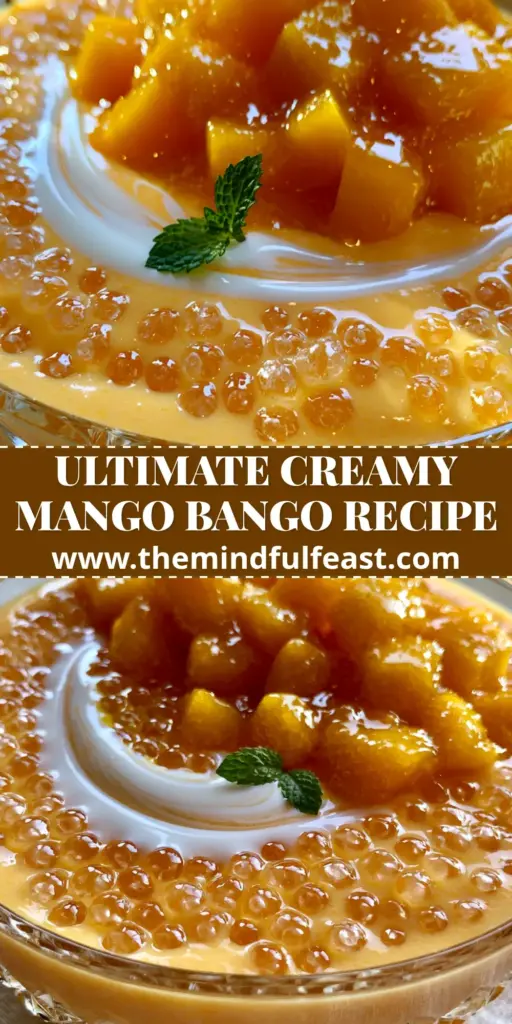
Mango Bango is more than just a dessert; it is a sensory experience that combines the best of tropical flavors with professional culinary techniques. By focusing on the visual cues—the translucent pearls, the marbled evaporated milk, and the vibrant Ataulfo cubes—you create a dish that is as beautiful as it is delicious. We invite you to share your creations and tag us on Pinterest to show off your glossy sago pearls!