There is a specific visual magic that happens when high-quality stone fruit preserves meet the piquancy of grainy mustard under a high-heat broiler. This Apricot Dijon Glazed Salmon isn’t just a meal; it is a masterclass in texture, featuring succulent, flaky Atlantic salmon enveloped in a thick, translucent, golden-orange glaze that glistens with a professional-grade glow.
Imagine a sheet pan emerging from your oven, the edges of the apricot-dijon reduction bubbling and caramelizing into a sticky, savory candy. The bright green of the crisp-tender asparagus provides a sharp contrast to the charred, caramelized lemon wheels, while a finishing dusting of coarse cracked black pepper and fresh thyme leaves adds an earthy aromatic layer that cuts through the richness of the fish.
This recipe was developed to bridge the gap between “easy weeknight dinner” and “five-star bistro presentation.” By focusing on a few high-impact ingredients and a specific two-stage cooking method, you can achieve that sought-after ‘unedited’ food blog aesthetic right in your own kitchen.
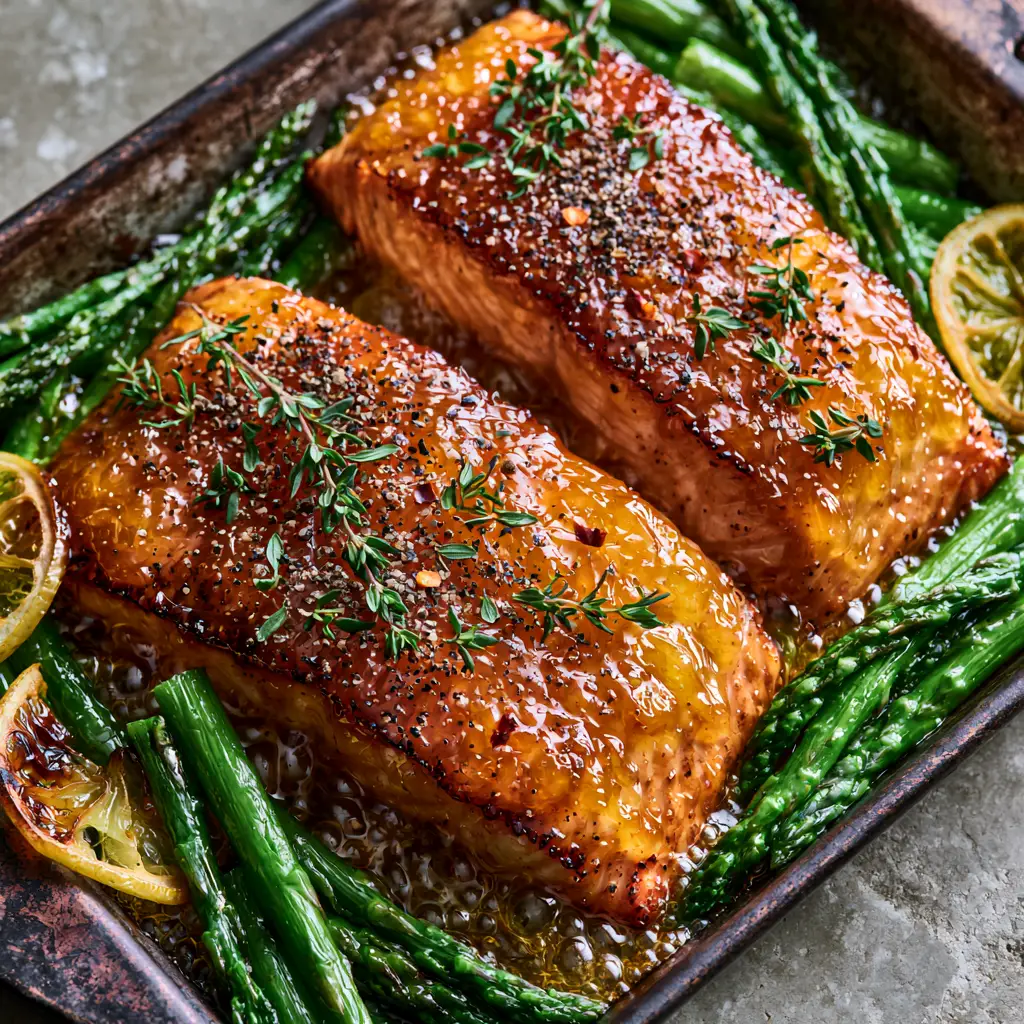
Why This Sheet Pan Salmon Recipe Works
- The Glisten Factor: The high sugar content in the apricot preserves, when balanced with Dijon, creates a high-shine glaze that clings to the salmon without running off.
- Flawless Texture: By roasting the asparagus and salmon simultaneously, we ensure the vegetables retain their “snap” while the fish reaches a buttery, flaky internal temperature.
- Visual Complexity: The combination of charred lemon, red chili flakes, and coarse pepper creates a “food stylist” look with zero extra effort.
- One-Pan Efficiency: Cleanup is minimal, making this an ideal choice for busy evenings when you still want a gourmet experience.
The Anatomy of a Perfect Apricot Dijon Glaze
To achieve the thick, “bubbling at the edges” look described in our visual blueprint, the quality of your preserves matters. Look for a high-fruit content apricot preserve rather than a jelly; the small bits of fruit add texture and help the glaze caramelize more effectively against the salmon’s surface.
The Dijon mustard acts as more than just a flavor agent; the vinegar and mustard seeds provide the necessary acidity to balance the sugar and emulsify the glaze so it doesn’t separate during the roasting process. If you enjoy this flavor profile, you might also love our salmon with bourbon glaze for a deeper, smokier alternative.
Don’t skip the fresh thyme. Unlike dried herbs, fresh thyme sprigs release volatile oils as they hit the hot glaze, providing a floral note that elevates the entire dish from basic to brilliant.
Essential Ingredients for Success
Atlantic Salmon Fillets: Use thick, center-cut fillets (about 6-8 oz (170-225g) each) to ensure they can withstand the heat needed to caramelize the glaze without overcooking the center.
Apricot Preserves: 1/2 cup (120ml) of high-quality preserves provides the base for our translucent, golden-orange coating.
Dijon Mustard: 2 tbsp (30g) adds a sharp, tangy bite and helps the glaze achieve its characteristic “thickness” and “stickiness.”
Fresh Asparagus: 1 lb (450g) of medium-thickness spears will roast in the exact same time it takes for the salmon to reach medium-rare perfection.
Lemons: One thinly sliced lemon to be charred on the pan, and another for fresh juice to brighten the glaze. Charring the lemons softens their acidity and brings out a hidden sweetness.
Foundational Seasonings: You will need 1 tbsp (15ml) of extra virgin olive oil for the asparagus, 1 tsp (6g) of coarse sea salt, and 1 tsp (2g) of coarse cracked black pepper to provide that rustic, textured finish.
Garnish Kit: Fresh thyme sprigs, red chili flakes for a tiny pop of heat, and extra cracked pepper are essential for the final visual “glow” of the dish.
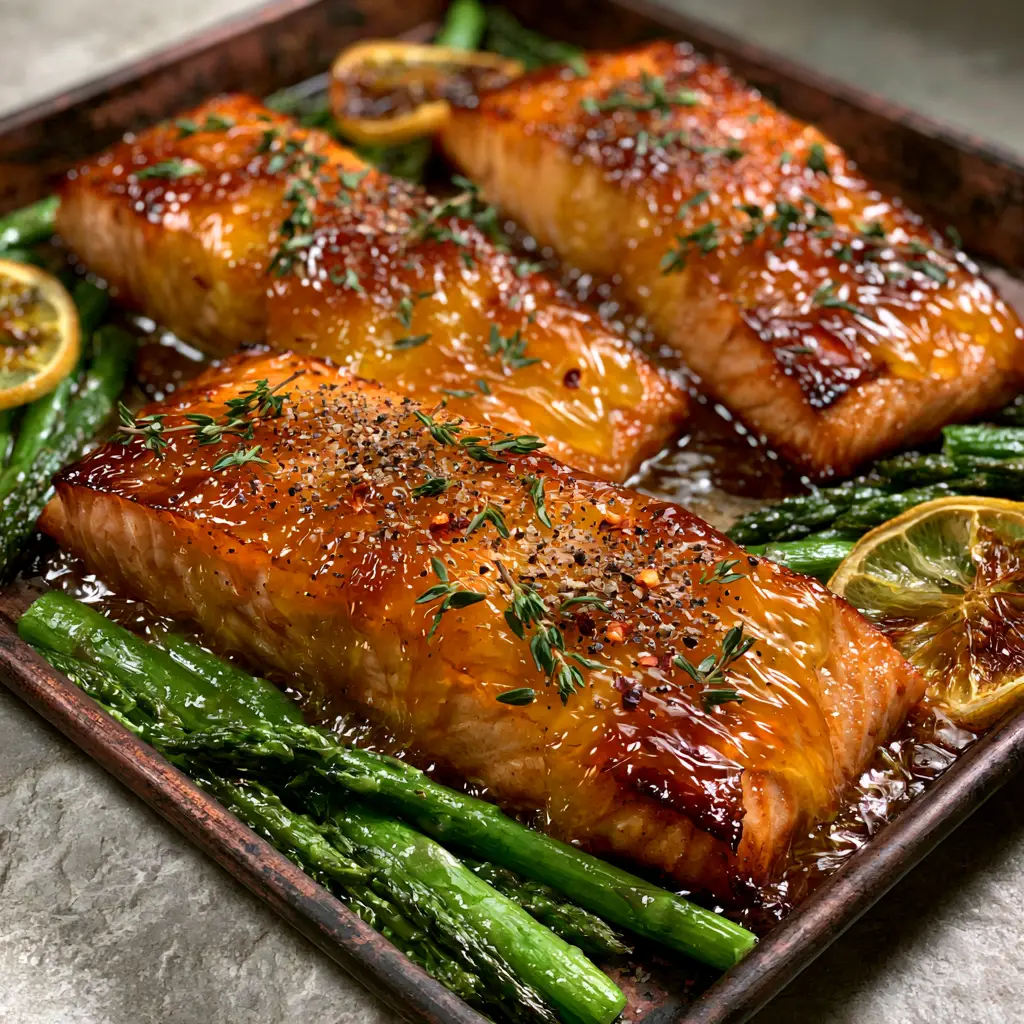
Must-Have Kitchen Tools
To replicate the rustic, dark sheet pan look from the visual prompt, a heavy-duty rimmed baking sheet is non-negotiable. A dark-colored pan actually aids in the “bubbling and caramelized” effect because it absorbs more heat than a light aluminum pan.
You will also need a pastry brush to apply the glaze heavily. This ensures every crevice of the salmon is coated in that high-shine apricot-dijon mixture. A digital meat thermometer is your best friend here—aim for an internal temperature of 135°F (57°C) for salmon that remains succulent and moist.
The Step-By-Step Path to Golden-Orange Perfection
1. Preparing the High-Shine Glaze
In a small bowl, whisk together the apricot preserves, Dijon mustard, a squeeze of fresh lemon juice, and a pinch of red chili flakes. If your preserves are particularly chunky, you can pulse them in a blender for 5 seconds to ensure a smooth, translucent finish that will “glow” under the oven lights.
2. Prepping the Sheet Pan Canvas
Preheat your oven to 400°F (200°C). Arrange your three thick salmon fillets in the center of a dark, rustic sheet pan. Surround them with the trimmed asparagus spears and the thin lemon wheels. Drizzle the asparagus and lemons with olive oil and a pinch of salt.
3. The Heavy Coating Technique
Using a pastry brush, apply a very thick layer of the apricot dijon glaze over the top and sides of the salmon. Be generous; we want that “heavily coated” look where the glaze starts to pool slightly at the base of the fish. Sprinkle the coarse cracked black pepper directly onto the wet glaze so it adheres well.
4. The Roasting and Caramelization Phase
Slide the pan into the oven and bake for 12-15 minutes. For that specific “bubbling and caramelized edges” look, turn the broiler on for the final 2 minutes of cooking. Watch closely—the sugar in the apricot can go from perfectly bronzed to burnt in seconds. You are looking for the glaze to “glisten and glow” and the lemon wheels to show dark, charred edges.
5. The Final Flourish
Once removed from the oven, immediately scatter the fresh thyme leaves over the hot salmon. The residual heat will wake up the herbs’ aroma. Add a final pinch of red chili flakes and another dusting of pepper for that high-end food blog aesthetic.
Expert Tips for the Ultimate Flaky Texture
- Room Temp is Key: Take your salmon out of the fridge 15 minutes before cooking. Cold fish on a hot pan leads to uneven cooking and white albumin (the white protein) pushing out of the sides.
- Pat Dry: Even though we are using a thick glaze, pat the salmon skin and tops dry with a paper towel before seasoning. This helps the glaze “grip” the fish instead of sliding off.
- The Flake Test: Use a fork to gently press on the side of the fillet. If the muscle fibers separate easily (the “flake”), the salmon is ready.
- Asparagus Sizing: If your asparagus is very thin, add it to the pan 5 minutes after the salmon has started roasting to prevent it from becoming mushy. For more tips on the perfect side, check out our guide on sheet pan asparagus.
How to Store and Reheat Leftover Salmon
While this dish is best served immediately to maintain the “crisp-tender” nature of the asparagus, leftovers make an incredible lunch. Store in an airtight container in the refrigerator for up to 2 days. To reheat, use a low oven (300°F/150°C) with a splash of water in the pan covered in foil to prevent the glaze from drying out.
If you find yourself with extra salmon, it works beautifully flaked into salmon rice bowls the next day. The apricot notes pair surprisingly well with a soy-ginger dressing!
What to Serve with Apricot Dijon Salmon
This sheet pan meal is a complete “protein and veg” duo, but if you want to round out the meal, consider these pairings:
- Grains: A bed of fluffy quinoa or jasmine rice is perfect for soaking up any extra apricot glaze that has pooled on the pan.
- Additional Veggies: If you’re feeding a crowd, an extra tray of oven roasted zucchini and squash provides a nice color contrast.
- Light Salad: A crisp cucumber onion salad offers a refreshing, vinegary counterpoint to the sweet glaze.
Frequently Asked Questions
Yes, but ensure it is completely thawed and patted dry with paper towels. Excess moisture will prevent the apricot glaze from sticking and caramelizing.
You can, but the texture will be thinner. Apricot preserves provide the ‘body’ and translucent golden color seen in the photos. If using honey, reduce the amount to 1/4 cup.
The high sugar content means it can burn under the broiler. Keep the pan at least 6 inches from the heat source and watch it constantly—it only needs 1-2 minutes to achieve that bubbling glow.
Yes! Even though we don’t flip it, the skin acts as an insulator, keeping the salmon succulent and moist while the top caramelizes.
Dijon is best for its smooth texture and acidity. If you want more crunch, a whole-grain Dijon works beautifully, but standard yellow mustard is too vinegary for this specific flavor profile.
The Complete Apricot Dijon Glazed Salmon Recipe
Apricot Dijon Glazed Salmon with Roasted Asparagus and Charred Lemon
Ingredients
Equipment
Method
- Preheat oven to 400°F (200°C). In a small bowl, whisk together apricot preserves and Dijon mustard until glossy and translucent.
- Place salmon fillets on a sheet pan. Surround with asparagus and lemon wheels. Drizzle olive oil over the vegetables and season with salt.
- Brush the apricot mixture heavily over the salmon. Top with coarse black pepper.
- Bake for 12-15 minutes. Switch to broil for the last 2 minutes until the glaze is bubbling and caramelized.
- Remove from oven and immediately top with fresh thyme and chili flakes. Serve with the charred lemon slices.
Notes
Watch the broiler closely; the high sugar in the glaze can burn quickly.
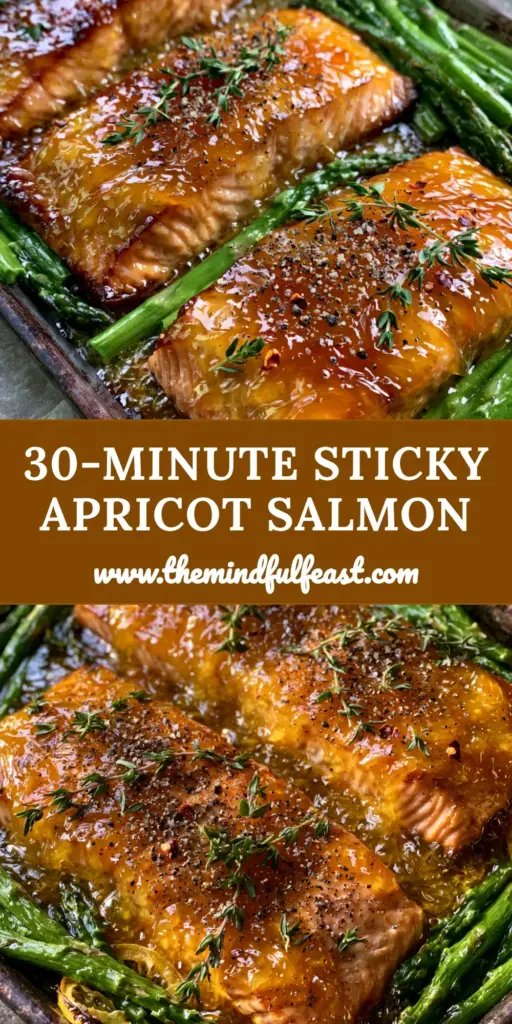
Bring This Glowing Salmon to Your Table
This Apricot Dijon Glazed Salmon is proof that you don’t need a professional kitchen to produce a visually stunning, restaurant-quality meal. The combination of the high-shine golden glaze and the rustic charred lemons creates a sensory experience that is as beautiful to look at as it is delicious to eat.
If you made this recipe and loved the “glisten and glow” effect, please leave a comment below and let us know! Don’t forget to share your creations with us on Pinterest and tag us so we can see your beautiful sheet pan dinners.