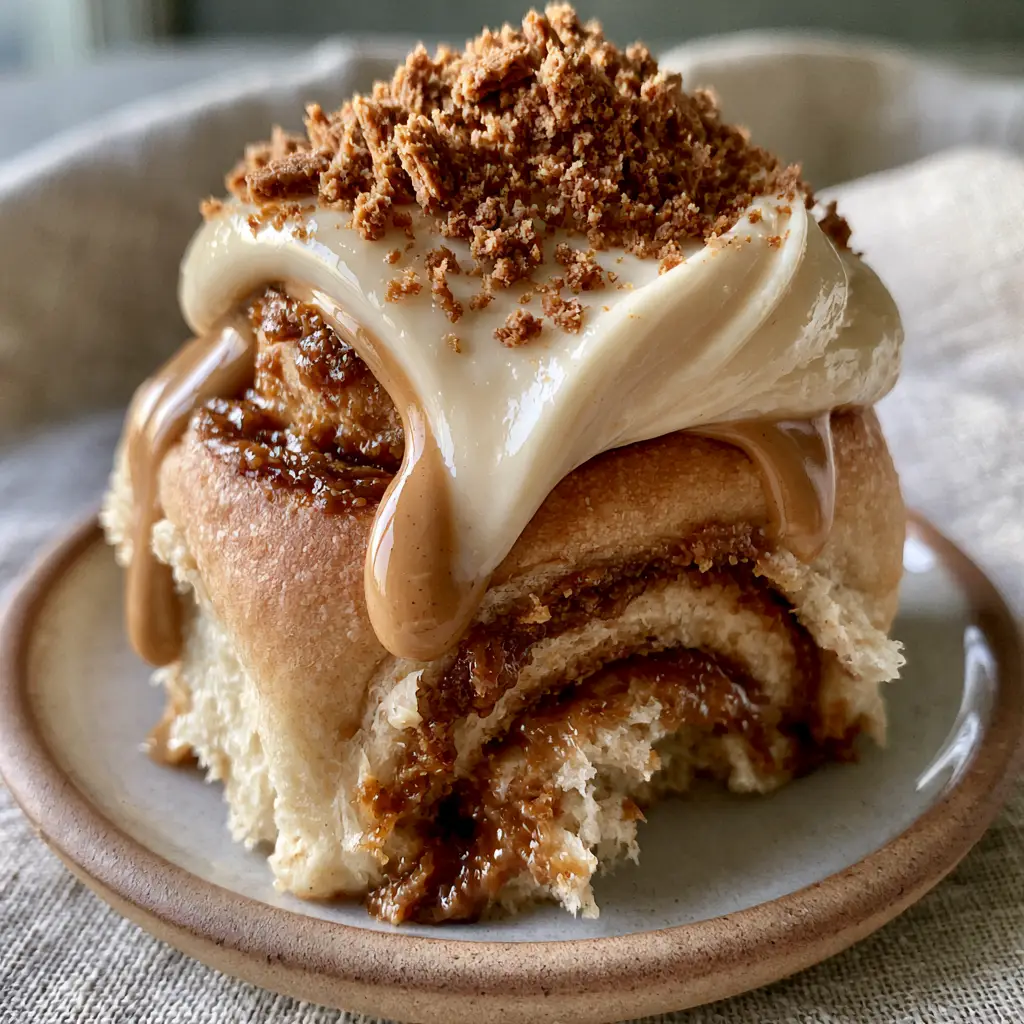
There is a specific kind of magic that happens when the spiced, toasted notes of Belgian speculoos meet the pillowy soft texture of a classic yeasted pastry. These Biscoff Cinnamon Rolls represent the pinnacle of home baking, offering a sensory journey that begins with the scent of warm cinnamon and ends with the crunch of caramelized cookie dust.
Imagine pulling apart a warm, golden-brown roll to reveal deep amber layers of melted cookie butter, all smothered in a glossy ivory cream cheese frosting that catches the morning light. It is not just a breakfast; it is a premium culinary experience designed for those who appreciate the finer details of a perfect bake.
Whether you are a seasoned baker or looking to create magical breakfast treats for your family, this recipe focuses on the forensic details that ensure success. From the elasticity of the dough to the exact temperature of the Biscoff drizzle, every step is calibrated for perfection.
The Irresistible Appeal of These Speculoos Pastries
- Unmatched Texture: A high-fat enriched dough ensures every bite is a “pull-apart” masterpiece with distinct, soft layers.
- Caramelized Depth: By swirling premium Biscoff spread with a hint of dark brown sugar, we achieve a deep amber interior that tastes like toasted gingerbread.
- The “Glossy Ivory” Finish: A professional-grade cream cheese icing provides a tangy counterpoint to the sweet, warm cookie butter.
- Gourmet Visuals: Finished with a generous drizzle of melted Biscoff and a dusting of finely crushed cookie crumbs for that “premium bakery” aesthetic.
Essential Ingredients for the Perfect Biscoff Dough
Whole Milk (240ml / 1 cup): Use full-fat milk warmed to exactly 110°F (43°C) to provide the necessary sugars and fats for a robust yeast fermentation. This ensures the dough rises high and remains moist after baking.
Active Dry Yeast (7g / 2.25 tsp): This is the engine of your Biscoff Cinnamon Rolls, responsible for that airy, honeycomb structure inside each roll. Ensure your yeast is fresh by checking for a foamy “bloom” after five minutes in the warm milk.
Granulated Sugar (50g / 1/4 cup): Beyond adding sweetness, sugar tenderizes the gluten structure, resulting in a softer crumb that doesn’t become tough or chewy. It also aids in the “golden-brown” maillard reaction on the crust.
Unsalted Butter (75g / 1/3 cup, melted): High-quality butter provides the richness required for an enriched dough. Using unsalted butter allows you to control the seasoning precisely, which is crucial when balancing the salty-sweet notes of Biscoff.
Large Egg (1 unit, room temperature): The proteins in the egg provide structure, while the fats in the yolk add a luxurious, custard-like quality to the dough’s interior. Room temperature eggs incorporate more easily without shocking the yeast.
Bread Flour (450-500g / 3.75 – 4 cups): Bread flour has a higher protein content than all-purpose flour, which is essential for creating the strong gluten network needed to hold heavy swirls of cookie butter. This is what creates those iconic “pull-apart” layers.
Biscoff Cookie Butter (250g / 1 cup, for filling): This is the star of the show, providing the caramelized, spiced flavor profile. We use the “creamy” version for the swirl to ensure it melts smoothly into the dough layers.
Light Brown Sugar (100g / 1/2 cup): Mixing brown sugar with the Biscoff filling adds a molasses depth and creates the “caramelized” texture that characterizes a premium roll. It also helps the filling stay put during the bake.
Cream Cheese (115g / 4 oz, softened): The base of our glossy ivory frosting. Its acidity cuts through the richness of the speculoos, creating a balanced flavor profile that keeps you coming back for another bite.
Biscoff Cookies (4-5 cookies, crushed): These provide the “cookie dust” garnish. The fine crumbs add a textural contrast to the soft dough and glossy icing, signaling the flavor profile to the eater before they even take a bite.
Must-Have Tools for Bakery-Style Results
To achieve the professional results seen in our handheld smartphone photo, you will need a few specific tools. A heavy-duty stand mixer with a dough hook is highly recommended to properly develop the gluten without overworking the dough with the heat of your hands.
A digital kitchen scale is non-negotiable for consistent baking, as measuring flour by volume can vary by up to 20%. You will also want a sharp serrated knife or, even better, unflavored dental floss to slice the rolls without squishing the delicate layers.
Finally, a 9×13 inch (23×33 cm) ceramic or glass baking dish is ideal. These materials conduct heat more evenly than thin metal pans, preventing the bottom of your Biscoff Cinnamon Rolls from burning before the centers are fully baked.
Master the Art of the Perfect Cookie Butter Swirl
Step 1: Activating the Yeast and Mixing the Dough
Begin by whisking your warm milk (110°F / 43°C) and one tablespoon of the sugar in your mixer bowl. Sprinkle the yeast over the top and let it sit for 5-10 minutes until it becomes foamy and smells slightly like bread. If it doesn’t foam, your yeast is likely inactive, and you must start over.
Add the remaining sugar, melted butter, and the egg. Turn the mixer to low and gradually add 3.5 cups (420g) of flour. Once a shaggy dough forms, switch to the dough hook and knead for 5-7 minutes. The dough should be tacky but should pull away cleanly from the sides of the bowl.
Step 2: The First Rise and Temperature Control
Place the dough in a lightly oiled bowl and cover it with a warm, damp cloth. Let it rise in a draft-free spot for 1-1.5 hours, or until it has doubled in size. This “bulk fermentation” is where the flavor develops and the dough becomes easy to handle.
While the dough rises, prepare your filling by mixing the Biscoff spread with the brown sugar. If the spread is too firm, microwave it for 10 seconds until it reaches a spreadable, peanut butter-like consistency. This ensures you don’t tear the delicate dough when applying the swirl.
Step 3: Rolling, Filling, and Shaping
Punch the air out of the dough and turn it onto a lightly floured surface. Roll it into a large rectangle, approximately 12×18 inches (30×45 cm). Spread the Biscoff mixture evenly across the surface, leaving a small half-inch border at the top to seal the roll.
Starting from the long edge, roll the dough into a tight log. Use dental floss to cut the log into 12 even rolls. Place them in your prepared baking dish, cover, and let them rise for a second time for about 45 minutes. They should look “puffy” and be touching each other in the pan.
Step 4: The Golden-Brown Bake
Preheat your oven to 350°F (175°C). Bake the rolls for 22-25 minutes. Look for a visual cue of “soft, warm golden-brown” edges. The centers should reach an internal temperature of 190°F (88°C) to ensure they aren’t gummy.
While the rolls bake, whisk together the cream cheese, powdered sugar, and a splash of milk until you achieve a glossy ivory consistency. It should be thick enough to hold its shape but fluid enough to “smother” the warm rolls.
Step 5: The Finishing Drizzle and Cookie Dust
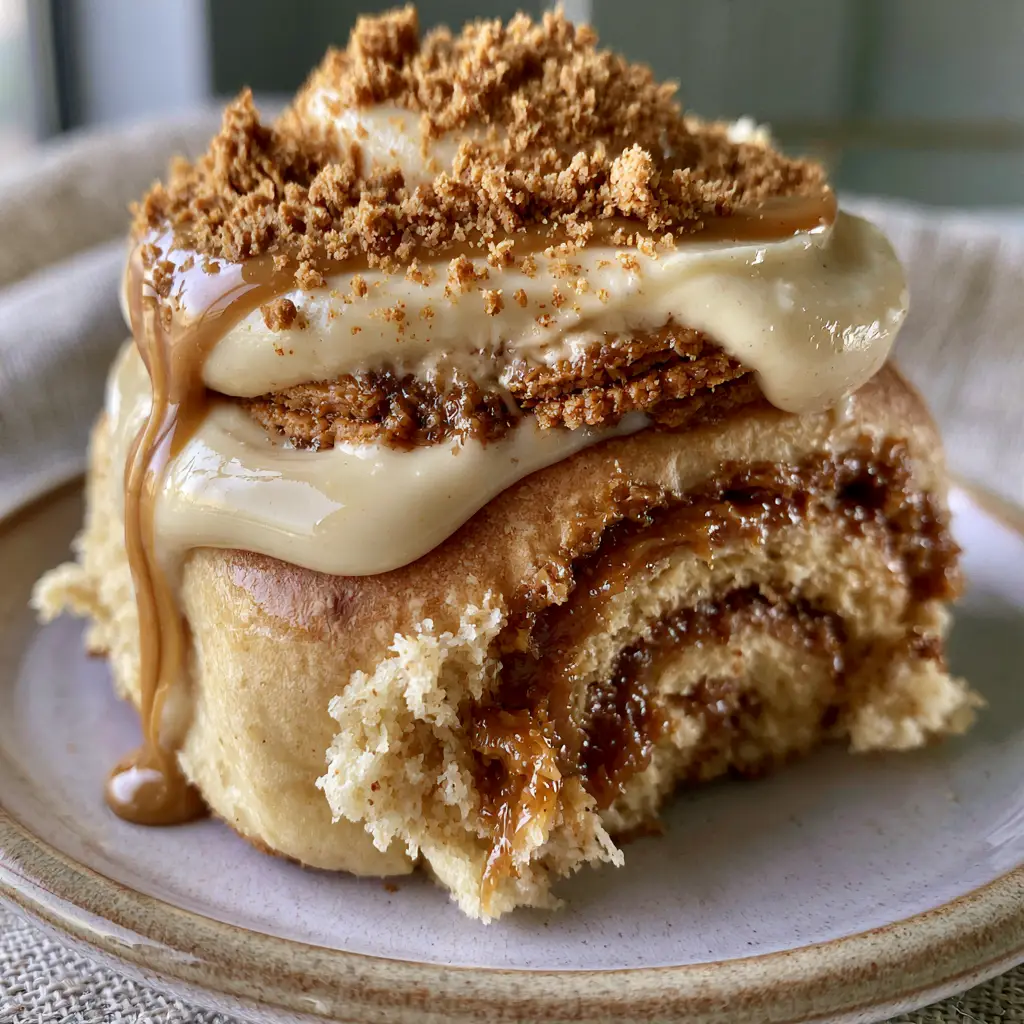
Remove the rolls from the oven and let them cool for only 5 minutes. Apply the cream cheese frosting while they are still warm so it melts slightly into the crevices. Heat an additional 2 tablespoons (30g) of Biscoff spread and drizzle it back and forth over the icing.
Immediately sprinkle the finely crushed Biscoff cookie dust over the top. This allows the crumbs to adhere to the warm drizzle and frosting, creating that “premium” look described in our visual blueprint.
Pro Tips for Fluffy, Pull-Apart Layers
- The Flour Factor: Don’t over-flour your work surface. Too much extra flour will make the dough dry and prevent those distinct, soft layers from forming.
- Dental Floss Hack: Never use a dull knife to cut your rolls. It compresses the dough. Slide a piece of unflavored floss under the log, cross it over the top, and pull quickly for a clean, professional cut.
- Room Temp Everything: Ensure your cream cheese and butter for the frosting are very soft. This prevents lumps and guarantees that “glossy ivory” finish.
- The “Jiggle” Test: Before the second rise is over, gently poke a roll. If the indentation stays and the roll jiggles slightly, it is ready for the oven.
Preserving the Freshness of Your Sweet Rolls
These Biscoff Cinnamon Rolls are best enjoyed within an hour of baking, but they can be stored successfully. Place them in an airtight container at room temperature for up to 2 days. To reheat, microwave a single roll for 15-20 seconds to soften the cookie butter swirl.
For longer storage, you can freeze the baked, unfrosted rolls for up to 3 months. Thaw them overnight in the refrigerator and warm them in a 300°F (150°C) oven before applying fresh frosting and the Biscoff drizzle.
Perfect Pairings to Elevate Your Brunch
To balance the intense sweetness of the cookie butter, serve these rolls alongside a savory protein. A sassy chicken salad or a platter of thick-cut smoked bacon provides the perfect salty contrast. The acidity in a fresh fruit salad also helps cleanse the palate between bites.
If you are hosting a larger gathering, consider adding more European-inspired items to the table. These rolls pair beautifully with German pastry traditions like quark balls. For those who prefer a savory start, these rolls work surprisingly well as a “dessert course” following a meal of easy weeknight favorites.
Don’t forget the beverages! A strong, dark roast coffee or a bitter espresso is the ideal companion to the caramelized speculoos flavors. If you prefer tea, a spicy chai latte complements the cinnamon and ginger notes perfectly.
Common Questions About Baking with Cookie Butter
Yes! After shaping the rolls and placing them in the baking dish, cover tightly with plastic wrap and refrigerate for up to 16 hours. Let them sit at room temperature for 45 minutes before baking as directed.
You can, but it will change the texture of the swirl. Creamy Biscoff provides a more consistent caramelized layer, while crunchy spread will add small bits of cookie throughout the dough.
While all-purpose flour works, bread flour is highly recommended. The higher protein content creates a stronger gluten structure, which is necessary to support the heavy Biscoff swirl and achieve that ‘pull-apart’ texture.
The secret is using room-temperature cream cheese and sifting your powdered sugar. Whisking by hand or with a mixer until completely smooth ensures a glossy, professional finish that doesn’t look grainy.
This usually happens if the Biscoff spread is too thin or the rolls aren’t rolled tightly enough. Mixing the spread with brown sugar helps ‘anchor’ the filling, and using dental floss for cutting prevents squeezing the filling out.
The Ultimate Biscoff Cinnamon Rolls Recipe
Biscoff Cinnamon Rolls with Caramelized Cookie Butter Swirl
Ingredients
Equipment
Method
- Combine warm milk, 1 tbsp sugar, and yeast. Let sit for 10 minutes until foamy.
- Add remaining sugar, butter, egg, and flour. Knead with a dough hook for 7 minutes until smooth and elastic.
- Place in an oiled bowl, cover, and let rise in a warm spot for 1.5 hours or until doubled.
- Roll dough into a 12x18 inch rectangle on a floured surface.
- Spread cookie butter and brown sugar over the dough. Roll tightly into a log.
- Cut into 12 rolls using dental floss. Place in a baking dish and rise for 45 minutes.
- Bake at 350°F (175°C) for 22-25 minutes until golden-brown.
- Whisk cream cheese and powdered sugar. Smother warm rolls. Drizzle with melted Biscoff and sprinkle with cookie dust.
Notes
For the fluffiest rolls, do not over-bake; pull them when they are just golden.

Join Our Community of Home Bakers
We hope these Biscoff Cinnamon Rolls become a staple in your weekend baking rotation. There is nothing quite like the satisfaction of mastering a yeasted dough and seeing those perfectly caramelized swirls emerge from the oven. If you enjoyed this recipe, please leave a comment below and let us know how your “cookie dust” garnish turned out!
Be sure to follow us on Pinterest for more indulgent breakfast inspiration and share your creations with our community. Happy baking!