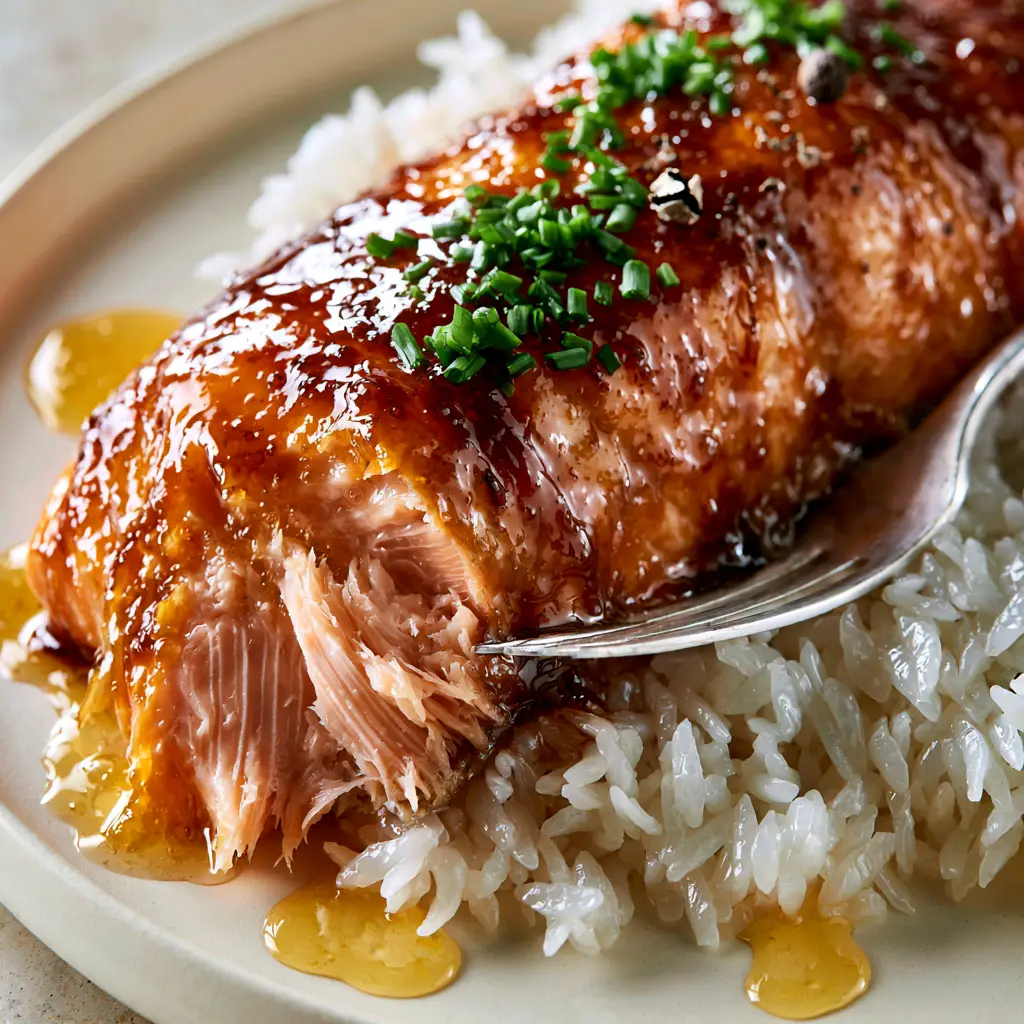
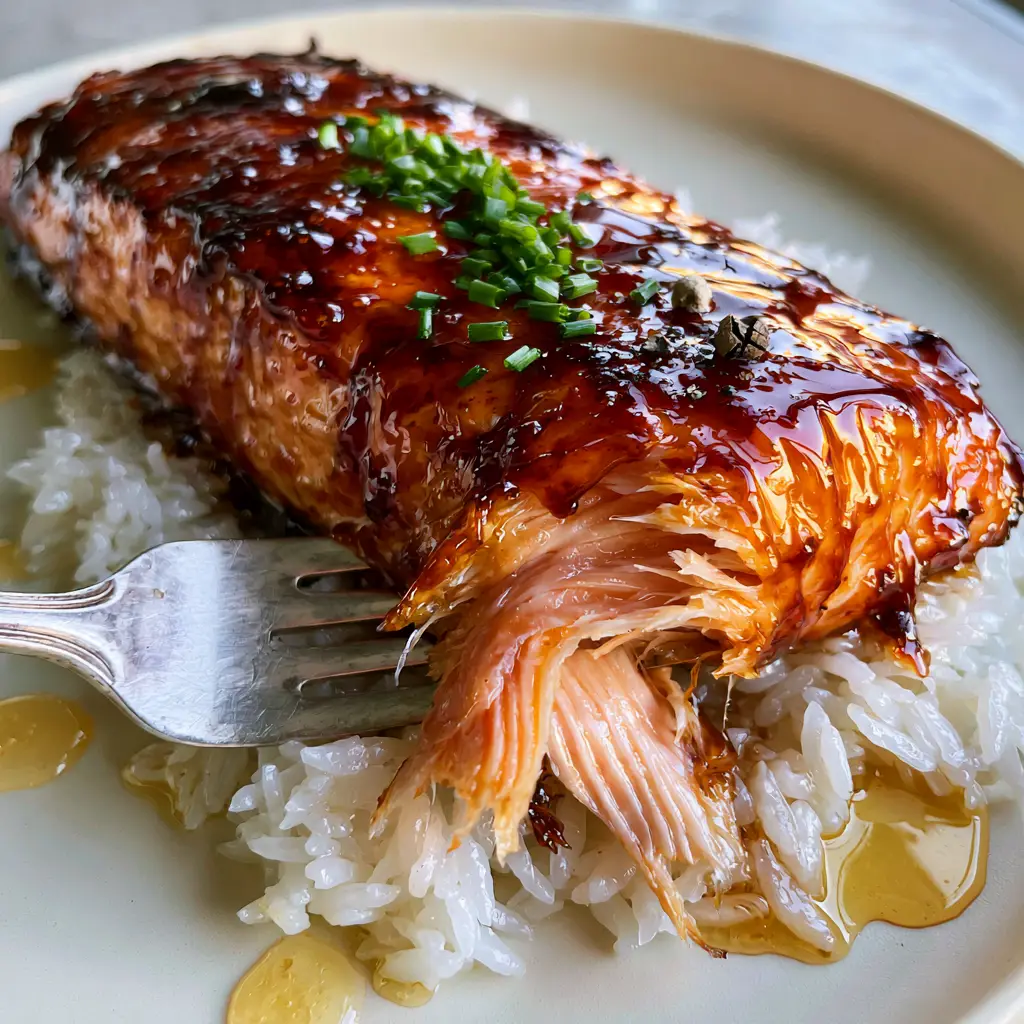
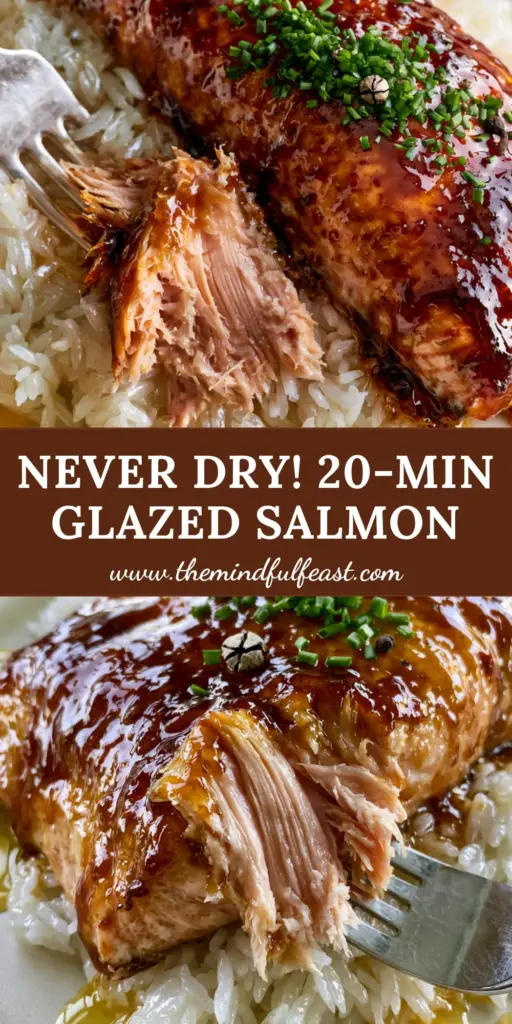
There is a specific, mouthwatering moment when a fork glides through a thick Atlantic fillet, revealing a steaming, moist, light pink interior with perfectly visible fat lines. This brown sugar glazed salmon is the embodiment of that culinary perfection, featuring a mahogany-colored crust that crackles slightly under the pressure of your utensil.
Every bite offers a contrast between the sticky, bubbling caramelization of the edges and the succulent, tender flakes of the fish. Plated over a bed of pearlescent, fluffy jasmine rice, this dish is as visually stunning as it is delicious, complete with specular highlights reflecting off the glossy garlic butter sauce.
Whether you are looking for healthy dinner ideas or a restaurant-quality meal to impress guests, this recipe delivers professional results with accessible techniques. We are going to dive deep into the science of the Maillard reaction and sugar caramelization to ensure your glaze is never watery and your salmon is never dry.
The Visual Allure and Textural Contrast of This Fillet
What sets this brown sugar glazed salmon apart is the intentional layering of flavors and textures that you can actually see on the plate. The mahogany glaze isn’t just a sauce; it is a concentrated reduction that clings to the fish, creating a sweet and savory lacquer.
- Extreme Succulence: The Atlantic salmon is cooked just until the fat lines are visible and the interior is a delicate, moist pink.
- Mahogany Caramelization: Dark brown sugar and garlic butter reduce into a bubbling, sticky coating that darkens beautifully at the edges of the fillet.
- Aromatic Base: A clean bed of fluffy jasmine rice absorbs the golden droplets of melted butter that pool around the fish.
- Fresh Finishes: Finely minced bright green chives and cracked black pepper corns provide a sharp, earthy counterpoint to the rich glaze.
Essential Ingredients for the Ultimate Mahogany Glaze
To achieve the visual and sensory cues described in our blueprint, every ingredient must serve a structural or flavorful purpose. We focus on high-quality fats and sugars to build that signature sticky texture.
Thick Atlantic Salmon Fillets: Look for fillets that are at least 1.5 inches (3.8cm) thick to ensure the interior remains moist while the exterior sears. Atlantic salmon provides the necessary fat content for those beautiful white fat lines.
Dark Brown Sugar: We use 1/2 cup (100g) of packed dark brown sugar because the extra molasses content aids in achieving that deep mahogany color and a more complex caramel flavor.
Unsalted Garlic Butter: 4 tbsp (56g) of high-quality butter allows us to control the salt levels while providing the fat needed for the specular highlights and pooling effect on the plate.
Jasmine Rice: 1 cup (185g) of dry jasmine rice is essential for its floral aroma and ability to remain fluffy and pearlescent rather than mushy.
Soy Sauce: 2 tbsp (30ml) of soy sauce acts as a foundational invisible ingredient, providing the salt and deep pigment required to darken the glaze without thinning it out too much.
Fresh Chives and Black Pepper: These are not just garnishes; the finely minced chives provide a sulfurous bite, and the cracked peppercorns add a floral heat that cuts through the sugar.
Must-Have Kitchen Tools for Professional Searing
Achieving a restaurant-grade brown sugar glazed salmon requires the right equipment to manage high heat and delicate protein handling. A heavy-bottomed skillet is your most important ally here.
A cast-iron or heavy stainless steel skillet is preferred for its heat retention, which is critical for creating the bubbling, caramelized edges. You will also need a wide fish spatula to flip the fillets without breaking the tender flakes.
For the rice, a fine-mesh sieve is mandatory for rinsing away excess starch, ensuring every grain remains individual and fluffy. Finally, a sharp chef’s knife is needed to achieve the “precisely minced” look for the fresh chives.
Mastering the Fluffy Jasmine Rice Foundation
Before we touch the fish, we must prepare the bed of pearlescent white rice. Fluffy rice is the result of proper rinsing and the exact water-to-grain ratio.
Rinsing for Pearlescent Grains
Place your jasmine rice in a fine-mesh sieve and run cold water over it for at least 60 seconds. You are looking for the water to run completely clear, removing the surface starch that causes clumping.
The Steaming Process
Combine the rinsed rice with 1.5 cups (350ml) of water and a pinch of salt. Bring to a boil, then immediately drop the heat to the lowest setting, cover tightly, and let steam for 15 minutes without lifting the lid.
Step-by-Step Execution of the Brown Sugar Glaze
The secret to this brown sugar glazed salmon is the two-stage cooking process: a hard sear for texture and a butter-baste for the mahogany finish. Watch for the sensory cues to know exactly when to move to the next step.
Achieving the Golden-Brown Sear
Pat the salmon fillets completely dry with paper towels. Season with salt and heat 1 tbsp (15ml) of neutral oil in your skillet over medium-high heat until it shimmers. Place the salmon flesh-side down and sear for 3-4 minutes until a golden crust forms.
The Mahogany Glaze Reduction
Flip the salmon and immediately turn the heat to medium. Add the butter, brown sugar, minced garlic, and soy sauce to the pan. As the butter melts, it will emulsify with the sugar and begin to bubble vigorously.
Basting for Specular Highlights
Use a large spoon to continuously pour the bubbling glaze over the salmon fillets. You will see the glaze thicken and darken into a mahogany hue, coating the fish in a sticky, glistening layer. This process should take about 3 minutes until the interior reaches 130°F (54°C).
Expert Tips for the Perfect Salmon Flake
To ensure your brown sugar glazed salmon matches the succulent visual of our blueprint, follow these professional tips. Overcooking is the enemy of the fat lines we want to see.
- Room Temperature Start: Take your salmon out of the fridge 15 minutes before cooking. This ensures the interior warms up at the same rate the exterior caramelizes.
- Monitor the Bubbles: The glaze should look like thick, slow-popping bubbles. If it looks thin, increase the heat slightly; if it smells like burning sugar, add a teaspoon of water immediately.
- Resting Period: Let the salmon rest for 2 minutes on the rice before serving. This allows the juices to redistribute, ensuring that “steaming, moist” interior when you take the first forkful.
Creative Pairings for a Balanced Meal
While the rice is the classic base for this dish, you can vary your sides to suit different nutritional needs. This salmon is incredibly versatile and pairs well with many flavors.
For a lighter option, consider serving the fillets alongside sauteed asparagus and mushrooms or a crisp vinegar cucumber salad to provide acidity. If you want a heartier meal, smashed baby potatoes offer a wonderful starchy crunch that complements the sticky glaze.
Storage and Reheating Guidelines
Salmon is best enjoyed fresh, but you can store leftovers in an airtight container for up to 2 days. To maintain the “moist, light pink interior,” avoid the microwave if possible.
Reheat the salmon in a pan over low heat with a splash of water and a lid. This creates a gentle steam environment that thins the mahogany glaze back to its glistening state without drying out the fish fibers.
Frequently Asked Questions
Yes, but light brown sugar has less molasses, so the glaze will be lighter in color and slightly less rich. To compensate for the mahogany color, you can add an extra teaspoon of soy sauce.
Look for the white fat lines (albumin) to just start appearing and use a fork to gently press the flakes. If they begin to separate easily while the center remains a light, translucent pink, it is ready.
The key is to add the sugar and butter only after flipping the salmon and reducing the heat to medium. If the glaze thickens too quickly or smells scorched, whisk in a teaspoon of water to reset the caramelization.
Sticky rice is usually caused by excess surface starch. Ensure you rinse the rice in cold water until the water runs completely clear, and never stir the rice while it is steaming.
The Ultimate Brown Sugar Glazed Salmon Recipe
Brown Sugar Glazed Salmon with Garlic Butter and Jasmine Rice
Ingredients
Equipment
Method
- Rinse 1 cup (185g) jasmine rice in a fine-mesh sieve under cold water until the water runs clear.
- Combine rice with 1.5 cups (350ml) water and a pinch of salt. Bring to a boil, then reduce to low, cover, and simmer for 15 minutes.
- Pat salmon dry. Heat oil in a skillet over medium-high heat. Sear salmon flesh-side down for 3-4 minutes until golden-brown.
- Flip salmon. Add 4 tbsp (56g) butter, 1/2 cup (100g) brown sugar, garlic, and 2 tbsp (30ml) soy sauce to the pan.
- Baste the salmon continuously with the bubbling mahogany glaze for 3 minutes until the interior is moist and pink (130°F/54°C).
Notes
Ensure the skillet is very hot before adding the salmon to achieve a crisp sear without overcooking the center.
Closing & Call to Action
This brown sugar glazed salmon is a masterclass in balancing sweet, savory, and fatty flavors. The visual impact of the mahogany glaze against the pearlescent jasmine rice makes it a true centerpiece for any dinner table.
If you enjoyed the succulent texture and caramelized flavors of this dish, please leave a comment below and share your results! You can find more visual recipe inspiration by following us on Pinterest.