Transport your kitchen to the sun-drenched shores of the islands with this vibrant Caribbean coconut chicken stew. This isn’t just a meal; it is a sensory experience designed to mimic the warmth of a tropical afternoon. Imagine golden-brown seared chicken thighs nestled in a velvety, vibrant yellow-orange coconut sauce, accented by the sweetness of tender sweet potatoes and the snap of red bell peppers. Every spoonful offers a complex balance of creamy fats, aromatic spices, and bright, citrusy highlights that will leave your family asking for seconds.
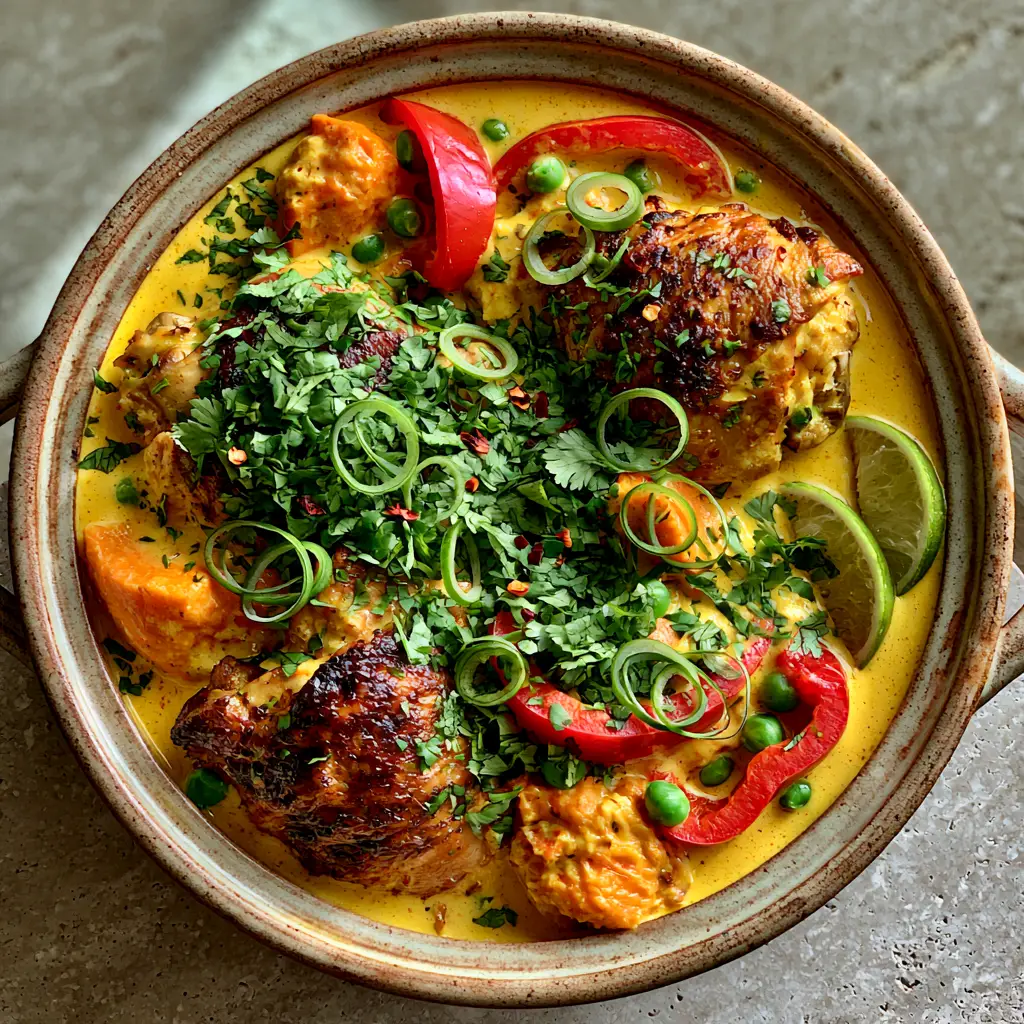
This recipe was meticulously crafted to match the aesthetic of a professional home kitchen. From the rustic ceramic pot to the gentle glow of natural daylight reflecting off the creamy sauce, every element serves a purpose. Whether you are looking for a comforting weeknight dinner or a stunning centerpiece for a weekend gathering, this Caribbean coconut chicken stew delivers on both flavor and visual drama.
The Visual Majesty and Textural Contrast of Caribbean Coconut Chicken Stew
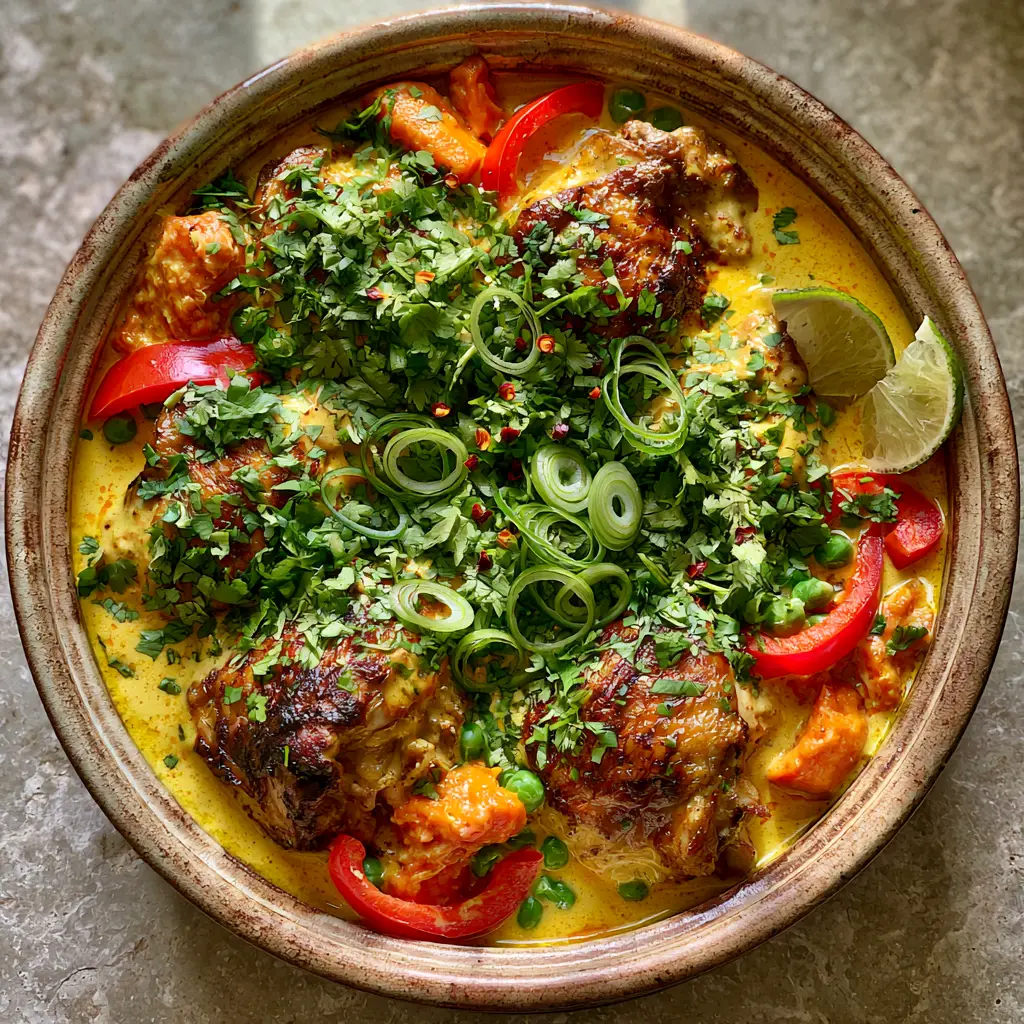
What sets this Caribbean coconut chicken stew apart is the intentional layering of colors and textures that create a restaurant-quality presentation at home. We focus on achieving a specific visual blueprint that emphasizes freshness and depth.
- Golden-Brown Searing: The chicken thighs are not just cooked; they are hard-seared to develop a rich, Maillard-reaction crust that stands out against the pale yellow sauce.
- Vibrant Color Palette: The contrast between the orange sweet potatoes, bright red bell peppers, and pop of green peas creates a stunning “jewel-tone” effect.
- Velvety Sauce Consistency: By using full-fat coconut milk, we achieve a thick, luxurious mouthfeel that coats the back of a spoon perfectly.
- Fresh Garnish Layering: The final scatter of green scallions, chopped cilantro, and red chili flakes adds the “high-definition” detail seen in professional food photography.
The Vibrant Essentials for Your Island-Inspired Pantry
To achieve the authentic flavor and specific visual results of our Caribbean coconut chicken stew, each ingredient must be selected and prepared with care. We use foundational invisible ingredients to bridge the gap between simple home cooking and professional culinary science.
Chicken Thighs: 2 lbs (900g) of boneless, skinless chicken thighs provide the succulent fat content needed for a tender stew. Unlike breasts, thighs remain juicy during the simmering process and hold a better sear.
Full-Fat Coconut Milk: 2 cans (800ml) of premium, thick coconut milk are essential for that velvety yellow-orange base. Avoid “lite” versions, as they lack the emulsifying power required for a thick sauce.
Sweet Potatoes: 2 large (500g) sweet potatoes, peeled and diced into 1-inch (2.5cm) cubes. These provide the structural “orange chunks” visible in the rustic ceramic pot.
Red Bell Peppers: 2 large peppers, sliced into thin strips. The red peppers offer a crisp-tender texture and a bright visual pop against the yellow curry base.
Aromatic Base (Onion, Garlic, Ginger): 1 yellow onion, 4 cloves of garlic, and 1 tbsp (15g) of fresh grated ginger. These are the invisible flavor workhorses that create the deep, savory backbone of the stew.
The Golden Spice Blend: 1 tbsp (15g) curry powder and 1 tsp (5g) ground turmeric. Turmeric is the key to achieving the specific “vibrant yellow-orange” sauce color described in our visual blueprint.
Green Peas: 1 cup (150g) of frozen or fresh peas. These are added at the very end to ensure they retain their bright green color and don’t turn mushy or brown.
Fresh Garnishes: 1/4 cup (10g) fresh cilantro, 3 sliced scallions, and 1 tsp (2g) red pepper flakes. These provide the final textural contrast and a hint of heat.
Lime Wedges: 2 fresh limes, cut into wedges. The acidity is crucial for cutting through the richness of the coconut milk and brightening the entire flavor profile.
Foundational Fats: 2 tbsp (30ml) of coconut oil or neutral avocado oil. This is scientifically required to achieve the high-heat sear on the chicken without burning.
The Essential Culinary Kit for One-Pot Success
To recreate the high-angle, rustic look of our professional blueprint, you need the right tools. A heavy-bottomed pot is non-negotiable for even heat distribution and proper searing.
We recommend using a 5-quart (4.7L) Dutch oven or a rustic ceramic casserole dish. The thick walls of these vessels help maintain a steady simmer, which prevents the coconut milk from breaking or curdling. A sharp chef’s knife is also vital for creating the uniform dice on the sweet potatoes and the clean rings of sliced scallions.
Mastering the Perfect Pan-Sear and Flavor Foundation
The first secret to a world-class Caribbean coconut chicken stew is the sear. You want to hear a loud sizzle the moment the chicken hits the oil.
Achieving the Golden-Brown Crust
Pat the chicken thighs completely dry with paper towels before seasoning with salt and pepper. Moisture is the enemy of a good sear; any surface water will cause the chicken to steam rather than brown. Heat your coconut oil over medium-high heat until it shimmers. Work in batches to avoid crowding the pan, which drops the temperature and prevents that “golden-brown” visual we are aiming for. Sear for 5-6 minutes per side until a deep crust forms, then remove and set aside.
Building the Aromatic Base
In the same pot, lower the heat to medium and add the diced onions. The onions will pick up the brown bits (fond) left behind by the chicken, incorporating that roasted flavor into the sauce. Once translucent, add the garlic, ginger, turmeric, and curry powder. Stir constantly for 60 seconds; this “blooms” the spices in the hot fat, unlocking their fat-soluble flavor compounds and intensifying the yellow-orange hue of the stew.
Simmering the Velvety Yellow-Orange Coconut Sauce
Now we move into the braising phase, where the chicken becomes tender and the vegetables reach their perfect consistency. This is where the Caribbean coconut chicken stew develops its signature creamy texture.
Layering the Vegetables and Coconut Milk
Pour in the thick coconut milk and 1 cup (240ml) of chicken stock. Stir gently to combine the spices into the liquid until it becomes a uniform, vibrant yellow. Add the diced sweet potatoes and sliced red bell peppers. Return the seared chicken thighs to the pot, ensuring they are partially submerged but the golden tops remain visible. This technique, known as shallow braising, keeps the seared skin or surface from becoming completely soggy.
The Low and Slow Simmer
Reduce the heat to low and cover the pot partially. Simmer for 20-25 minutes. You are looking for the sweet potatoes to become fork-tender and the sauce to reduce slightly until it is thick and velvety. Five minutes before serving, stir in the green peas. Adding them late ensures they stay “bright green,” providing that essential color contrast against the orange sweet potatoes.
Finishing Touches: Garnishing for Visual Impact
Presentation is everything. To match our high-angle smartphone photo aesthetic, the garnishing must look effortless yet generous. The contrast of the green herbs against the yellow sauce is what makes this dish “pop” on the plate.
Turn off the heat and squeeze the juice of half a lime into the pot. Sprinkle the fresh chopped cilantro and the thin rings of scallions across the surface. Finally, add a light dusting of red pepper flakes for a touch of heat and visual detail. Nestle the remaining lime wedges on the side of the ceramic pot to invite the diner to add their own hit of acidity.
Expert Tips for the Ultimate Coconut Stew
- Prevent Sauce Separation: Never boil the stew vigorously once the coconut milk is added. A gentle simmer keeps the emulsion stable and the sauce smooth.
- Consistent Dicing: Ensure your sweet potato chunks are uniform in size so they cook at the same rate. This prevents some pieces from turning into mush while others remain hard.
- Deglaze Thoroughly: Use a wooden spoon to scrape the bottom of the pot after adding the coconut milk to ensure all the flavor from the chicken sear is integrated.
- Quality of Spices: Use fresh turmeric and curry powder. If your spices have been in the cabinet for over a year, they will lack the potency to achieve that vibrant color.
Creative Pairings and Serving Suggestions
While this stew is a complete meal on its own, pairing it with the right side dish can elevate the experience. For a truly hearty meal, serve it over a bed of fluffy jasmine rice or with a side of warm crusty bread to soak up the extra velvety sauce.
If you enjoy this flavor profile, you might also love our spicy Brazilian coconut chicken for a different regional twist. For those nights when you need something faster, our last-minute dinners collection offers plenty of inspiration. If you have leftover sweet potatoes, they work perfectly in a sweet potato burger bowl for lunch the next day. For a different take on poultry, try our coconut chicken tenders which offer a crispy alternative to this braised dish.
Storage, Reheating, and Freezing Guidelines
This Caribbean coconut chicken stew actually tastes better the next day as the spices have more time to meld. Store leftovers in an airtight container in the refrigerator for up to 4 days.
When reheating, do so gently on the stovetop over low heat. If the sauce has thickened too much in the fridge, add a splash of chicken broth or water to loosen it back to its original velvety consistency. We do not recommend freezing this stew, as the texture of the sweet potatoes and the coconut milk emulsion can change significantly upon thawing, leading to a grainy sauce.
Frequently Asked Questions
Absolutely. While sweet potatoes offer a traditional flavor and color, you can use butternut squash or pumpkin for a similar texture and visual appeal.
Yes, but be careful not to overcook them. Chicken breasts dry out faster than thighs. If using breasts, sear them quickly and add them back to the stew during the last 10-12 minutes of simmering.
The specific hue comes from blooming turmeric and curry powder in oil before adding the coconut milk. This releases the pigments and ensures a deep, vibrant color throughout the sauce.
This version is relatively mild, with just a hint of heat from the red pepper flakes. For a more authentic kick, you can add a whole Scotch Bonnet pepper to the simmer, taking care not to burst it.
A thin sauce usually results from using ‘lite’ coconut milk or not simmering long enough. Use full-fat coconut milk and allow the stew to simmer uncovered for the last 10 minutes to reduce and thicken the liquid.
The Ultimate Caribbean Coconut Chicken Stew Recipe

Caribbean Coconut Chicken Stew: A One-Pot Tropical Masterpiece
Ingredients
Equipment
Method
- Heat coconut oil in a large rustic ceramic pot over medium-high heat. Season chicken with salt and pepper, then sear in batches until a golden-brown crust forms, about 5-6 minutes per side. Remove and set aside.
- In the same pot, add diced onion and cook until translucent. Add garlic, ginger, turmeric, and curry powder. Stir constantly for 1 minute until fragrant and the oil turns a vibrant orange.
- Pour in the coconut milk and sweet potatoes. Return the chicken to the pot. Bring to a gentle simmer, cover partially, and cook for 20 minutes until sweet potatoes are tender.
- Stir in the sliced red bell peppers and green peas. Simmer for an additional 5 minutes until the peppers are crisp-tender and the peas are bright green.
- Remove from heat. Squeeze in fresh lime juice. Top with a generous scattering of fresh cilantro, scallions, and red pepper flakes. Serve with lime wedges on the side.
Notes
Add the peas at the very end to keep them vibrant green.
Bring the Tropics to Your Table Tonight
This Caribbean coconut chicken stew is more than just a recipe; it is a gateway to island flavors and a masterclass in one-pot cooking. With its vibrant colors and rich, creamy textures, it is guaranteed to become a staple in your dinner rotation. The combination of sweet, savory, and spicy elements creates a sophisticated profile that appeals to both adults and children alike.
If you enjoyed this recipe, please leave a comment below and let us know how it turned out! Don’t forget to follow us on Pinterest for more culinary inspiration and visual recipe guides. Sharing a photo of your creation? Tag us so we can see your beautiful rustic ceramic pots in action!