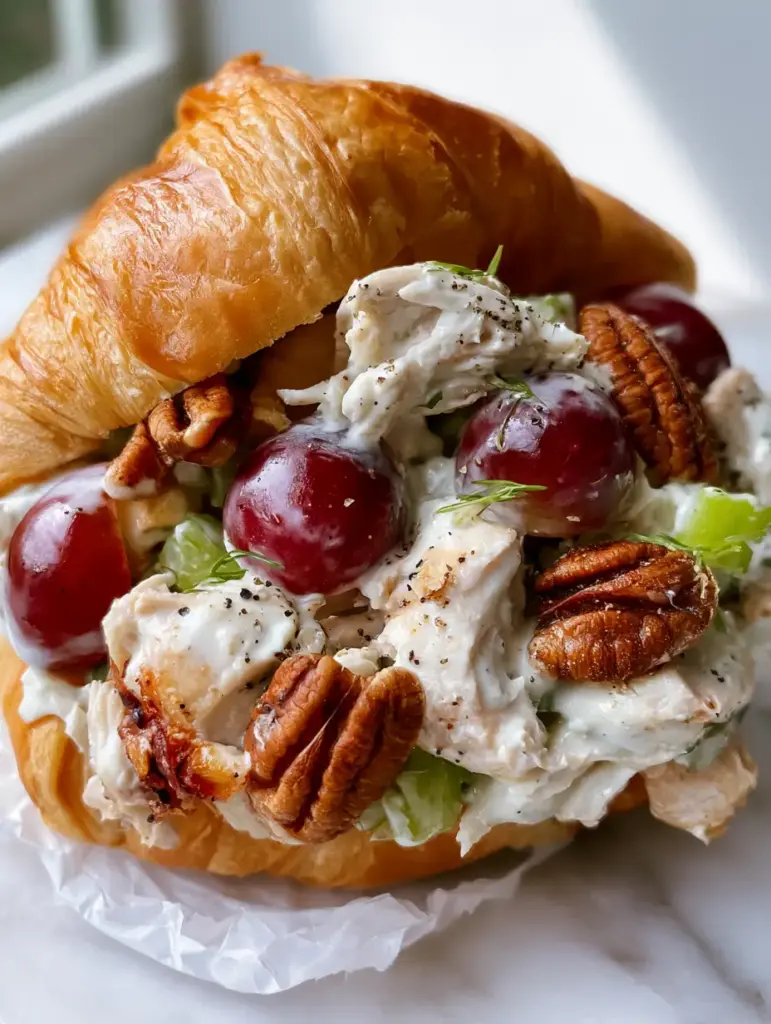
The perfect chicken salad with grapes is more than just a lunch staple; it is a masterclass in textural contrast and balanced flavors. Imagine biting into a buttery, flaky golden-brown croissant that shatters with every mouthful, revealing a decadent filling of hand-shredded rotisserie chicken and juicy crimson red grapes.
This recipe focuses on the forensic details that elevate a simple salad into a gourmet experience. We are moving away from the “mushy” deli-style salads of the past and leaning into the artisan aesthetic of high-end bistro fare.
Whether you are preparing a sophisticated brunch or looking for a way to transform a grocery store rotisserie chicken, this chicken salad with grapes provides the ultimate sensory satisfaction. From the snap of the fresh celery to the earthy crunch of toasted pecans, every ingredient serves a visual and culinary purpose.
The Unrivaled Textural Harmony of This Gourmet Salad
- Hand-Shredded Mastery: Unlike cubed chicken, hand-shredding creates more surface area, allowing the light velvety cream dressing to cling to every roasted edge without drowning the meat.
- The Crimson Snap: We use specifically crimson red grapes, halved to reveal their natural sheen and provide a burst of acidity that cuts through the richness of the buttery croissant.
- Structural Crunch: Large toasted pecan halves and finely diced green celery offer two distinct levels of crunch, ensuring the sandwich never feels one-dimensional.
- Aromatic Freshness: Tiny flecks of fresh green dill and coarse cracked black pepper provide a sophisticated herbal finish that elevates the “store-bought” flavor profile to a chef-led creation.
The Anatomy of Ingredients for Chicken Salad with Grapes
Rotisserie Chicken (1.5 lbs / 680g): We use the meat from one whole roasted chicken, hand-shredded while slightly warm for better absorption. This provides those signature roasted edges that look stunning and taste even better.
Crimson Red Grapes (1.5 cups / 225g): Select firm, plump grapes for that “snap” when bitten. Halving them vertically creates a beautiful visual contrast against the pale chicken and green herbs.
Toasted Pecan Halves (0.5 cup / 65g): Pecans contain natural oils that, when toasted, release a deep, woody aroma. Leaving them in large halves provides a premium, rustic look compared to chopped bits.
Crisp Green Celery (2 stalks / 100g): Finely dicing the celery is crucial for a consistent “bite.” It provides the essential water content and freshness needed to balance the light mayonnaise base.
Light Creamy Mayonnaise (0.75 cup / 175ml): We aren’t looking for a heavy, gloopy mess. A high-quality mayo, thinned slightly with a teaspoon of lemon juice, creates that “velvety white cream” look that coats rather than pools.
Fresh Dill Sprigs (2 tbsp / 5g): Freshness is non-negotiable here. The dill provides a bright, citrus-adjacent flavor that pairs perfectly with the sweetness of the grapes.
Coarse Cracked Black Pepper (1 tsp / 2g): Large specks of pepper are essential for the visual aesthetic. They provide sharp “pops” of heat that contrast with the creamy dressing.
Buttery Croissants (4-6 large): The vessel matters as much as the filling. A high-quality, all-butter croissant should be toasted until golden-brown to provide a sturdy, flaky foundation.
Invisible Essentials: Do not forget 0.5 tsp (3g) of kosher salt and 1 tsp (5ml) of fresh lemon juice. These act as flavor magnifiers, ensuring the grapes and chicken reach their full potential.
Essential Culinary Tools for Professional Results
To achieve the visual depth seen in the chicken salad with grapes, you will need a few key tools. A large stainless steel mixing bowl is essential for tossing the ingredients without bruising the delicate grapes.
A heavy-bottomed skillet is required for toasting the pecan halves. This allows for even heat distribution, preventing the bitter charred taste that comes from uneven roasting.
For the chicken, your own two hands are the best tool. Hand-shredding preserves the muscle fibers of the rotisserie chicken, creating that authentic, artisanal texture that machine-diced chicken simply cannot replicate.
The Step-by-Step Evolution of a Masterpiece
Preparing the Hand-Shredded Foundation
Begin by removing the skin from your rotisserie chicken. While the chicken is still slightly warm, pull the meat from the bones in large chunks, then shred it by hand into 1-inch (2.5cm) pieces.
Look for the “roasted edges”—those slightly darker, caramelized bits of the breast and thigh meat. These provide the visual highlights and concentrated savory flavor that define this chicken salad with grapes.
Achieving the Perfect Pecan Toast
Place your large pecan halves in a dry skillet over medium heat. Toast them for 3-5 minutes, shaking the pan frequently, until they become aromatic and turn a shade darker.
You will know they are ready when you smell a rich, buttery fragrance. Immediately remove them from the heat and let them cool; adding hot pecans to mayo will cause the dressing to break and become oily.
Dicing and Slicing for Visual Precision
Wash your crimson red grapes and slice each one in half vertically. This reveals the juicy interior while keeping the skin intact for that “natural sheen” described in our visual blueprint.
Dice the celery into uniform, tiny cubes of about 1/8 inch (3mm). This ensure every bite has crunch without the celery overpowering the delicate hand-shredded chicken.
Whisking the Velvety Dressing
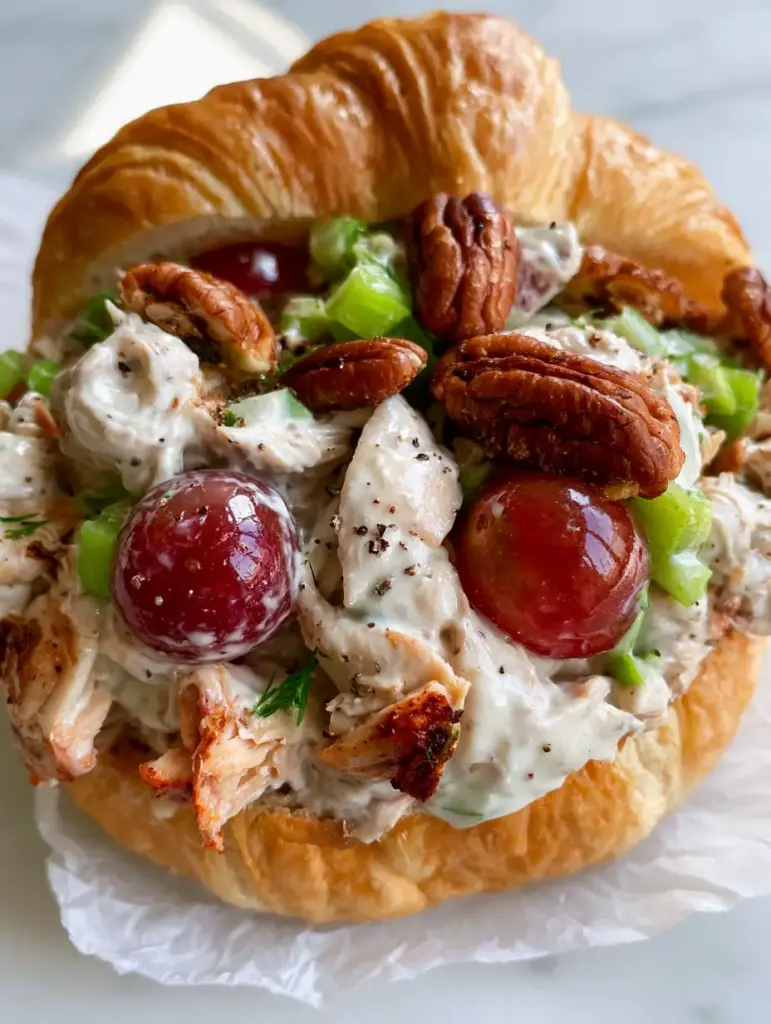
In a small bowl, whisk together the mayonnaise, lemon juice, salt, and half of the cracked black pepper. The goal is a light, velvety consistency that looks like a high-end cream sauce.
Stir in the finely chopped fresh dill. The tiny green flecks should be evenly distributed throughout the white cream, creating a beautiful speckled effect.
The Art of the Fold
Combine the chicken, celery, toasted pecans, and halved grapes in your large mixing bowl. Pour the dressing over the top and use a rubber spatula to gently “fold” the ingredients together.
Continue folding until every piece of chicken and grape is lightly coated. You are looking for a finish where the dressing clings to the ingredients rather than pooling at the bottom of the bowl.
Expert Strategies for Sandwich Success
- The Toasting Secret: Always slice your croissants and toast the cut side down in a pan with a tiny bit of butter. This creates a moisture barrier so the chicken salad with grapes doesn’t make the bread soggy.
- Temperature Control: Serve the chicken salad chilled, but allow the toasted croissant to remain slightly warm. This temperature contrast is a hallmark of professional sandwich making.
- Freshness Timeline: Add the toasted pecans just before serving if you want maximum crunch. If the salad sits overnight, the pecans will naturally soften slightly.
- Acid Balance: If the salad feels too heavy, add an extra squeeze of lemon juice. The acidity “lifts” the flavors of the grapes and dill.
Maintaining Freshness and Storage Guidelines
Your chicken salad with grapes will stay fresh in an airtight container in the refrigerator for up to 3 days. However, for the best visual appeal, it is best consumed within 24 hours.
We do not recommend freezing this recipe. Mayonnaise-based dressings tend to separate when frozen and thawed, and the crisp texture of the celery and grapes will become mushy.
If you are meal prepping, store the croissant separately. Only assemble the sandwich when you are ready to eat to maintain that iconic flaky texture.
Perfect Pairings for Your Gourmet Lunch
This sandwich is a complete meal on its own, but it pairs beautifully with a light, vinegary side dish. A cold cucumber crab salad offers a seafood alternative if you are hosting a larger brunch spread.
For those who enjoy a bit of heat to contrast the sweetness of the grapes, consider serving this alongside a small bowl of jalapeño chicken salad for a “scoop duo” presentation.
If you are looking for a dessert to follow this sophisticated lunch, a rustic peach galette continues the theme of buttery, flaky pastry and fresh fruit.
Need more chicken inspiration? Our baked parmesan chicken is a great hot dinner option for the following evening, while perfect midnight snacks can help satisfy those late-night cravings.
Answers to Your Common Chicken Salad Questions
Yes, you can make the salad 24 hours in advance. Store it in the fridge, but wait to toast the croissants and add the pecans until just before serving to ensure maximum crunch.
While possible, canned chicken lacks the ‘roasted edges’ and textural integrity of rotisserie chicken. For the best result, hand-shred a fresh roasted chicken.
Toast the inner side of the croissant in a pan with a little butter. This creates a crisp barrier that prevents the creamy dressing from soaking into the bread.
If you have a nut allergy, toasted sunflower seeds provide a similar crunch. Otherwise, toasted walnuts are the best culinary substitute for pecans.
Crimson red grapes are ideal because they offer a sweet-tart balance and a beautiful visual contrast. Ensure they are seedless and firm to the touch.
The Signature Recipe: Chicken Salad with Grapes on Flaky Croissants
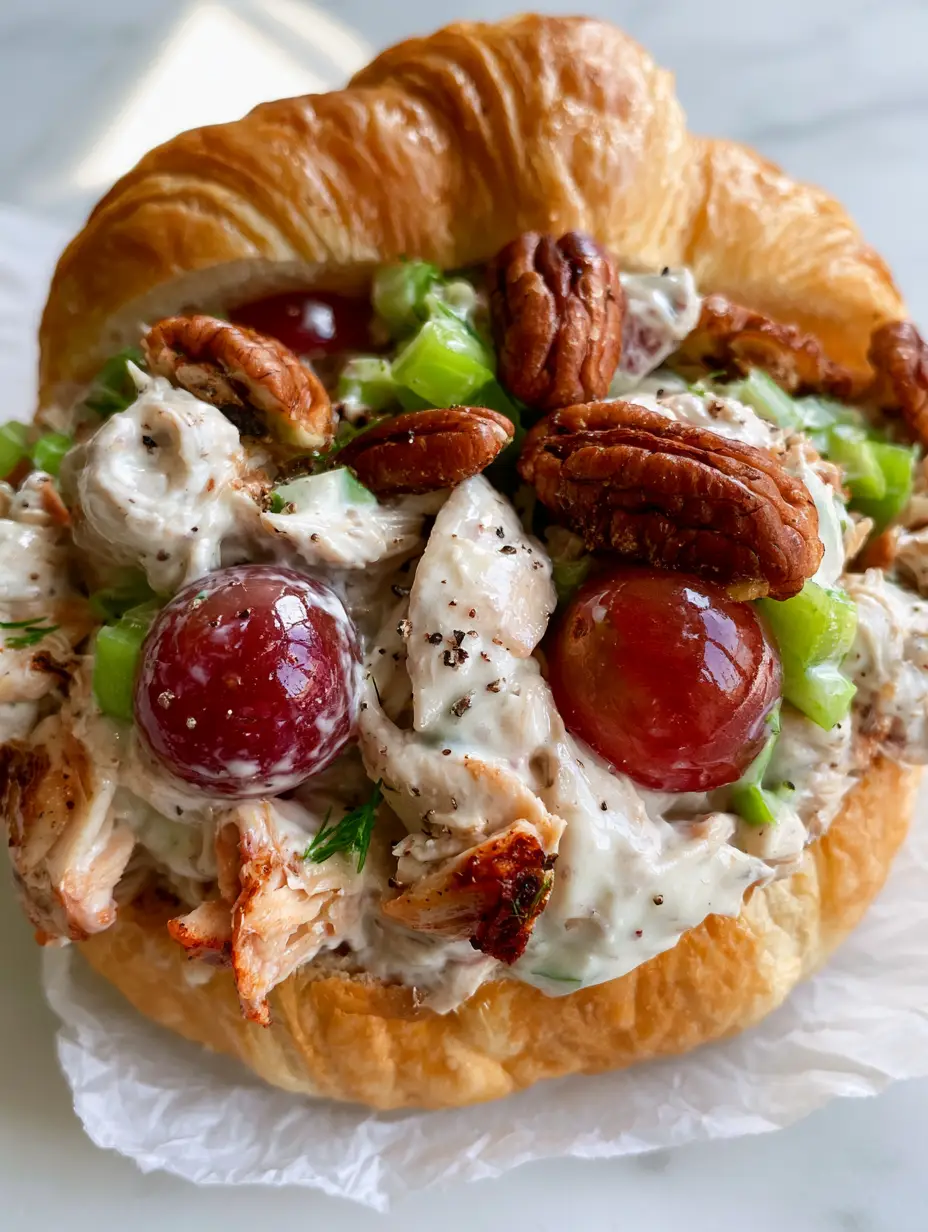
Chicken salad with grapes: The Ultimate Buttery Croissant Sandwich
Ingredients
Equipment
Method
- Hand-shred the rotisserie chicken into 1-inch pieces, ensuring you include the flavorful roasted edges.
- Toast pecan halves in a dry skillet over medium heat for 3-5 minutes until aromatic and golden brown. Let cool completely.
- Whisk together mayo, lemon juice, salt, pepper, and dill until a velvety white cream forms.
- Gently fold the chicken, halved grapes, diced celery, and cooled pecans into the dressing until lightly coated.
- Slice croissants and toast until golden. Fill generously with the chicken salad and serve immediately.
Notes
Use a slightly warm rotisserie chicken for easier shredding.

Closing the Loop on This Culinary Classic
Creating the ultimate chicken salad with grapes is about respecting the integrity of each ingredient. By focusing on hand-shredding the chicken and toasting the pecans, you transform a standard lunch into a gourmet event.
We invite you to try this recipe and see the difference that “visual blueprinting” makes in your kitchen. If you enjoyed this recipe, please leave a comment below and share your results!
Follow us for more culinary inspiration on our Pinterest page and join our community of home cooks.