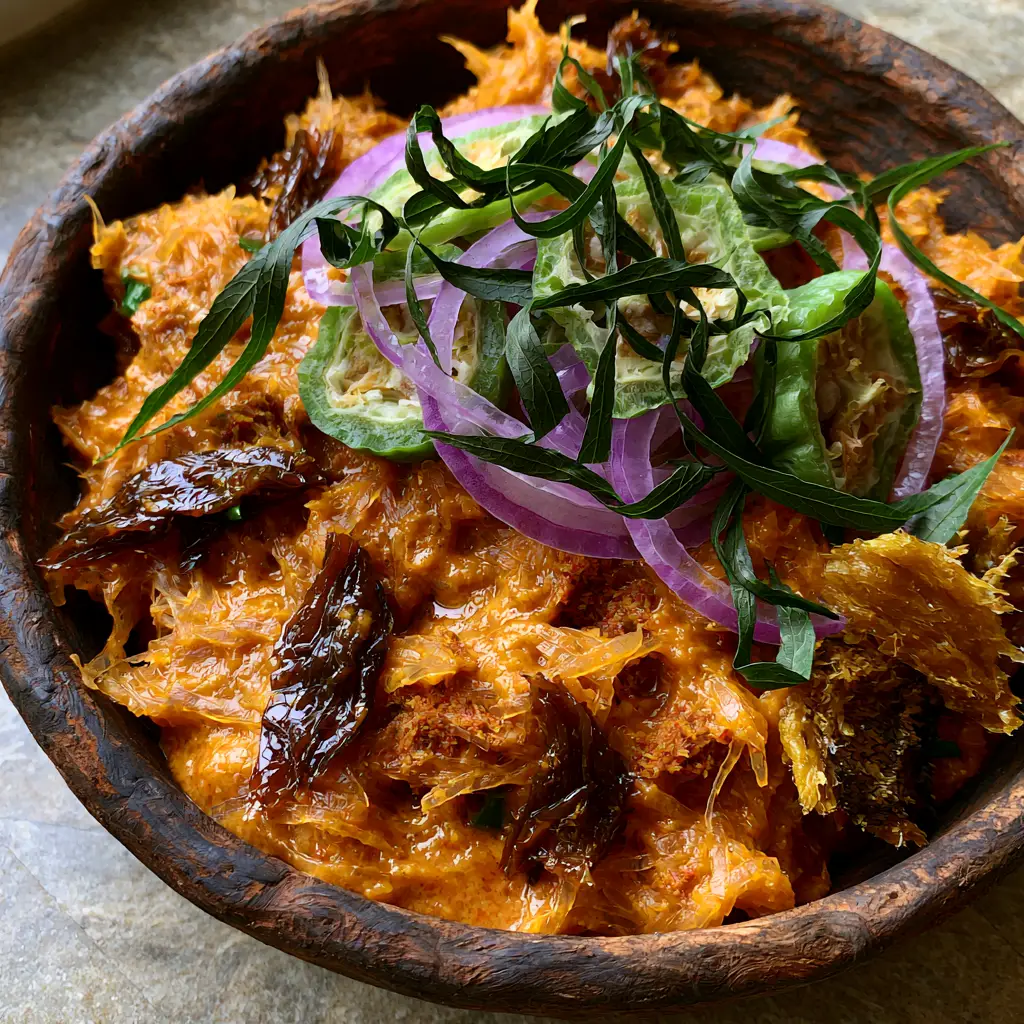
Enugu Abacha, affectionately known as the “African Salad,” is more than just a meal; it is a vibrant culinary tapestry woven from the heart of Igboland. This dish is celebrated for its unique contrast of flavors, ranging from the rich, nutty notes of fermented oil beans to the sharp, refreshing bite of utazi leaves. When prepared correctly, the cassava shreds become translucent and supple, perfectly cradling a thick, velvety orange palm oil sauce that glows under natural light.
Whether you are walking through the bustling markets of Enugu or hosting a festive gathering, the sight of a rustic clay bowl filled with glossy ugba and plump prawns is unmistakable. This recipe honors the traditional techniques required to achieve that specific, hyper-realistic texture seen in professional Igbo kitchens. By mastering the emulsification of the palm oil and the delicate soaking of the cassava, you will create a dish that is as visually stunning as it is delicious.
Why This Authentic Enugu Abacha Is a Culinary Masterpiece
- Translucent Texture: We use specific soaking techniques to ensure the cassava shreds are tender yet firm, achieving a beautiful translucent finish.
- Velvety Emulsion: The “ncha” (sauce) is whipped into a thick, vibrant orange cream that coats every strand without being greasy.
- Layered Aromatics: The combination of ground crayfish, fermented ugba, and deboned dry fish creates a deep umami base.
- Visual Contrast: The bright green garden eggs and purple onion rings provide a crisp, fresh counterpoint to the rich, warm tones of the palm oil.
The Anatomy of a Perfect Enugu Abacha: Ingredients and Substitutions
Dry Cassava Shreds (Abacha): 4 cups (400g). These must be soaked until they transition from brittle white to a soft, translucent state. If you cannot find dried shreds, freshly processed cassava is a viable but less traditional alternative.
Red Palm Oil: 1 cup (240ml). This provides the signature orange hue and a rich, earthy fat base. Ensure you use high-quality, unrefined oil for the most authentic flavor profile.
Edible Potash (Akanwu) or Baking Soda: 1 tsp (5g). This acts as the emulsifier that reacts with the palm oil to create the thick, orange “ncha.” A pinch of baking soda can work in a pinch, though the flavor varies slightly.
Fermented Oil Bean (Ugba): 1 cup (150g). These glossy slivers add a pungent, fermented depth. Always rinse them briefly to remove excess salt or fermentation liquid before adding to the bowl.
Ground Crayfish: 3 tbsp (30g). This provides the essential “grainy” texture and a massive boost of seafood umami that defines Enugu Abacha.
Deboned Dry Fish (Stockfish or Smoked Catfish): 1 cup (100g). These golden-brown chunks add a chewy, smoky element. Ensure they are properly cleaned and deboned to maintain the dish’s refined texture.
Whole Steamed Prawns: 10-12 pieces. Steaming ensures they remain succulent and serve as a premium protein topping that stands out against the orange sauce.
Fresh Utazi Leaves: 1/2 cup (20g), finely shredded. These dark green ribbons provide a necessary bitter note to balance the richness of the oil.
Garden Eggs (African Eggplant): 3-4 medium, sliced into thin rounds. These add a crisp, watery crunch and a mild peppery finish.
Red Onion: 1 small, sliced into translucent rings. The sharp bite of raw onion cuts through the density of the palm oil emulsion.
Seasoning Foundational Elements: 1 tbsp (15ml) warm water (to dissolve potash), salt to taste, and 1 tsp (2g) of fermented locust beans (ogiri) for an optional but traditional scent boost.
Professional Tools for Igbo Culinary Excellence
To achieve the handheld smartphone-worthy aesthetic, you will need a large mixing bowl—preferably stainless steel or a traditional mortar. A fine-mesh sieve is crucial for draining the cassava to prevent a watery sauce. For the final presentation, a handcrafted dark clay bowl will make the vibrant orange and green colors pop, especially when placed on a neutral stone countertop.
A sharp mandoline or chef’s knife is required to achieve the paper-thin onion rings and utazi ribbons. Finally, a small whisk or wooden spoon is essential for vigorously beating the palm oil and potash into a velvety, thick emulsion.
The Secret to the Perfect Palm Oil Emulsion
Step 1: Preparing the Cassava Foundation
Place the dry cassava shreds in a large bowl and cover with cold water. Allow them to soak for about 40-60 minutes until they are soft and translucent. Once hydrated, pour them into a colander and rinse thoroughly under cool running water. It is vital to let the shreds sit in the sieve for at least 10 minutes to ensure every drop of excess water is removed; otherwise, your Enugu Abacha sauce will become runny.
Step 2: Crafting the “Ncha” Sauce
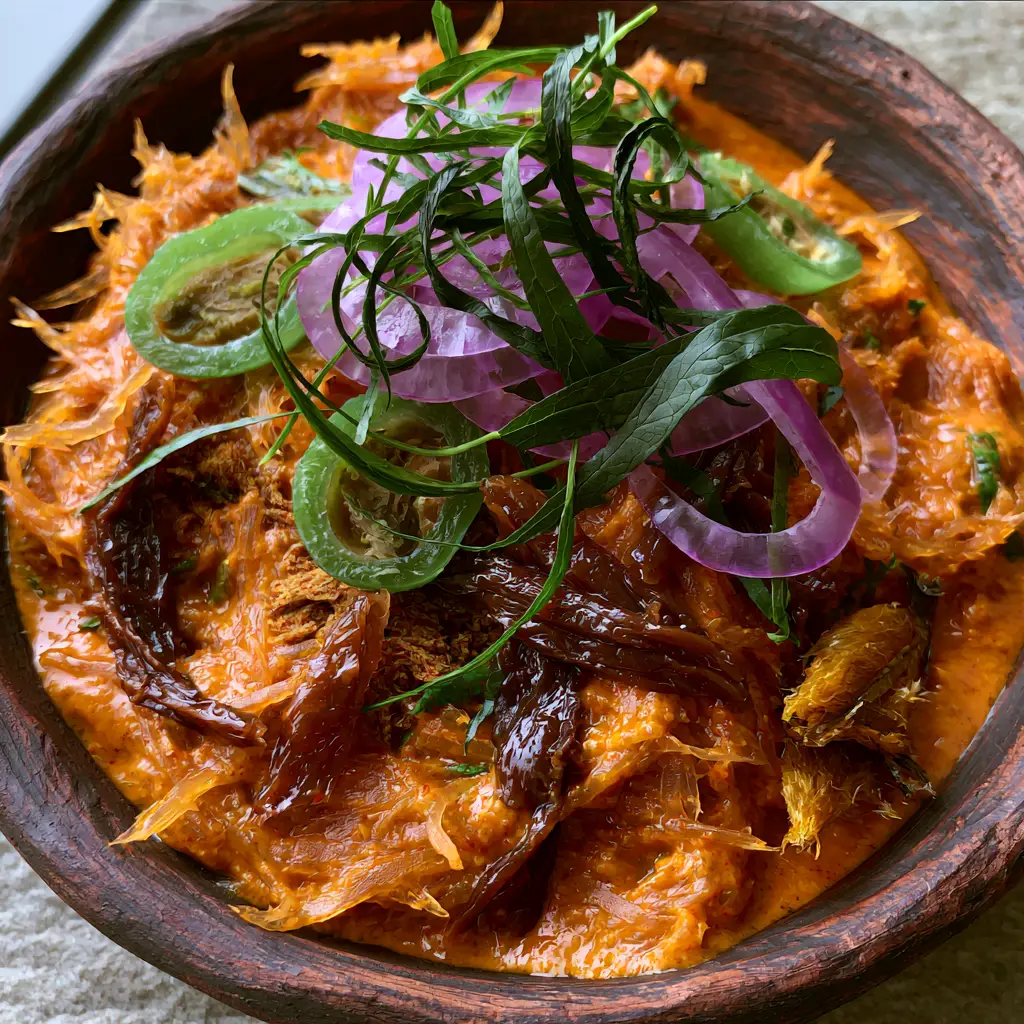
In a separate large mixing bowl, dissolve the potash in 1 tablespoon (15ml) of warm water and strain out any grit. Pour the red palm oil into the bowl. Begin whisking the oil while slowly adding the potash liquid. You will see a scientific reaction occur: the oil will transform from a translucent red to a thick, opaque, and vibrant orange cream. Keep whisking until the texture is velvety and holds its shape slightly.
Step 3: Building the Umami Base
Into your orange emulsion, fold in the ground crayfish, deboned dry fish chunks, and the fermented ugba. If you are using ogiri (locust beans), add it now and stir until fully integrated. The sauce should look grainy from the crayfish and glossy from the oil bean slivers. Taste the mixture; the salt from the dry fish and crayfish often suffices, but add a pinch of salt if necessary to brighten the flavors.
Step 4: Incorporating the Cassava
Add the drained, translucent cassava shreds to the sauce. Using a large spoon or your hands (wearing gloves for that authentic touch), toss the shreds until every single strand is perfectly coated in the orange emulsion. The shreds should look supple and glowing under the light. While this dish is cold, you can gently warm the ugba beforehand if you prefer a slightly softer bite similar to how you might temper spices for an egusi soup.
Step 5: The Art of Garnishing
Transfer the coated mixture into your dark clay bowl. Arrange the whole steamed prawns on top in a circular pattern. Scatter the thin red onion rings and the crisp garden egg slices across the surface. Finally, sprinkle the dark green utazi ribbons over the top. The contrast of the purple onions against the orange sauce creates that hyper-realistic, unedited aesthetic that makes Enugu Abacha famous.
Expert Tips for Success
- Water Management: The number one enemy of good Abacha is excess water. Ensure the garden eggs and onions are patted dry after slicing to prevent them from diluting the sauce.
- Potash Precision: Too much potash will make the sauce taste soapy; too little, and it won’t thicken. Add the liquid drop by drop until the color change is complete.
- Bitter Balance: Utazi is very potent. Always shred it as finely as possible so the bitterness is distributed evenly rather than overwhelming a single bite.
- Fish Prep: To make the dry fish “golden-brown” as seen in the prompt, flash-fry the deboned pieces in a teaspoon of palm oil for 60 seconds before adding them to the mix.
Storage, Reheating, and Freshness
Enugu Abacha is best enjoyed immediately while the vegetables are crisp and the emulsion is at its peak stability. However, you can store the coated cassava in an airtight container in the refrigerator for up to 24 hours. The oils may solidify slightly, so allow it to come to room temperature before serving.
Do not freeze the assembled dish, as the garden eggs and onions will lose their structural integrity. If you are meal-prepping, store the sauce and the soaked cassava separately and combine just before serving for the best texture. This fresh approach is much like maintaining the crunch in a traditional cucumber and onion salad.
What to Serve With Enugu Abacha
This dish is a complete meal on its own, but it pairs beautifully with other Nigerian staples. For a full spread, consider serving it alongside a bowl of savory beef tips or as a refreshing starter before a heavier meal like beef and gravy. If you are looking for a lighter accompaniment, a side of roasted squash provides a nice textural contrast to the soft cassava shreds.
Frequently Asked Questions
Yes, but you must boil the fresh cassava and shred it thinly. However, the unique ‘bite’ and translucency of Enugu Abacha are best achieved using traditional dried and soaked shreds.
Briefly warm the ugba in a pan with a teaspoon of palm oil for 30 seconds before adding it to the salad. This releases the natural oils and gives it a professional shine.
Abacha is traditionally served at room temperature. Heating the entire dish can cause the fresh vegetables to wilt and the palm oil emulsion to break and become greasy.
If utazi is unavailable, you can use very finely shredded kale or dandelion greens, though you will lose the specific authentic bitterness that utazi provides.
The orange color is a result of the chemical reaction between palm oil and an emulsifier like potash (akanwu). Ensure your potash is fresh and thoroughly dissolved in a little water before whisking it into the oil.
The Ultimate Authentic Enugu Abacha Recipe
[Image-Pin]
Enugu Abacha: The Ultimate Authentic African Salad Recipe
Ingredients
Equipment
Method
- Soak dry cassava shreds in cold water for 40-60 minutes until they become translucent and supple. Drain in a sieve for 10 minutes to remove all moisture.
- Mix dissolved potash with palm oil in a bowl. Whisk vigorously until the oil turns into a thick, velvety orange emulsion.
- Fold in ground crayfish, ugba, and deboned dry fish chunks into the orange sauce until well combined and glossy.
- Add the translucent cassava shreds to the bowl and toss thoroughly until every strand is coated in the orange sauce.
- Top the dish with steamed prawns, sliced garden eggs, utazi ribbons, and red onion rings. Serve in a clay bowl.
Notes
Use a mandoline for the thinnest, most professional onion and garden egg slices.
[Image-Pin-2]
Bring the Taste of Enugu Home
Mastering Enugu Abacha is a rite of passage for any lover of West African cuisine. The combination of textures—from the grainy crayfish to the velvety emulsion—creates a sensory experience that is truly unmatched. We hope this guide helps you achieve that perfect morning-light glow on your dinner table! If you enjoyed this recipe, please leave a comment below and share your photos with us on Pinterest.
[Image-Pin-3]