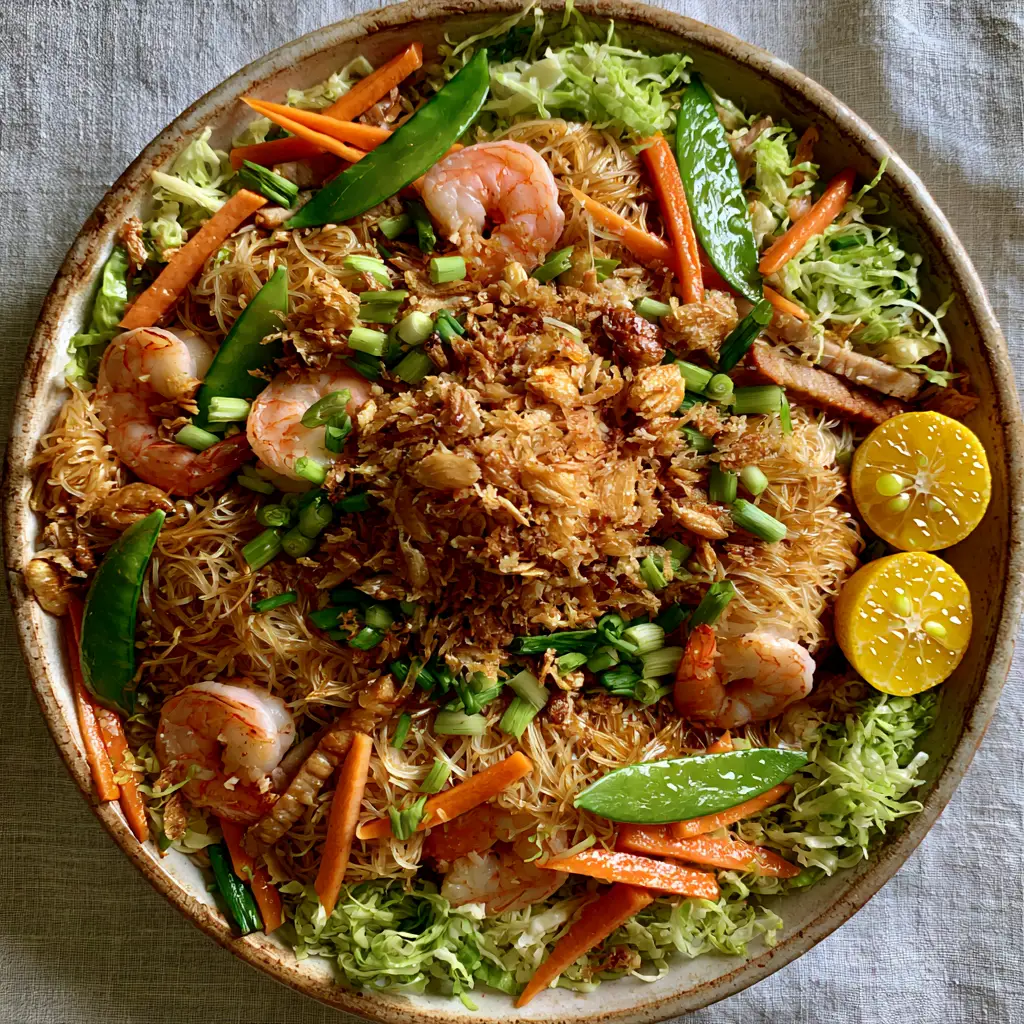
There is a specific kind of magic that happens when a rustic shallow bowl of Filipino Pancit hits the table. The steam rises in curls, carrying the aroma of toasted garlic and savory citrus, while the translucent golden-brown noodles glisten under the afternoon light. This isn’t just a meal; it is a centerpiece of Filipino hospitality and a masterclass in balancing textures.
Our journey today focuses on the iconic Pancit Bihon, characterized by its thin, delicate rice vermicelli and a vibrant medley of farm-fresh vegetables and succulent proteins. Whether you are aiming for that perfect “unedited social media” aesthetic or simply a soul-warming dinner, this guide provides the forensic culinary detail needed to achieve professional results at home.
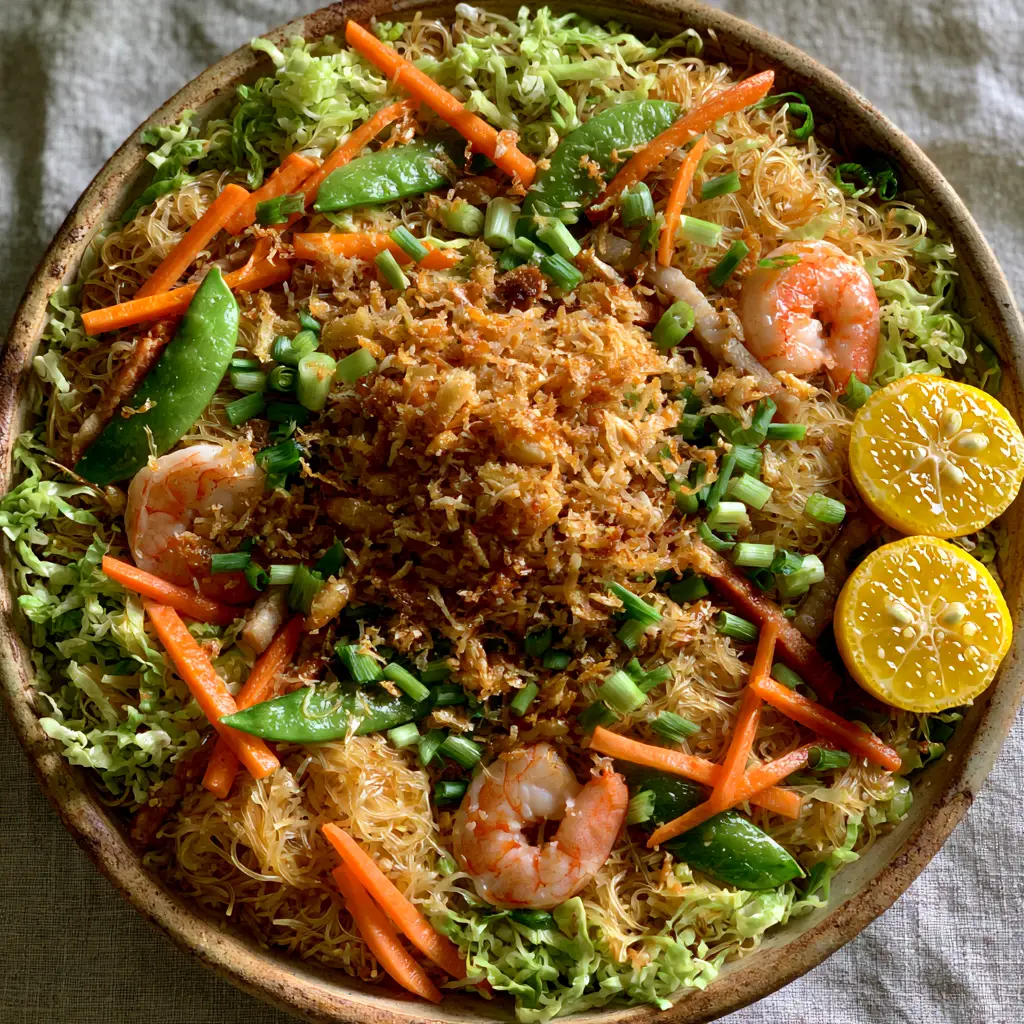
Every strand of noodle in this Filipino Pancit is designed to carry the savory soy-citrus glaze, ensuring that no bite is left unseasoned. From the “mountain” of crispy fried garlic bits to the bright pop of calamansi juice, we are recreating the exact sensory experience of an authentic Filipino feast.
Why This Filipino Pancit Recipe Delivers Professional Results Every Time
Creating a truly authentic Filipino Pancit requires more than just tossing ingredients in a pan; it requires an understanding of moisture management and heat control. This recipe is engineered to provide the exact visual and textural contrast described in our culinary blueprint.
- The Golden Glisten: We utilize a specific ratio of high-quality soy sauce and citrus to create a glaze that coats the noodles without making them soggy.
- Textural Contrast: By searing the shrimp and pork separately, we ensure the proteins remain succulent while the julienned carrots and snap peas retain a vibrant, “tender-crisp” snap.
- Aromatic Depth: The inclusion of a heavy garnish of home-fried garlic bits provides a deep, nutty crunch that offsets the soft, savory noodles.
- Citrus Brightness: The use of fresh calamansi halves is non-negotiable, offering a sharp, acidic finish that cuts through the rich soy-based sauce.
The Anatomy of Flavor: Essential Ingredients for Your Noodle Masterpiece
To achieve the “translucent golden-brown” look of the noodles, we must select ingredients that offer both pigment and flavor. Here is the breakdown of what you will need for this Filipino Pancit.
8 oz (227g) Rice Vermicelli (Bihon): These thin rice noodles are the foundation. They are prized for their ability to absorb broth while maintaining a delicate, translucent structure.
1/2 lb (227g) Pork Shoulder or Belly: Sliced into thin, savory strips, this provides the fatty richness and “umami” base that defines a classic pancit.
1/2 lb (227g) Large Shrimp: Peeled and deveined, these will be seared until they reach a “succulent pink” hue, providing a sweet contrast to the salty pork.
1 cup (150g) Julienned Carrots: These provide the “vibrant orange” visual pops and a natural sweetness when lightly sautéed.
1 cup (100g) Snap Peas: Trimmed and left whole or sliced, they offer a “bright green” color and a satisfying crunch.
2 cups (140g) Shredded Green Cabbage: This adds volume and a “tender-crisp” texture that integrates seamlessly with the thin noodles.
6 cloves Garlic, minced: We will fry half of this into “golden-brown bits” for the mountain of garnish and use the rest for the base aromatics.
3 Scallions, chopped: These “freshly chopped green scallions” provide a mild onion bite and a final layer of color.
4-6 Calamansi Fruits: Halved and served on the side, their juice is the final “citrus” element of the glaze. If unavailable, use lemon wedges.
The Savory Glaze: A blend of 1/4 cup (60ml) Soy Sauce, 1 tbsp (15ml) Oyster Sauce, and 2 cups (480ml) high-quality Chicken Broth.
Foundational Elements: 2 tbsp (30ml) Neutral oil (like grapeseed) for searing, 1/2 tsp (3g) Sea salt, and 1/2 tsp (1g) Cracked black pepper for seasoning.
Essential Tools for a Perfect Stir-Fry
To replicate the “rustic bowl” presentation, you need the right tools to handle high-heat cooking without overcrowding. A large wok or a heavy-bottomed stainless steel skillet is ideal for this Filipino Pancit.
You will also need a sharp chef’s knife to achieve those perfect “julienned” carrots and “thin strips” of pork. Precise cutting ensures that everything cooks evenly in the short window of time that stir-frying allows. Lastly, a spider strainer or long tongs are essential for tossing the noodles through the savory glaze without breaking the delicate strands.
The Step-by-Step Guide to Visual and Culinary Perfection
1. Creating the Golden Garlic Mountain
Heat 2 tbsp (30ml) of oil in your wok over medium-low heat. Add half of your minced garlic and cook, stirring constantly, until it turns a deep “golden-brown.” Immediately remove the garlic bits with a slotted spoon and drain on a paper towel; this ensures they stay “crispy” and don’t turn bitter. Set the fragrant garlic oil aside in the wok.
2. Searing the Proteins for Maximum Succulence
Turn the heat to high. Add the thinly sliced pork to the garlic-infused oil. Sear until the edges are browned and crisp, then add the shrimp. Cook the shrimp for only 1-2 minutes until they are “succulent pink” and curled. Remove both proteins from the wok and set aside to prevent overcooking.
3. Sautéing the Vibrant Vegetables
In the same wok, toss in the julienned carrots and snap peas. Stir-fry for 2 minutes until they are “bright” and “tender-crisp.” Add the shredded cabbage last, tossing just until it begins to wilt but retains its “green” vibrancy. Remove the vegetables and keep them with the proteins. This is the secret to perfectly sautéed vegetables that don’t turn into a mushy mess.
4. Infusing the Rice Noodles
Pour the chicken broth, soy sauce, and oyster sauce into the wok. Bring to a vigorous boil. Add the dry rice vermicelli. Using tongs, submerged the noodles in the liquid. The noodles will act like a sponge, absorbing the “savory soy-citrus glaze” until they become “translucent golden-brown” and “glistening.”
5. The Final Assembly
Once the liquid has been almost entirely absorbed, return the pork, shrimp, and vegetables to the wok. Toss everything together over high heat for 1-2 minutes. The goal is a “dense nest” of noodles where the ingredients are “interspersed” evenly. Season with salt and pepper to taste.
Expert Tips for Authentic Filipino Pancit Success
- Don’t Soak the Noodles: Many recipes suggest soaking bihon in water first. For this “glistening” result, add them dry to the boiling broth. This allows them to absorb the flavored glaze rather than plain water.
- The “High Heat” Rule: Stir-frying is a fast process. Ensure your wok is shimmering hot before adding ingredients to get those “gentle specular highlights” on the seared surfaces.
- Balance the Acid: If your glaze feels too heavy, a small splash of vinegar or extra calamansi juice during the final toss can brighten the entire profile, much like a refreshing vinegar salad.
- Garnish Generously: Don’t be shy with the “mountain of fried garlic.” It provides the essential textural contrast to the soft noodles.
Planning Your Menu: What to Serve with Filipino Pancit
This dish is incredibly versatile and works well as a standalone healthy dinner idea or as part of a larger spread. In the Philippines, Pancit is often served alongside “Lumpia” (spring rolls) or steamed white rice for a high-carb celebration meal.
If you are looking for a lighter accompaniment, consider a crisp Asian cucumber salad to provide a cold, crunchy contrast to the warm noodles. For a heartier feast, this dish pairs beautifully with other savory mains like a savory beef bowl or even crispy smashed potatoes if you are hosting a fusion-style gathering.
Storage and Reheating Advice
Filipino Pancit keeps remarkably well in the refrigerator for up to 3 days when stored in an airtight container. Because rice noodles can continue to absorb moisture, they may appear drier the next day.
To reheat, add a tablespoon of water or broth to the noodles and microwave for 1-2 minutes, or toss them in a hot skillet for a few minutes. Avoid freezing this dish, as the cabbage and snap peas will lose their “tender-crisp” texture and the noodles may become brittle upon thawing.
Frequently Asked Questions
Yes! Substitute the pork and shrimp with extra firm tofu or mushrooms, and use vegetable broth and a vegan stir-fry sauce instead of oyster sauce.
Fry the minced garlic separately over medium heat until golden-brown, then immediately remove and drain on a paper towel before using as a garnish.
The best substitute for calamansi is a 1:1 mixture of fresh lemon and lime juice, or simply fresh lemon wedges to provide that essential citrus kick.
Pancit Bihon uses thin, translucent rice vermicelli noodles, whereas Pancit Canton uses thick, flour-based egg noodles similar to lo mein.
Noodles break if they are over-soaked or over-cooked. Adding dry noodles directly to the boiling broth and tossing gently with tongs prevents breakage.
Authentic Filipino Pancit Bihon Recipe Card
Filipino Pancit Bihon: The Ultimate Guide to Authentic Stir-Fried Rice Noodles
Ingredients
Equipment
Method
- Heat oil in wok; fry half the garlic until golden-brown and crispy. Remove and set aside.
- Sear pork strips until browned; add shrimp and cook until succulent and pink. Remove from wok.
- Stir-fry carrots, snap peas, and cabbage until tender-crisp. Remove and set aside.
- Boil broth, soy sauce, and oyster sauce. Add dry noodles and toss until liquid is absorbed and noodles are glistening.
- Combine everything back into the wok. Garnish with fried garlic, scallions, and serve with calamansi.
Notes
If calamansi is unavailable, use fresh lemon or lime wedges.
Join the Honest Food Craving Community
We hope this Filipino Pancit brings a touch of authentic Manila flavor to your kitchen! If you enjoyed the “glistening” textures and “savory-citrus” notes of this dish, we would love to hear from you. Leave a comment below with your results or tag us in your photos!
For more visual inspiration and recipe guides, be sure to follow us on Pinterest and sign up for our newsletter to receive the latest satisfying dinner recipes straight to your inbox. Happy cooking!