There is a specific, intoxicating aroma that defines the streets of Manila at dusk—the scent of charcoal smoke mingling with a sweet, savory marinade. Filipino pork barbecue is more than just a grilled snack; it is a culinary icon, characterized by its succulent ribbons of pork and a signature mahogany glaze that sparkles under the light. Whether you are relishing these at a roadside stand or a family gathering, the experience is defined by that perfect balance of salty, sweet, and tangy flavors.
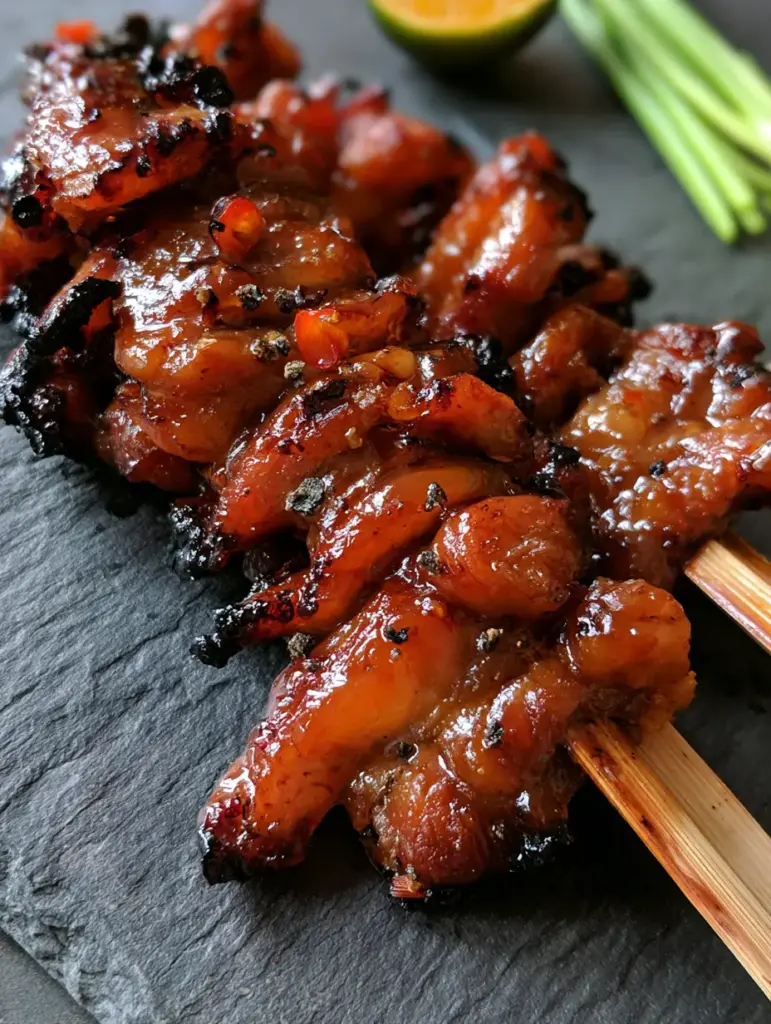
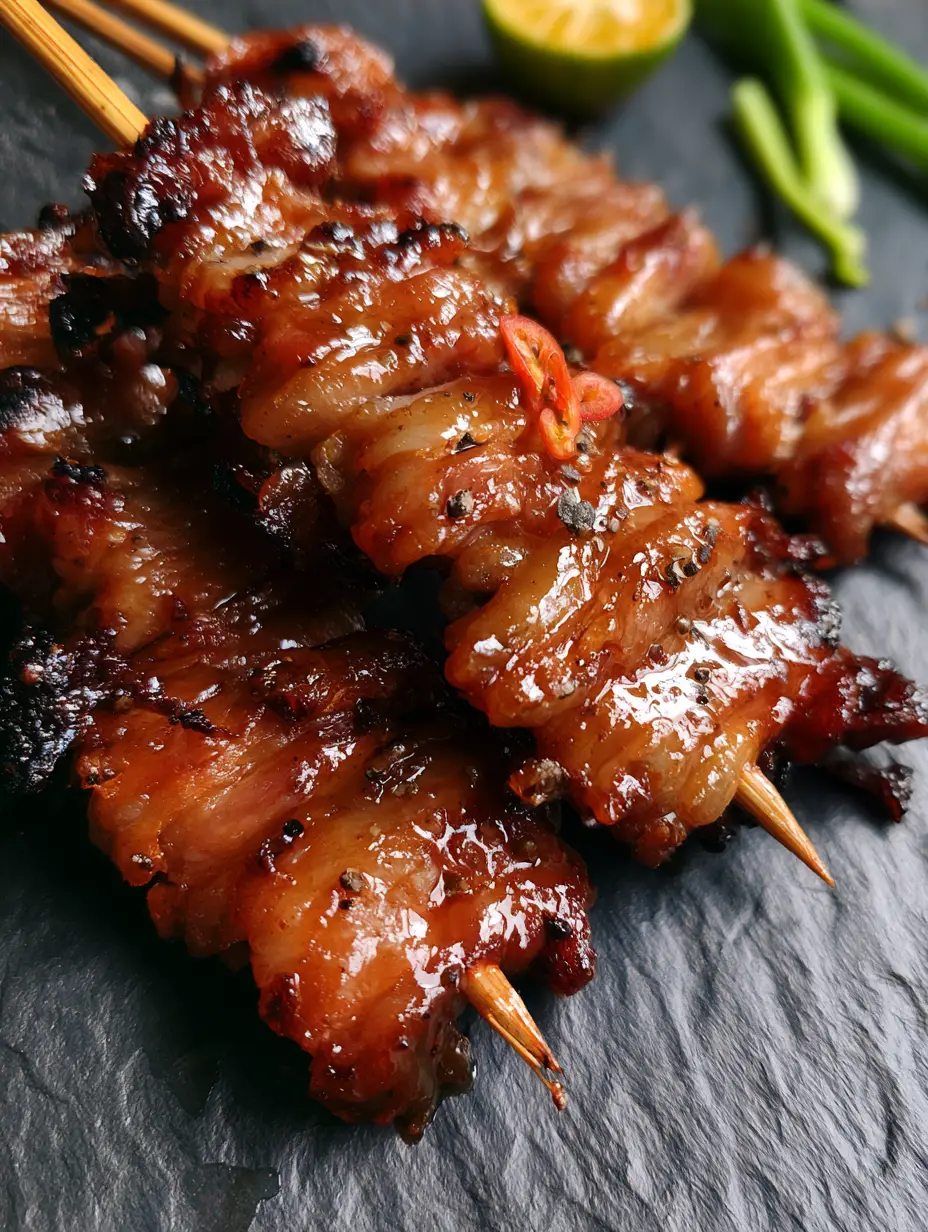
In this guide, we are recreating that authentic “handheld smartphone photo” aesthetic you see in high-end food photography. We are aiming for three skewers of thin, succulent ribbons of pork shoulder, tightly woven on bamboo sticks, featuring deep caramelized char marks and crispy edges. By the time we are finished, your kitchen will yield a dish that looks exactly like a macro shot: heavily coated in a thick, glass-like mahogany glaze with tiny flecks of cracked black pepper and bright red bird’s eye chili slices.
This recipe focuses on the forensic visual accuracy of the dish, ensuring every bite delivers that high-gloss highlight and deep shadow contrast seen on a textured dark slate platter. We will bridge the gap between street food traditions and professional culinary science to ensure your pork is never dry and your glaze is never dull.
Why You Will Love These Succulent Grilled Pork Ribbons
- The Iconic Mahogany Glaze: We achieve a thick, glass-like finish using a combination of traditional banana ketchup and dark soy sauce, providing that deep reddish-brown hue.
- Succulent Ribbons: By slicing the pork shoulder into thin strips and weaving them, we maximize surface area for both the marinade and the caramelized char.
- Perfect Flavor Balance: The heat from sliced red bird’s eye chilies cuts through the richness of the pork, while fresh calamansi halves provide a bright, citrusy lift.
- Authentic Texture: Expect crispy, charred edges that contrast beautifully against the tender, juicy interior of the pork shoulder ribbons.
The Anatomy of Authentic Filipino Pork Barbecue Ingredients
To achieve the visual and textural results described in our blueprint, we must select ingredients that perform specific chemical roles during the marination and grilling process. Each component contributes to the final “mahogany” look and “succulent” feel.
2 lbs (907g) Pork Shoulder (Boston Butt): This cut is essential because the intramuscular fat renders down, keeping the ribbons moist while the edges crisp up under the flame. Avoid lean cuts like tenderloin, which will dry out before the glaze caramelizes.
1/2 cup (120ml) Soy Sauce: This provides the foundational salty umami and the dark base color for our mahogany finish. It also helps break down the muscle fibers slightly for a more tender bite.
1/2 cup (120ml) Banana Ketchup: An indispensable Filipino ingredient, this provides the unique sweetness and the red tint that characterizes the barbecue’s appearance. It contains thickeners that help the glaze stick to the meat like glass.
1/4 cup (60ml) Calamansi Juice: This Filipino citrus is more floral than a lime and more tart than an orange. If you cannot find fresh calamansi, a mix of lemon and lime juice is a viable substitute to provide the necessary acidity.
1/2 cup (100g) Brown Sugar: The sugar is responsible for the heavy caramelization and the glossy highlights seen in the macro photography. It creates the “sticky” factor that defines Filipino street food.
6 cloves Garlic, minced: Garlic provides the aromatic backbone that balances the sweetness of the sugar and ketchup. It becomes toasted and fragrant during the grilling process.
1 tsp (2g) Cracked Black Pepper: Large flecks are visually prominent in the final dish and provide hits of earthy heat. We want coarse cracks, not fine powder, to match the visual blueprint.
2-3 Red Bird’s Eye Chilies (Siling Labuyo): These small, potent chilies add a sharp kick. Sliced into thin rounds, they serve as a bright red garnish that signals heat to the diner.
2 tbsp (30ml) Neutral Oil: Essential for preventing the sugar-heavy marinade from sticking to the grill grates and ensuring a smooth, glossy sear.
Essential Equipment for Professional Grilling
To recreate the “authentic food blog aesthetic,” you need tools that allow for precision and high-heat management. Achieving that deep caramelized char without burning the bamboo requires specific preparation.
First, you will need 10-12 bamboo skewers. These must be soaked in water for at least 30 minutes prior to threading to prevent them from igniting. A charcoal grill is preferred for the authentic smoky flavor, but a heavy-duty cast-iron grill pan will also produce the dark shadows and high-gloss highlights we desire.
A high-quality basting brush is non-negotiable. The “glass-like” finish is achieved through multiple layers of glaze applied during the final minutes of cooking. Finally, a sharp chef’s knife is required to slice the pork into the thin, uniform ribbons necessary for the woven look.
The Secret to the Perfect Ribbon Weave Technique
Preparing the Pork Shoulder
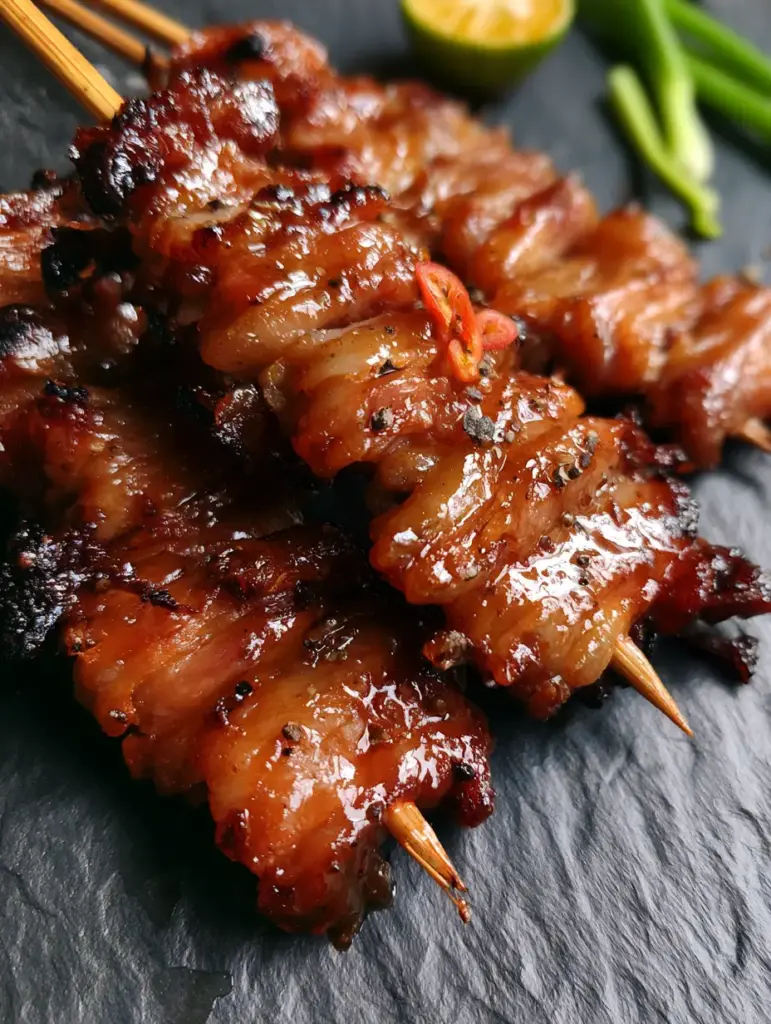
Start by slicing the pork shoulder into thin strips, approximately 1 inch (2.5cm) wide and 4 inches (10cm) long. Aim for a thickness of about 1/8 inch (3mm). This thinness is what allows us to “weave” the meat onto the skewers, creating the succulent texture mentioned in the visual prompt.
The Long Marination Phase
In a large bowl, whisk together the soy sauce, banana ketchup, calamansi juice, brown sugar, minced garlic, and half of the cracked black pepper. Submerge the pork ribbons in this mixture, ensuring every surface is coated. Cover and refrigerate for at least 4 hours, though overnight is best for the deepest mahogany color penetration.
Threading the Skewers
Take a soaked bamboo skewer and pierce one end of a pork ribbon. Fold the meat back over itself and pierce it again, creating an “S” or “accordion” pattern. Pack the ribbons tightly onto the stick, leaving about 2 inches (5cm) at the bottom for a handle. This tight weave ensures the meat stays juicy while the exposed edges get those crispy, charred highlights.
The Basting Liquid Reduction
Pour the leftover marinade into a small saucepan and bring it to a boil over medium heat. Simmer for 5-7 minutes until it thickens into a syrupy consistency. This is your secret weapon for the “thick, glass-like mahogany glaze.” Stir in the neutral oil at the end for extra shine.
Grilling for Visual Impact
Preheat your grill to medium-high heat. Place the skewers on the grates and cook for 3-4 minutes per side. Watch for the sensory cues: the sound of fat rendering and sizzling, the smell of caramelizing sugar, and the visual change from raw pink to a deep, opaque brown. During the last 2 minutes of cooking, brush the thickened glaze generously over the pork. The heat will set the glaze, creating that high-gloss finish.
Expert Tips for Success
- Soak Your Skewers: If using bamboo, soak them for at least 30 minutes. This prevents the “handle” from burning away before the pork is charred.
- Don’t Overcrowd the Grill: Leave space between the skewers to allow the heat to circulate, ensuring the edges of the ribbons get crispy rather than just steaming.
- The “Double Baste”: For the ultimate glass-like finish, baste once, let it set for 30 seconds, and baste again right before removing from the heat.
- Temperature Control: If the sugar in the glaze starts to burn too quickly, move the skewers to a cooler part of the grill to finish cooking through.
Storage, Reheating, and Freezing
Filipino pork barbecue is best enjoyed fresh off the grill, but it stores remarkably well. Keep leftovers in an airtight container in the refrigerator for up to 3 days. To reheat, use an oven at 350°F (175°C) for 5-8 minutes to maintain the glaze’s integrity; avoid the microwave, as it can make the pork rubbery.
You can also freeze the marinated, uncooked skewers. Lay them flat on a baking sheet to flash-freeze, then transfer to a freezer bag. They will keep for up to 2 months. Thaw completely in the refrigerator before grilling as usual.
What to Serve With Filipino Pork Barbecue
To balance the sweet and savory intensity of the barbecue, serve it over a bed of warm garlic fried rice. For a lighter approach, these skewers pair beautifully with a refreshing cold bean salad or a side of buttery bow tie pasta.
If you are planning a full Filipino feast, consider starting with a savory beef adobo to provide a different profile of soy and vinegar. For a sweet contrast to the smoky char, a glass of homemade peach lemonade works perfectly to cleanse the palate. If you have leftovers, they make an excellent protein addition to simple lunch bowls.
Frequently Asked Questions
While you can, pork shoulder is preferred because the higher fat content ensures the ribbons stay succulent and juicy during the high-heat grilling process.
Boil the remaining marinade until it thickens into a syrup and baste the skewers during the final two minutes of grilling to create a high-gloss, reflective coating.
The iconic mahogany-red color comes primarily from banana ketchup and dark soy sauce, which caramelize under high heat to create a deep, glossy finish.
If calamansi is unavailable, you can substitute it with a 1:1 mixture of fresh lemon and lime juice to mimic the floral acidity.
Authentic Filipino Pork Barbecue Recipe Card
Filipino Pork Barbecue: The Ultimate Glazed Skewers Recipe
Ingredients
Equipment
Method
- Slice the pork shoulder into thin ribbons, approximately 1/8 inch thick.
- Whisk soy sauce, banana ketchup, sugar, calamansi, and garlic in a bowl. Add pork and marinate for at least 4 hours.
- Thread pork ribbons onto soaked bamboo sticks in an accordion pattern.
- Grill over medium-high heat for 3-4 minutes per side. Baste frequently with reduced marinade during the last 2 minutes until a glass-like mahogany glaze forms.
Notes
Use banana ketchup for the most authentic color and flavor profile.
Bring the Streets of Manila to Your Kitchen
Making Filipino pork barbecue at home is a rewarding experience that engages all the senses. From the vibrant red of the bird’s eye chilies to the deep, mahogany shine of the glaze, this dish is as beautiful as it is delicious. The combination of succulent pork shoulder and a complex, sweet-savory marinade creates a flavor profile that is truly unforgettable.
We would love to see your results! If you make this recipe, please leave a comment below and let us know how your “ribbon weave” turned out. Don’t forget to share your photos and save this recipe to Pinterest to help other home cooks discover the joy of authentic Filipino flavors.