When you think of the ultimate comfort food, Filipino beef adobo stands in a league of its own. This isn’t just a stew; it is a masterclass in the balance of salt, acid, and deep, caramelized umami. Every bite offers a journey through layers of slow-braised beef chuck, where the muscle fibers have softened into a delicate, shredded texture that melts against the palate.
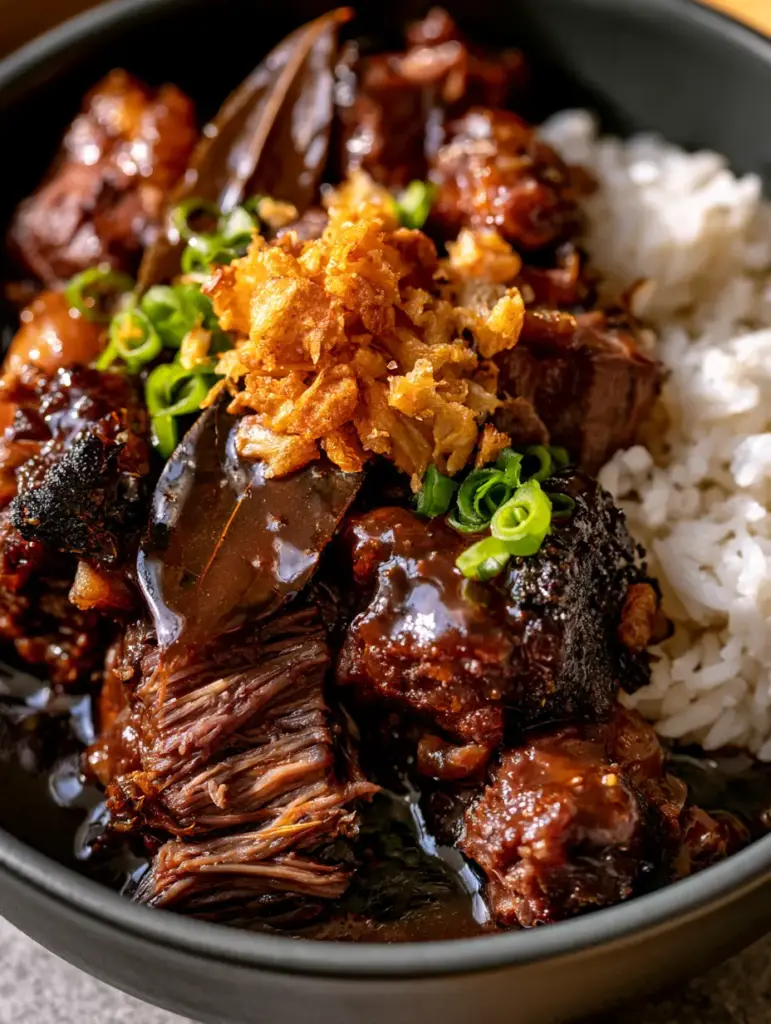
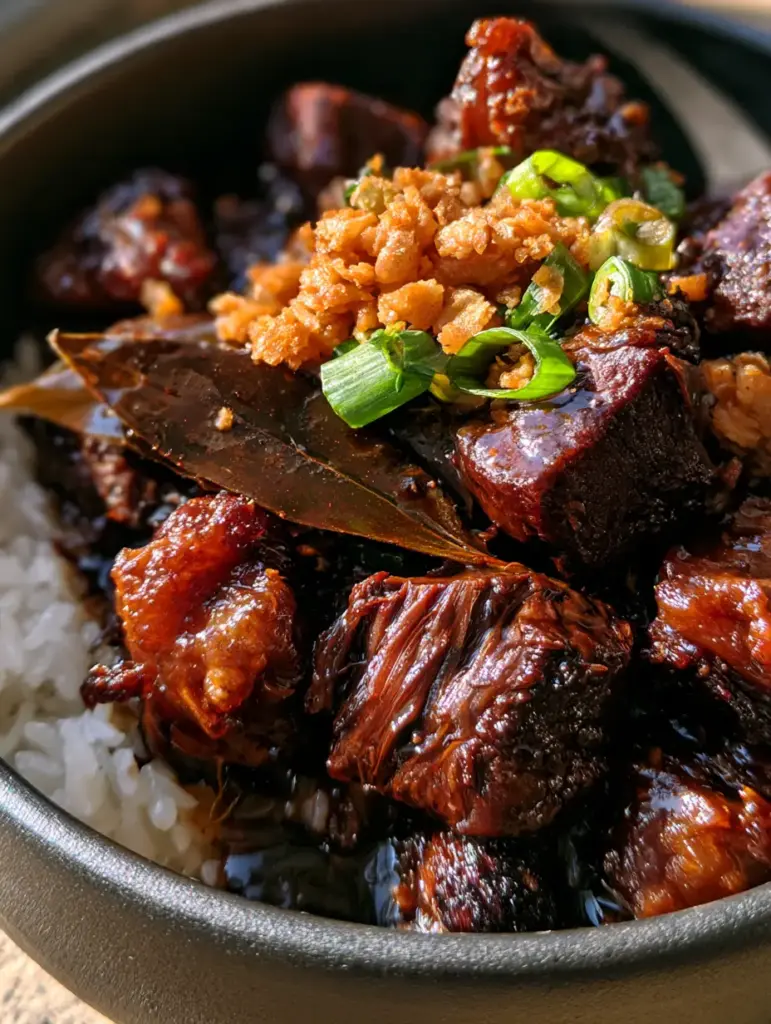
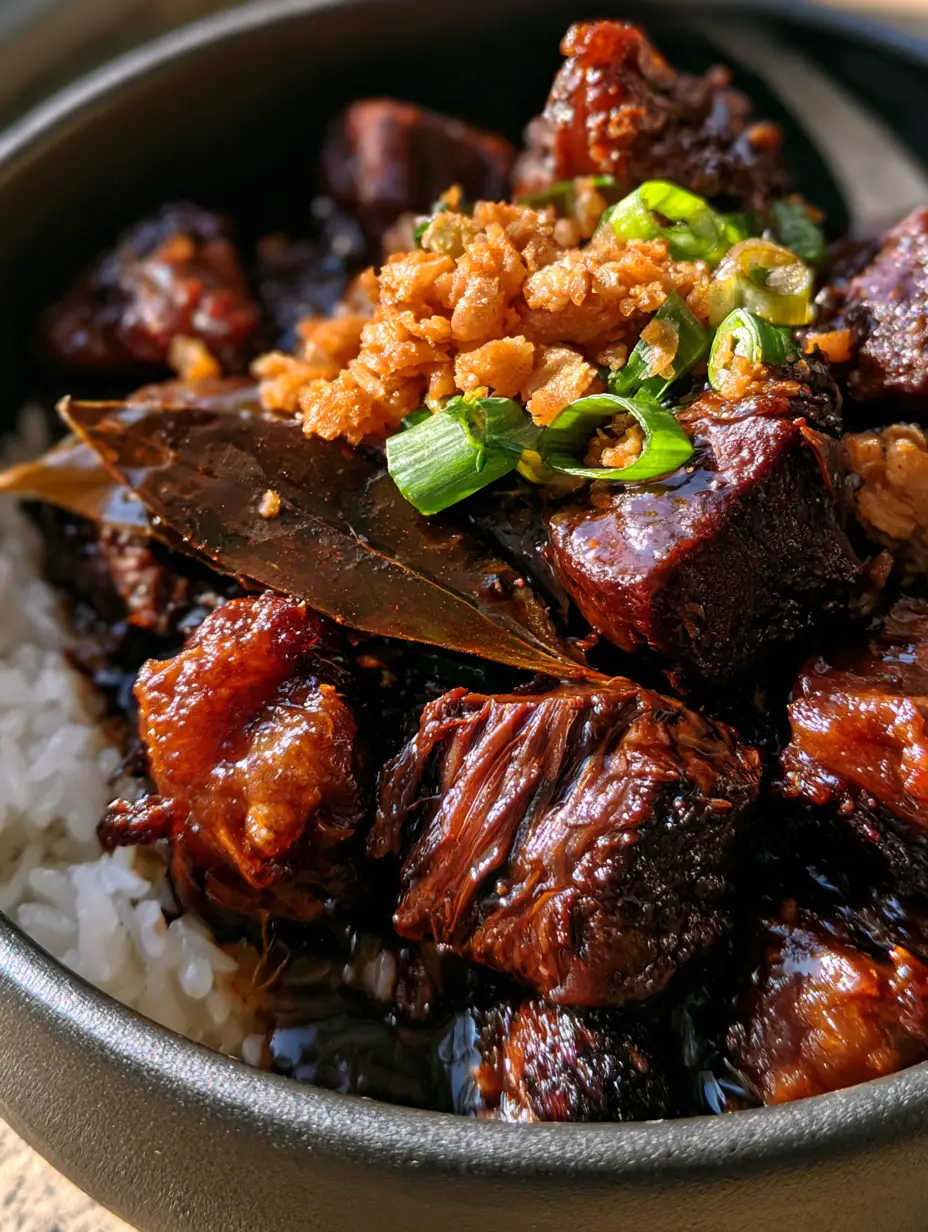
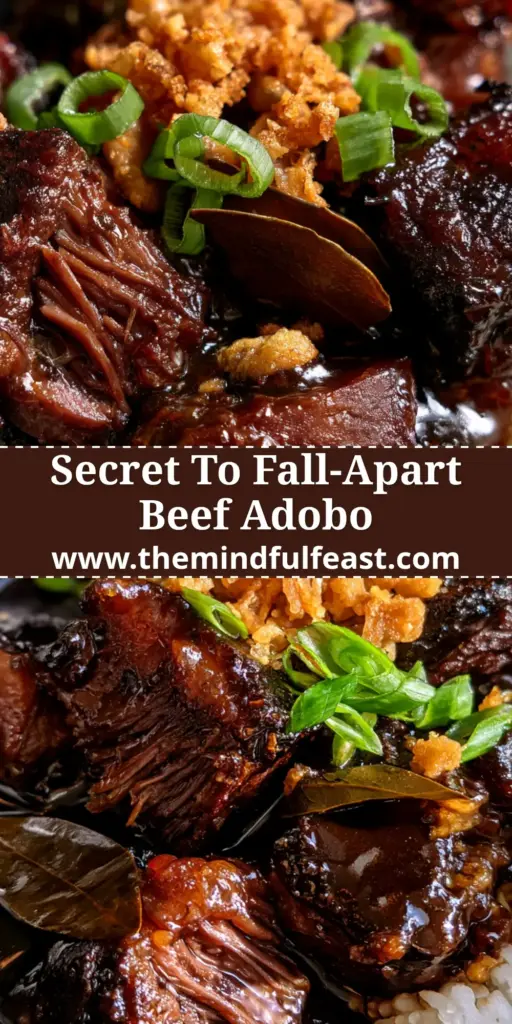
Imagine a matte charcoal ceramic bowl filled with large, succulent chunks of beef. Each piece is drenched in an ultra-glossy, dark brown soy-vinegar reduction that clings to the meat like a velvet coat. The scent of toasted peppercorns and bay leaves wafts through the kitchen, promising a meal that is both rustic and deeply sophisticated.
What sets this specific filipino beef adobo apart is the final texture. We aren’t just boiling meat; we are transforming it. By achieving those specific caramelized, charred edges and topping the dish with a literal mountain of crispy golden-fried garlic, we elevate a humble household staple into a culinary masterpiece that looks as good as it tastes.
The Visual and Flavor Profile of Authentic Adobong Baka
- Shatter-Tender Texture: We use slow-braising techniques to ensure the beef chuck develops those characteristic shredded fibers seen in high-end food photography.
- The Gloss Factor: A specific reduction process creates a thick, dark glaze that captures natural window light with brilliant specular highlights.
- Textural Contrast: The soft, steaming jasmine rice provides the perfect neutral base for the crunch of fried garlic and the bite of fresh scallions.
- Maillard Excellence: A secondary sear ensures the beef edges are charred and crispy, providing a smoky depth to the vinegar-heavy sauce.
The Pantry Essentials for Deep Umami and Glossy Glaze
To achieve the visual and structural integrity of this dish, every ingredient serves a dual purpose. We need fats for the sear, acids for tenderizing, and sugars for that mirror-like finish on the sauce. This recipe for filipino beef adobo demands patience and high-quality staples.
Beef Chuck Roasts (3 lbs / 1.36kg): This cut is essential for the “shredded fiber” look. Its high connective tissue breaks down into gelatin, thickening the sauce naturally while keeping the meat moist during the long braise.
Cane Vinegar (1/2 cup / 120ml): Filipino cane vinegar is milder than white distilled vinegar. It provides the necessary acidity to cut through the richness of the beef without overpowering the aromatics.
Premium Soy Sauce (1/2 cup / 120ml): This provides the salt and the deep, dark pigment. Use a high-quality naturally brewed soy sauce to ensure the color of your reduction is a rich mahogany rather than a pale tan.
Fresh Garlic Bulbs (2 large heads): You will need a significant amount of garlic. Half is used for the slow braise to infuse the meat, while the other half is sliced and fried until golden-brown for that iconic “mountain of garlic” topping.
Whole Black Peppercorns (2 tbsp / 12g): Do not use ground pepper here. Whole peppercorns soften during the braise, releasing a floral heat that is central to the adobo identity.
Dried Bay Leaves (4-6 leaves): These provide an earthy, herbal backbone. Look for softened, high-quality leaves that will rest beautifully in the sauce for your final presentation.
Brown Sugar (1 tbsp / 15g): This is the secret to the ultra-glossy reduction. The sugar caramelizes during the final reduction phase, helping the sauce cling to the beef fibers.
Neutral Oil (3 tbsp / 45ml): High-smoke point oil like avocado or canola is required for the initial sear. This ensures we get those charred edges without burning the pan drippings.
Essential Kitchen Tools for Braising Mastery
Achieving the look of an unedited, high-resolution handheld smartphone photo requires the right vessel. A heavy-bottomed Dutch oven or a deep cast-iron skillet is non-negotiable for consistent heat distribution.
You will also need a fine-mesh spider or slotted spoon to remove the garlic bits once they reach that perfect golden hue. To mimic the soft, directional natural window light in your own kitchen, place your matte charcoal bowl near a north-facing window during the late afternoon.
The Culinary Blueprint: Step-by-Step to Perfection
The Initial Sear and Maillard Development
Start by patting your beef chuck chunks completely dry with paper towels. Moisture is the enemy of the crust; if the meat is wet, it will steam rather than sear.
Heat your oil in a heavy pot over medium-high heat until it begins to shimmer. Working in batches to avoid crowding, sear the beef until a deep, dark brown crust forms on at least two sides of each cube.
Remove the meat and set it aside. This step is where we build the “caramelized charred edges” mentioned in our visual blueprint, ensuring the flavor is locked in before the liquid is added.
Infusing the Braising Liquid
Reduce the heat to medium and add your smashed garlic cloves to the residual beef fat. Sauté until fragrant but not browned, then deglaze the pan with the soy sauce and cane vinegar.
Scrape the bottom of the pot to release the “fond” (the brown bits), which contain concentrated beef flavor. Add the peppercorns, bay leaves, and sugar, stirring until the sugar is fully dissolved.
Return the beef to the pot and add just enough water (about 1-2 cups / 240-480ml) to partially submerge the meat. This partial submersion allows the top of the beef to stay out of the liquid, aiding in the eventual shredding texture.
The Slow Braise: Developing Shredded Fibers
Cover the pot with a tight-fitting lid and reduce the heat to the lowest possible setting. A gentle simmer is key; if the liquid boils vigorously, the muscle fibers will tighten and become tough.
Simmer for 2 to 2.5 hours. You will know it is ready when a fork easily slides into a chunk of beef and the muscle fibers begin to pull apart with minimal resistance.
Check the pot occasionally to ensure the liquid hasn’t evaporated completely. If needed, add a splash of water, but remember we want a concentrated sauce at the end.
The Reduction and The Final Polish
Once the meat is tender, remove the lid and increase the heat to medium-high. This is the most critical stage for the visual “glossy glaze.”
Boil the sauce until it reduces by half, thickening into a syrupy consistency. The fat from the beef will emulsify with the soy-vinegar mixture, creating that brilliant specular highlight effect.
Gently toss the beef chunks in this reduction. The sauce should coat each piece of meat thickly, filling the crevices of the shredded fibers.
Expert Tips for Success with Filipino Beef Adobo
- The Vinegar Rule: Never stir the pot immediately after adding the vinegar. Let it simmer for at least 2 minutes to allow the “harsh” acidic notes to cook off, leaving only the bright, fruity undertones.
- Fat Management: If the sauce feels too greasy, use a wide spoon to skim the excess oil from the surface before the final reduction. However, keep some fat, as it provides the gloss.
- Garlic Timing: Fry your garlic garnish separately in a small pan with oil. Remove them the second they turn golden, as they will continue to cook and can turn bitter if left in the hot oil too long.
- The Resting Period: Like most braises, this dish tastes even better the next day. The flavors meld, and the beef absorbs more of the vinegar’s tang.
What to Pair With This Savory Masterpiece
To balance the intense savory notes of the filipino beef adobo, you need something fresh or slightly sweet. While jasmine rice is the traditional choice, you can expand your menu with these complementary dishes.
For a complete Filipino feast, serve this alongside Filipino Pork Barbecue skewers. The smoky sweetness of the pork contrasts beautifully with the acidic punch of the beef adobo.
If you’re looking for a refreshing beverage to cleanse the palate between bites, a tall glass of refreshing peach lemonade offers the perfect fruity counterpoint to the heavy umami profile.
For those who enjoy a bit of beef variety in their weekly meal prep, you might also enjoy experimenting with ground beef quesadillas for a quicker weeknight option. However, for a celebratory weekend dinner, nothing beats the slow-cooked luxury of adobo.
Finish your meal with a light dessert like fluffy Japanese pancakes or a decadent birthday cheesecake to round out the dining experience.
Storage, Reheating, and Freezing
Adobo is incredibly shelf-stable due to the high vinegar content. Store leftovers in an airtight container in the refrigerator for up to 5 days. In fact, many Filipinos prefer “day-old” adobo because the beef becomes even more infused with the sauce.
To reheat, place the beef and sauce in a pan over low heat with a tablespoon of water. Cover and simmer until the fat has melted and the beef is heated through. Avoid microwaving at high power, as it can toughen the shredded fibers.
This dish freezes beautifully for up to 3 months. Thaw in the refrigerator overnight before reheating on the stovetop to maintain that glossy texture.
Frequently Asked Questions
Yes, but white distilled vinegar is much sharper. If using white vinegar, reduce the amount by 25% or add an extra teaspoon of brown sugar to balance the high acidity.
The secret is a hard sear before adding any liquid. Ensure your beef is patted dry with paper towels and your pan is screaming hot to achieve those caramelized edges.
While optional, marinating the beef in soy sauce and garlic for 30 minutes before searing can deepen the color, but the long slow-braise usually provides plenty of flavor infusion.
Beef chuck is the gold standard for adobo. It contains enough connective tissue and fat to remain moist during a 2.5-hour braise, eventually breaking down into the shredded fibers characteristic of a perfect adobo.
If your sauce is thin, you likely didn’t reduce it enough. Remove the lid during the final 20 minutes of cooking and increase the heat. The sugars and gelatin from the beef need to concentrate to create that glossy coating.
The Master Recipe: Signature Filipino Beef Adobo
Filipino Beef Adobo: The Ultimate Guide to Fork-Tender, Glossy Braised Perfection
Ingredients
Equipment
Method
- Pat beef chunks dry. Heat oil in a Dutch oven over medium-high heat. Sear beef in batches until charred edges form. Remove and set aside.
- Reduce heat. Add smashed garlic cloves to the pot. Sauté for 1 minute until fragrant but not burnt.
- Add soy sauce, cane vinegar, sugar, peppercorns, and bay leaves. Return beef to pot. Add water to partially submerge. Cover and simmer on low for 2.5 hours.
- Remove lid. Increase heat to medium-high. Boil until the sauce reduces to a thick, glossy glaze that coats the beef.
- In a separate small pan, fry the sliced garlic in oil until golden brown. Drain on paper towels immediately.
- Serve the beef over a mound of steaming jasmine rice. Garnish with a mountain of fried garlic, fresh scallions, and extra bay leaves.
Notes
Use beef chuck rather than lean cuts for the best shredded fiber texture.
Closing & Call to Action
Mastering filipino beef adobo is a rite of passage for any home cook looking to explore the vibrant world of Southeast Asian cuisine. With its balance of charred edges, tender fibers, and that unmistakable mountain of garlic, this dish is guaranteed to become a family favorite. It represents the heart of Filipino hospitality—bold, generous, and deeply satisfying.
Did you achieve that perfect glossy reduction? We would love to see your results! Leave a comment below or share your photos on social media. Be sure to follow us on Pinterest for more culinary inspiration and visual recipe guides.