Fufu is more than just a staple; it is the heartbeat of West African dining, a “swallow” that defines the soul of the meal. When you see that snow-white, incredibly silky surface glistening under soft natural light, you know you are in for a tactile and sensory journey. This recipe focuses on achieving that iconic, stretchy cassava texture that pulls away with a gentle resistance, perfectly designed to scoop up a rich, vibrant Egusi soup.
The magic of a perfect fufu lies in the starch gelatinization, where heat and vigorous agitation turn simple cassava into a glossy sphere of edible art. In this guide, we will bridge the gap between traditional techniques and modern home kitchens to ensure your dough is never lumpy and always elastic. From the deep green of wilted spinach to the characteristic red palm oil droplets, every element of this dish is a visual and culinary masterpiece.
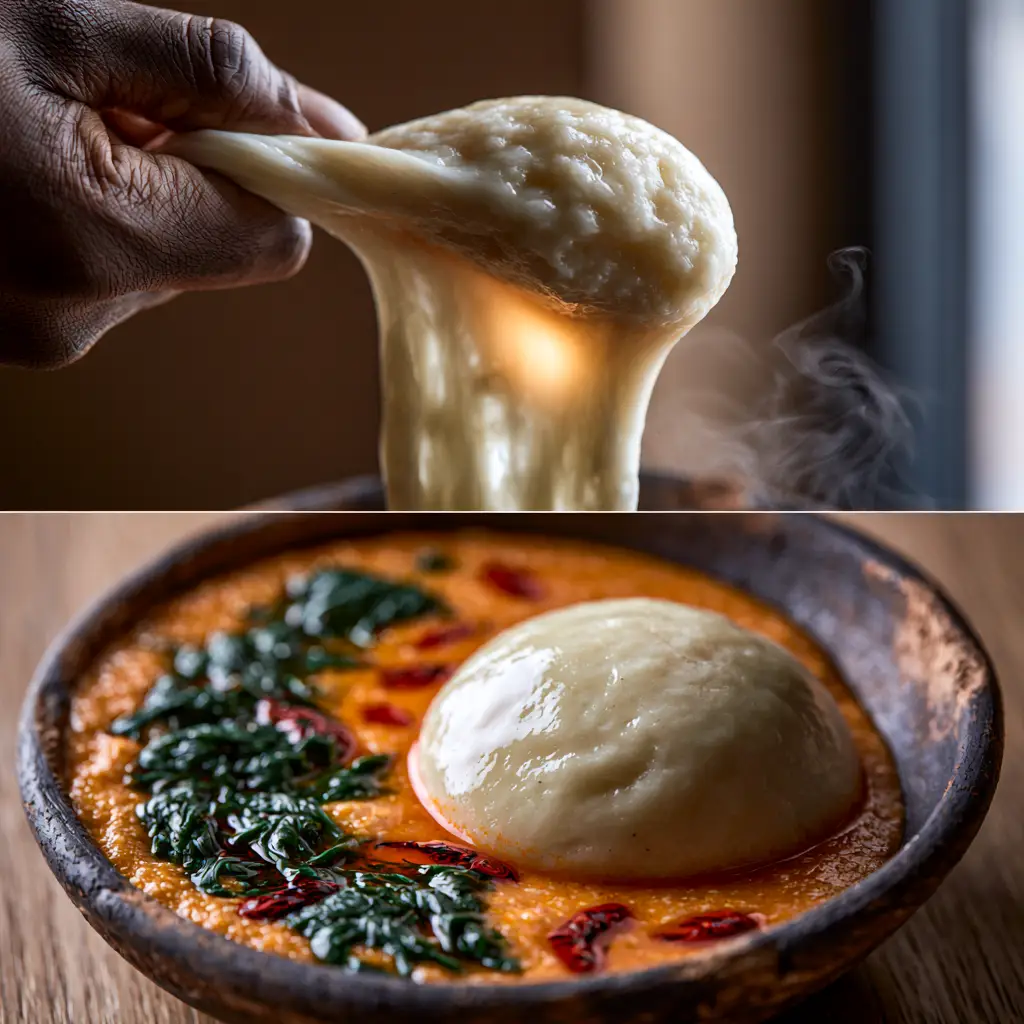
Why This Fufu Recipe Works: The Visual and Textural Edge
- The Iconic Stretch: Using high-quality fermented cassava flour allows for an elastic fufu texture that mimics the traditional “pounded” method without the heavy physical labor.
- Snow-White Brilliance: By controlling the water temperature and filtration, we maintain the pristine, snow-white color seen in professional food photography.
- Rich Flavor Contrast: The neutral, slightly tangy profile of the fufu acts as the perfect canvas for the savory, orange Egusi soup and its earthy spinach garnish.
- Glossy Finishing: We utilize a specific “steam-shaping” technique to ensure a perfectly smooth, glossy sphere that looks as good in a rustic dark clay bowl as it tastes.
The Anatomy of Authentic Fufu and Rich Egusi Soup
To recreate the visual recipe blueprint accurately, we must select ingredients that provide both the structural integrity of the fufu and the vibrant hues of the soup. While fufu is a simple starch, the quality of your cassava determines the final elasticity and mouthfeel.
Cassava Flour (Fermented): 2 cups (240g). This is the foundation; the fermentation process provides the necessary acidity and starch structure to achieve that signature stretch and smooth finish.
Water: 3 cups (720ml). Essential for the gelatinization process; it must be added at specific stages to prevent the formation of dry starch pockets or “lumps.”
Ground Egusi (Melon Seeds): 1.5 cups (150g). These provide the rich, nutty base and the textured “curd” appearance that makes the soup visually striking and hearty.
Red Palm Oil: 0.5 cup (120ml). This creates the vibrant orange hue and provides the characteristic “red palm oil drizzle” that pools beautifully around the white fufu.
Fresh Spinach: 3 cups (90g), chopped. Added at the final moment to achieve the “chopped wilted spinach” look without losing the deep green color to overcooking.
Invisible Essentials: Do not overlook 1 tsp (6g) of fine sea salt and 1 tbsp (15g) of ground crayfish. These provide the savory “umami” backbone that balances the richness of the oil.
Essential Tools for a Glossy, Smooth Finish
Achieving a macro-quality fufu requires more than just a pot; it requires the right mechanical advantage. A heavy-bottomed pot is crucial for even heat distribution, preventing the bottom of the dough from scorching before the center is cooked.
A sturdy wooden spoon (often called an omorogun in Yoruba culture) is your most important tool. You need a handle that won’t snap when you apply the “smash and fold” technique required to develop the fufu’s elasticity. Finally, a small bowl of cold water nearby is the secret to shaping the fufu into that perfectly smooth sphere seen in our visual prompt.
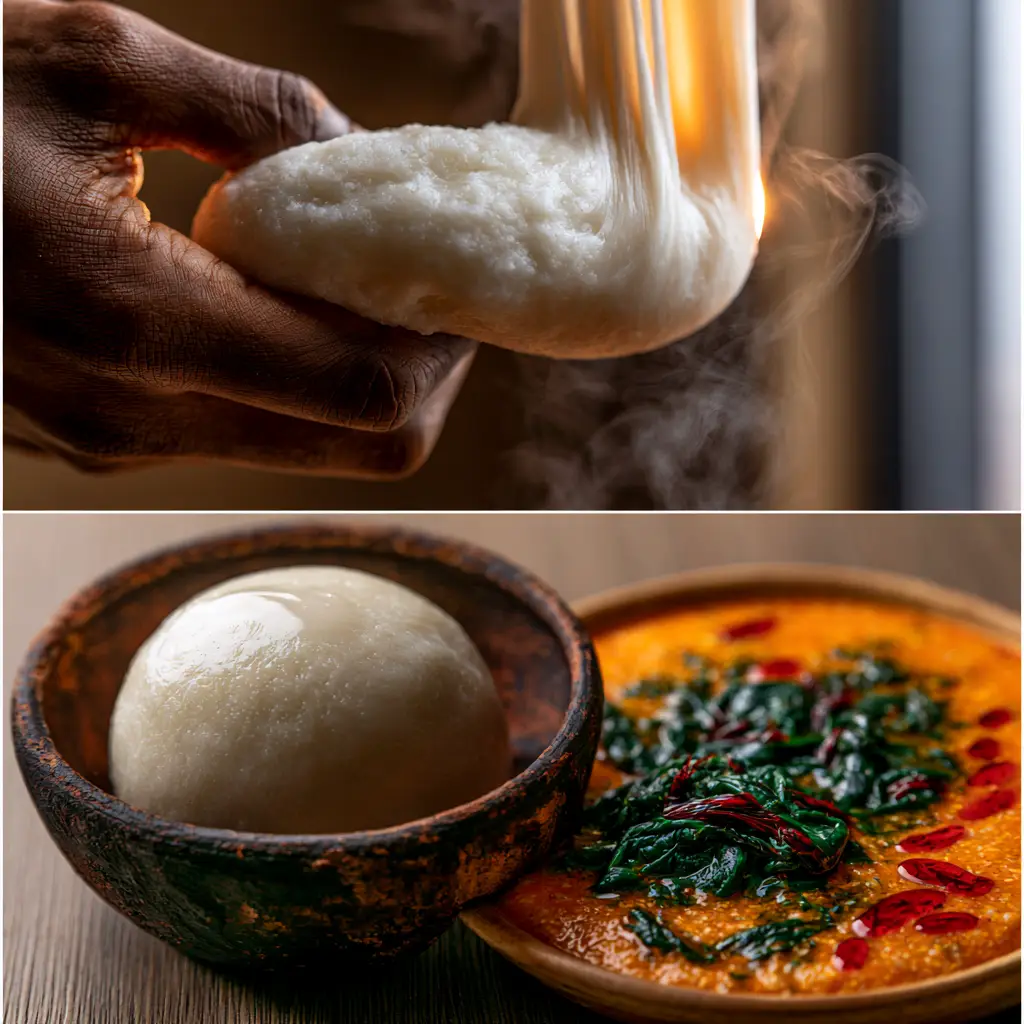
Step-by-Step: Crafting the Perfect Elastic Fufu Texture
Phase 1: Hydrating the Starch
Begin by whisking 2 cups (240g) of cassava flour into 2.5 cups (600ml) of room-temperature water in your heavy pot before turning on the heat. This “cold start” method ensures every starch granule is hydrated, which is the secret to a lump-free result.
Place the pot over medium heat and stir constantly with your wooden spoon. You will hear the sound of the liquid thickening, and within 3-5 minutes, the mixture will begin to form translucent clumps—this is the starch beginning to gelatinize.
Phase 2: The “Smash and Fold” Technique
Once the dough becomes thick and heavy, reduce the heat to low. This is where the work begins: use the back of your wooden spoon to smash the dough against the sides of the pot, then fold it back onto itself.
Continue this vigorous stirring and smashing for 5-7 minutes. You are looking for a visual change: the dough will transition from a dull, opaque white to a glossy, snow-white sheen. If the dough feels too stiff to pull, add the remaining 0.5 cup (120ml) of hot water, cover for 2 minutes to steam, and then resume smashing.
Phase 3: Preparing the Vibrant Egusi Soup
While the fufu steams, heat 0.5 cup (120ml) of red palm oil in a separate pan until it shimmers. Add your egusi paste (ground seeds mixed with a little water) and fry until small curds form, resembling scrambled eggs. This creates the “rich orange” base.
Incorporate your broth, crayfish, and seasonings. Just before serving, fold in the 3 cups (90g) of chopped spinach. Watch as it wilts into a deep green, providing a stunning contrast to the orange oil. This ensures your soup matches the vibrant descriptors in the visual blueprint.
Expert Tips for Professional Results
- Wet Your Hands: When shaping the fufu into a sphere, keep your hands or your shaping bowl damp with cold water. This prevents sticking and creates that high-end “glossy” surface highlight.
- The “Elastic Pull” Test: To see if your fufu is ready, pull a small piece. It should stretch significantly before breaking, exactly like the macro close-up in the prompt.
- Manage the Heat: If the fufu develops a yellowish tint, your heat is too high. Keep it at a low simmer during the final steaming phase to maintain the snow-white color.
- Texture Control: For a softer fufu, increase the water ratio by 10%. For a firmer “swallow” that holds its shape in the bowl, stick to the 1:1.5 flour-to-water ratio.
Storage, Reheating, and Maintaining Freshness
Fufu is best enjoyed immediately while the steam wisps are still rising. However, if you have leftovers, wrap the glossy spheres tightly in plastic wrap while they are still warm to prevent a dry skin from forming.
To reheat, place the wrapped fufu in a steamer basket for 5-8 minutes, or microwave with a small splash of water for 60 seconds. The goal is to re-introduce moisture to regain that elastic fufu texture. The Egusi soup actually improves the next day as the flavors meld, and it can be refrigerated for up to 3 days.
What to Serve With This Traditional Feast
While Egusi is the classic pairing, this fufu is versatile enough to accompany various textures. If you are looking for a lighter start to the meal, consider a crisp cucumber salad to cleanse the palate between bites of the rich soup.
For those who enjoy a fusion approach, the savory notes of the Egusi soup complement savory steak bites surprisingly well. If you have extra spinach on hand, you might also enjoy exploring a zucchini and spinach dish for a different take on leafy greens.
Traditionalists might prefer to keep the meal entirely West African, but for a global table, pairing this with a traditional chicken salad or even hearty family dinners can offer an interesting contrast in starch textures.
Frequently Asked Questions
Yes! This recipe uses the pot-and-wooden-spoon method, which replicates the results of traditional pounding by using a specific folding technique on the stovetop.
The stretch comes from mechanical agitation. You must vigorously ‘smash and fold’ the dough against the side of the pot for several minutes once it thickens to develop the starches.
Traditional cassava fufu is often made from fermented cassava, which gives it a characteristic slight tang and helps improve the final elastic texture.
Lightly dampen a small bowl with cold water, place a portion of hot fufu inside, and swirl the bowl in a circular motion until a smooth, glossy sphere forms.
Lumps usually form when flour is added to boiling water too quickly. To avoid this, use the ‘cold start’ method by whisking flour into room-temperature water before applying heat.
Mastering the Fufu and Egusi Experience

Fufu: The Ultimate Guide to Master the Perfectly Elastic Cassava Dough
Ingredients
Equipment
Method
- Whisk cassava flour into 2.5 cups of water in a cold pot to prevent lumps, then place over medium heat.
- Stir vigorously as it thickens. Use a smash-and-fold motion against the pot sides to develop elasticity and a glossy sheen.
- Heat red palm oil and fry the Egusi paste until curds form and the oil turns a rich orange.
- Add broth and seasonings, simmering until thick. Fold in spinach at the last minute until just wilted.
Notes
Always use fermented cassava flour for that authentic, slightly tangy flavor profile.
Bring the Flavors of West Africa to Your Kitchen
Creating the perfect Fufu is a rewarding culinary skill that brings a sense of ceremony to the dinner table. The combination of the snow-white, stretchy dough and the rich, orange, palm-oil-drizzled soup is a visual and flavor profile that stays with you. We hope this guide helps you achieve that professional, glossy result right at home.
Did your fufu have that perfect elastic pull? We would love to hear about your results in the comments below! Don’t forget to sign up for our newsletter for more deep-dive recipe guides, and share your beautiful creations on Pinterest to inspire other home cooks.