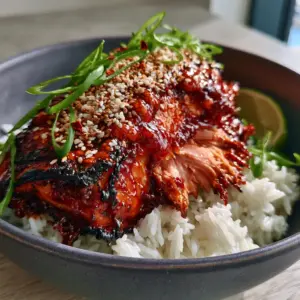
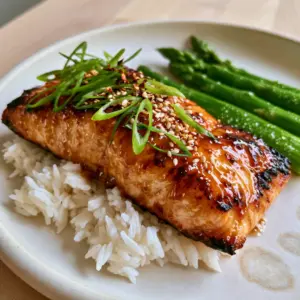
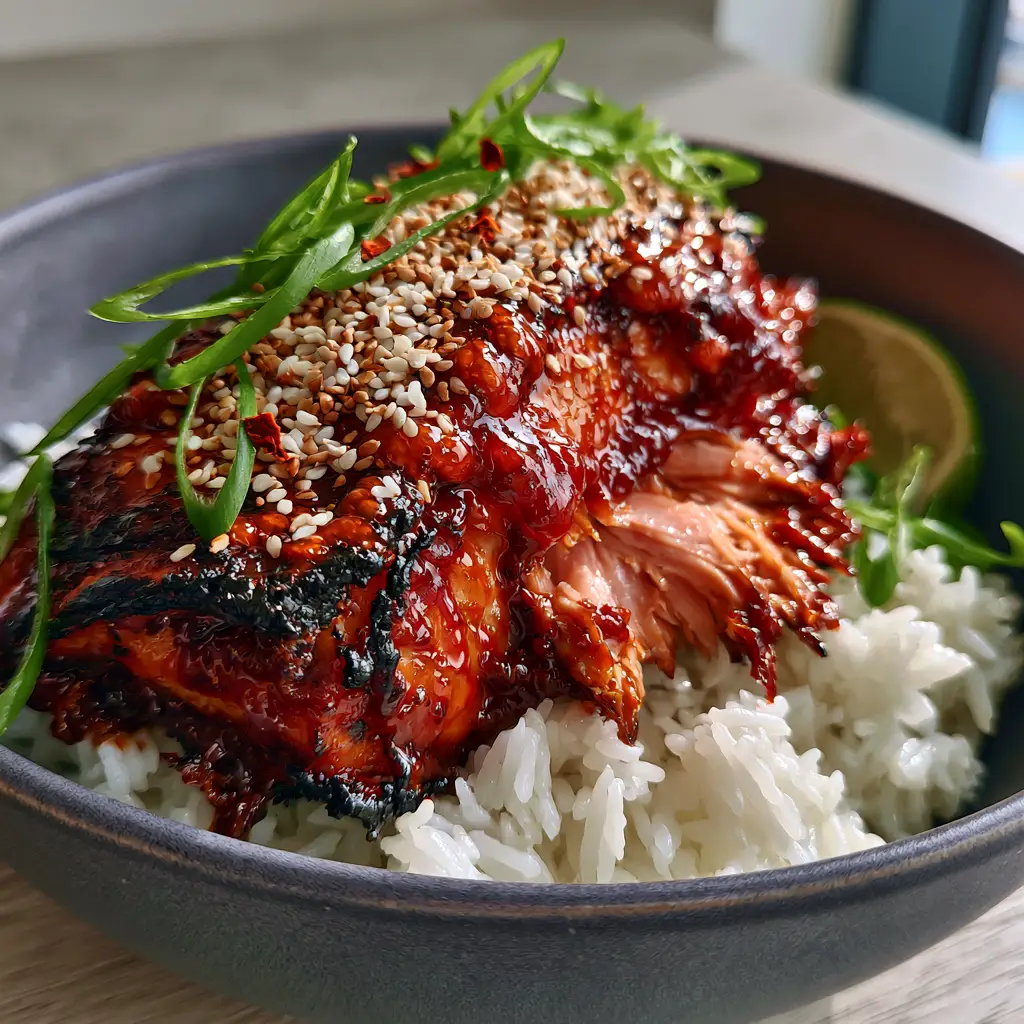
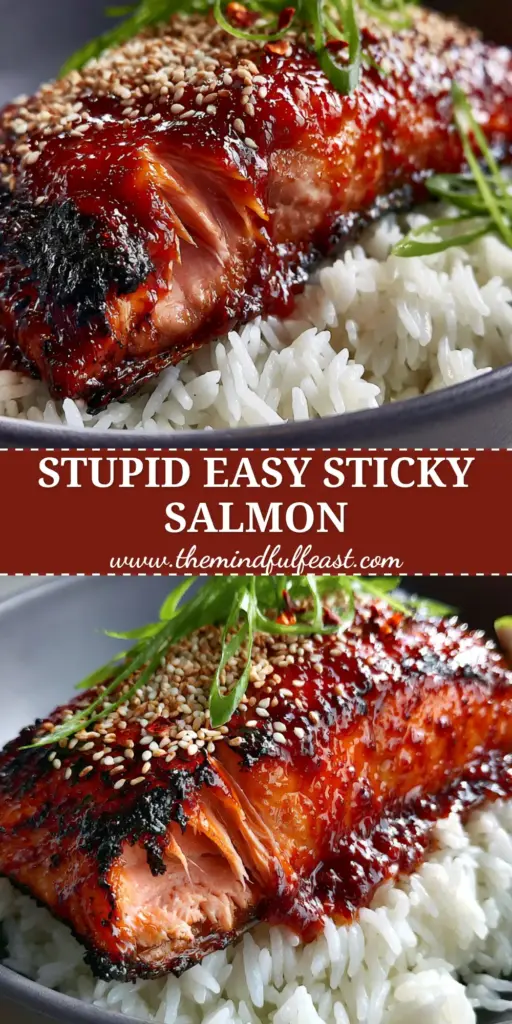
There is a specific kind of magic that happens when the fermented heat of Korean chili paste meets the floral sweetness of honey under a high-heat sear. This gochujang honey glazed salmon isn’t just a meal; it is a sensory experience designed to mimic the viral, high-contrast food photography that stops your scroll. Imagine a thick, succulent fillet where the edges have transitioned into a deep, caramelized char, providing a crisp counterpoint to the tender, moist pink meat inside.
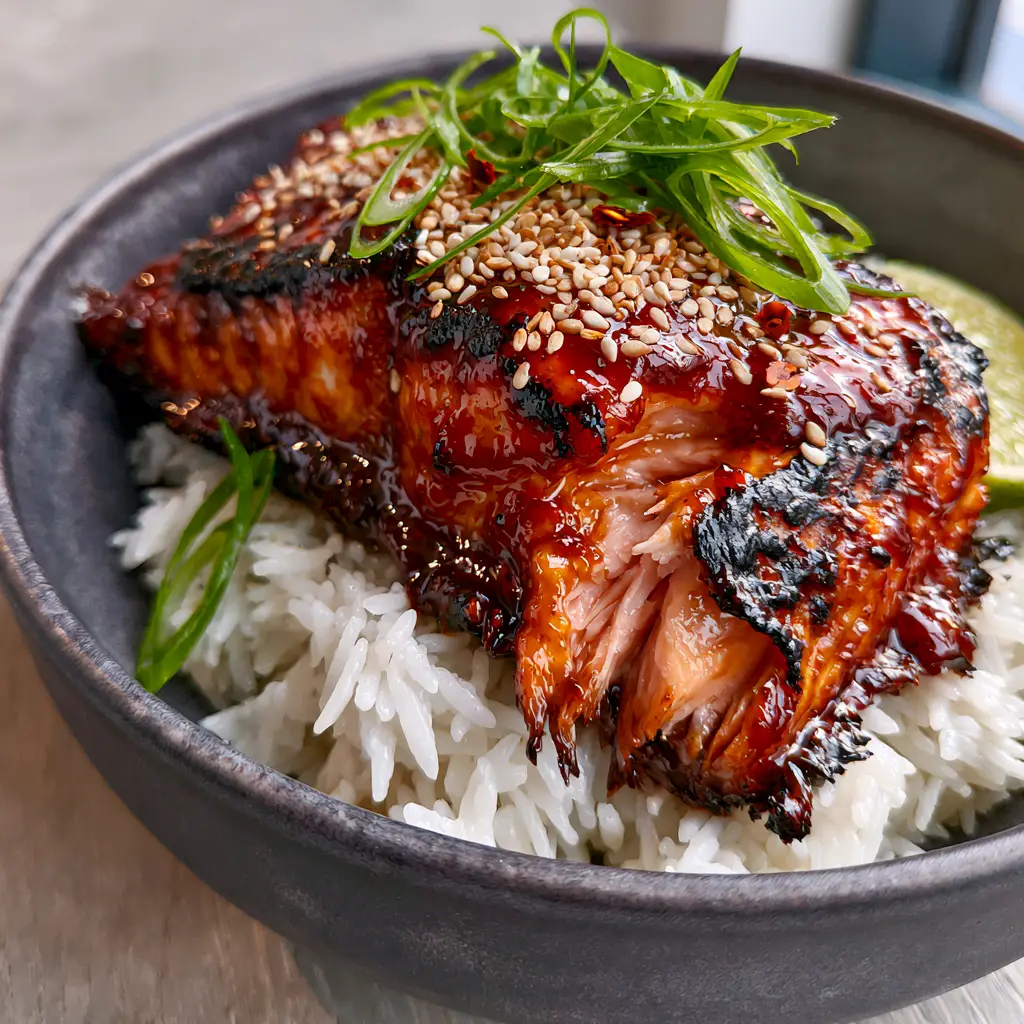
The star of the show is the thick, bubbling, glistening red-orange glaze that looks perpetually wet and sticky. As you flake the salmon open with a fork, the steam rises from a pristine bed of fluffy, individual grains of white jasmine rice. Every bite is a balance of umami, spice, and citrus, punctuated by the crunch of toasted sesame seeds and the sharp bite of fresh scallions. Whether you are cooking for a special date night or simply want to elevate your Tuesday evening, this dish delivers restaurant-quality results with home-cook accessibility.
Why This Korean-Inspired Salmon Recipe Works
- The Maillard Reaction Mastery: By using a specific ratio of honey to gochujang, we achieve deep charred edges without burning the delicate fish proteins.
- Textural Harmony: The contrast between the sticky, bubbling glaze and the light, airy jasmine rice creates a professional mouthfeel.
- Visual Brilliance: The vibrant red-orange sauce against the matte charcoal grey bowl and bright green scallions makes this a “gram-worthy” masterpiece.
- Balanced Flavor Profile: We balance the intense heat of the fermented chilies with fresh lime juice and savory soy sauce for a complete palate experience.
The Anatomy of the Ultimate Gochujang Glaze
To achieve that specific “bubbling” look described in our visual blueprint, we cannot rely on gochujang alone. We need foundational ingredients that create a stable emulsion. The honey provides the viscosity and sugar for caramelization, while a touch of unsalted butter at the end ensures the sauce remains glistening and “wet” even as it cools slightly on the plate.
Gochujang Paste: 3 tbsp (45g). This fermented Korean chili paste is the backbone of the dish, providing a deep, savory funk and moderate heat.
Raw Honey: 2 tbsp (42g). Honey acts as the primary sweetener and the vehicle for that thick, sticky texture that clings to the salmon.
Soy Sauce: 1 tbsp (15ml). Use a high-quality naturally brewed soy sauce to add necessary salt and enhance the umami depth.
Rice Vinegar: 1 tsp (5ml). The acidity cuts through the fat of the salmon and the sweetness of the glaze to keep the dish vibrant.
Fresh Garlic: 2 cloves (approx. 6g), finely minced. Garlic provides the aromatic base that blooms when the sauce hits the hot pan.
Grated Ginger: 1 tsp (2g). Ginger adds a subtle back-end warmth that complements the chili flakes.
Unsalted Butter: 1 tbsp (14g). This is the secret “invisible” ingredient that creates the bubbling, professional finish in the final moments of cooking.
Foundational Ingredients for the Perfect Bowl
Salmon Fillets: 2 large fillets, approx. 6oz (170g) each. Look for center-cut fillets with even thickness to ensure they flake open perfectly while remaining moist.
Jasmine Rice: 1 cup (185g) dry. Jasmine rice is prized for its floral aroma and its ability to remain as individual, fluffy grains rather than clumping.
Neutral Oil: 1 tbsp (15ml). Use avocado or grapeseed oil; these have high smoke points, which are essential for achieving those charred edges without the oil breaking down.
Toasted White Sesame Seeds: 1 tsp (3g). A heavy sprinkle provides a nutty crunch and visual contrast against the dark red glaze.
Green Scallions: 2 stalks, very thinly sliced. The bright green color is essential for that fresh, handheld smartphone photo aesthetic.
Dried Red Chili Flakes: A pinch. These add a secondary layer of heat and hint at the spicy profile of the gochujang honey glazed salmon.
Fresh Lime: 1 wedge. The citric acid is the final “key” to unlocking the richness of the fish.
Essential Equipment for Professional Results
To achieve the succulent, charred results seen in our Midjourney prompt, you need the right tools. A heavy-bottomed stainless steel or cast iron skillet is non-negotiable for superior heat retention. You will also need a fine-mesh strainer to wash the jasmine rice properly—removing excess starch is the only way to get those “individual grains.” Finally, a sharp chef’s knife is required to get those paper-thin scallion slices that professional food stylists swear by.
Step-by-Step: Crafting the Gochujang Honey Glazed Salmon
Preparing the Fluffy Jasmine Rice Base
Start by rinsing your 1 cup (185g) of jasmine rice under cold water until the water runs completely clear. This step is vital for removing surface starch, ensuring the grains remain distinct and fluffy. Combine the rice with 1.5 cups (350ml) of water and a pinch of salt in a small pot. Bring to a boil, then reduce to the lowest heat, cover, and simmer for 15 minutes. Once done, remove from heat and let it sit, covered, for 5 minutes before fluffing with a fork.
Whisking the Glistening Glaze
In a small bowl, whisk together the 3 tbsp (45g) of gochujang, 2 tbsp (42g) of honey, 1 tbsp (15ml) of soy sauce, 1 tsp (5ml) of rice vinegar, minced garlic, and ginger. The mixture should be thick and vibrant red-orange. Set this aside; we will add the butter directly to the pan later to create that bubbling effect.
Searing for Charred Edges
Pat your salmon fillets bone-dry with paper towels and season lightly with salt. Heat 1 tbsp (15ml) of neutral oil in your skillet over medium-high heat until it shimmers. Place the salmon fillets in the pan, flesh-side down first. Do not move them for 3-4 minutes. You are looking for a deep, golden-brown crust to form. Flip the fillets carefully using a fish spatula.
The Bubbling Glaze Finish
Once flipped, reduce the heat to medium. Pour the gochujang honey mixture over the salmon. Add the 1 tbsp (14g) of butter to the liquid in the pan. As the butter melts, use a spoon to continuously baste the salmon with the sauce. You will see the glaze begin to bubble and thicken, turning into a wet, sticky coating. The edges of the salmon will begin to darken and char slightly as the honey sugars caramelize. Cook for another 2-3 minutes until the salmon is just opaque and flakes easily.
Expert Tips for Success
- Room Temperature Fish: Take your salmon out of the fridge 15 minutes before cooking. This ensures the center warms through without overcooking the exterior.
- Don’t Over-Crowd: If cooking more than two fillets, use a larger pan. Overcrowding creates steam, which prevents those iconic charred edges.
- Visual Cues: Watch for the glaze to transition from a thin liquid to a “slow-burst” bubble. This indicates the water has evaporated, leaving behind the concentrated flavor.
- The Resting Period: Let the salmon rest for 2 minutes before serving. This allows the juices to redistribute, ensuring the meat is moist when you flake it open.
Storage, Reheating, and Meal Prep
This gochujang honey glazed salmon is best enjoyed immediately to preserve the texture of the glaze and the fluffiness of the rice. However, leftovers can be stored in an airtight container in the refrigerator for up to 2 days. When reheating, avoid the microwave if possible, as it can make the salmon rubbery. Instead, place the salmon in a pan over low heat with a splash of water and cover with a lid to steam it gently until warmed through.
What to Serve With Your Salmon Bowl
While the jasmine rice is the classic pairing, you can expand this meal into a full feast. A side of charred bok choy or a simple cucumber salad with sesame oil provides a cooling contrast to the spicy glaze. If you enjoy this flavor profile, you might also like experimenting with different grains or even serving the salmon over a bed of cold soba noodles for a refreshing summer twist.
Frequently Asked Questions
Yes, but ensure it is completely thawed and patted very dry with paper towels. Excess moisture will prevent the salmon from developing the charred edges required for this dish.
The key is the combination of honey and a final addition of cold butter. Basting the salmon over medium heat allows the sugars to caramelize and the fats to emulsify into a thick, glistening coating.
Rinse the dry rice under cold water for at least 60 seconds until the water runs clear. This removes excess starch that causes clumping, resulting in the fluffy texture seen in professional food photography.
It has a moderate, manageable heat. The honey and butter in the glaze significantly mellow the fermented spice of the gochujang, resulting in a balanced sweet-heat profile.
While gochujang has a unique fermented flavor, you can substitute it with a mix of Sriracha and a touch of miso paste, though the depth of flavor will differ slightly.
Recipe: Signature Gochujang Honey Glazed Salmon
Gochujang Honey Glazed Salmon with Charred Edges and Fluffy Jasmine Rice
Ingredients
Equipment
Method
- Rinse jasmine rice until water is clear. Combine with 1.5 cups water and salt in a pot. Bring to a boil, then simmer covered on low for 15 minutes.
- Remove rice from heat and let sit covered for 5 minutes. Fluff with a fork to reveal individual grains.
- Whisk gochujang, honey, soy sauce, vinegar, garlic, and ginger in a small bowl.
- Heat oil in a skillet over medium-high. Sear salmon flesh-side down for 3-4 minutes until deep charred edges form. Flip.
- Add glaze and butter to the pan. Baste the salmon continuously for 2-3 minutes as the sauce bubbles and thickens into a sticky coating.
- Place salmon over rice. Top with a heavy sprinkle of sesame seeds, sliced scallions, and chili flakes. Add a lime wedge to the side.
Notes
Ensure the pan is fully pre-heated before adding the fish to achieve that perfect caramelization.
Closing & Call to Action
Creating a restaurant-quality gochujang honey glazed salmon at home is all about the balance of heat and technique. The combination of the sticky, bubbling glaze and the succulent, charred salmon creates a meal that is as beautiful as it is delicious. If you enjoyed this recipe, please leave a comment below and share your photos with us! Don’t forget to follow us and save this recipe to your favorite boards on Pinterest for your next dinner inspiration.