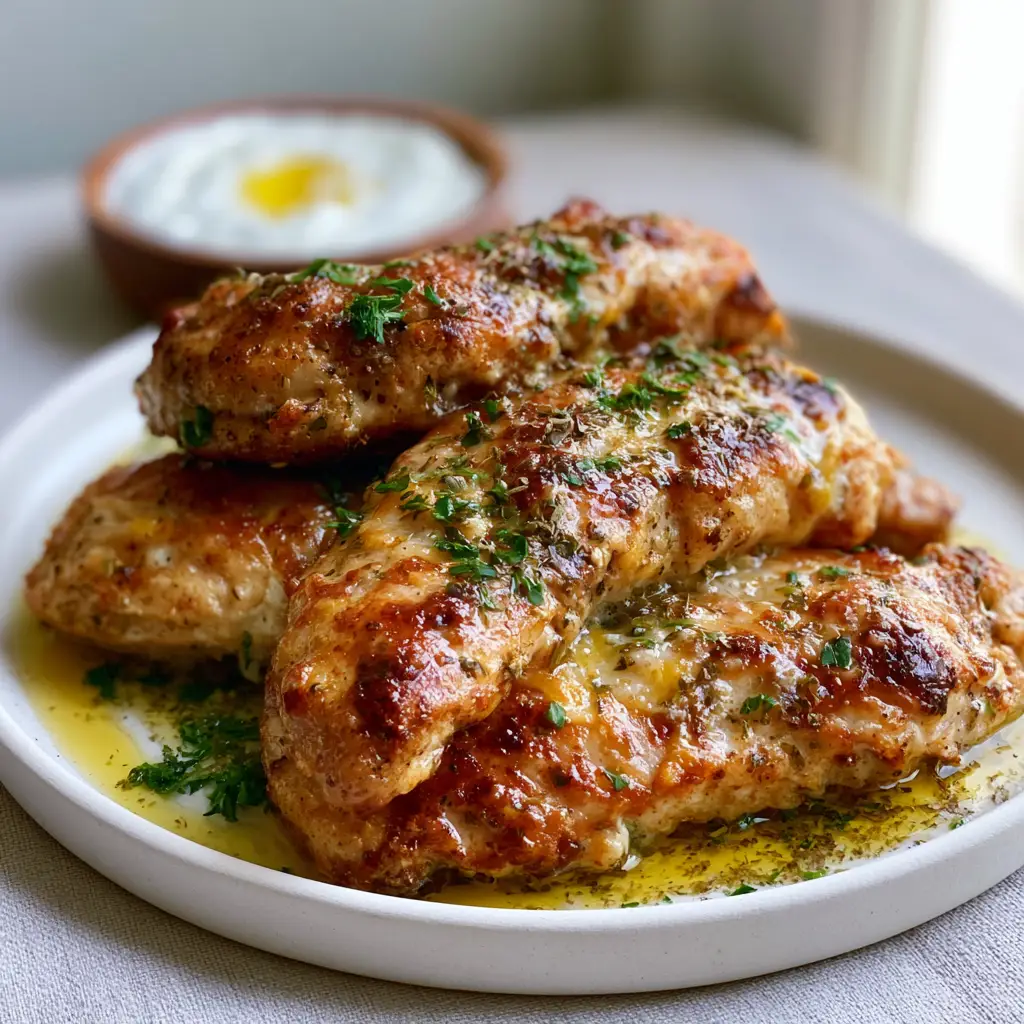
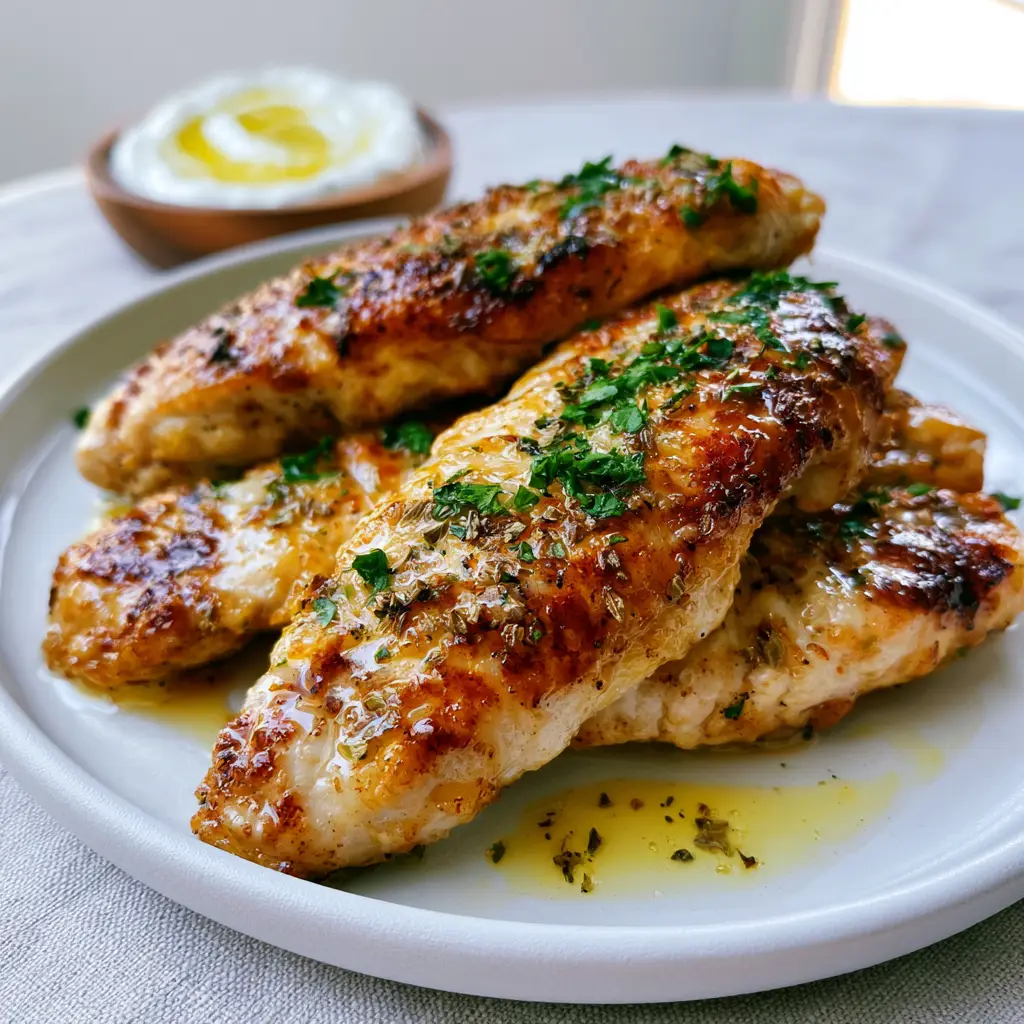
There is something undeniably magnetic about the perfect sear on a piece of poultry. These Greek chicken tenders aren’t just a quick weeknight meal; they are a masterclass in Mediterranean flavor profiles and culinary textures. When you pull these from the pan, they boast a deep, golden-brown crust that crackles slightly before giving way to an impossibly moist interior, all coated in a high-gloss lemon garlic butter glaze.
Every element of these Greek chicken tenders has been meticulously designed to hit the palate with precision. From the herbaceous notes of dried oregano and fresh flat-leaf parsley to the bright, acidic punch of fresh lemon, this recipe balances richness with vibrancy. The addition of a thick, cooling tzatziki sauce provides the necessary creamy counterpoint to the warm, peppery spice of the chicken.
If you have ever struggled with dry, lackluster chicken, this method will change your kitchen routine forever. We aren’t just cooking meat; we are building layers of flavor through proper searing techniques and emulsified pan sauces. Let’s dive into the science and soul of these restaurant-quality Greek chicken tenders.
The Signature Appeal of This Mediterranean Masterpiece
- High-Gloss Finish: The combination of extra virgin olive oil and unsalted butter creates a shimmering, velvet-like glaze that clings to every crevice of the golden crust.
- Shatter-Crisp Sear: By utilizing high-conductivity fats and specific heat management, we achieve a deep mahogany color without overcooking the delicate breast meat.
- Aromatic Depth: The dual-layered herb approach—using dried oregano for earthy depth and fresh parsley for bright top notes—ensures a multi-dimensional flavor profile.
- Textural Harmony: The contrast between the hot, seared protein and the cold, garlic-infused tzatziki creates a sensory experience that keeps you coming back for another bite.
Essential Ingredients for the Ultimate Greek Chicken Tenders
Chicken Breast Tenders (1.5 lbs / 680g): Choose high-quality, air-chilled tenders if possible. This ensures there is no excess water weight, allowing for a superior sear and better flavor absorption.
Extra Virgin Olive Oil (3 tbsp / 45ml): This serves as both the primary cooking fat and a finishing flavor. The “pool of oil” mentioned in our visual blueprint comes from a high-quality, cold-pressed Greek oil that adds a peppery, fruity finish.
Unsalted Butter (2 tbsp / 30g): Butter is the secret to that “glistening moisture” and glossy glaze. It provides the milk solids that brown and add a nutty complexity to the lemon-garlic base.
Fresh Lemon Juice (2 tbsp / 30ml) and Wedges: Acidity is the bridge between the heavy fats and the lean protein. The fresh wedges also serve as a vital visual and flavor garnish.
Garlic Cloves (3 large, minced): Fresh garlic is non-negotiable here. It infuses the butter and oil, creating a fragrant foundation that permeates the crust of the Greek chicken tenders.
Dried Oregano (1 tsp): This is the backbone of Greek seasoning. We use dried here because it withstands the high heat of the sear better than fresh, providing an earthy, floral aroma.
Fresh Flat-Leaf Parsley (2 tbsp, chopped): Added at the very end, parsley provides a pop of “bright green” color and a clean, grassy finish that cuts through the rich butter sauce.
Cracked Black Pepper & Kosher Salt: Coarse salt and freshly cracked pepper are essential for creating the visible spice flecks and the savory crust described in our visual guide.
Creamy Tzatziki Sauce: A mixture of full-fat Greek yogurt (1 cup / 240g), grated cucumber, garlic, and dill. This thick, white sauce is the essential dipping companion for the warm tenders.
Tools for Achieving the Perfect Seared Finish
To replicate the visual result of a “deep seared crust,” you need a heavy-bottomed skillet. A cast-iron pan or a high-quality stainless steel skillet is preferred over non-stick, as these materials allow for better heat retention and the formation of a fond (the flavorful brown bits at the bottom of the pan).
You will also need a fine-mesh grater for the garlic and lemon zest, a sharp chef’s knife for mincing the fresh parsley, and a pair of silicone-tipped tongs. The tongs are vital for flipping the Greek chicken tenders without piercing the meat and losing those precious juices.
Mastering the Sear: A Step-by-Step Guide
Preparing the Chicken for Maximum Crust
Start by patting your chicken tenders completely dry with paper towels. Any moisture on the surface of the meat will turn to steam in the hot pan, preventing the formation of that beautiful golden-brown crust.
In a small bowl, mix your kosher salt, cracked black pepper, and dried oregano. Generously season both sides of the chicken, pressing the spices into the meat so they adhere during the cooking process.
Executing the High-Heat Sear
Place your skillet over medium-high heat and add 2 tablespoons (30ml) of the extra virgin olive oil. Wait until the oil is shimmering and just beginning to show a faint wisp of smoke—this is the sensory cue that the pan is ready.
Lay the Greek chicken tenders into the pan, ensuring they are not crowded. You should hear a vigorous sizzling sound immediately; if you don’t, the pan isn’t hot enough. Sear for 3-4 minutes without moving them, allowing the deep golden crust to develop.
The Lemon Garlic Butter Baste
Flip the tenders once they release easily from the pan. Reduce the heat to medium and add the butter, the remaining olive oil, and the minced garlic to the spaces between the chicken.
As the butter melts and foams, tilt the pan slightly and use a large spoon to continuously pour the hot garlic butter over the chicken. This “basting” technique is what creates the “glossy lemon garlic butter glaze” and ensures the meat remains succulent.
The Final Flourish of Flavor
During the last minute of cooking, squeeze the fresh lemon juice into the pan. This will deglaze the surface and emulsify with the butter and oil to create that signature pool of golden herb-infused oil.
Remove the pan from the heat and immediately sprinkle the chopped fresh flat-leaf parsley over the top. The residual heat will wake up the aromatics of the herbs without wilting them into mush.
Expert Tips for Culinary Excellence
- The Temperature Rule: For the juiciest Greek chicken tenders, use a meat thermometer to pull the tenders when they reach 160°F (71°C). They will carry over to the safe 165°F (74°C) while resting.
- Emulsifying the Sauce: If your glaze looks broken (oily), add a teaspoon of water or chicken stock and whisk vigorously; this helps the fat and lemon juice bind into a smooth, glossy sauce.
- Tzatziki Thickness: Always squeeze the excess water out of your grated cucumber using a clean kitchen towel before adding it to the yogurt. This prevents the sauce from becoming watery.
- Herb Timing: Never add the fresh parsley at the beginning. Its volatile oils are delicate; adding it at the very end preserves the “bright green” visual flecks mentioned in our blueprint.
How to Store and Reheat Your Tenders
Store any leftover Greek chicken tenders in an airtight container in the refrigerator for up to 3 days. The glaze will solidify when cold due to the butter content, but it will return to its glossy state once reheated.
To reheat, avoid the microwave as it can make the chicken rubbery. Instead, place the tenders in a skillet over low heat with a splash of water or olive oil, covering the pan to trap steam until they are warmed through.
Perfect Pairings for a Greek Feast
These tenders are incredibly versatile and pair beautifully with a variety of Mediterranean sides. For a light lunch, serve them over a crisp Greek salad with plenty of feta and kalamata olives.
If you are looking for something heartier, these tenders complement a bowl of savory rice or even a side of creamy tomato ricotta pasta for a fusion twist. If you enjoy the buttery profile of this dish, you might also love our cowboy butter chicken for your next dinner rotation.
For a fun appetizer spread, serve these alongside crispy onion ring chips and the wooden bowl of tzatziki for the ultimate dipping experience.
Frequently Asked Questions
Yes, boneless skinless chicken thighs work beautifully. They contain more fat and are more forgiving of high heat, though you may need to increase the cooking time by 2-3 minutes per side to ensure they are fully cooked.
The key is surface dryness and heat. Pat the chicken very dry with paper towels and ensure the oil is shimmering-hot before adding the meat. Don’t crowd the pan, as this causes the temperature to drop and the chicken to steam rather than sear.
Add the garlic only after you have flipped the chicken and reduced the heat to medium. The butter and the juices from the chicken will help regulate the temperature, allowing the garlic to soften and perfume the oil without turning bitter and black.
To make it dairy-free, replace the butter with a high-quality vegan butter substitute or simply use more extra virgin olive oil. For the tzatziki, use a thick almond-based or coconut-based unsweetened Greek-style yogurt.
The gloss comes from the emulsion of butter and extra virgin olive oil. By basting the chicken with the foaming butter and adding lemon juice at the end, you create a thick, shimmering sauce that clings to the crust.
The Ultimate Greek Chicken Tenders Recipe
Greek Chicken Tenders with Lemon Garlic Butter and Creamy Tzatziki
Ingredients
Equipment
Method
- Pat the chicken tenders completely dry with paper towels. Mix salt, pepper, and oregano in a small bowl and coat the chicken thoroughly on all sides.
- Heat 2 tbsp of olive oil in a skillet over medium-high heat. Once shimmering, add chicken and sear for 3-4 minutes until a deep golden-brown crust forms. Do not move them prematurely.
- Flip the chicken. Add butter, remaining oil, and garlic. As butter foams, spoon it over the chicken repeatedly. Add lemon juice in the last minute to emulsify the sauce.
- Remove from heat and garnish with chopped fresh parsley and extra cracked pepper. Serve immediately with a side of tzatziki and lemon wedges.
Notes
Always squeeze the cucumber dry for the tzatziki to prevent a watery sauce.
Bring the Mediterranean Home Today
These Greek chicken tenders prove that simple ingredients, when treated with professional technique, result in an extraordinary meal. The combination of the citrusy glaze, the earthy oregano, and the cooling tzatziki offers a balanced bite that is as visually stunning as it is delicious.
We invite you to try this recipe and see the difference a proper sear makes. If you enjoyed this dish, please leave a comment below and share your results! Don’t forget to follow us on Pinterest for more culinary inspiration and visual recipe guides.