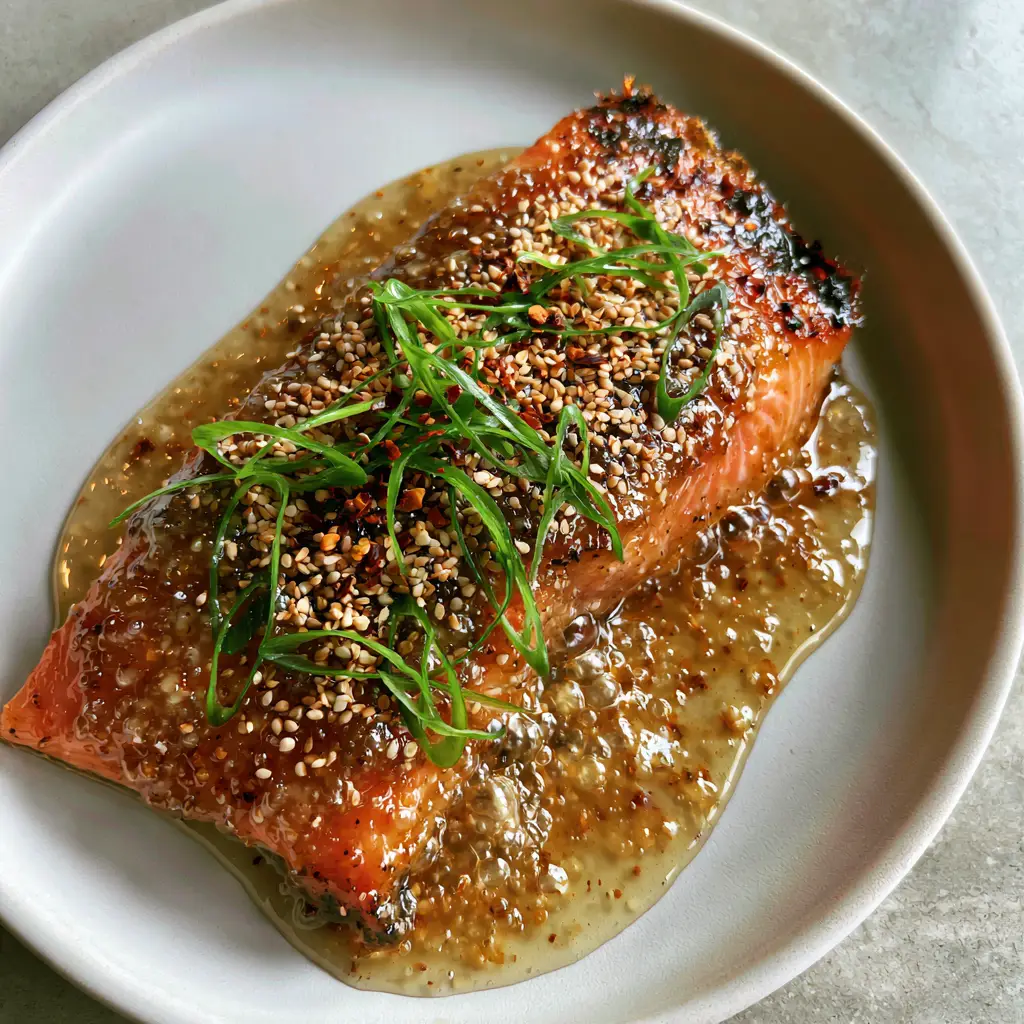
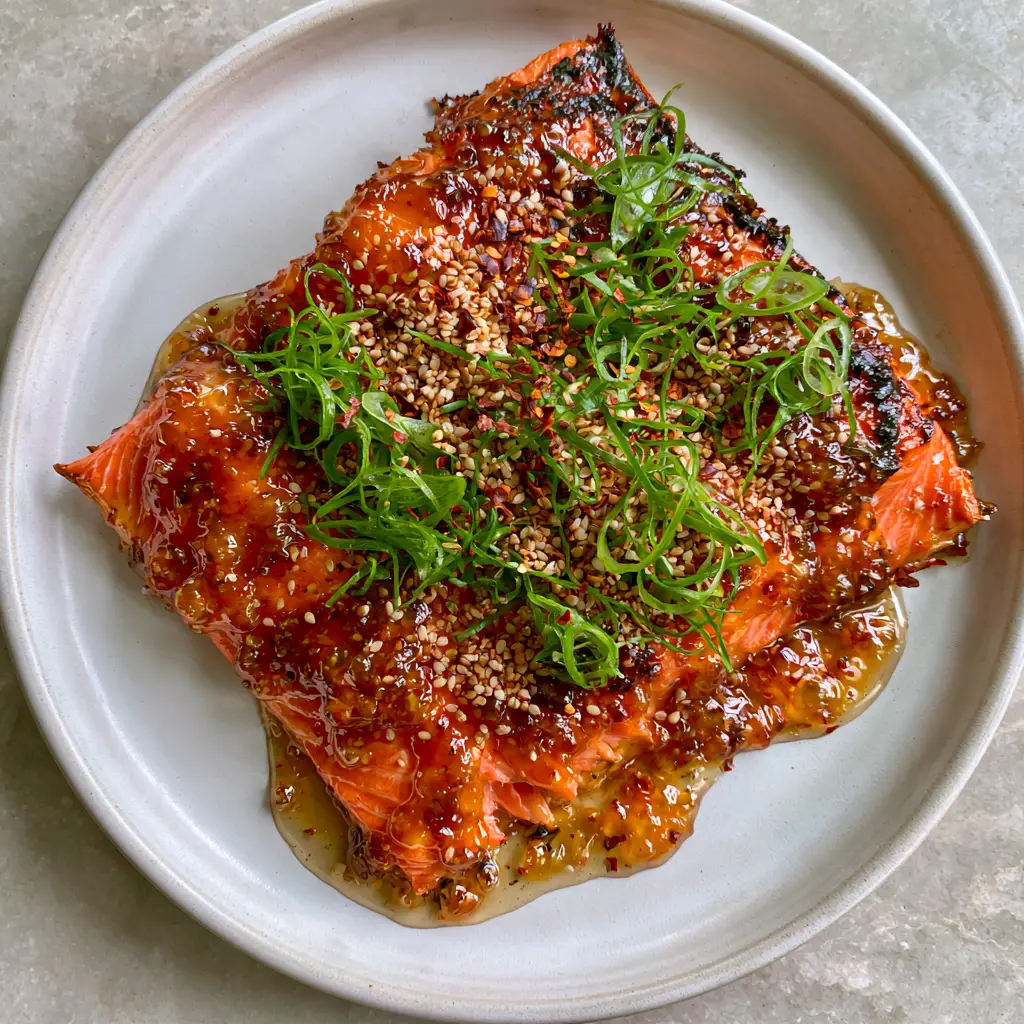
When you are craving a restaurant-quality dinner that looks as stunning as it tastes, this Honey-garlic steelhead trout is the ultimate solution. Featuring a vibrant coral-pink fillet draped in a thick, translucent amber sauce, this dish is the definition of edible art.
The secret lies in the contrast between the moist, tender flakes of the trout and the charred, caramelized edges that only a high-heat broiler can provide. Every bite offers a symphony of sweet honey, pungent toasted garlic, and the subtle heat of red chili flakes.
Whether you are hosting a formal dinner or simply upgrading your weeknight routine, the visual appeal of this dish—served on a minimalist matte white ceramic plate—is guaranteed to impress. Let’s dive into the culinary science of achieving that perfect bubbly glaze and flaky texture.
Why This Honey-garlic steelhead trout Recipe Works
- Visual Brilliance: The natural coral-pink hue of the steelhead trout provides a stunning backdrop for the bright green scallions and white sesame seeds.
- Texture Mastery: By using a two-stage cooking process, we achieve moist internal flakes and crispy, caramelized edges that pool with sticky sauce.
- Flavor Balance: The sweetness of the honey is perfectly cut by the acidity of lemon and the savory depth of toasted minced garlic.
- Speed and Efficiency: From prep to plate, this high-impact meal takes less than 25 minutes to execute, making it perfect for enthusiastic home cooks.
The Essential Components for a Bubbly Honey-Garlic Glaze
To achieve the specific visual blueprint of this dish, each ingredient plays a critical role in both the flavor profile and the final aesthetic. We aren’t just making a sauce; we are creating a translucent amber coating that shimmers under natural light.
Large Steelhead Trout Fillet (approx. 1.5 lbs / 680g): Steelhead is prized for its succulent, moist texture and vibrant color. If you cannot find steelhead, a thick salmon fillet is a suitable substitute, though the flavor of steelhead is slightly milder and more refined, much like a classic trout amandine.
Raw Honey (1/3 cup / 80ml): Honey is the foundational sugar that creates the “bubbly” effect when heated. It provides the viscosity needed for the glaze to pool slightly at the edges of the fish.
Fresh Garlic (4 cloves / 20g): We use minced garlic that will be toasted in the pan. This provides the “toasted minced garlic” visual mentioned in our blueprint and a deep, nutty aroma.
Low-Sodium Soy Sauce (2 tbsp / 30ml): This adds the necessary salt and contributes to the translucent amber color of the glaze. If you prefer a different protein with this profile, you might enjoy honey garlic grilled chicken thighs.
Lemon Juice (1 tbsp / 15ml): The acid is essential for breaking the sugar’s sweetness and keeping the fish bright. It also helps the glaze maintain its translucent clarity.
Toasted White Sesame Seeds (1 tsp / 5g): These provide a visual dusting and a slight crunch. They are essential for the “highly appetizing” finish described in the smartphone photo prompt.
Green Scallions (2 stalks / 20g): These must be bias-cut (sliced at an angle) to match the professional visual blueprint. Their bright green color pops against the coral trout.
Red Chili Flakes (1/2 tsp / 1g): A pinch of these provides a subtle heat and small flecks of red color that complete the garnishing trio.
High-Heat Oil (1 tbsp / 15ml): Avocado oil or grapeseed oil is required for searing the trout to achieve those charred, caramelized edges without the oil smoking out your kitchen.
Professional Tools for the Perfect Sear
To get the exact results seen in our smartphone-style photo, you need tools that can handle high heat. A heavy-bottomed cast iron skillet or a stainless steel pan is preferred for achieving that initial sear.
You will also need a broiler-safe baking sheet or platter if you aren’t using a skillet that can go from stovetop to oven. A sharp chef’s knife is non-negotiable for achieving those clean, bias-cut scallion slices that look so elegant on the plate.
The Master Class: How to Execute Honey-garlic steelhead trout
Preparing the Fish and the Aromatics
Start by patting your steelhead trout fillet completely dry with paper towels. This is a critical culinary step; moisture is the enemy of caramelization. If the surface is wet, the fish will steam rather than sear.
Mince your garlic finely. Do not use the jarred version, as the preservatives prevent the garlic from toasting into the golden-brown morsels required for the visual blueprint.
Searing for Structural Integrity
Heat your oil in a large skillet over medium-high heat. Once the oil shimmers, place the trout skin-side down (if skin is on) or directly on the flesh. Sear for 3-4 minutes until the edges begin to show a golden-brown crust.
Flip the trout carefully. The goal here is to initiate the Maillard reaction, creating those charred, caramelized edges that characterize the “succulent” appearance of the final dish.
Emulsifying the Bubbly Honey Garlic Glaze
Reduce the heat to medium and add the minced garlic to the pan, tossing it in the residual oil until it becomes fragrant and toasted. Pour in the honey, soy sauce, and lemon juice.
Allow the mixture to bubble vigorously. As the water content evaporates, the honey and soy will emulsify into a thick, translucent amber glaze. Spoon this sauce repeatedly over the fish to build layers of flavor.
The Broiler Finish
Transfer the skillet to the broiler for the final 2-3 minutes. Watch closely! The sugars in the honey will begin to darken and bubble intensely. You are looking for a few spots of deep char on the surface of the trout flakes.
Remove the fish when the internal temperature reaches 135°F (57°C) for a moist, medium finish. The fish will continue to cook slightly as it rests, ensuring the flakes remain visible and moist as described in the prompt.
Garnishing for Forensic Visual Accuracy
Transfer the trout to a minimalist matte white ceramic plate. Pour the remaining bubbly glaze from the pan over the center, allowing it to pool slightly at the edges.
Immediately dust with the toasted white sesame seeds. Sprinkle the bias-cut green scallions and the red chili flakes evenly across the surface. The heat from the fish will slightly soften the scallions, releasing their aroma.
Expert Tips for Success
- Check for Pin Bones: Steelhead trout often has small pin bones. Use tweezers to remove them before cooking to maintain the “succulent” eating experience.
- Don’t Crowd the Pan: If your fillet is too large for the skillet, cut it into two pieces. Crowding lowers the pan temperature and prevents caramelization.
- Cold Fish, Hot Pan: While some suggest bringing meat to room temperature, keeping the fish slightly chilled helps you get a better sear on the outside without overcooking the delicate interior.
- Glaze Consistency: If your glaze is too thin, remove the fish and reduce the sauce for an extra minute until it coats the back of a spoon.
Storage, Reheating, and Make-Ahead Advice
This Honey-garlic steelhead trout is best served immediately to appreciate the “bubbly” texture of the glaze. However, you can store leftovers in an airtight container for up to 2 days.
To reheat, avoid the microwave, which will toughen the fish. Instead, place it in a 300°F (150°C) oven with a splash of water and cover with foil until just warmed through. This preserves the moisture of the flakes.
While we don’t recommend freezing the cooked fish, you can whisk the honey garlic sauce ahead of time and store it in the fridge for up to a week for a quick 15-minute dinner later.
What to Serve with Honey-Garlic Steelhead
To balance the richness of the amber glaze, pair this fish with light, textural sides. A crisp green salad or steamed bok choy works beautifully to cut through the honey’s sweetness.
If you want a more substantial meal, serve the trout over a bed of jasmine rice to soak up the extra sauce, much like you would with a honey garlic butter steak and rice skillet.
For a crunchier side, these air fryer garlic parmesan fries provide a savory counterpoint to the sweet fish. If you are preparing a multi-course meal, start with a light marry me chicken pasta salad to keep the flavors exciting.
Frequently Asked Questions
Yes! Skin-on trout is actually preferred as the skin protects the delicate flesh during the high-heat sear and adds an extra layer of texture. Just be sure to sear the skin side first until crispy.
The bubbly texture comes from reducing the honey and soy sauce over medium heat until the water evaporates and the sugars emulsify. Finishing the dish under a broiler for 2 minutes creates the intense bubbling and caramelization seen in professional photos.
Most steelhead trout available in the US is farm-raised in closed tanks or raceways, which are considered environmentally responsible and sustainable options by organizations like Seafood Watch.
Steelhead trout is technically a rainbow trout that migrates to the ocean. It looks similar to salmon but has a slightly milder flavor and a leaner, more delicate texture that flakes easily when cooked.
Cutting scallions at an angle (on a bias) increases the surface area, which releases more flavor and provides a more sophisticated, restaurant-style visual garnishing that looks better in photos.
The Ultimate Honey-garlic steelhead trout Recipe
Honey-garlic steelhead trout Recipe With A Bubbly Caramelized Glaze
Ingredients
Equipment
Method
- Pat the steelhead trout fillet dry with paper towels to ensure a crispy sear. Season lightly with salt.
- Heat oil in a skillet over medium-high heat. Sear the trout for 3-4 minutes until edges are golden and caramelized.
- Add minced garlic to the pan, toasting for 30 seconds. Pour in honey, soy sauce, and lemon juice. Simmer until bubbly and translucent.
- Place the skillet under the broiler for 2-3 minutes until the glaze is thick and the fish edges are charred.
- Top with toasted sesame seeds, bias-cut scallions, and red chili flakes before serving on a matte white plate.
Notes
Watch the broiler closely to prevent the honey from burning.
Closing & Call to Action
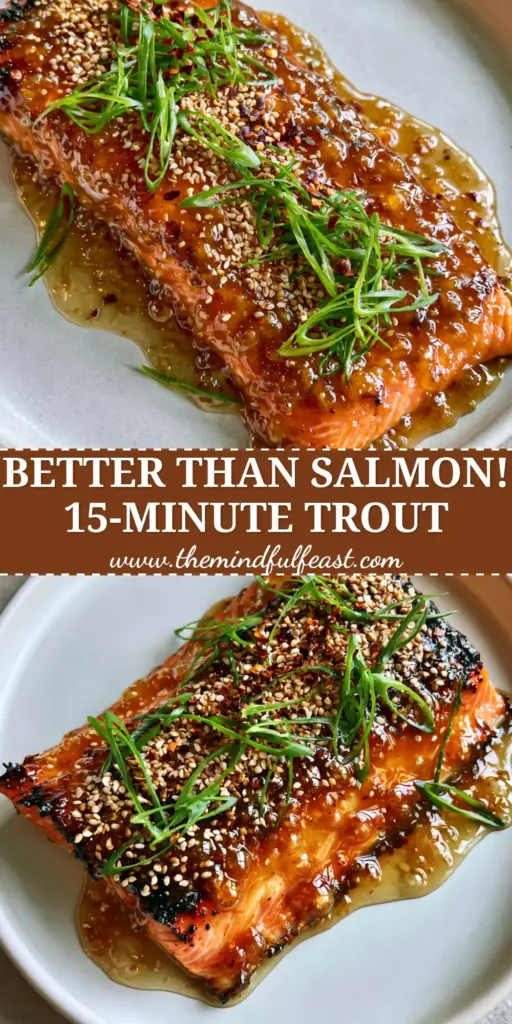
This Honey-garlic steelhead trout is a testament to how simple ingredients, when treated with professional technique, can create a world-class meal. The combination of the bubbly glaze, toasted garlic, and moist, coral-pink flakes makes it a staple for any home cook’s repertoire.
If you enjoyed this recipe, please leave a comment below and let us know how your glaze turned out! Don’t forget to follow us on Pinterest for more visually stunning recipe inspiration.