Indian curries represent one of the world’s most diverse and visually captivating culinary traditions, offering a spectrum of flavors that range from fiery and pungent to creamy and comforting. Today, we are diving deep into a specific variation that emphasizes texture and vibrant color: a thick, glossy turmeric-orange curry featuring tender sweet potatoes and protein-rich chickpeas. This dish is designed to be a feast for the eyes as much as the palate, mirroring the high-quality smartphone photography style that makes modern home cooking so approachable.
The beauty of Indian curries lies in the layering of aromatics and the careful tempering of spices. In this recipe, we focus on achieving that signature thick, vibrant orange-red sauce that clings perfectly to every soft-cooked sweet potato chunk. We will also master the art of the heavy coconut cream swirl, creating a stunning marble effect that adds both visual drama and a luxurious mouthfeel to the final presentation.
Whether you are looking for a comforting weeknight meal or a show-stopping centerpiece for a dinner party, understanding the science of Indian curries will elevate your kitchen skills. Let’s explore how to transform humble ingredients into a steaming bowl of aromatic excellence, complete with fluffy, long-grain basmati rice and a scattering of toasted cumin seeds.
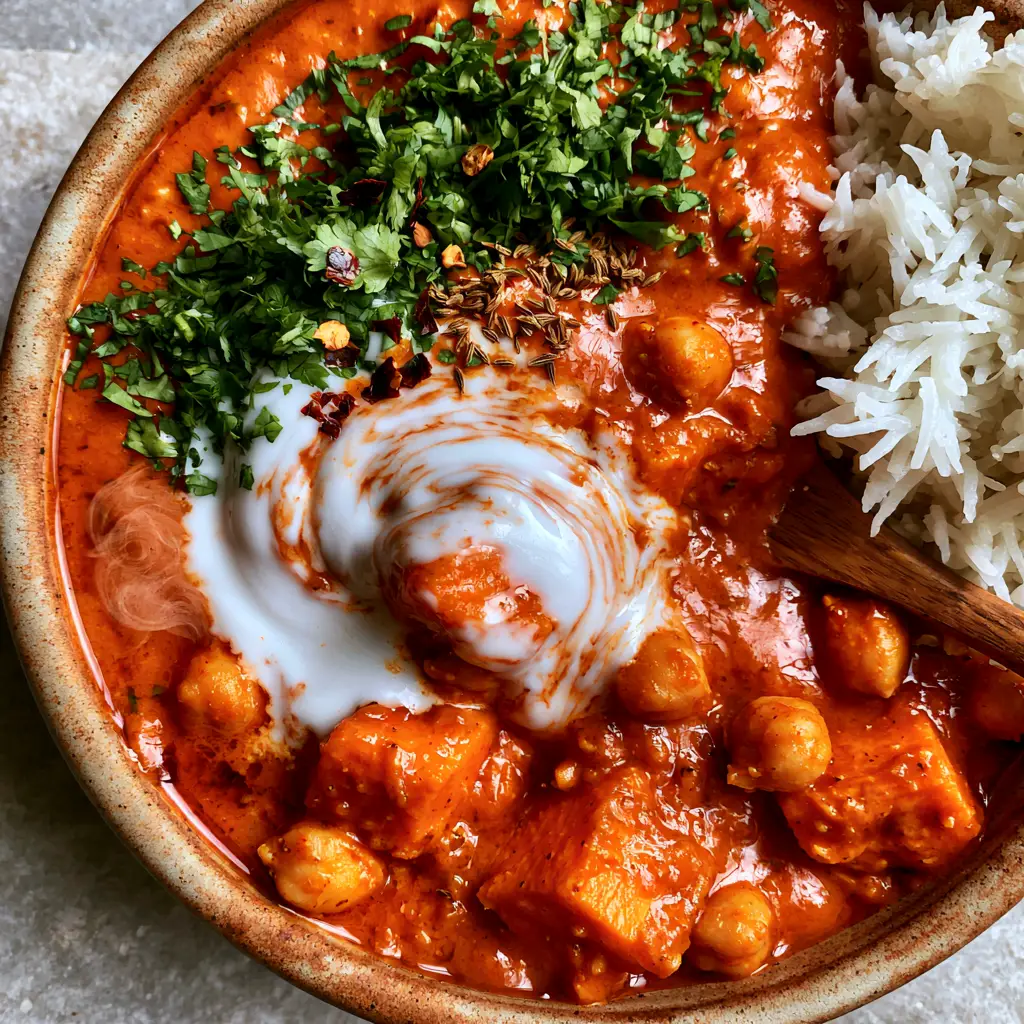
The Visual and Sensory Appeal of Artisan Indian Curries
- Glossy Turmeric-Orange Sauce: A thick, emulsified base that glows with the warmth of ground turmeric and red chili, providing a rich backdrop for the vegetables.
- Textural Contrast: Soft-cooked sweet potato chunks that melt in your mouth paired with whole, tender chickpeas that offer a satisfying bite.
- The Marble Effect: A heavy swirl of thick white coconut cream drizzled just before serving, creating beautiful contrast against the orange sauce.
- Aromatic Garnishes: Bright green freshly chopped cilantro, tiny dried red chili flakes for heat, and toasted cumin seeds for a nutty, earthy crunch.
- Distinct Long-Grain Basmati: Fluffy, steaming white rice where every grain is separate, acting as the perfect vessel for the rich curry sauce.
Critical Components for Your Glossy Curry Base
Sweet Potato (600g / approx. 4 cups cubed): These provide the primary bulk and sweetness, releasing natural starches that help thicken the sauce as they soften during the simmer.
Canned Chickpeas (1 can / 400g): Whole and tender, these legumes provide plant-based protein and a dense texture that complements the softer potato cubes perfectly.
Coconut Cream (1/2 cup / 120ml): Use the thick, fatty portion from the top of the can to achieve that heavy, marble-like swirl seen in professional food photography.
Turmeric Powder (1 tsp / 3g): This is the essential pigment responsible for the vibrant orange hue of the sauce, providing earthy undertones and anti-inflammatory benefits.
Toasted Cumin Seeds (1 tsp / 2g): Toasting these seeds in oil releases essential oils, providing a deep, smoky aroma that pre-ground cumin simply cannot match.
Basmati Rice (1.5 cups / 300g): The long, distinct grains are essential for a professional finish, ensuring the meal doesn’t become heavy or clumpy.
Fresh Cilantro (1/4 cup / 10g): Chopped finely, this adds a pop of bright green color and a citrusy top note that cuts through the richness of the coconut cream.
Dried Red Chili Flakes (1/2 tsp / 1g): These offer tiny specks of deep red color and a customizable level of heat that lingers on the palate.
Aromatic Base (Onion, Garlic, Ginger): The “holy trinity” of Indian curries, sautéed until golden to create a deep, savory foundation for the spices to cling to.
Vegetable Oil (2 tbsp / 30ml): A neutral oil with a high smoke point is required for tempering the whole cumin seeds and searing the aromatics without burning.
Essential Equipment for Mastering Indian Curries
To achieve the “smartphone photo” quality look, you need a heavy-bottomed pot, such as a Dutch oven, which ensures even heat distribution and prevents the thick sauce from scorching. A wooden spoon is not just a tool but a visual element; it is used here to drizzle the coconut cream precisely to create those artistic swirls. You will also need a fine-mesh strainer to rinse your basmati rice, removing excess surface starch to ensure the grains remain long and distinct rather than sticky. Finally, a small skillet is useful for dry-toasting your cumin seeds until they become fragrant and dark golden-brown.
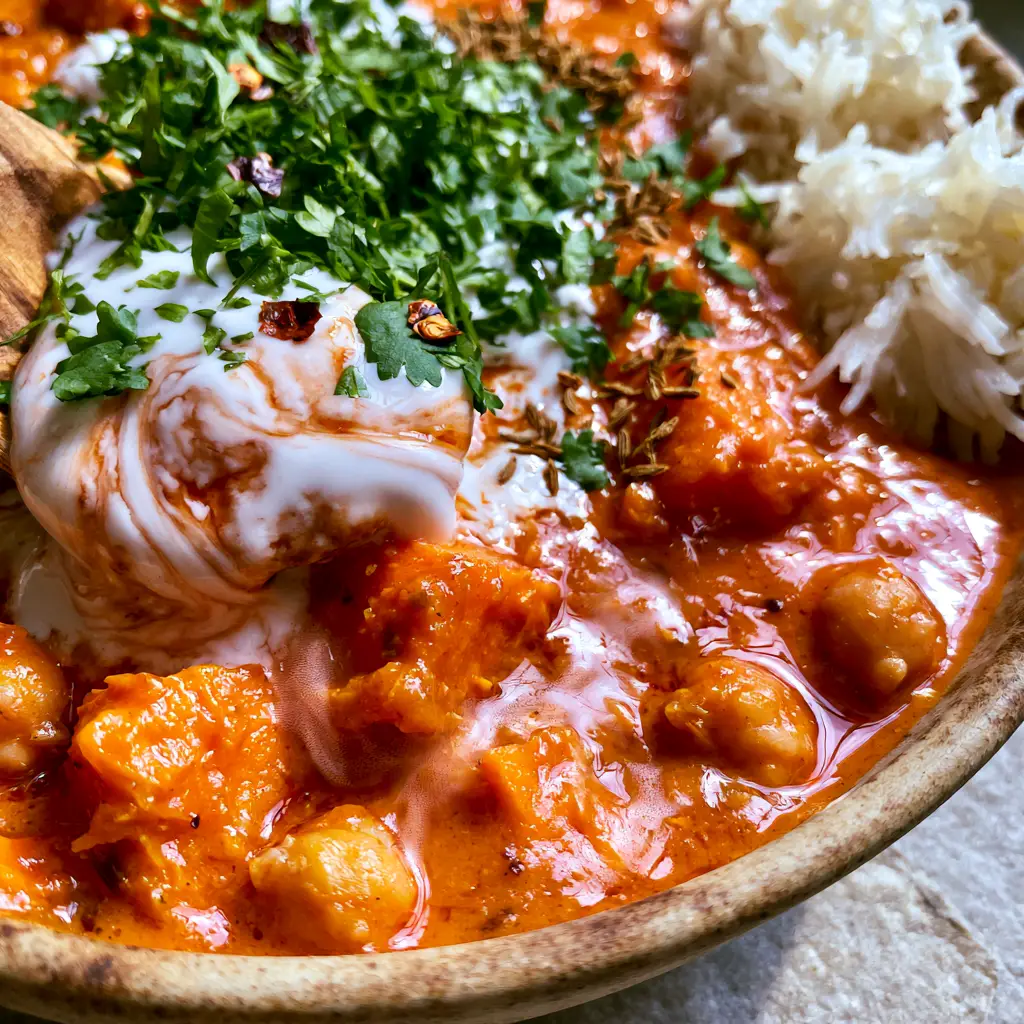
Step-by-Step Culinary Forensic Guide
1. Preparing the Aromatic Foundation
Begin by heating 2 tbsp (30ml) of neutral oil in your heavy pot over medium heat. Once the oil is shimmering, add 1 tsp (2g) of whole cumin seeds and 1/2 tsp (1g) of red chili flakes. Listen for the “sizzle and pop”—this sensory cue indicates that the volatile oils are being released into the fat, which will flavor the entire dish. Add one finely diced large onion and sauté for 8-10 minutes until it reaches a deep translucent gold.
2. Building the Turmeric-Orange Sauce
Stir in 1 tbsp (15g) each of minced garlic and ginger, cooking for just 60 seconds until fragrant. Add 1 tsp (3g) of turmeric, 1 tsp (2g) of garam masala, and 1 tsp (2g) of salt. Quickly follow with a splash of water to prevent the spices from burning. Pour in 1.5 cups (360ml) of vegetable broth and 1 can (400g) of crushed tomatoes. Stir until the mixture becomes a thick, glossy, vibrant orange-red sauce.
3. Simmering the Sweet Potatoes and Chickpeas
Add 4 cups (600g) of cubed sweet potatoes and one drained can (400g) of chickpeas to the pot. Ensure the sweet potatoes are submerged in the liquid. Cover and simmer for 20-25 minutes. You are looking for the sweet potato chunks to be “fork-tender” but not falling apart—they should hold their shape visually while being soft to the bite.
4. Preparing the Fluffy Long-Grain Basmati
While the curry simmers, rinse 1.5 cups (300g) of basmati rice under cold water until the water runs clear. Boil 3 cups (720ml) of water with a pinch of salt. Add the rice, cover tightly, and reduce heat to low for 15 minutes. Remove from heat and let sit, covered, for 5 minutes before fluffing with a fork. This ensures the “distinct, long grains” described in the visual blueprint.
5. The Signature Drizzle and Finish
Remove the curry from the heat. Take a wooden spoon and scoop up the thick white coconut cream. Gently drizzle it in a circular motion over the surface of the curry. Do not stir it in completely; use the tip of the spoon to lightly swirl the cream into the orange sauce to create a marble effect. Finish with a generous scattering of freshly chopped cilantro and the remaining toasted cumin seeds.
Expert Tips for Visual and Flavor Success
- Rinse Your Rice: To get those distinct, long grains of basmati, you must remove the surface starch. If you skip this, the rice will clump and ruin the professional aesthetic.
- Temperature Matters for Cream: Ensure the curry has stopped boiling before adding the coconut cream swirl. If the sauce is too hot, the cream may break and lose its thick, white, opaque appearance.
- Sweet Potato Sizing: Cut your potatoes into uniform 1-inch cubes. This ensures they cook at the same rate and look consistent in the rustic ceramic bowl.
- Toast Your Spices: Never skip toasting the cumin seeds. The difference in aroma between raw and toasted seeds is the hallmark of high-quality Indian curries.
Effective Storage and Reheating Protocols
Indian curries are famous for tasting even better the next day as the spices have more time to meld. Store any leftovers in an airtight container in the refrigerator for up to 4 days. When reheating, the sauce may have thickened significantly due to the sweet potato starch. Add a small splash of water or coconut milk to loosen the sauce back to its glossy consistency. For long-term storage, this curry freezes well for up to 3 months, though the sweet potatoes may become slightly softer upon thawing.
Creative Pairings and Serving Suggestions
While this curry is a complete meal with basmati rice, you can elevate the experience with complementary side dishes. If you are serving this as part of a larger spread, consider a light chilled edamame salad to provide a crisp contrast to the warm spices. For those who enjoy a variety of textures, serving this alongside a zesty cold bean salad can add a refreshing acidic note to the palate.
If you find yourself craving something sweet after such a savory meal, these flavors pair beautifully with a fruit-forward dessert like a rustic peach galette or even some moist banana brownies for a decadent finish. For those late nights when you want a smaller portion, this curry also makes for one of the most satisfying savory midnight snacks when reheated quickly.
Frequently Asked Questions Regarding Indian Curries
Yes, but they may cook faster and release more water. Add them directly from frozen and reduce the simmering time by 5-8 minutes to prevent them from becoming mushy.
The key is using high-quality turmeric powder and ensuring it is cooked into the fat (oil) along with aromatics. This ‘blooms’ the pigment, creating a deep, glossy orange-red hue rather than a dull yellow.
Rinsing the rice until the water runs clear is non-negotiable. This removes the surface starch that causes clumping, allowing each long grain to remain separate and steaming.
This usually happens if the curry is too hot or if the cream is too thin. Use only the thick, solid part of canned coconut cream and drizzle it over the curry after it has been removed from the heat source.
The Ultimate Creamy Sweet Potato and Chickpea Curry
Indian Curries: The Ultimate Creamy Sweet Potato and Chickpea Recipe
Ingredients
Equipment
Method
- Heat oil in a heavy pot and add cumin seeds and chili flakes until they sizzle and release aroma.
- Add aromatics and turmeric, then sweet potatoes and chickpeas. Simmer for 25 minutes until the sauce is thick and potatoes are soft.
- Drizzle coconut cream from a wooden spoon and swirl lightly. Top with cilantro and toasted cumin.
Notes
Don't stir the coconut cream fully; leave visible swirls for the best look.
Join the Mindful Feast Community
We hope this deep dive into the textures and techniques of Indian curries inspires you to create your own vibrant masterpiece at home. The combination of glossy sauce, marbleized coconut cream, and perfectly cooked sweet potatoes is a testament to how beautiful plant-based cooking can be. If you enjoyed this recipe, please leave a comment below and share your results with us!
Don’t forget to follow us on Pinterest for more visually stunning recipe inspiration and kitchen tips. You can also sign up for our newsletter to get the latest culinary blueprints delivered straight to your inbox. Happy cooking!