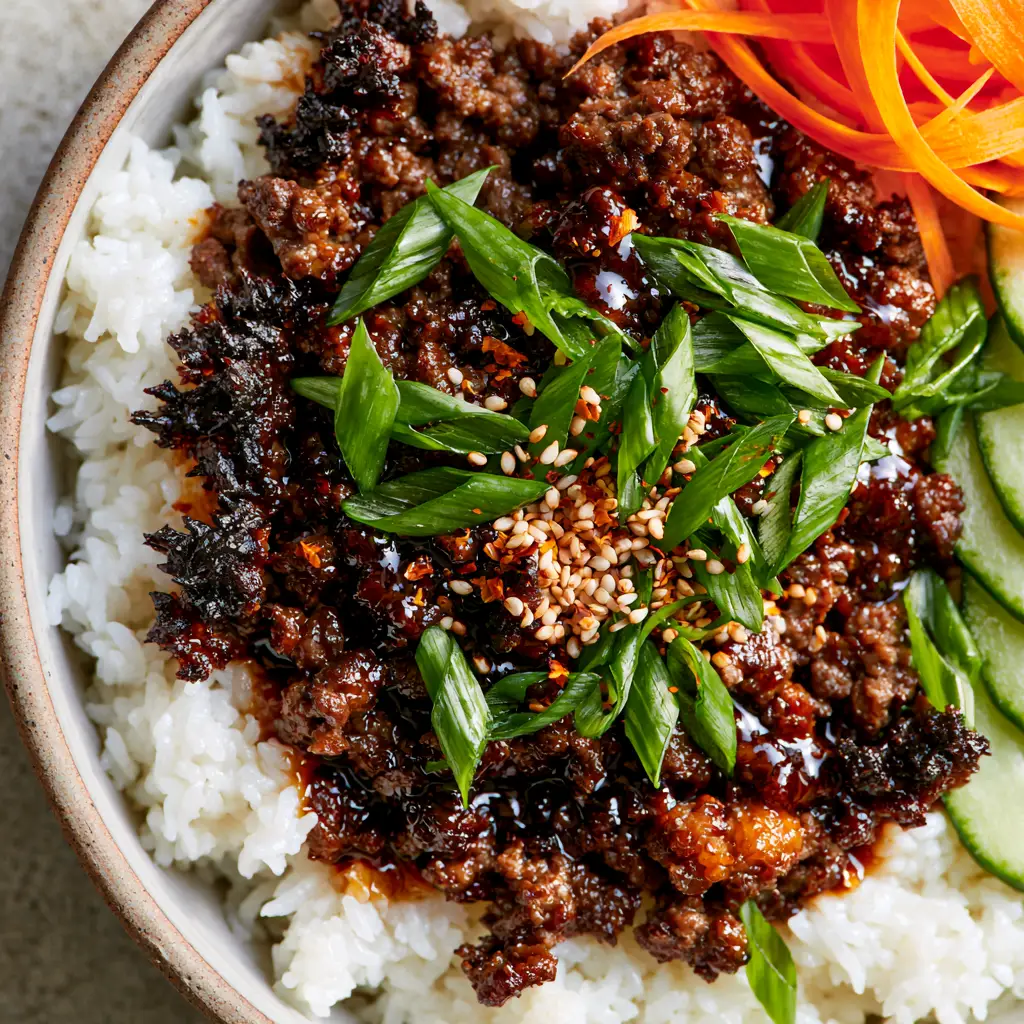
There is a specific culinary magic that happens when high-heat caramelization meets the savory depth of a soy-ginger reduction. These Korean beef bowls are designed to recreate that exact sensory experience you see in high-end gastropubs: deeply browned, jagged edges of protein contrasted against the pristine, pillowy softness of steamed jasmine rice.
The visual appeal of this dish lies in its vibrant color palette and varied textures. From the lacquer-like sheen of the dark brown sauce to the bright pop of neon-orange julienned carrots and the cool, translucent green of Persian cucumbers, every element serves a structural and flavor purpose.
If you are looking for a meal that delivers “restaurant-quality” results in under 30 minutes, this recipe is your new weeknight staple. It bridges the gap between intensive traditional techniques and the efficiency required for modern home cooking, much like our popular honey garlic ground beef bowl.
Why This Specific Recipe Outperforms Traditional Stir-Fries
- Textural Contrast: We utilize a specific searing technique to ensure the beef isn’t just cooked, but “shattered”—providing those crispy, charred bits that hold onto the sauce.
- Glossy Architecture: The glaze is formulated to be a “lacquer,” meaning it clings to the meat rather than pooling at the bottom of the bowl.
- Raw Botanical Balance: Unlike many heavy beef dishes, the inclusion of chilled Persian cucumbers and raw carrots provides a necessary enzymatic crunch and temperature contrast.
- Macro-Friendly Depth: By focusing on high-protein ground beef and aromatic aromatics, we achieve maximum flavor density with foundational ingredients.
The Foundation: Essential Ingredients for the Perfect Korean Beef Bowls
Lean Ground Beef (85/15 or 90/10): The fat content is critical; you need enough rendered fat to fry the edges of the meat, but not so much that the “lacquered” glaze becomes greasy. If you are exploring other protein options, this technique works similarly for many of our ground beef dinner recipes.
Jasmine Rice: Chosen for its floral aroma and slightly sticky but distinct grain structure. It provides the “steaming white foundation” required to absorb the ginger-infused runoff from the beef.
Fresh Ginger and Garlic: These are the aromatic backbone. Freshly grated ginger provides a sharp, spicy heat that dried powder simply cannot replicate, cutting through the richness of the beef.
Low-Sodium Soy Sauce: This provides the “thick dark brown” color and the essential umami. Using low-sodium allows us to control the salt levels while reducing the sauce to a thick consistency.
Dark Brown Sugar: The molasses content in dark brown sugar is the secret to that deep, mahogany caramelization and the “stickiness” of the final glaze.
Toasted Sesame Oil: A finishing oil that adds a nutty, toasted top note. Never sear with this oil, as its smoke point is too low; it is purely for aromatic depth.
Persian Cucumbers: These are preferred over English cucumbers for their thin skin and extra-crisp interior. They provide a “chilled” element that refreshes the palate between bites of savory beef.
Julienned Carrots: Raw carrots add a sweet, earthy crunch. Cutting them into thin ribbons or matchsticks ensures they integrate into the bowl rather than standing out as bulky chunks.
Garnish Trinity: Fresh bias-cut scallions, toasted white sesame seeds, and dried red pepper flakes provide the final layers of visual detail and heat, much like the finishing touches on our beef and broccoli recipe.
The Technical Tool Kit: What You Need
To achieve the “crispy charred edges” described in our visual blueprint, you need a heavy-bottomed skillet. A cast-iron pan or a high-quality stainless steel skillet is ideal for heat retention.
You will also need a fine-mesh grater or Microplane for the ginger and garlic. This ensures the aromatics melt into the sauce rather than leaving behind fibrous chunks. A sharp chef’s knife is non-negotiable for achieving those professional “bias-cut” scallions.
Mastering the Sear: A Step-by-Step Culinary Guide
Phase 1: The Steamed Foundation
Begin by rinsing 1.5 cups (300g) of jasmine rice under cold water until the water runs clear. This removes excess surface starch, ensuring the rice is “fluffy” rather than gummy. Combine with 1.75 cups (420ml) of water and a pinch of salt; bring to a boil, then simmer covered for 15 minutes. Let it stand, covered, for 5 minutes before fluffing with a fork.
Phase 2: Achieving the Crispy Beef Edges
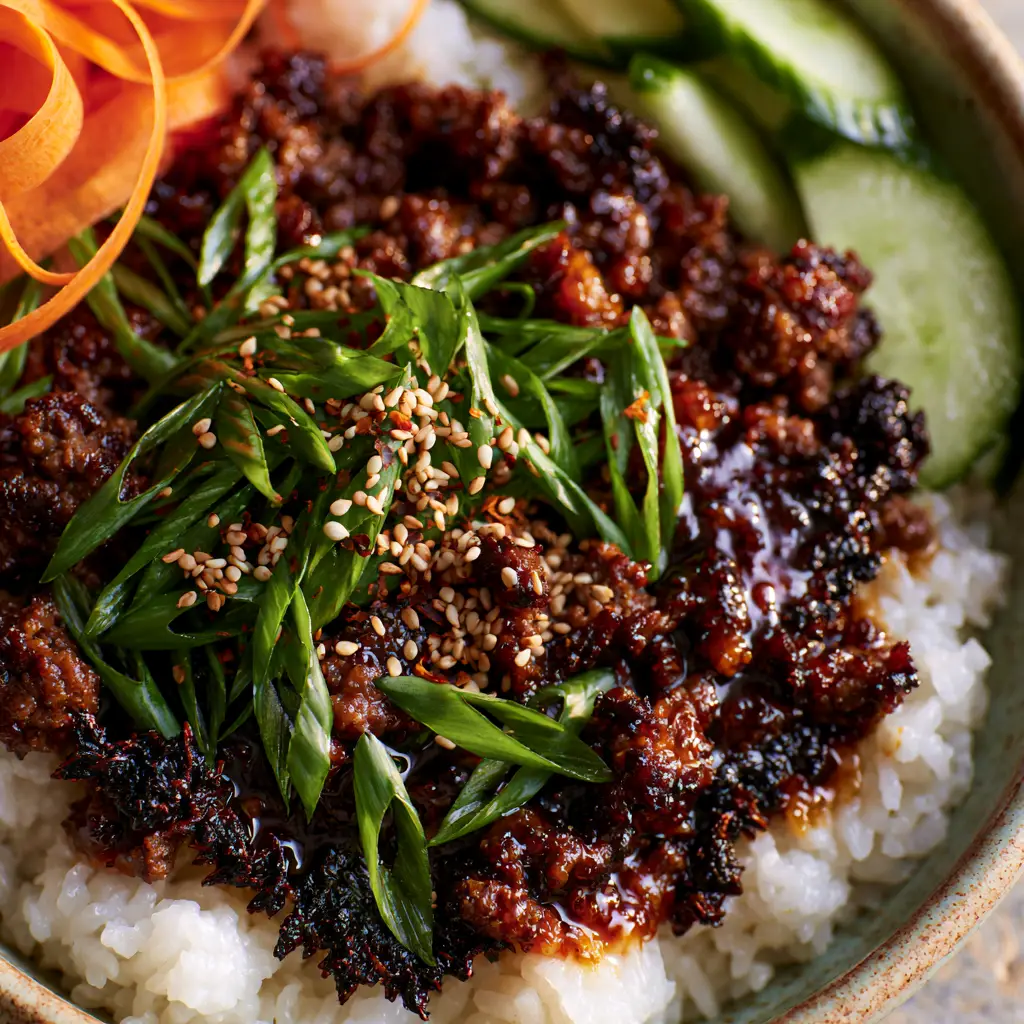
Heat 1 tbsp (15ml) of neutral oil (like avocado or vegetable oil) in your skillet over medium-high heat until it shimmers. Add 1 lb (450g) of ground beef. Crucial Tip: Do not break the meat up immediately. Let it sear undisturbed for 3-4 minutes until a deep, dark brown crust forms on the bottom.
Once the crust is established, break the meat into large crumbles. Continue to cook until the fat has rendered and the edges of the beef bits look “jagged and crispy.” This is the Maillard reaction in full effect, providing the savory depth our Korean beef bowls are known for.
Phase 3: The Lacquered Soy-Ginger Glaze
Reduce heat to medium. Stir in 3 cloves of minced garlic and 1 tbsp (15g) of freshly grated ginger. Cook for 60 seconds until fragrant. Pour in 1/3 cup (80ml) of soy sauce, 1/4 cup (50g) of dark brown sugar, and 1 tsp (5ml) of toasted sesame oil. Stir constantly as the sugar melts and the liquid begins to bubble.
Allow the mixture to simmer for 2-3 minutes. The sauce will transition from a thin liquid to a “thick, glistening, lacquered” glaze. It should coat the back of a spoon and cling to every crevice of the crispy beef.
Phase 4: Cold Component Preparation
While the beef rests, slice your Persian cucumbers into thin rounds. Julienne the carrots into thin 2-inch matchsticks. Slice the scallions on a sharp diagonal (bias-cut). Having these ready ensures the “fresh” elements of the bowl stay crisp and cold against the hot beef.
Expert Tips for Success
- Don’t Overcrowd the Pan: If your skillet is small, sear the beef in two batches. Overcrowding causes the meat to steam in its own juices rather than fry, preventing those “charred edges.”
- Control the Heat: If the soy sauce begins to smell like it is burning, add a tablespoon of water immediately to slow down the reduction.
- Rice Temperature: For the best experience, serve the rice steaming hot. The contrast with the “chilled” cucumbers is a hallmark of great bowl assembly.
- Acid Balance: If the dish feels too heavy, a tiny splash of rice vinegar added to the cucumbers can brighten the entire profile, similar to the acidity found in classic cucumber salad recipes.
Storage, Reheating, and Meal Prep
These Korean beef bowls are excellent for meal prep. Store the cooked beef and rice in airtight containers for up to 4 days. However, keep the raw carrots and cucumbers in separate containers or bags. Reheat the beef and rice together in the microwave with a damp paper towel over the top to maintain moisture, then add the fresh vegetables and garnishes just before eating.
What to Serve with Your Korean Beef Bowls
While this is a complete meal on its own, you can expand the spread. For a surf-and-turf feel, consider serving these alongside our shrimp and avocado bowls. If you have extra cucumbers, a side of spicy kimchi or a vinegar-based slaw adds another layer of fermentation and funk that complements the sweet soy glaze perfectly.
Frequently Asked Questions
Yes, but since poultry is leaner, you may need to add an extra tablespoon of oil to the pan to achieve the same level of crispiness and prevent the meat from drying out.
The secret is high heat and patience. Place the beef in a hot, oiled skillet and let it sit undisturbed for at least 3 minutes. This allows the Maillard reaction to create a deep crust before you break it into crumbles.
Absolutely. The beef and rice reheat beautifully. Just keep the raw carrots, cucumbers, and scallions in a separate container so they stay cold and crunchy.
The combination of dark brown sugar and the natural gelatinous properties of reduced soy sauce creates that lacquered look. Ensure you simmer the sauce until it coats the back of a spoon.
Persian cucumbers have thinner skin and smaller seeds, making them extra crunchy and less watery. This ensures they stay ‘chilled’ and crisp even when sitting next to hot rice.
The Ultimate Korean Beef Bowl Recipe
Korean Beef Bowls with Crispy Caramelized Beef and Glossy Ginger Glaze
Ingredients
Equipment
Method
- Rinse the jasmine rice under cold water until clear. In a medium pot, combine rice, water, and a pinch of salt. Bring to a boil, then reduce heat to low, cover, and simmer for 15 minutes.
- Remove from heat and let sit, covered, for 5 minutes. Fluff with a fork before serving to maintain the fluffy jasmine rice foundation.
- Heat neutral oil in a large skillet over medium-high heat. Add ground beef in a flat layer. Let sear undisturbed for 3-4 minutes until a deep brown crust forms. Break into crumbles and cook until the edges are crispy and charred.
- Add minced garlic and grated ginger. Sauté for 1 minute until fragrant and the smell fills the kitchen.
- Stir in soy sauce, dark brown sugar, and sesame oil. Simmer for 2-3 minutes until the liquid reduces into a thick, glossy dark brown soy-ginger glaze that coats the beef.
- Divide the rice into ceramic bowls. Top with a generous portion of the lacquered beef. Arrange the chilled Persian cucumber slices and julienned raw carrots on the side.
- Garnish heavily with bias-cut green scallions, toasted white sesame seeds, and dried red pepper flakes.
Notes
If the sauce thickens too much, add a teaspoon of water to loosen the glaze back to a lacquered sheen.
Closing and Call to Action
Mastering the balance of sweet, salty, and crispy is the hallmark of a great home cook. These Korean beef bowls prove that you don’t need a long list of ingredients to create a dish with immense visual and flavorful impact. The secret is all in the sear!
Did you manage to get those perfect crispy edges? Let us know in the comments below! If you loved the visual of this dish, be sure to save it to your “Easy Weeknight Dinners” board on Pinterest.