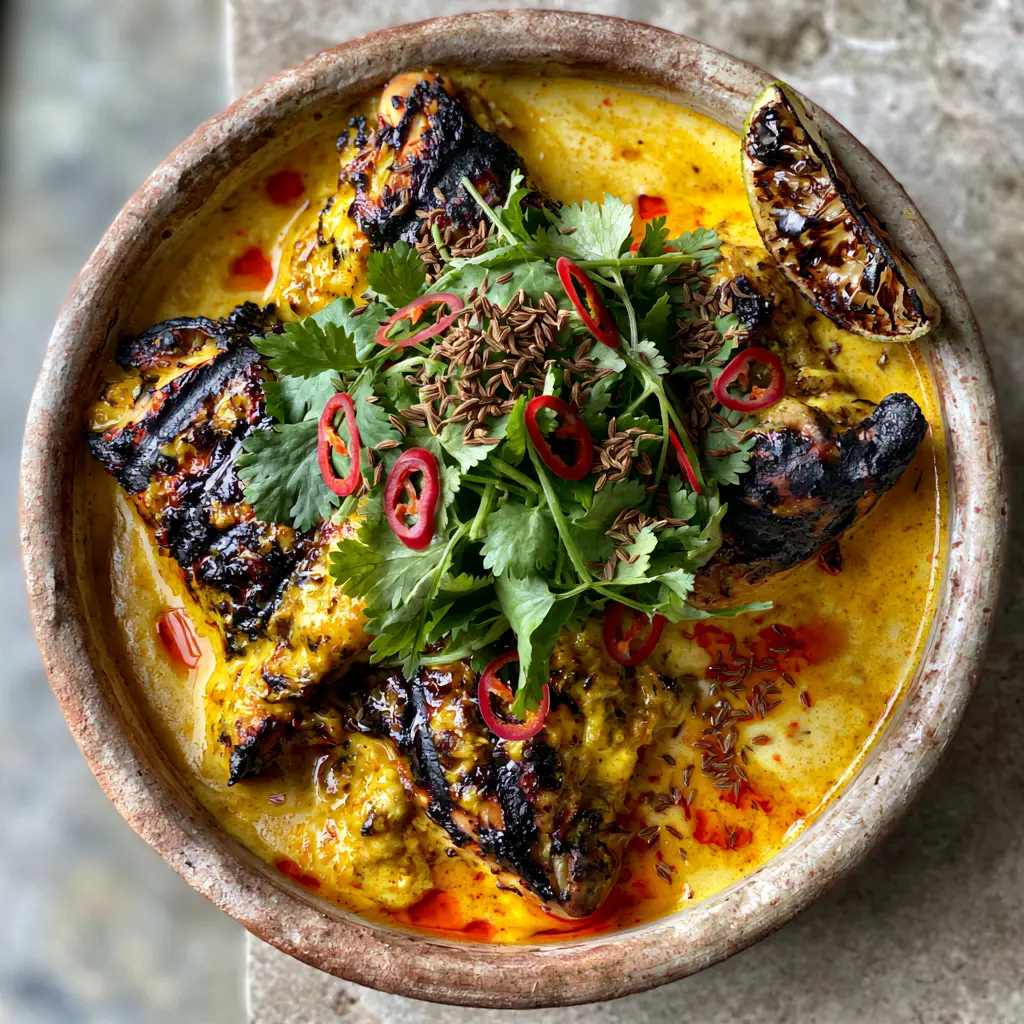
The Kuku Paka recipe is a masterclass in the intersection of African, Indian, and Arab culinary traditions. Originating from the Swahili coast, this dish is not your average chicken curry; it is a sensory explosion of smoky, flame-grilled poultry enveloped in a velvety, golden-yellow coconut sanctuary.
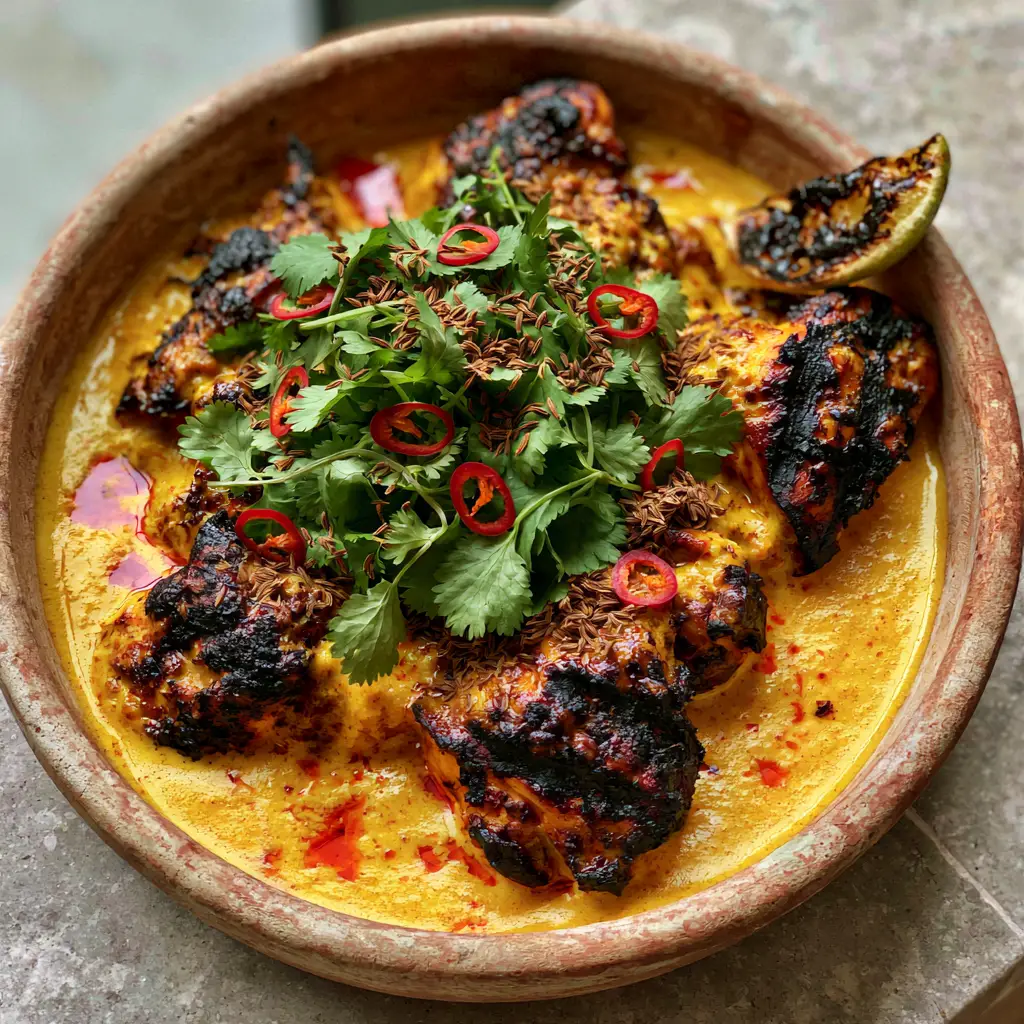
If you have ever craved a dish that balances the intense heat of a charcoal grill with the cooling, creamy embrace of tropical coconut milk, this is it. The visual appeal alone—featuring deep black char marks against a vibrant yellow sauce—makes it the centerpiece of any dinner table.
In this guide, we are going to break down the professional techniques required to achieve that signature “Paka” (which means to coat or smear) finish. You will learn how to build layers of flavor that result in a restaurant-quality meal right in your home kitchen.
Why This Authentic Kuku Paka Recipe Stands Out
- Double-Layered Flavor: Unlike standard curries where chicken is simmered, this recipe uses a two-stage process: marinating and grilling, followed by a gentle braise in the sauce.
- The “Golden Glow” Texture: We use a specific ratio of turmeric and high-fat coconut milk to create a sauce that is thick, velvety, and visually stunning.
- Smoky Sophistication: The inclusion of flame-grilled char marks adds a bitter-sweet complexity that offsets the richness of the coconut.
- Forensic Garnishing: From the glossy red chili oil drizzle to the toasted cumin seeds, every topping serves a functional flavor purpose.
The Anatomy of a Perfect Kenyan Chicken Curry
To recreate the exact dish seen in our visual blueprint, we must be precise with our ingredient selection. Every component plays a role in the structural integrity and flavor profile of the final plate.
Bone-In Chicken Thighs and Drumsticks: 2 lbs (900g). Bone-in meat stays succulent during the high-heat grilling process and provides collagen to thicken the sauce.
Full-Fat Coconut Milk: 2 cans (800ml). This is the base of your sauce; avoid “light” versions as they lack the viscosity needed for the “glossy sheen” described in our visual prompt.
Fresh Turmeric and Ginger: 1 tbsp (15g) each, grated. These provide the vibrant golden-yellow hue and a sharp, earthy zing that cuts through the fat.
Red Bird’s Eye Chilies: 3-4 pieces. These offer a clean, sharp heat that lingers without overpowering the delicate coconut notes.
Cumin Seeds: 1 tsp (5g). Toasted until fragrant, these add a nutty texture and an aromatic punch to the garnish.
Neutral Oil for Chili Infusion: 1/4 cup (60ml). This will be infused with red chili flakes to create that essential “glossy red chili oil drizzle.”
Fresh Cilantro: 1 bunch. The bright green leaves provide a color contrast and a refreshing herbal finish.
Essential Tools for Success
To achieve those professional grill lines and the thick sauce consistency, you will need a few specific kitchen tools. First, a heavy-duty outdoor grill or an indoor cast-iron grill pan is non-negotiable for the char marks.
You will also need a high-speed blender to create a perfectly smooth base for the curry sauce. A rustic clay bowl for serving is highly recommended to maintain the heat and match the modern, clean aesthetic of the dish.
Step-By-Step: Mastering the Kuku Paka Recipe
Phase 1: The Aromatic Marinade
In a large bowl, whisk together 1/2 cup (120ml) of plain yogurt, 1 tsp (5g) turmeric, 1 tbsp (15g) minced garlic, and the juice of one lime. This yogurt-based marinade tenderizes the chicken fibers through lactic acid, ensuring the meat remains “succulent” even after flame-grilling.
Coat your chicken pieces thoroughly. Let them marinate for at least 30 minutes, though 4 hours is ideal for deep flavor penetration. Ensure you season with 1.5 tsp (9g) of kosher salt at this stage.
Phase 2: Achieving the Signature Flame-Char
Preheat your grill to medium-high heat. Place the chicken pieces down and do not move them for at least 4-5 minutes. We are looking for those “deep black char marks” and “visible grill lines.”
Flip the chicken and sear the other side. Note that the chicken does not need to be cooked through yet; we are simply developing the exterior flavor profile. The smoky aroma at this stage is a key sensory cue that your Kuku Paka recipe is on the right track.
Phase 3: The Golden Coconut Reduction
While the chicken rests, sauté one finely diced onion in a large pot until translucent. Add a blended mixture of 2 large tomatoes, 2 cloves of garlic, and 1 tbsp (15g) of ginger. Cook until the moisture evaporates and the oil begins to separate.
Pour in your coconut milk and bring to a gentle simmer. Introduce the grilled chicken pieces into this velvety bath. Simmer for 15-20 minutes until the sauce thickens and the chicken reaches an internal temperature of 165°F (74°C).
Phase 4: The Finishing Forensic Garnishes
While the curry simmers, heat 2 tbsp (30ml) of oil in a small pan with 1 tsp (5g) of Kashmiri chili powder or paprika. This creates the “glossy red chili oil.”
Toast your cumin seeds in a dry pan for 60 seconds until they jump and smell nutty. Squeeze a lime wedge over a hot grill pan to create a “charred lime wedge” for the final presentation.
Expert Tips for Culinary Excellence
- Don’t Rush the Reduction: The sauce should be “thick and velvety.” if it looks too thin, continue simmering uncovered to allow water to evaporate.
- The Color Secret: If your sauce isn’t “vibrant golden-yellow” enough, add a pinch more turmeric, but be careful—too much can lead to a medicinal taste.
- Chili Control: When adding the sliced red bird’s eye chilies, remove the seeds if you prefer a milder heat profile while keeping the visual pop.
- Rest the Meat: Let the chicken rest for 5 minutes after grilling before putting it in the sauce to keep the juices locked inside.
The Best Side Dishes for Kuku Paka
This rich curry demands sides that can soak up every drop of the golden sauce. A classic choice is an aromatic rice pilaf which complements the cumin notes in the curry perfectly.
For a refreshing contrast to the creamy coconut, try serving a crisp chilled cucumber salad on the side. If you want to lean into the tropical theme, a side of fresh mango salsa adds a sweet and tangy brightness that cuts through the richness.
If you’re hosting a larger feast, consider adding savory stuffed peppers as a vegetable-heavy accompaniment that shares the same smoky flavor profile.
Frequently Asked Questions
Yes! You can achieve similar char marks using a high-heat cast-iron grill pan indoors or by placing the marinated chicken under a broiler on high for 5-7 minutes per side.
The base sauce is mild and creamy, but the heat comes from the added red bird’s eye chilies and chili oil drizzle. You can easily control the spice level by adjusting these garnishes.
In Swahili, ‘Kuku’ means chicken and ‘Paka’ means to coat, smear, or spread. It refers to the way the thick, velvety coconut sauce generously coats the grilled chicken pieces.
The vibrant golden-yellow hue comes from a combination of ground turmeric and fresh grated turmeric root, which is quintessential to the authentic East African appearance.
Coconut milk can separate if boiled too vigorously. Keep the sauce at a gentle simmer and ensure you are using full-fat coconut milk for the most stable and thick emulsion.
The Ultimate Kuku Paka Recipe Card
Kuku Paka Recipe: Authentic Kenyan Coconut Chicken Curry with Char-Grilled Flavor
Ingredients
Equipment
Method
- Whisk yogurt, turmeric, garlic, ginger, and lime juice. Coat chicken and marinate for at least 30 minutes.
- Grill chicken over medium-high heat until deep black char marks and visible grill lines appear on both sides.
- Sauté onions, add blended tomatoes and spices, then pour in coconut milk. Simmer until the sauce is thick and golden-yellow.
- Add grilled chicken to the sauce and simmer for 15 minutes until tender and glossy.
- Drizzle with red chili oil, sprinkle with toasted cumin and sliced bird's eye chilies. Top with fresh cilantro and a charred lime wedge.
Notes
If you don't have a grill, use a very hot cast-iron skillet to achieve the necessary char.
Final Thoughts on This Kenyan Classic
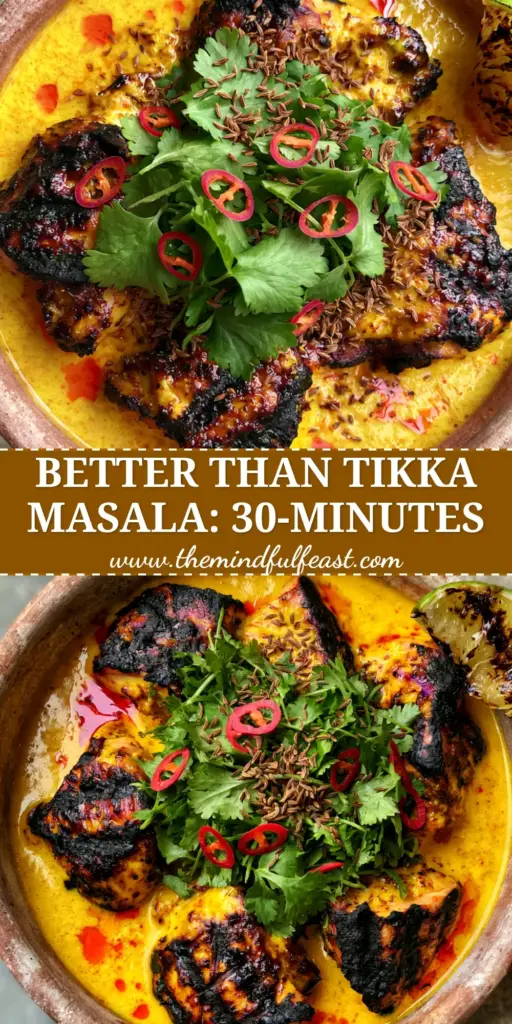
Making an authentic Kuku Paka recipe is about more than just following steps; it’s about embracing the sensory experience of fire and cream. The contrast between the blackened chicken skin and the sun-colored sauce is a hallmark of Swahili hospitality.
We hope this recipe brings a piece of the Kenyan coast to your kitchen. If you enjoyed this dish, please leave a comment below and share your photos with us! Don’t forget to follow us on Pinterest for more global culinary inspiration.