There is a specific kind of magic that happens when high-heat culinary techniques meet the delicate brightness of citrus. This Lemon garlic salmon pasta isn’t just a meal; it is a sensory experience designed to mimic the atmosphere of a high-end coastal bistro right in your own kitchen.
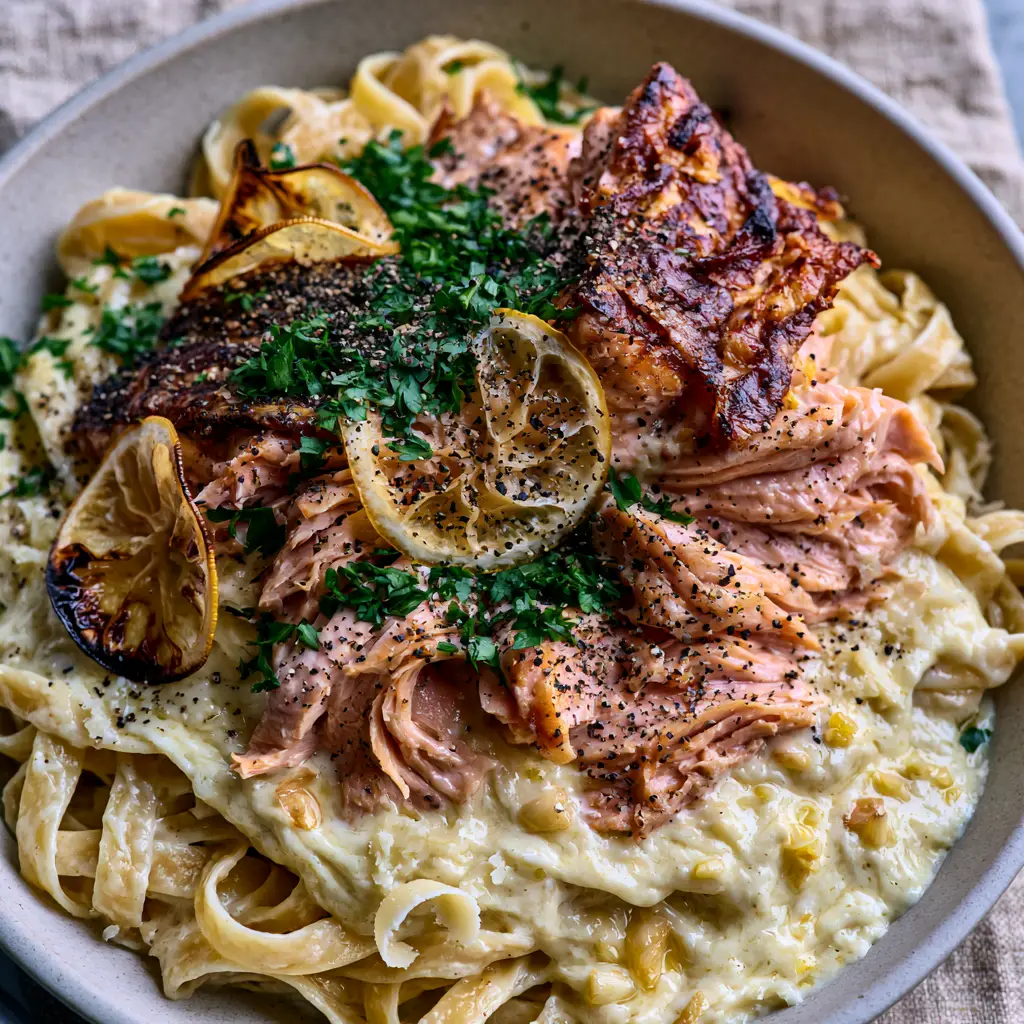
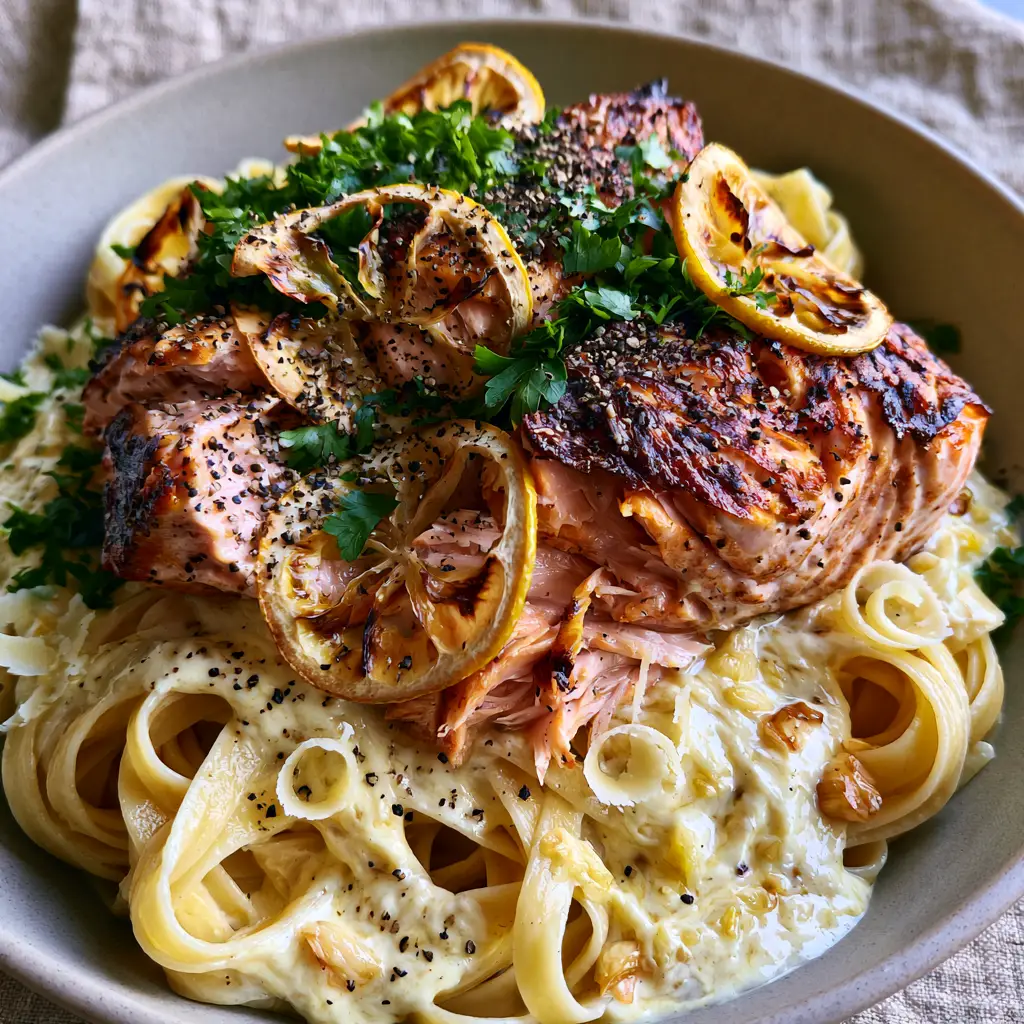
Imagine a shallow matte ceramic bowl filled with ribbons of fettuccine, each strand perfectly coated in a velvety, pale-yellow cream sauce. Nestled on top are succulent flakes of salmon, boasting a deep golden-brown caramelized crust while remaining tender and pink in the center.
To finish, we add the sharp bite of freshly cracked black pepper, the herbaceous lift of chopped parsley, and the sophisticated bitterness of charred lemon wheels. This dish is the ultimate intersection of comfort and elegance, providing a restaurant-quality finish that is surprisingly achievable for the home cook.
Why This Pan-Seared Salmon Fettuccine Will Become Your New Signature Dish
- The Perfect Texture Contrast: The marriage of the crispy, pan-seared salmon “crust” and the al dente bite of fettuccine creates a professional-level mouthfeel.
- Emulsified Glossy Sauce: We use a specific reduction technique to ensure the lemon garlic cream sauce is thick and glossy, never broken or greasy.
- Visual Sophistication: With micro-planed parmesan curls and charred citrus, this dish is visually indistinguishable from a $45 entree at a Michelin-recommended trattoria.
- Flavor Depth: By searing the salmon in the same pan used for the sauce base, we capitalize on the “fond”—those brown bits that pack a massive savory punch.
If you enjoy the bright, citrusy notes of this dish, you might also want to explore our Mafaldine Pasta Limone for a lighter, cream-free alternative. Both recipes celebrate the versatility of fresh lemons in Italian-inspired cooking.
Essential Ingredients for the Ultimate Lemon Garlic Cream Sauce
Fresh Atlantic Salmon Fillets: Opt for center-cut fillets to ensure even thickness, which is crucial for achieving that signature golden-brown caramelized edge while keeping the center moist and pink. You can also experiment with a citrus-based salmon marinade if you want to prep the fish ahead of time.
Fettuccine Pasta: The wide, flat surface area of fettuccine ribbons is scientifically superior for “holding” onto thick cream-based sauces compared to thinner strands like spaghetti. If you prefer a different shape, this sauce also works beautifully with salmon stuffed shells.
Heavy Cream (36% Milkfat): This provides the foundational body of the sauce; using lower-fat milk will result in a thin, watery consistency that won’t coat the pasta properly. It creates that velvety, pale-yellow aesthetic we are looking for.
Fresh Garlic: We use six full cloves of minced garlic to provide a robust aromatics base that balances the high acidity of the lemon juice. If you love garlic-forward dishes, our garlic beef pasta is another fantastic high-protein option.
Fresh Lemons: We use both the zest for aromatic intensity and the juice for acidity, plus extra slices for charring in the pan to create a smoky, sweet garnish. For a different fruit-forward protein, try our orange glazed salmon next time.
Parmigiano-Reggiano: Use a micro-plane to create feather-light shavings that melt instantly into the sauce’s residual heat, adding a nutty, salty depth. This is a significant upgrade over the “shaker” style cheese often found in grocery aisles.
Foundational Additions: You will also need 1 tbsp (15ml) of high-smoke point neutral oil for searing, 2 tbsp (30g) of unsalted butter for the sauce, and 1 tsp (5g) of freshly cracked black pepper for that final pungent kick.
Professional Kitchen Tools for Success
To achieve the specific visual results seen in our photography, you will need a 12-inch (30cm) heavy-bottomed stainless steel or cast iron skillet. These materials are essential for heat retention, allowing the salmon to develop a crust without overcooking the interior.
A Microplane grater is also required for the parmesan shavings and lemon zest. This tool creates more surface area in the cheese, allowing it to emulsify into the sauce rather than clumping together. Finally, a pair of silicone-tipped tongs will help you handle the delicate salmon flakes without breaking them prematurely.
The Secret to Searing Salmon with a Golden Crust
Step 1: Prep and Dry the Salmon
Remove 1 lb (450g) of salmon from the refrigerator 15 minutes before cooking. Pat the skinless fillets extremely dry with paper towels; moisture is the enemy of a golden-brown crust. Season generously with kosher salt and cracked black pepper.
Step 2: The High-Heat Sear
Heat 1 tbsp (15ml) of oil in your skillet over medium-high heat until the oil shimmers. Place the salmon fillets in the pan and press down lightly with a spatula. Sear for 4-5 minutes without moving them until a deep golden-brown crust forms, then flip and cook for another 2 minutes. Remove and set aside.
Step 3: Charring the Lemon Wheels
In the same pan, place 4-5 paper-thin lemon slices. Cook for 1-2 minutes per side until the edges are blackened and the flesh is translucent. These charred lemons provide a smoky acidity that cuts through the rich cream sauce perfectly.
Step 4: Building the Garlic Cream Base
Reduce heat to medium and add 2 tbsp (30g) of butter. Once melted, sauté 6 cloves of minced garlic for 60 seconds until fragrant but not browned. Pour in 1.5 cups (350ml) of heavy cream and 1/2 cup (120ml) of reserved pasta water, simmering until the sauce thickens enough to coat the back of a spoon.
If you find yourself craving more bold flavors after this, our creamy Cajun pasta uses a similar emulsification technique but with a spicy kick. Or, for a quick lunch version, try the creamy parmesan tuna pasta.
Step 5: The Final Assembly
Toss the al dente fettuccine into the sauce along with 2 tbsp (30ml) of fresh lemon juice and 1 tbsp (6g) of zest. Use your tongs to flake the salmon into large, succulent chunks and gently fold them into the pasta. Garnish with a heavy scatter of parsley, the charred lemons, and micro-planed parmesan.
Expert Tips for the Perfect Pasta Texture
- Salt the Water Like the Sea: Your pasta water should be heavily salted (about 1 tbsp per 4 liters). This is your only chance to season the pasta dough itself.
- Undercook the Pasta Slightly: Remove the fettuccine from the water about 2 minutes before the package says “al dente.” It will finish cooking in the cream sauce, absorbing the flavor rather than just sitting in it.
- The Emulsion Trick: Never toss out your pasta water! The starchy liquid is the secret ingredient that binds the fats in the cream and butter to the noodles, creating a glossy finish.
- Rest the Salmon: Let the salmon rest for 3 minutes before flaking. This allows the juices to redistribute, ensuring those moist, pink centers you see in the photos.
If you’re a fan of the “one-pan” method, you might also enjoy our one-pot Cajun chicken pasta which utilizes similar starch-binding principles for a rich sauce.
Storage, Reheating, and Make-Ahead Advice
While this Lemon garlic salmon pasta is best enjoyed immediately to preserve the “glissen” of the sauce, leftovers can be stored in an airtight container for up to 2 days. Because cream-based sauces tend to thicken significantly when cold, you will need a specific technique for reheating.
To reheat, place the pasta in a skillet over low heat and add a splash of milk or water. Stir gently to re-emulsify the sauce. Avoid the microwave if possible, as it can cause the salmon to become rubbery and the sauce to “split” into oil and solids.
What to Serve with This Lemon Garlic Salmon Pasta
To balance the richness of the cream sauce, we recommend serving this dish with a crisp green side. A garlic parmesan zucchini and squash medley provides a light, vegetal crunch that complements the salmon perfectly.
If you are looking for a more starch-heavy side, a simple garlic butter orzo can be served alongside if you are feeding a larger crowd. For a refreshing beverage pairing, try the honey lemon butterfly fizz to echo the citrus notes in the pasta.
Common Questions About This Recipe
I don’t recommend it. Milk lacks the fat content to emulsify into a thick, glossy sauce and may result in a watery consistency that won’t coat the fettuccine properly.
Yes, but ensure it is completely thawed and patted extremely dry with paper towels. Any excess moisture will prevent the salmon from forming that signature golden crust.
Add the lemon juice at the very end of the cooking process after the cream has thickened. High heat combined with high acidity can cause dairy to split if boiled too vigorously.
Use a fork or tongs to gently pull the fillets apart into large chunks rather than small shreds. This preserves the texture and the contrast between the crust and the moist center.
Charring lemons caramelizes their natural sugars, reducing the sharp sourness and adding a complex, smoky depth that elevates the entire dish visually and gastronomically.
The Ultimate Lemon Garlic Salmon Pasta Recipe Card
Lemon garlic salmon pasta with Pan-Seared Golden Crust and Silky Cream Sauce
Ingredients
Equipment
Method
- Pat salmon dry and season. Heat oil in skillet over medium-high. Sear for 4-5 mins until a golden crust forms, flip for 2 mins. Remove and flake into large chunks.
- Place lemon slices in the same skillet for 1-2 mins per side until charred and caramelized. Remove and set aside.
- Sauté minced garlic in butter for 60 seconds. Add heavy cream and simmer for 5 mins until thickened. Stir in lemon juice, zest, and parmesan.
- Toss al dente fettuccine into the sauce with a splash of pasta water. Fold in salmon flakes and garnish with charred lemons, parsley, and pepper.
Notes
Ensure the salmon is room temperature before searing to get the best crust.
Bring the Bistro Experience to Your Table
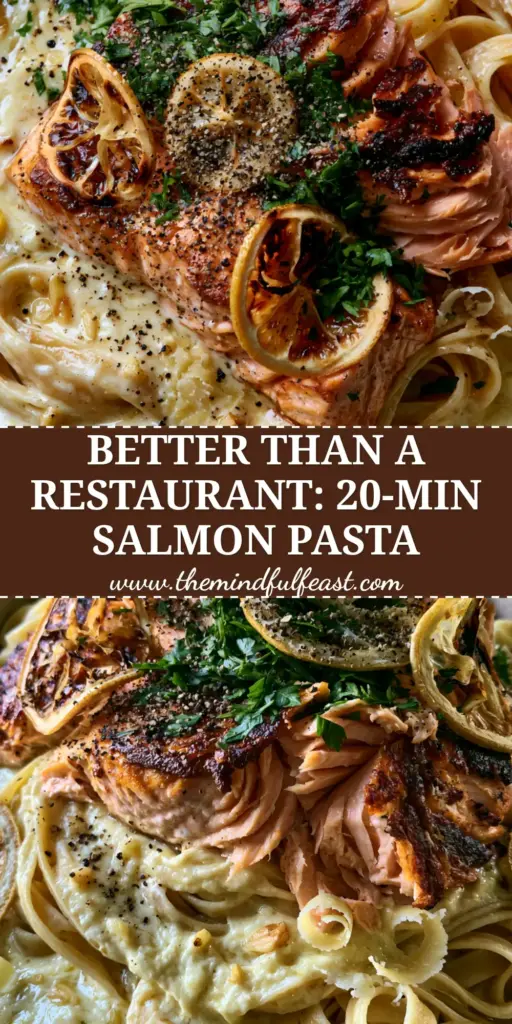
This Lemon garlic salmon pasta proves that you don’t need a professional kitchen to produce a meal that looks and tastes like art. By focusing on the Maillard reaction for the salmon and a proper emulsion for the sauce, you create a dish that is deeply satisfying and visually stunning.
If you enjoyed this recipe, please leave a comment below and let us know how your salmon crust turned out! Don’t forget to save this recipe to your “Dinner Goals” board on Pinterest and share it with your fellow home cooks.