There is something inherently restorative about a breakfast that looks like a tropical vacation. This Mango Coconut Chia Pudding isn’t just a meal; it is a meticulously layered sensory experience designed to jumpstart your morning with vibrant colors and nutrient-dense fats. If you have been searching for a way to replicate that high-end cafe aesthetic at home, you have arrived at the right place.
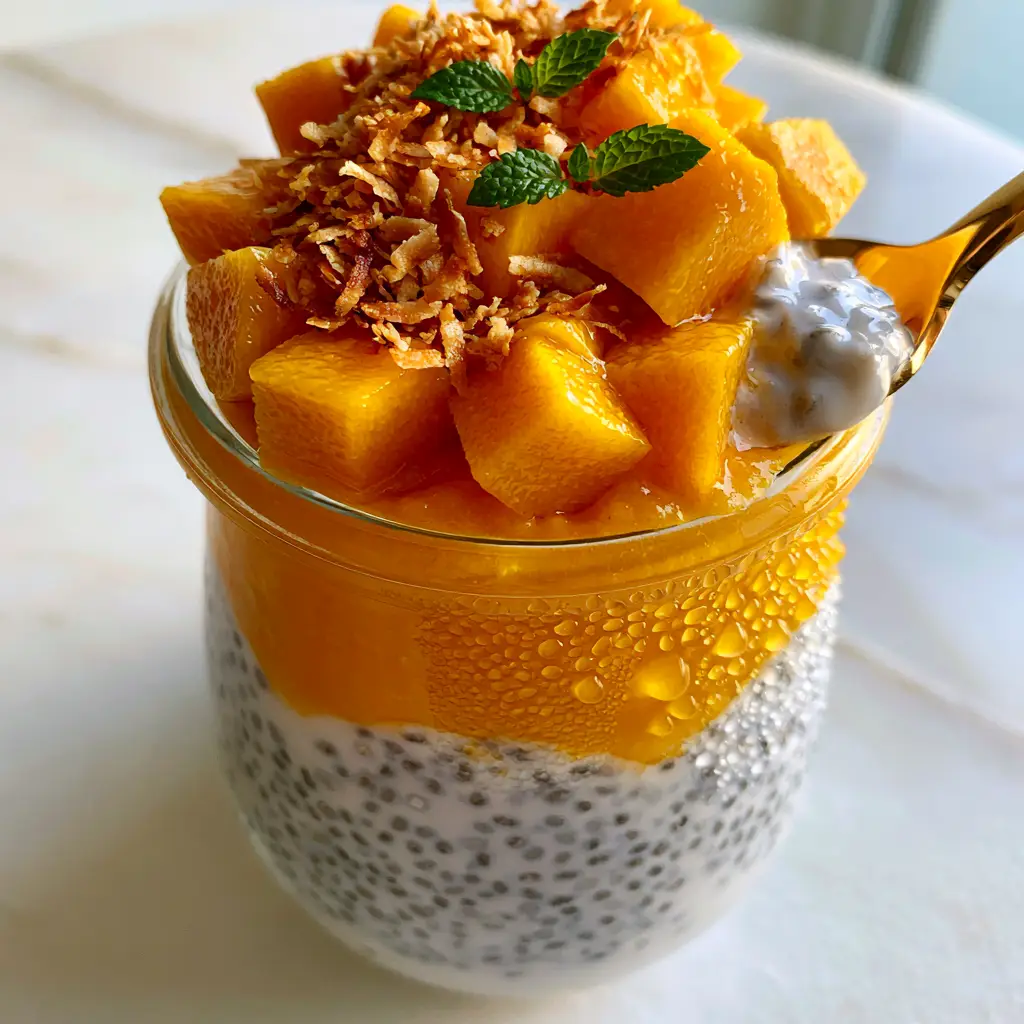
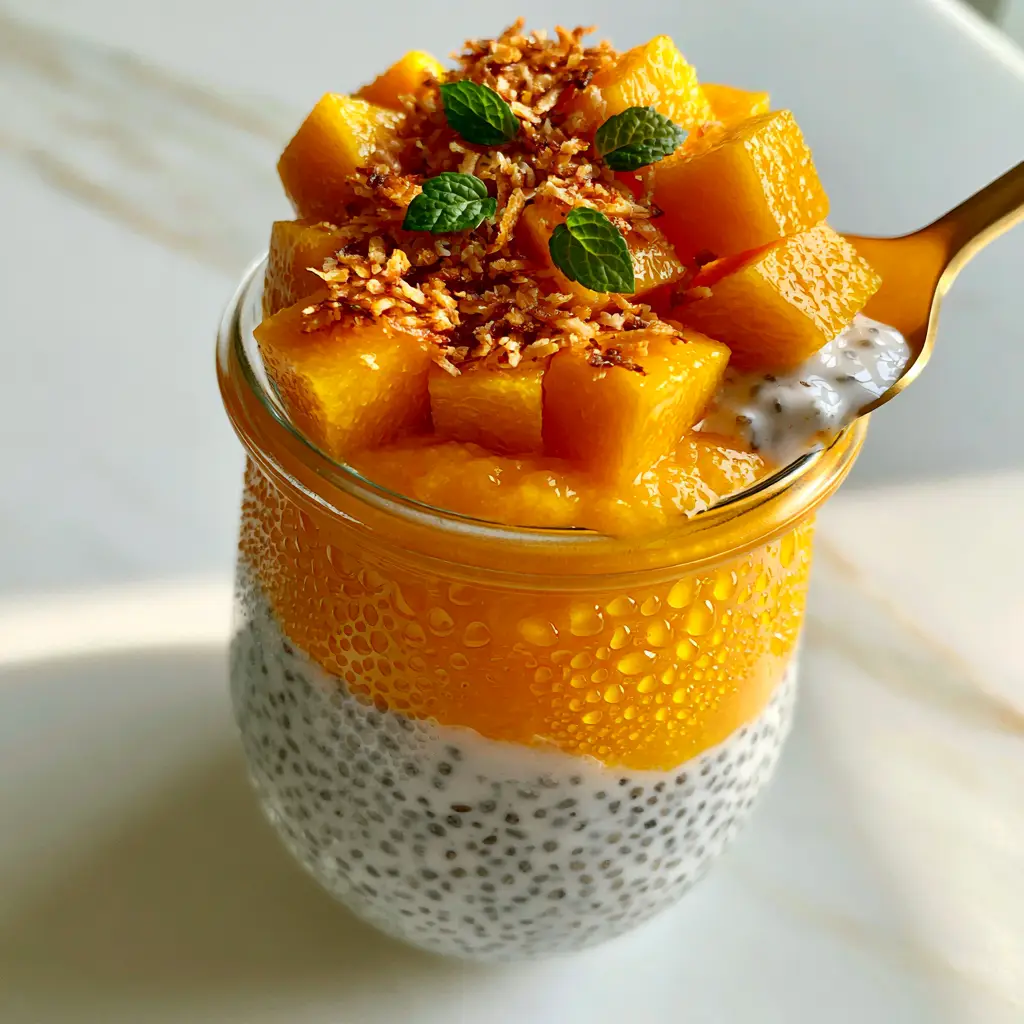
Imagine plunging a heavy gold spoon through layers of velvety, sun-drenched mango puree and into a dense, creamy coconut base studded with tiny, fiber-rich chia seeds. The contrast between the chilled, smooth pudding and the crunch of toasted coconut flakes creates a textural masterpiece. Whether you are prepping for a busy work week or hosting a refined brunch, this recipe delivers both nutritional power and visual elegance.
Inspired by the classic flavors of Southeast Asia, specifically the profile of mango sticky rice, this pudding transforms those traditional elements into a modern, health-conscious format. By understanding the science of chia hydration and the specific gravity of fruit purees, we can build a breakfast jar that stays perfectly layered and delicious for days.
The Anatomy of a Perfect Tropical Breakfast Jar
- Textural Contrast: The interplay between the gelatinous chia seeds, the fluid mango nectar, and the crisp coconut flakes.
- Saturated Visuals: A bright orange middle layer that pops against the stark white of the coconut milk.
- Nutrient Density: Loaded with Omega-3 fatty acids, fiber, and Vitamin C to sustain energy levels until lunch.
- Meal Prep Ready: A dish that actually improves in flavor and texture as it sets in the refrigerator.
Essential Components for a Creamy Chia Base
To achieve the specific “thick, creamy white” result seen in our visual blueprint, you must use full-fat canned coconut milk. Light coconut milk or carton-based alternatives lack the viscosity required to suspend the chia seeds evenly. The high fat content provides the structural integrity needed to support the heavy mango layers above.
Chia Seeds (Black or White): 1/4 cup (40g). These tiny powerhouses absorb up to 12 times their weight in liquid. While white seeds offer a monochromatic look, a mix of black seeds provides that classic “speckled” visual described in our blueprint.
Full-Fat Canned Coconut Milk: 1 cup (240ml). This is the secret to a dessert-like richness. Ensure you shake the can vigorously before opening to emulsify the coconut cream and water.
Pure Maple Syrup or Agave: 1 tbsp (15ml). A liquid sweetener integrates seamlessly into the cold milk without leaving a grainy residue. This keeps the pudding smooth and refined.
Vanilla Bean Paste or Extract: 1 tsp (5ml). While invisible to the eye, vanilla adds a floral aromatic layer that bridges the gap between the nutty coconut and the acidic mango.
Fresh Ripe Mangoes: 2 large (approx. 600g). You will need enough for both a smooth puree and perfectly cubed pieces. Look for Ataulfo or Champagne mangoes for the lowest fiber content and highest sweetness.
Unsweetened Coconut Flakes: 2 tbsp (10g). These provide the essential “golden-brown” crunch mentioned in the visual prompt. Always toast them fresh for the best aroma.
Fresh Mint Leaves: 3-5 small leaves. These are not just a garnish; the herbaceous scent enhances the perceived sweetness of the mango.
Tools for Culinary Precision
Achieving a professional-grade Mango Coconut Chia Pudding requires a few specific tools to ensure the textures are exactly as described. A high-speed blender is non-negotiable for a “smooth mango puree” that lacks any stringy fibers. A sharp chef’s knife is required to get those “perfectly cubed” mango chunks that sit proudly on top of the jar.
Finally, using a clear glass jar—ideally a wide-mouth mason jar or a specialized breakfast jar—is critical. The glass allows you to monitor the condensation and the distinct separation of layers. A gold metal spoon, as seen in our visual blueprint, adds a touch of luxury and makes the eating experience feel like a true ritual.
Mastering the Hydration: Step-by-Step Base Preparation
Step 1: Emulsifying the Coconut and Chia
In a medium mixing bowl, whisk together 1 cup (240ml) of full-fat coconut milk, 1/4 cup (40g) of chia seeds, the sweetener, and the vanilla. It is vital to whisk for at least two full minutes to prevent the seeds from clumping at the bottom.
Let the mixture sit for 5 minutes, then whisk again. This “double whisk” method ensures every seed is surrounded by liquid, leading to a consistent, thickened texture without any dry pockets.
Step 2: The Cold Set Phase
Cover the bowl and refrigerate for at least 4 hours, though overnight is preferred. During this time, the mucilaginous outer layer of the chia seeds expands, turning the liquid milk into a thick, spoonable pudding. You will know it is ready when the mixture holds its shape when scooped.
Step 3: Creating the Vibrant Mango Puree
Peel and pit one of the mangoes. Place the flesh into a blender and process on high until completely liquefied. If your mango is slightly underripe, you can add a teaspoon of lime juice to brighten the flavor. The result should be a thick, bright orange nectar that can support the weight of the fruit toppings.
Step 4: The Golden Toast
Place the coconut flakes in a dry skillet over medium-low heat. Stay vigilant; coconut goes from white to burnt in seconds. Shake the pan constantly until the flakes are a beautiful golden-brown and smell intensely nutty. Remove them from the pan immediately to stop the cooking process.
Step 5: Precision Dicing
Take the second mango and cut the “cheeks” off the pit. Score the flesh in a grid pattern without cutting through the skin. Invert the skin so the cubes pop out, and carefully slice them off. This technique ensures “perfectly cubed, juicy ripe mango chunks” for the final crown.
Expert Tips for Visual and Flavor Success
- The Condensation Effect: To achieve those appetizing “droplets of condensation” seen in food photography, chill your glass jar in the freezer for 10 minutes before layering the room-temperature mango puree.
- Layering Physics: Always add the chia pudding first. Because it is the densest layer, it provides a stable foundation. Pour the mango puree gently over the back of a spoon to prevent it from bleeding into the white pudding.
- Mango Selection: If you cannot find fresh mangoes, you can use frozen mango chunks for the puree, but always use fresh for the topping cubes to maintain that structural integrity.
- Internal Balance: If you find the coconut milk too heavy, you can substitute 1/4 cup of it with Greek yogurt for a tangy note, similar to the profile of healthy dessert swaps.
Optimal Storage and Meal Prep Longevity
This Mango Coconut Chia Pudding is a meal prep champion. Once assembled in a sealed glass jar, it will remain fresh in the refrigerator for up to 4 days. However, for the best visual appeal, add the toasted coconut flakes and fresh mint leaves just before serving to maintain their respective crunch and color.
If you are making this for a week of breakfasts, store the chia base and the mango puree in separate containers. This prevents the colors from bleeding over time and allows you to quickly assemble a fresh-looking jar each morning in under two minutes.
Tropical Pairings and Serving Suggestions
While this jar is a complete meal on its own, it pairs beautifully with other tropical-inspired dishes. If you are looking for a savory contrast, consider serving this alongside a light chicken pasta salad for a balanced lunch. For those who enjoy a full mango-themed spread, this pudding is a fantastic follow-up to a mango bango drink.
If you prefer a warm component to your breakfast, a small serving of coconut chicken brothy rice can provide a comforting, savory balance to the chilled sweetness of the chia pudding.
Common Questions About Chia Pudding
Yes, both work identically in terms of nutrition and texture. Black seeds will be more visible against the white coconut milk, creating the speckled look described in our visual blueprint.
Yes, frozen mango works perfectly for the smooth puree layer. However, for the fresh diced cubes on top, fresh mango is recommended to ensure they hold their shape and don’t release excess water into the pudding.
When stored in an airtight glass jar, the pudding and puree layers will stay fresh for up to 4 days. Wait to add the toasted coconut and mint until just before serving to keep them crisp and bright.
Absolutely. By using coconut milk and maple syrup, this Mango Coconut Chia Pudding is naturally vegan, dairy-free, and gluten-free, making it suitable for a wide range of dietary needs.
This usually happens if you use light coconut milk or a carton-based milk alternative. For the thick, creamy result seen in the photos, you must use full-fat canned coconut milk and ensure you whisk the seeds twice during the first 10 minutes of soaking.
The Ultimate Mango Coconut Chia Pudding Recipe
Mango Coconut Chia Pudding: The Ultimate Tropical Breakfast Jar Guide
Ingredients
Equipment
Method
- In a bowl, combine chia seeds, coconut milk, maple syrup, and vanilla. Whisk vigorously for 2 minutes to ensure seeds don't clump.
- Refrigerate the mixture for at least 4 hours or overnight until it becomes a thick, creamy white pudding with suspended seeds.
- Blend one mango until it reaches a smooth, vibrant orange consistency. Dice the second mango into uniform cubes.
- Heat coconut flakes in a dry pan over medium heat for 1-2 minutes until fragrant and golden-brown.
- Spoon the chia pudding into the bottom of a clear glass jar. Carefully add the smooth mango puree as the middle layer.
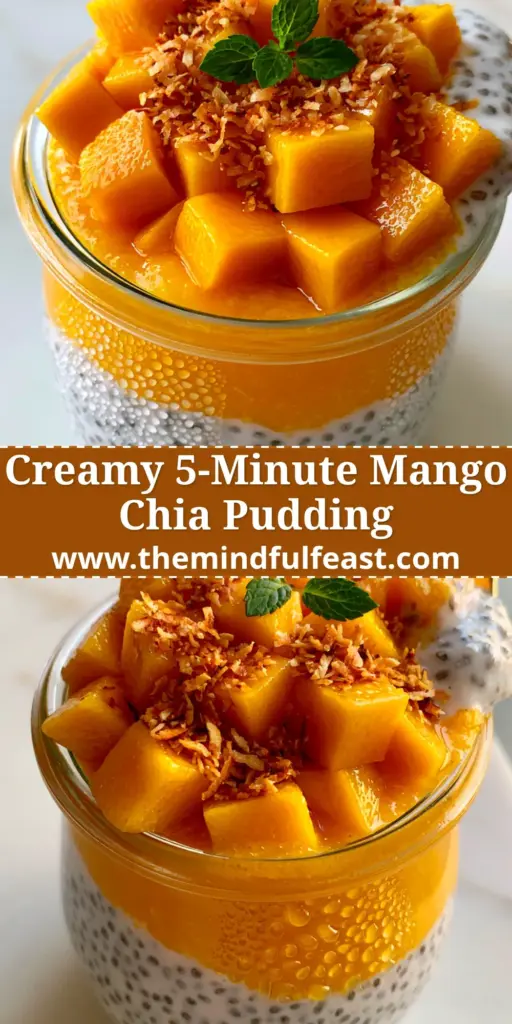
- Top with mango cubes, toasted coconut flakes, and three tiny mint leaves. Serve with a gold spoon partially dipped into the top layer.
Notes
Double-whisk the chia seeds (once at the start and once after 5 minutes) to prevent clumping.
Closing Thoughts on the Ultimate Breakfast Ritual
Mastering the Mango Coconut Chia Pudding is a gateway to more creative, healthful eating. By focusing on high-quality fats and vibrant fruit, you create a meal that satisfies the palate and the eyes simultaneously. This recipe is a testament to the fact that healthy eating doesn’t have to be bland or boring; it can be as luxurious as a gold spoon in a crystal jar.
We would love to see your creations! Tag your photos and share your layering progress with us. For more tropical inspiration and daily recipe updates, be sure to follow us on Pinterest and join our community of home cooks dedicated to authentic flavors.